| Author |
 Replies: 32 / Views: 15,382 Replies: 32 / Views: 15,382 |
|
|
|
Moderator
  Australia
17006 Posts |
OK, up till now, nothing much has actually afected the verdigris - only the oxidation, which I was trying to preserve. Next step: try a few different chemicals, which I'd heard might be helpful. First off was ethanol, in the form of methylated spirits. If the problem is primarily copper acetate-based, a nice soak in alcohol ought to do the trick. I tried it for 15 minutes and... nothing. Whatver this coin's problem is, acetate isn't it. Next up was ammonia. And not the nice, safe, mild "ammonia" you can get from off the supermarket shelf, either - this is lab-grade stuff, 25% pure (you can't readily buy it any purer; ammonia is a gas at room temperatures) and no other fancy ingredients. Here are the results. I must say that this time, I'm impressed that something like what I was hoping would happen, actually happened  : 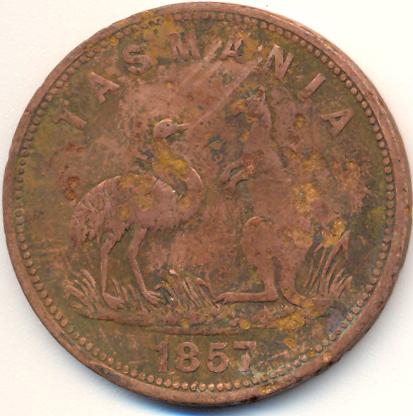 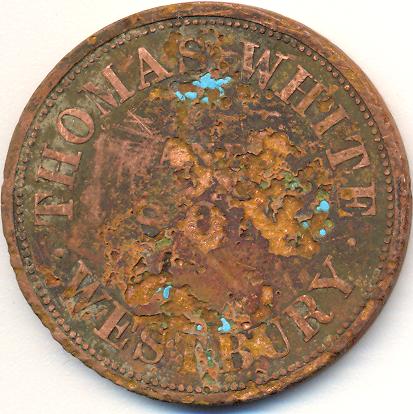 At least the verdigris isn't ignoring me anymore! Check it out - it turned blue and dissolved away! This is the result after a half-hour-long soak, with a solution replacement halfway through - far longer than your typical verdigrized coin ought to need, but still not quite long enough to wash away all the blue stuff. Still, it seems to be completely gone from the obverse (emu and kangaroo side) and it shouldn't take much effort to remove the remaining stubborn spots. There are, of course, serious craters where the verdigris disappeared from - but I expected that. I don't think there is any way of removing verdigris without leaving pitting behind. Again, a warning - the ammonia I used was quite strong. I was doing this test in an industrial fume cupboard; I took one inadvertent whiff of the concoction, and my nose stung for hours afterwards...  Anyway, some more "trial and error" needs to be done, to see if the verdigris comes off a "raw" coin (i.e. one that hasn't been soaked in olive oil, citric acid, etc.) without damaging the toning, and whether diluted, commercial-grade ammonia solutions can do just as good a job. Don't say "infinitely" when you mean "very"; otherwise, you'll have no word left when you want to talk about something really infinite. - C. S. Lewis
|
|
Pillar of the Community
Australia
1262 Posts |
Very interesting Dr. sap
Thanks for keeping informed
|
|
Moderator
Australia
17006 Posts |
I gave it another hit with some more ammonia this morning - all the blue is gone, now.  It looks exactly the same, otherwise, so I'll save everyone's bandwidth and skip a final picture. ConclusionsIs the coin more valuable, now I've cleaned it? No. (Not unless I sell it on ebay with a very fuzzy picture!  It may not look "green" anymore, but it sure does look "cleaned". Has the appearance been improved by the cleaning? Qualified yes. I could probably have done a bit more homework and erased the verdigris while leaving the undamaged surface more intact. And the orange-brown pits left behind are ugly and unattractive, without a doubt. But the verdigris was unattractive, too, and not cleaning it (i.e. leaving the verdigris there) would have been detrimental in the long run - the next generation would likely have inherited a crumbly green lump that might have been a coin once. Is the coin something I'm proud to keep in my collection? Sure, why not - I don't have any other tokens from Westbury. Is this the end of the story, for this token? For now. I'm going to have to keep and eye on it for a few years yet, to make sure the evil green is really gone, and not just in remission. Don't say "infinitely" when you mean "very"; otherwise, you'll have no word left when you want to talk about something really infinite. - C. S. Lewis
|
|
Pillar of the Community
Canada
1152 Posts |
wow keep us posted if you ever find a verdegris covered coin to purge again! wow wow wow! Now all you need to do is post before, and after pics, just like they do in weight loss clinics. You could even photoshop the "after" pic and make it look undamaged, so as to start a business doing it!
|
|
Pillar of the Community
Australia
1360 Posts |
Congratulations Professor Sap! I used your ammonia method, with lots of success. You should patent it! I had to use the mild ammonia that is available in supermarkets, as it was all I had on hand. I ended up soaking the coins for twenty hours in the ammonia and found that it worked wonderfully. The pitting on some of the pennies looks pretty awful, I must admit, but then they didn't look too good covered with green either. I nearly had a heart attack when I saw the ammonia after twenty hours soaking, it was the most incredible, bright blue that I have ever seen. However, I think that we have defeated the dreaded verdigris! You may find, Sap, that I now contact you every time I have a coin problem, so you may regret being this helpful!  |
|
Pillar of the Community
Australia
1360 Posts |
Sap, I have a question for you. One of the pennies I soaked in ammonia is now an amazing shade of florescent orange! Almost glow-in-the-dark orange! Did any of yours turn that colour? Is it a possible side effect of the ammonia? I am at a loss to explain how it changed.  [:0] Hey! I've got an idea! I'll list it on ebay as a "rare, scarce, hard to get, one of a kind" and make lots and lots of money. When I've made my fortune, I'll split the profit with you 50/50, what do you think? |
|
Rest in Peace
United States
2668 Posts |
Thank you for an interesting and informative thread on your experimentation. I just have to come to the coin forum more often!  |
|
Moderator
Australia
17006 Posts |
Yes, parts of the coin I worked on above have gone orange, in the pits left behind by the verdigris - you can see it in the final scan above. A tip I got from the googled sites on verdigris removal might be worth a try: buffer the ammonia by dissolving some table salt (sodium chloride) in it. I never got around to trying that, because straight ammonia did the job for me. Is the orange one by any chance a Perth Mint coin? Those often turn up with "natural" bizarre colours (must have been the alloy they used over there) and it wouldn't surprise me in the ammonia treatment enhanced this. Some tips to keep a coin with verdigris as original-looking as possible: - If the verdigris spots are only in a small area, don't soak the whole coin - use a cotton swab soaked in the solution to attack the verdigrised area directly. - Only soak the coins for the minimum time necessary - 20 hours seems quite a long time to me, but I don't know how much time diluted ammonia takes to work. - Give the coins a thorough wash in water after cleaning, and dry them as quickly and thoroughly as possible. - Some of the protective oxide layer may well be removed by ammonia, leaving the surface "activated" and prone to sucking up anything nasty from the atmosphere. Try keeping the cleaned coins sealed up in an airtight box, with some silica gel to keep the moisture down. Again, don't do this en masse to your entire collection - only treat damaged coins. And before you do too much more experimentation, it may be best to keep the treated coins (especially the orange ones!) aside for a couple of weeks to watch for any more nasty "side effects"! Don't say "infinitely" when you mean "very"; otherwise, you'll have no word left when you want to talk about something really infinite. - C. S. Lewis
|
|
Pillar of the Community
Australia
1360 Posts |
Hi Sap,
I only did it to the absolutely worst coins imaginable, so that no matter what happened it wouldn't matter. Also, the 20 hours shocked me too. I kept checking them constantly, but nothing happened. Eventually I gave up and went off to bed for the night, deciding that if nothing happened overnight, then nothing was ever going to happen. I'll keep an eye on them for a while before I try my next batch.
Thanks for your help.
Edited by Snooba
08/04/2006 05:01 am
|
|
Pillar of the Community
United States
4589 Posts |
wow that was very interesting, what about the concept of combatting an acid with a base (baking soda), And I have used hot sauce to clean mild cases however it will leave th copper with a pinkish hue,
thanks for sharing SAp.
|
|
Pillar of the Community
Canada
1152 Posts |
I have this brazilian coin, from the 20's, and it has some verdegris on it. It is not particularly valuble, and I suspect it is made of copper nickel... any ideas on how to get that green stuff off?
andrew
|
|
Moderator
Australia
17006 Posts |
Cupronickel doesn't verdigrize (I think I just invented a new verb) easily, but it can happen. I don't think it's as "contagious" as it is on bronzes and coppers. It might pay to make sure it's "real verdigris" and not just PVC residue - give it a swish in acetone first. If that doesn't remove the green, then try treating it with something harsher if you like. Any of the suggestions in this thread (or in links you can find in this thread) would be worth a shot.
Don't say "infinitely" when you mean "very"; otherwise, you'll have no word left when you want to talk about something really infinite. - C. S. Lewis
|
|
Valued Member
New Zealand
227 Posts |
Wow Sap this whole thread is fantastic and very educational  |
|
Pillar of the Community
Canada
1152 Posts |
what other cleaning products would work, and where can I get some?
Andrew
|
|
Pillar of the Community
Australia
2830 Posts |
Sap, how did this end up ?
Peter in Darwin
|
| |
Replies: 32 / Views: 15,382 |







 First Page


 Posted 08/02/2006 11:25 pm





