Nice, hokiefan_82!
Following the French Revolution in 1789, the new government confiscated property belonging to the church and nobility. But they needed
money, and selling off the confiscated lands, houses, and goods was tedious and time consuming. Better then to capitalize the assets by selling rights to take part in the future realization of the riches - the
assignat was born. By purchasing an assignat from the government, the buyer was "assigned" a fraction of the property - and everyone "knew" the church had immense riches, so everyone wanted their share. Money flowed in to the treasury and the assignats soon took the function of banknotes. Their value was backed by the assumed value of confiscated property, in 1789 estimated to 3.5 billion livres. The assignats were a success and all was fine.
Of course, eventually, the government found it needed more money than the 3.5 billions. So, maybe the confiscated property was actually worth 10 billions? Hm, yes, probably! - and more assignats could be issued. In 1796 the estimate was up to 40 billions . . . People saw through this and the initial enthusiasm gradually changed into distrust. The value of the assignats fell successively, far below the nominal value. Towards the end of the assignat era, in 1796, their real value was down to a few per cent of the nominal.
Here is an early assignat from 1792, the last year of the constitutional monarchy (the republic was proclaimed Sept 22 the same year and the king was guillotined in January 1793).
France 1792, assignat 50 livres.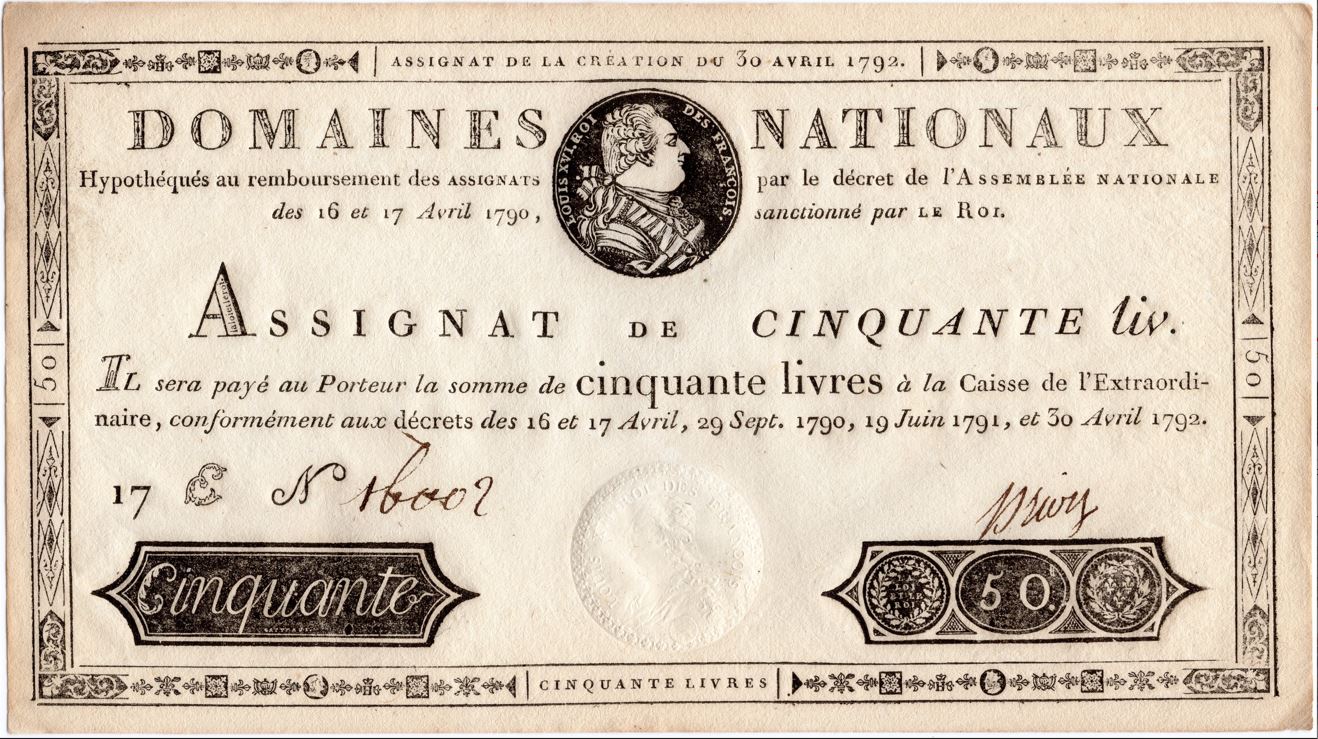
The reverse is blank.
Top center, we have the king's portrait, surrounded by the text LOUIS XVI ROI DES FRANÇOIS (Louis XVI King of the French). Next to him, DOMAINES NATIONAUX (literally National Domains, refering to the confiscated property). The rest of the text in short states that this is an assignat, mortgaged to repayment with a value of fifty livres, conforming to various decrees.
The assignat is signed
Brioy, one of many clerks assigned to that task. Initially, the assignats were signed manually, but by 1792 the signature is printed. The serial number (16002), however, is handwritten (a numbering machine was constructed and used for later assignats, but in 1792 there was still need for a cadre of clerks with good handwriting and stamina).
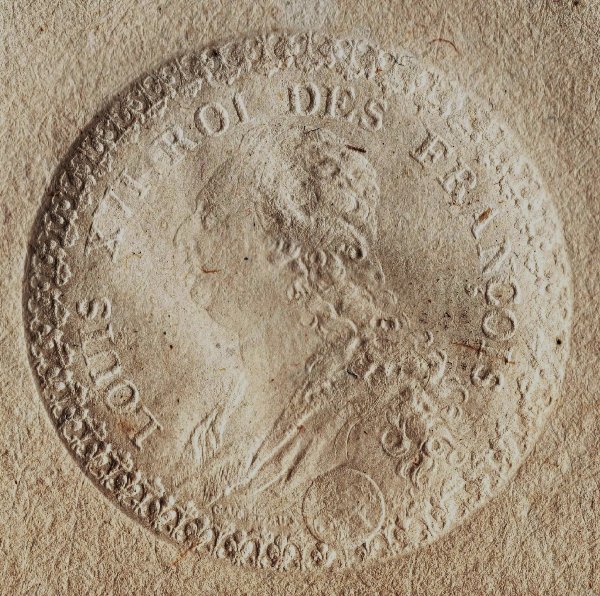
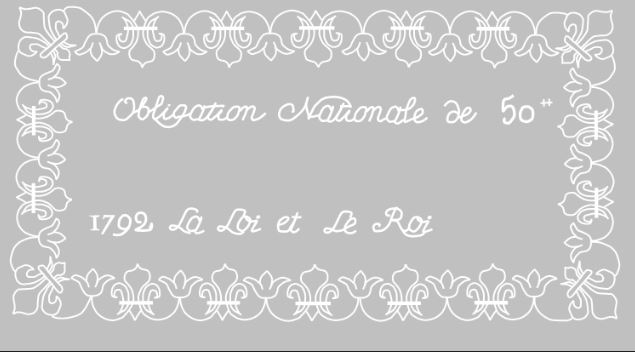
Security features include watermarked paper and a dry stamp. The dry stamp shows the king in relief:
The watermark I cannot catch with my camera, but here it is from the site
https://assignat.fr/1-assignat/ass-28a (copyright Jean-Luc Buatheir):








 First Page
 Previous Page


 Posted 06/16/2024 1:37 pm