| Author |
 Replies: 13 / Views: 2,242 Replies: 13 / Views: 2,242 |
|
|
Valued Member
United States
153 Posts |
|
|
|
|
Moderator
 Australia
17005 Posts |
Lead is too soft to be used in any kind of die - it would just squirt out under pressure.
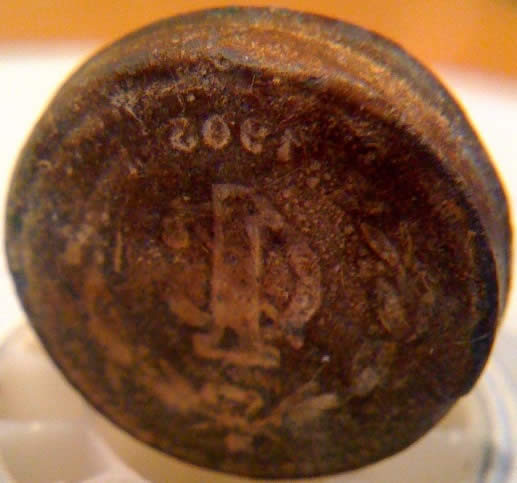
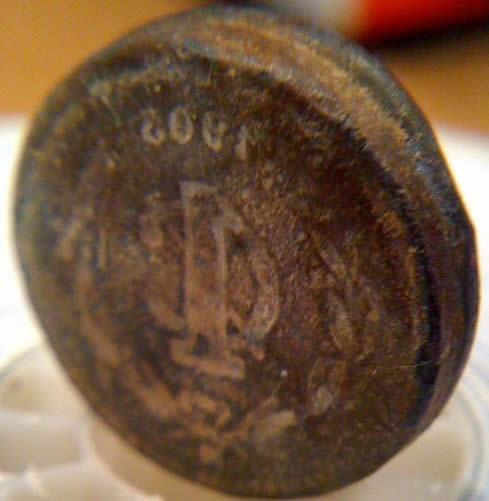
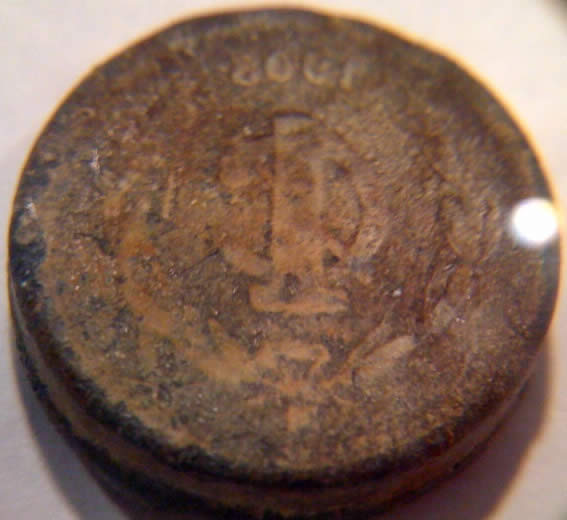
I would assume - and I'm really only making an educated guess here - you've got (part of) a mould for making a cast copy... unless there are genuinely cast coins from this period that I'm not aware of.
Don't say "infinitely" when you mean "very"; otherwise, you'll have no word left when you want to talk about something really infinite. - C. S. Lewis
|
|
Pillar of the Community
United States
5362 Posts |
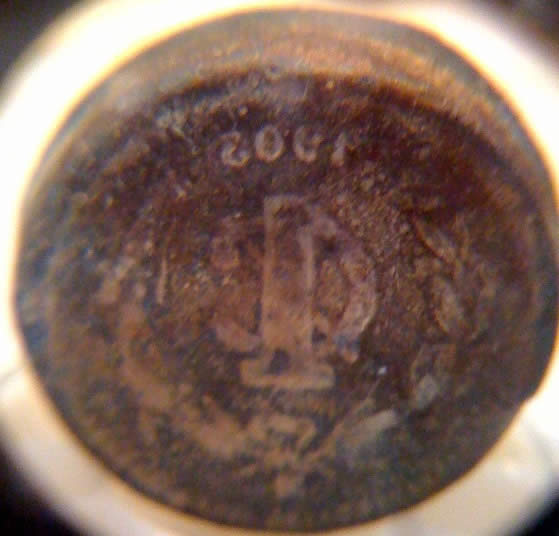
Looks like a transfer impression to me - an impression in metal of a real coin. The most common method was impact transfer using a shotgun shell as the force. The coin (or half a coin) is mounted on a steel rod and the assembly is fired into a smooth metal surface. They use a cylinder to contain the explosive force. The impression of the coin is transferred to the metal "reversed" creating a die. This "die" is often too soft to be directly used as a coin striking die but some were. Soft steel can be used with copper or silver coins. The steel can be hardened for striking. These transfer impressions can also be used to cast copies. They can make good copies in this way but the impression is weak or stretched at the edges and stronger at the center - depending on the strength of the sheet of metal.
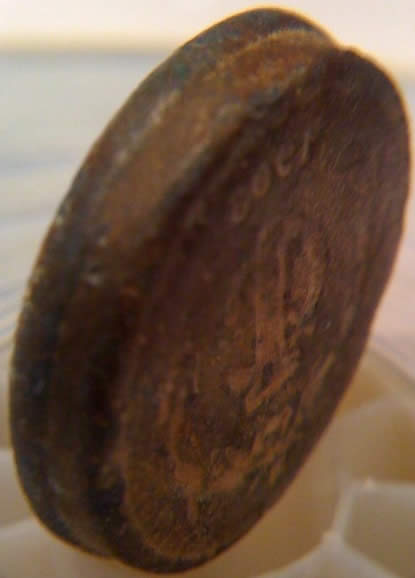
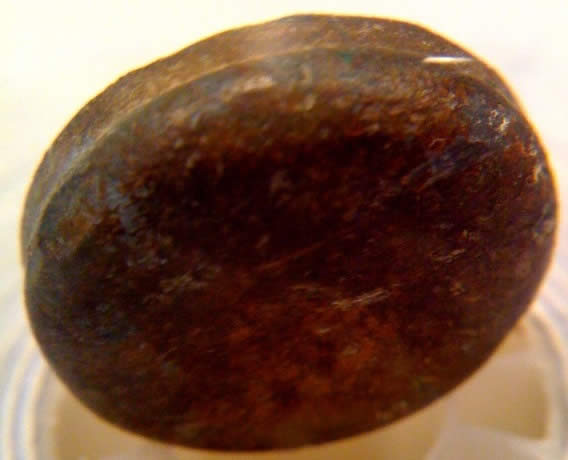
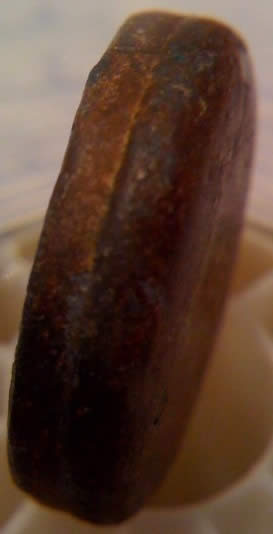
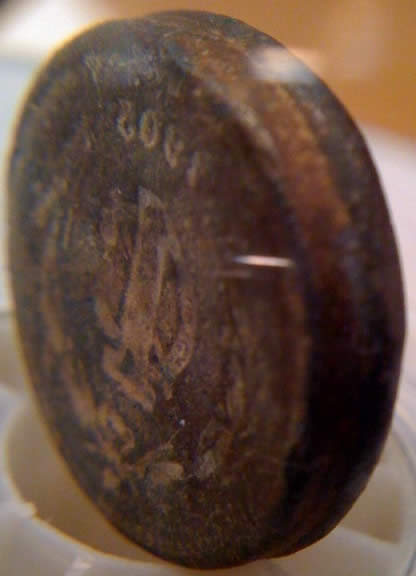
That said I wonder how it would be used. I noticed that the backing appears to be slightly larger than the coin impression. I don;t know why but perhaps it fir into the other side of a mold pair.
In this case, the description of the metal is the thing that makes no sense. Lead is not used even in most molding applications because it melts at too low a temperature. It is also far too soft for striking.
Perhaps this negative image was used to make a copper deposition positive shell which could then be backed up with a harder material that could then be used to make ceramic or plastic molds. Coopper is more heat restistant than either lead or white metals and can be backed up with white metal to make a striking die.
|
|
Valued Member
 United States
153 Posts |
Thanks guys! Does this sort of item carry a special value or is it just a lump of lead? If it carries value , what is it worth?
|
|
Pillar of the Community
United States
5362 Posts |
I am not 100% sure of the legality of owning a "forgery artifact" but I suspect no one cares in this case. But legality asside - counterfeit dies (old ones) can be of significant value. I have seen earlier versions from the 1880s sell for well over $100. Just be careful how you sell it. With ebay, their rules on counterfeits are VERY strict and just because you properly identify what this artifact may be - they could terminate the auction. |
|
Valued Member
United States
153 Posts |
Thanks guys! Does this sort of item carry a special value or is it just a lump of lead? If it carries value , what is it worth?
|
|
Pillar of the Community
United States
5362 Posts |
I would guess $50 to $100.
|
|
Valued Member
United States
153 Posts |
Thanks for the info swamperbob. I could be mistaking the metals. How can I find out what this thing is made out of? A jewler? I have asked a couple of buddies that have coin shops but neither of them knew what this was nor what it is made of.
|
|
Pillar of the Community
United States
819 Posts |
why would someone want to counterfeit a 1 centavo coin, even back in 1903?
|
|
Pillar of the Community
United States
1801 Posts |
You would fake a 1903 1 centavo to sell to coin collectors as a rare trial coin, That style 1 centavo didn't start production until 1905 if memory serves me right.
|
|
Pillar of the Community
United States
5362 Posts |
jfransch The KM 394 was made 1899 to 1905. That coin uses the older style eagle like the one on the Peso of the same era. The coin you are thinking of is the KM 415 with the more modern looking bird which was on the peso in the 1920s to 49s.
In 1903 a centavo was still worth something. There was a very common forgery of the US cent dated 1893 that was discovered in 1895 or so. It would be a similar profit to cost ratio as the Henning nickel in the 1950s.
|
|
Pillar of the Community
United States
1801 Posts |
Thanks for the correction Swamperbob. I was thinking Estados Unidos instead of Republica.
|
|
Pillar of the Community
Mexico
1304 Posts |
This thread REALLY caught my attention...I have seen copper blanks right next to counterfeits in Hacienda detecting finds.
I live in amongst many haciendas and many of them are still active. I can easily imagine a laborer holed up in a back corner of the hacienda creating counterfeits. Depending on what part of the country your hacienda is in, copper in the area might have been EXTREMELY low cost. If the materials for casting are on hand (example sand, clay etc) I would not be surprised to see them make counterfeits.
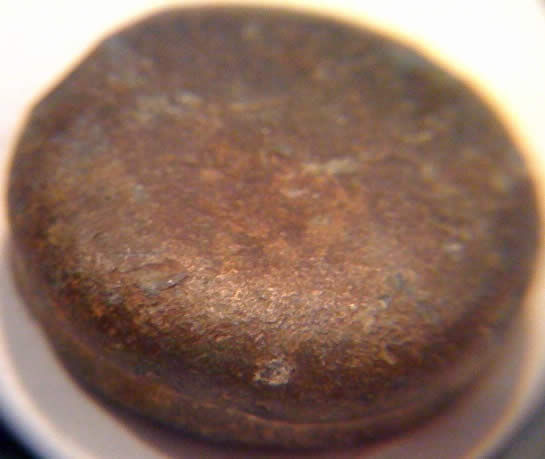
I can easily imagine what you have is a die used to make an impression for one side of a cast copy process. The lead would act as a shock absorber to prevent a "shadow" or "double strike" impression that would happen with a harder metal that would bounce. The sides are smooth like the side of the centavo and the "mushroom" rim of the top would help the craftsman know how deep to make the impression.
Just my 2 centavos worth.
|
|
Valued Member
United States
153 Posts |
Thank you Harrison2 for the info, this was found in the north around Durango. I did a lot of metal detecting there at different hacienda ruins and I have found many unique interesting things including gold, silver & copper rings, earings, "casquillos", machine pieces, coins and now I can add fake die molds to the list. What part of Mexico have you searched in?
|
| |
Replies: 13 / Views: 2,242 |
|











 Posted 02/01/2010 9:24 pm


