









 Posted 04/10/2010 5:09 pm


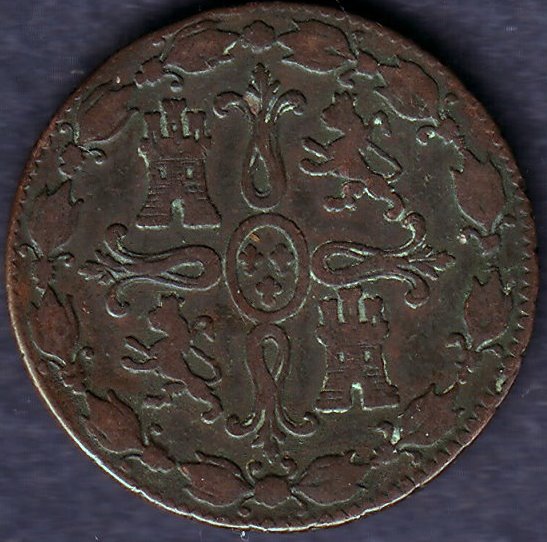
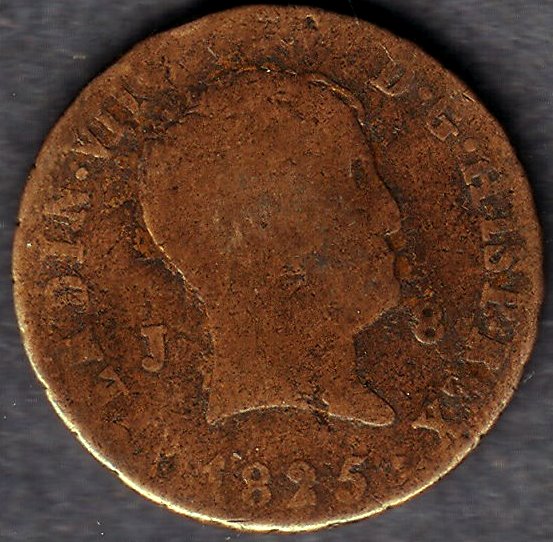
The first coin is a coin of Spain with the denomination of 8 maravedis. it was issued in the name (and with the effigy) of king Ferdinand VII.
It bears the mintletter J of the Jubia Mint.
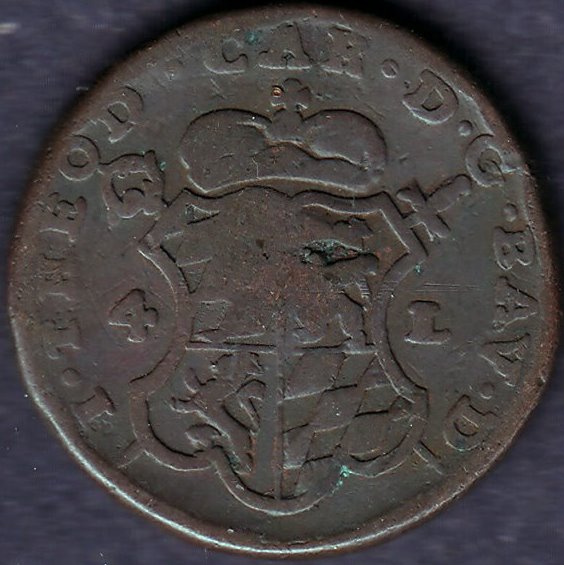
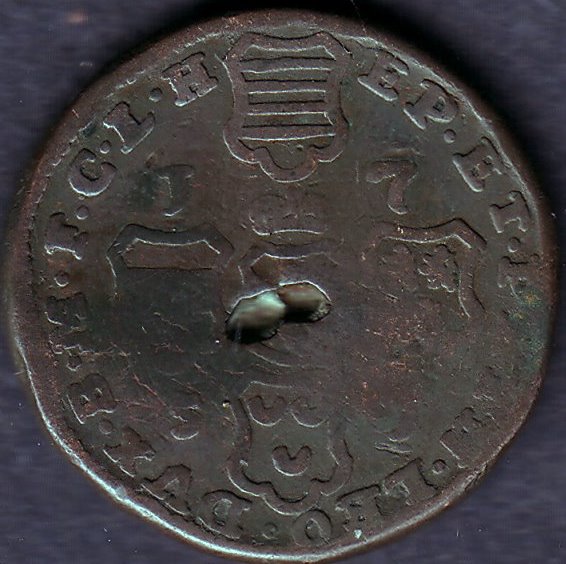
The second coin is a 4 liard coin, struck for the prince-bishopric of Liege (nowadays in Belgium). It was struck in the name (and bears the weapon of) John Theodore of Bavaria, prince-bishop 1744-1763.
Legends say: I(ohannes) THEOD(orus) CAR(dinalem) D(ei) G(ratia) BAV(ariae) D(ux) EP(iscopus) ET PRIN(ceps) LEO(dinium) DUX B(ullensis) %(arquis) F(ranchimontis C(omes) L(ossensis et) H(ornensis): John Theodore, cardinal, by the grace of God duke in Bavaria, bishop and prince of Liege, duke of Bouillon, marquis of Franchimont, count of Loon and Horn.
John Theodore was a member of the Wittelsbach family, the great rivals of the Habsburg family in the Holy Roman Empire. In the Netherlands they hold hand of the important prince-bishopry of Liege, whilst the Habsburg family owned the rest of the Southern Netherlands, better known as the Austran Netherlands.
It bears the mintletter J of the Jubia Mint.
The second coin is a 4 liard coin, struck for the prince-bishopric of Liege (nowadays in Belgium). It was struck in the name (and bears the weapon of) John Theodore of Bavaria, prince-bishop 1744-1763.
Legends say: I(ohannes) THEOD(orus) CAR(dinalem) D(ei) G(ratia) BAV(ariae) D(ux) EP(iscopus) ET PRIN(ceps) LEO(dinium) DUX B(ullensis) %(arquis) F(ranchimontis C(omes) L(ossensis et) H(ornensis): John Theodore, cardinal, by the grace of God duke in Bavaria, bishop and prince of Liege, duke of Bouillon, marquis of Franchimont, count of Loon and Horn.
John Theodore was a member of the Wittelsbach family, the great rivals of the Habsburg family in the Holy Roman Empire. In the Netherlands they hold hand of the important prince-bishopry of Liege, whilst the Habsburg family owned the rest of the Southern Netherlands, better known as the Austran Netherlands.


