| Author |
 Replies: 24 / Views: 14,037 Replies: 24 / Views: 14,037 |
|
Pillar of the Community
United States
870 Posts |
Hello, folks - first post... First thanks in advance for your kindness and assistance - I've been doing some reading and there are some really cool people here with beautiful collections! While I was looking through my collection, I found this crown I purchased some 15 years ago when I was a bit younger and more naive. I was looking at the coin carefully, and the coin may have a wax cap - as if it were cast, rather than struck. I'm aware of the pewter reissue of this coin, but this one has great patine and the seller labeled it AVF. I'm not concerned about the grade (I'm not interested in selling) so much as whether or not it is real. These are admittedly not the most brilliant images, however, I hope that they describe the potential problem in sufficient detail. Obverse: 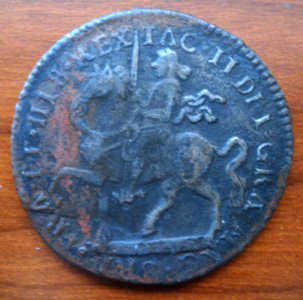 Reverse: 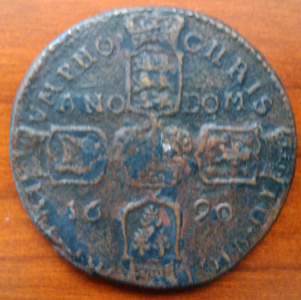 Obverse (low angle): 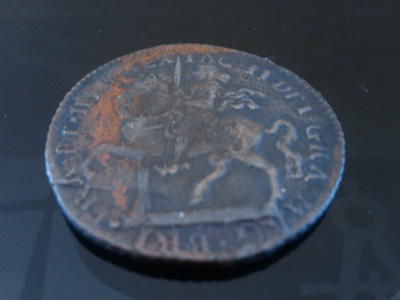 Reverse (low angle): 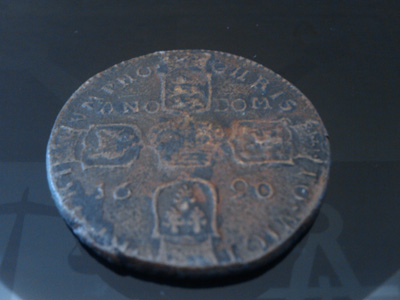 Reverse (low angle - note "cap" beneath 1690: 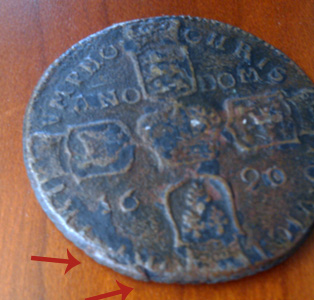 The coin has a very nice "weight" - though I can't give you the data. I was under the impression these coins were struck, not cast. I've reviewed a number of images of coins like this and haven't come across anything protruding from the edge, as this. Well, was I taken? =) Thank you again for your kindness and assistance. I hope that as my knowledge in this hobby grows, I may be able to contribute with value! Edited by delaner
05/04/2010 1:46 pm
|
|
|
|
Pillar of the Community
 United States
870 Posts |
Ah - forgive me (I'm a noob) - my pictures don't show scale. For what it's worth, the radius of this coin is about the size of a modern American half-dollar. It is thicker in the middle than it is at the rim. =)
|
|
Pillar of the Community
United States
731 Posts |
Irish Gunmoney was milled.
Your specimen looks a bit questionable. IMO the surfaces appear cast.
|
|
Pillar of the Community
United States
870 Posts |
Ah! FASCINATING! I've done a bit of reading up on the milling process... Thank you for that information. So that I might better understand and learn - what in the surface of the coin appears cast rather than milled?
|
|
Pillar of the Community
United States
870 Posts |
Still struggling with this one - while it appears it could be sandy or porous, it seems I purchased it many years ago from a very reputable dealer. Are there known counterfeits of these?
|
|
Pillar of the Community
United States
870 Posts |
I thought I might submit new pictures that are more in-line with my photographic "standard" (the same method as all the other pictures I'm taking for this forum) Again - my concern is that this looks like it may be cast, but I purchased it many years ago from a reputable dealer. Does anyone have experience with counterfeits of this type?  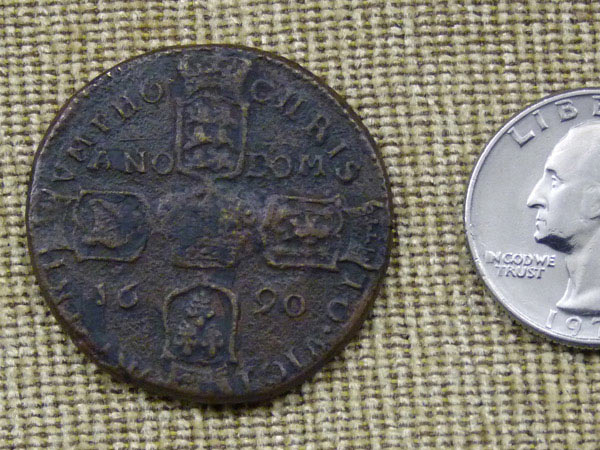 |
|
Pillar of the Community
United States
2605 Posts |
I found an example on Coin Arcives, it is very porous as well. Even more! |
|
Pillar of the Community
United States
870 Posts |
|
|
Valued Member
Portugal
130 Posts |
If it was me I would buy it also ,nice piece.
|
|
Pillar of the Community
United States
870 Posts |
 Thank you, jlcarvoeiro. That helps! |
|
Valued Member
United States
321 Posts |
Cool coin. I was at the coin club tonight and a man brought in one of the same date but different rev. Still, a very nice coin!
|
|
Pillar of the Community
United States
870 Posts |
Wow - thread resurrected... I think this was my very first thread here!
That's cool satwxd! I saw one at the LB Coin show recently, and it reminded me how cool it really is. I have determined since that I'm pretty darned sure it's authentic, after playing with lots of old coppers. It's just corroded and has some gook on it.
I love these "real" coins. They're gigantic in your hand and have real weight to them. They feel so cool! You get the impression this thing was WORTH something back in it's day.
I just bought an Portuguese 1830 40 Reis from the same folks out of their $1 bin, and man is it cool. It doesn't look like much, it's just a giant worn out piece of copper, a lot like this. I really dig that. They're fun to play with! (Though the gun money doesn't get played with often.)
|
|
New Member
United States
5 Posts |
The "crud" shown on the Irish Gun Money Crown, looks consistent with deposits left when a coin has gone through a fire. As far as authenticity, I don't see anything that makes me suspicious. I just don't like to have coins that have serious problems in my personal collection.
You still have a coin with a real neat history behind it and take pride that not many collectors have these in their collections. Many have never heard of or seen Gun Money.
|
|
Pillar of the Community
United States
870 Posts |
A fire you say, eh? That's interesting!! What makes you say that? At this point I had simply assumed it was dug.
|
|
New Member
United States
5 Posts |
I have worked several collections after a fire and this looks consistent with large cents I have seen.
For starters, the "crud" is usually something like plastic, cloth or similar flammable material next to it that burned and left these deposits. These are notable on the reverse in the crown and shield to the left of the crown. If you delicately chipped some of that off, the metal beneath will probably be reddish color from being hot. The same effect can be seen on the obverse between the horses front legs. Also, the pitting can be caused by heat or ground contamination. Since other factors look like fire damage, I first suspect pitting from excessive heat, but it could be a combination.
|
|
Pillar of the Community
United States
870 Posts |
Fascinating - yeah, I was wondering about the red splotch on the obverse. Is it worth brushing a little acetone around one this one?
|
| |
Replies: 24 / Views: 14,037 |







 Posted 04/28/2010 10:37 pm





