| Author |
 Replies: 21 / Views: 6,303 Replies: 21 / Views: 6,303 |
|
Pillar of the Community
Canada
1733 Posts |
Anyone else have one that's this yellow? I've been flipping through photos all day. Don't have an accurate weight yet. Thoughts? 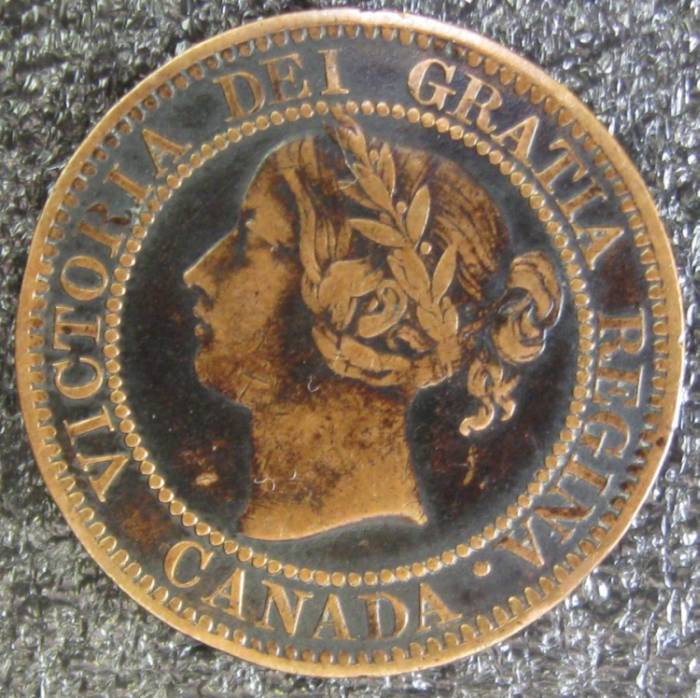 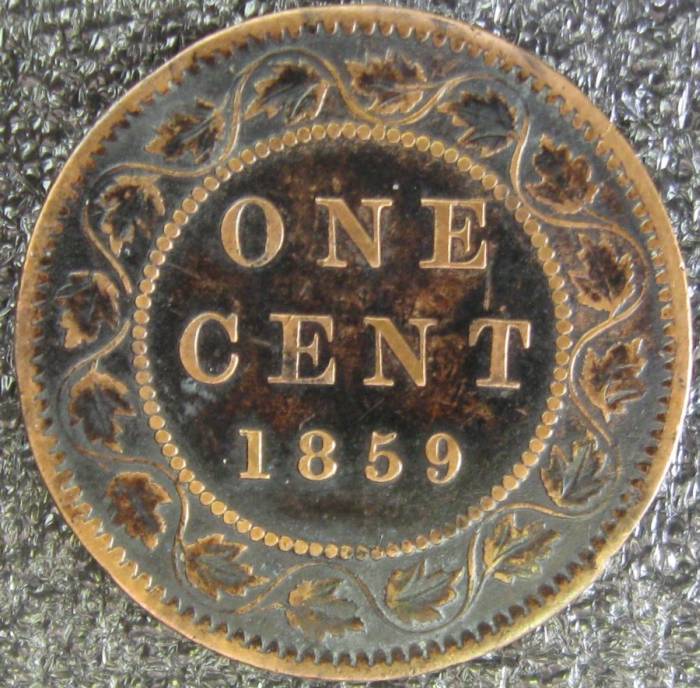 |
|
|
|
Pillar of the Community
Canada
1248 Posts |
scratch it somewhere to see what you are looking for...the only way to know....I think
i touch wood......( my head)
send it to me and I do it for you...lololo
|
|
New Member
Canada
8 Posts |
Is there a conductivity test or similar that can be done to determine copper content or other components levels? Charlton only lists the percentages for the copper version?
|
|
Pillar of the Community
 Canada
1733 Posts |
lol HH. I wasn't actually thinking this was brass as per the earlier thread here https://goccf.com/t/64577What is fascinating about this is that there are changes in the alloys throughout this series simply due to bad workmanship. Yeah I know, most people like to variety hunt these coins and I'm only interested in the metallurgy . The problem is I'm going to have to destroy a few so close your eyes and look the other way. I'll try and use damaged ones. |
|
Moderator
 United States
15941 Posts |
That is one lovely coin Ugly .....
I'm no help on the color .... just my best wishes for whatever you hope to discover about it.
David
Take a look at my other hobby ... http://www.jk-dk.art |
|
Pillar of the Community
Canada
1733 Posts |
Hi jeavesy1, welcome to coin community. Quote:
Is there a conductivity test or similar that can be done to determine copper content or other components levels? Charlton only lists the percentages for the copper version?
I have some decent load test equipment but testing electrical conductivity is at the other end of the spectrum for what I have equipment wise. A brass coin will have a different density and a bright yellow colour, more yellow than this. I have primitive gear and I want to know exactly what the composition is so that means destructive testing. Some of the alloy batches didn't get made correctly resulting in differences in the alloys that range from brass with high levels of zinc all the way to bronze (normal) with low levels. All contain some tin, all contain some trace lead that I have found so far. Anyhow, I'm going to buy up all the holed or damaged that I come across for the next few years and do a large sample. |
|
Pillar of the Community
 United States
1372 Posts |
In many cases toning makes it very tough to tell from the color and you cannot tell from the weight (the specific gravity of brass and bronze are too close to the same). Here is one that is fairly obvious from the color alone. :)) 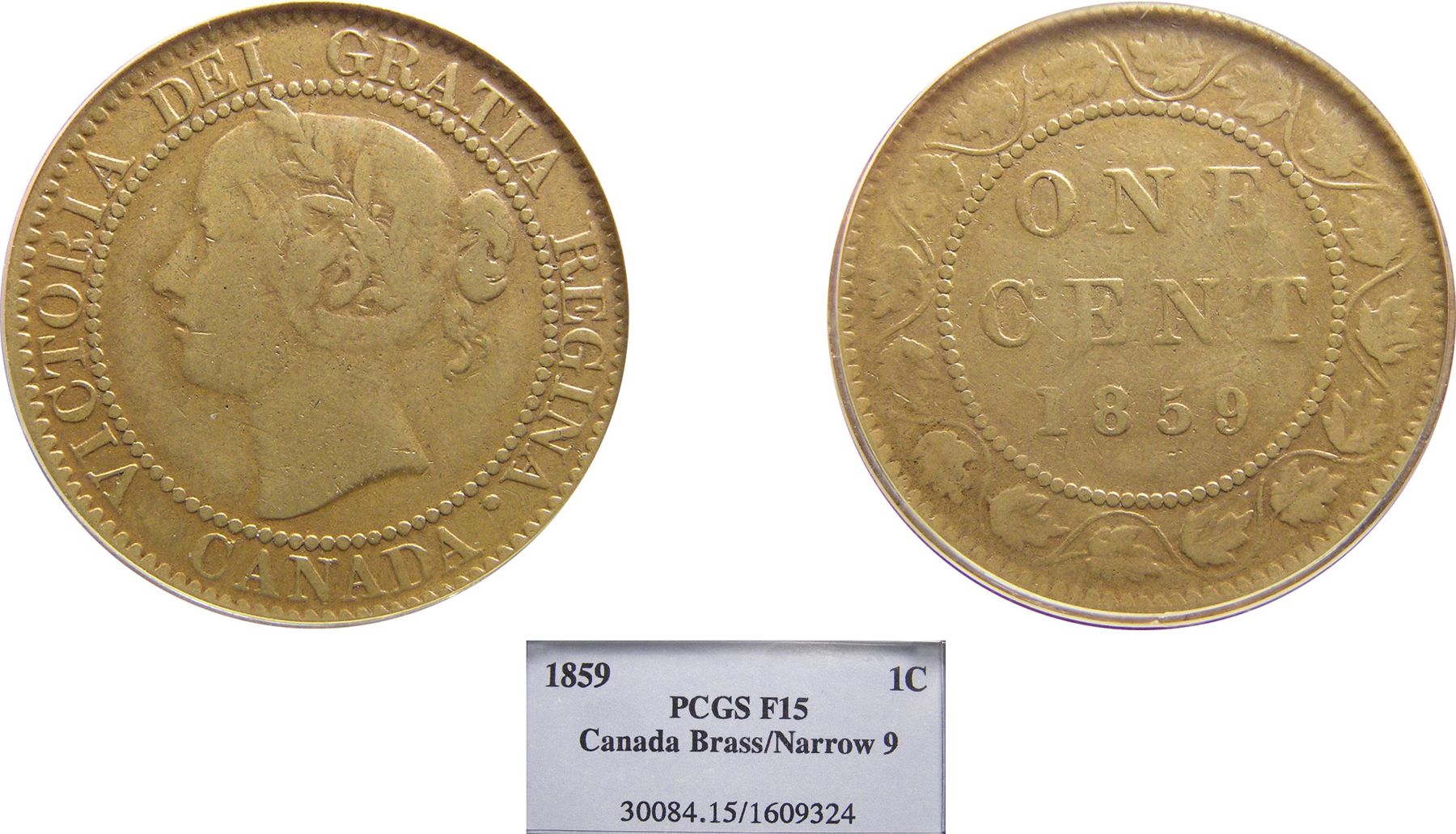 http://www.victoriancent.com2011 & 2025 Fred Bowman Literary Award, 2025 Guy Potter Literary Award, 2022 Paul Fiocca Award, & 2020 J. Douglas Ferguson Award. Life Member of RCNA.
|
|
Pillar of the Community
Canada
1733 Posts |
I saw that pic in your previous post, thanks boxox. As I said I already know I don't have a brass penny but I'm betting that if I were to turn it to vapour I would find it's not the exact component values put out in the guides. There's been a lot of deviation and a lot more lead show up than I expected (even though they almost always tossed in some back then). Oh to be a fly on the wall at Heaton and Sons.
|
|
Valued Member
United States
287 Posts |
Nice coins, even if the one is yellow. LOL. Certainly makes it different. :)
|
|
Pillar of the Community
United States
1372 Posts |
Ugly - I used to think there was a lot of variation even in bronze cents. Then I had two bronze cents spectro'd. Both were 95/4/1. One had a minor (<<1%) of lead.
http://www.victoriancent.com2011 & 2025 Fred Bowman Literary Award, 2025 Guy Potter Literary Award, 2022 Paul Fiocca Award, & 2020 J. Douglas Ferguson Award. Life Member of RCNA.
|
|
Pillar of the Community
Canada
1733 Posts |
That is very interesting Bosox. There's no decent published study on this that I could find. I need a sample of 100 units to even give enough of an indication that it's even worth investigating further. I've seen higher lead concentrations though, certainly more than trace picked up from moving down the channels during founding. There is some minor sampling of other Heaton planchets and we know they kept lead stock around and that it was a cheap filler.
|
|
Pillar of the Community
Canada
1248 Posts |
Bosox, how did the TPG determine that it is brass? Just by color? |
|
Pillar of the Community
United States
1372 Posts |
The dealer (who I know and respect) who submitted it told me it was submitted with a spectro result of 85% copper. I suspect PCGS did their own spectro verification, but don't know for sure since I did not submit it.
http://www.victoriancent.com2011 & 2025 Fred Bowman Literary Award, 2025 Guy Potter Literary Award, 2022 Paul Fiocca Award, & 2020 J. Douglas Ferguson Award. Life Member of RCNA.
|
|
Pillar of the Community
Canada
1248 Posts |
Sure would love to see the analysis results, and how they did it.
I know from German east Africa 20 Heller coins that it is nearly impossible to determine which metal it is UNLESS you remove samples and have these analyzed. Or use chemical agents to remove all surface patina nd other properties on the surface to get to base metal. In Germany they use a small scratch somewhere on the side of the rim to obtain material for analysis. This is normally done by a certified and court appointed Coin appraiser. he will 5then certify one way or another and indicating the analysis in his report.It is to be noted the coin is NOT sealed when given back, Only described.
|
|
Pillar of the Community
Canada
1733 Posts |
Spectrographic analysis is a blanket term that usually involves destructive testing. The advances in spectrographic analysis have all surrounded the quantity of material needed being decreased, the available reagents becoming more targeted to the likely alloy etc... Even rapid high tech machinery simply vapourises a sample with a laser in a chamber with inert gas so that it can be analyzed.
The point I suppose is you can't just look at an alloy and figure out what it is, somewhere down the line whether you use X-ray, infrared or visible light etc you need a small destructed sample.
This is all high tech of course, there are still old fashioned methods that involve basic chemistry you can do in primitive lab conditions, much like portable assay kits used in gold scrap dealing etc...
|
|
Bedrock of the Community
United States
12437 Posts |
Sample destruction is not necessary if you utilize the proper testing equipment  XRF spectroscopy will give you a nondestructive elemental analysis but it would not be cost-effective for a low value coin. |
| |
Replies: 21 / Views: 6,303 |







 Posted 05/17/2010 9:00 pm





