| Author |
 Replies: 13 / Views: 2,182 Replies: 13 / Views: 2,182 |
|
|
Valued Member
United States
203 Posts |
i cam across this nickel at work today its most likely nothing but its weird none the less 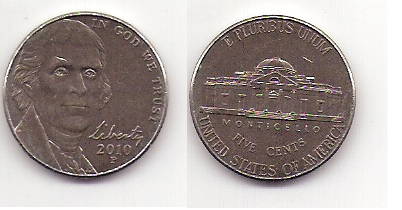 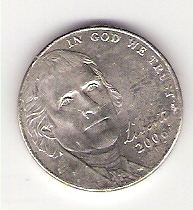 added for comparison Edited by hybrid
07/27/2010 10:26 pm
|
|
|
|
Bedrock of the Community
United States
12437 Posts |
Is it lustrous like a normal unc nickel or dull?
|
|
Valued Member
 United States
203 Posts |
its lustrous its it shines in the light the you can see the light reflections from the scanner specially on the nicks above his eye and the Monticello building
|
|
Pillar of the Community
United States
4846 Posts |
|
|
Valued Member
United States
203 Posts |
well maybe not technically black added a regular nickel for comparison
|
|
Pillar of the Community
United States
4212 Posts |
I have an album of just black nics. I imagine it's all, or most enviromental.
|
|
Bedrock of the Community
United States
12437 Posts |
Unfortunately, it is impossible to judge luster from scans alone. Normally, I would think "environmental damage" and just move on but this is one of the elusive 2010 nickels so it has not been in the wild very long for it to have sustained environmental damage. A dark, but lustrous, appearance can indicate a sintered or improperly annealed planchet error. They key is that the coin must have a lustrous appearance with a cartwheel effect just like a freshly minted normal coin, environmental damage or a coating would dull the luster. The darkness can be caused by leaving the planchets in the annealing oven too long(planchets are heated before striking to soften them) or a fine coating of metal dust adhering to the planchet in the annealing oven which then bonds to the surface of the planchet. Because this happens before the coin is struck the striking of the coin imparts luster to an otherwise dark coin.
|
|
Valued Member
United States
203 Posts |
what do you mean by cartwheel effect?  something like this? Edited by hybrid
07/28/2010 02:13 am
|
|
Bedrock of the Community
Australia
21792 Posts |
I think it could be post mint environmental damage of a chemical nature. Metals can tarnish in an oxidising environment. Oxidising agents are those chemicals that carry oxygen (obviously logical), but other oxidising agents are those chemicals that carry chlorine or sulphur. Metallic sulphides are often very dark or black in colour. Since a nickel is 75% copper, I would suspect that the coin has a very thin coating of (mainly) copper sulphide.
|
|
Pillar of the Community
United States
2752 Posts |
A black color is one of the tints associated with improper annealing. Prolonged exposure to the heat of the annealing drum, or a failure to maintain a low-oxygen atmosphere, are what the Mint says causes it.
Error coin writer and researcher.
|
|
Valued Member
United States
203 Posts |
Found another one 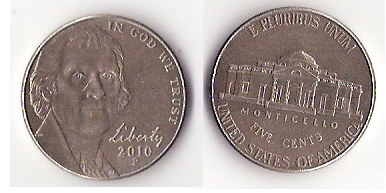 |
|
New Member
United States
2 Posts |
Just curious if there is a way to intentionally color nickels black. My younger brother loves finding these, and I'd like to "make" him some black nickels for his birthday :-)
Thanks@
|
|
Pillar of the Community
United States
613 Posts |
Just read in a book that the dark color comes naturally from an incorrect alloy mix. Way to much copper is used and colors range from blue, purple, to black. It goes on to say that these nickels are highly collected, but says nothing about added value. Anyone know if this is true?
|
|
Pillar of the Community
United States
8904 Posts |
Quote:
intentionally color nickels black A Sharpie will do it! |
| |
Replies: 13 / Views: 2,182 |
|







 Posted 07/27/2010 8:53 pm





