| Author |
 Replies: 11 / Views: 2,825 Replies: 11 / Views: 2,825 |
|
|
Valued Member
United States
314 Posts |
Ran across this 1865 3 Cent Nickel with at least three variety/errors on it. Obverse has what appears to be a nice die filled error in --ited St-tes of America legend, reverse has a nice "brockage"(?) at about 10:00, and there are a couple die breaks from the edge on the reverse. Interested to know if you agree and any comments you might have. Also would like to know what this might be worth. Is there a variety book for something like this? 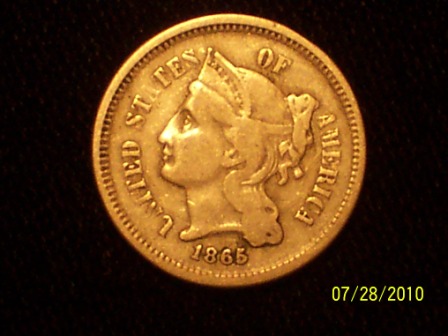 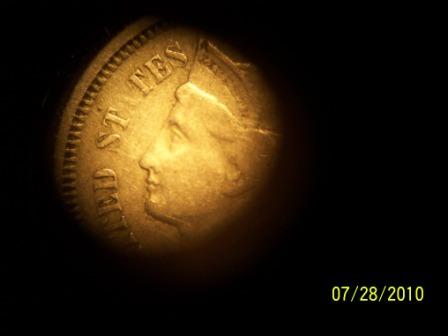 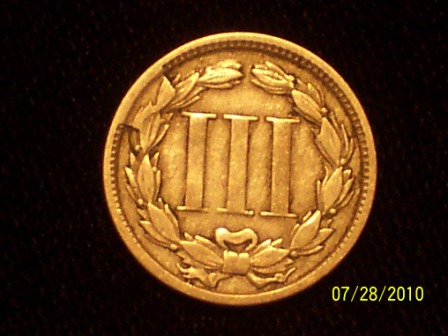 |
|
|
|
Bedrock of the Community
United States
17884 Posts |
I would agree that the weak A is probably due to a filled die. I don't think that is the case for the UNI. What you are calling a 'brockage" on the reverse is actually a Retained Cud. The reverse die has cracked from the rim through the leaf and back to the rim. That piece of the die has actually broken off but for some reason has been unable to fall away. Most likely it dropped dowm and has become jammed between the body of the die and the collar. Since the piece is still there, when the metal flowed into the void it was still able to make contact with the displaced piece of the die and receive at least a partial image. Since that piece of the die was at least partially missing the pressure of the strike was lower in that area resulting in insufficient pressure to cause the design to strike up on the other side of the coin. THAT is why the UNI is weak. There is a very good book on the varieties of the nickel Three Cent pieces. It was published something like 15 years ago and they only printed 250 copies. It is long out of print, rarely available, and expensive when it does show up. I believe there is another book that either came out recently or will in the near future but I don't expect it to be up to par with the previous book. In either case neither book could possibly illustrate all the different varieties of this coin series. |
|
Pillar of the Community
United States
2760 Posts |
I can try looking up the Cud attribution in 'The Cud Book' when I get home, but Cuds on these coins were very common because the metal was hard on the dies, and the dies had very short life spans as a consequence. As such, they are interesting, not too rare, but big ones can get a small premium. |
|
Valued Member
 United States
314 Posts |
Thanks to Conder and Robbudo, I learned something today. Excellent explanation of the sparse "UNI". What exactly is a brockage then? Apologies for getting my terminology messed up.
|
|
Bedrock of the Community
United States
62064 Posts |
|
|
Pillar of the Community
United States
2760 Posts |
FYI, just checked The Cud Book and there are about 40 Cuds on this coin from this particular date. This area is affected in about 40% of the Cuds so I can't tell which is which by the pictures - must have been a common place for the die to break for whatever reason. |
|
Pillar of the Community
United States
958 Posts |
should be in classic errors
|
|
Valued Member
United States
314 Posts |
Coop, great pics of the brockage. So what exactly happens during the minting process to create a brockage? Just curious.
|
|
Bedrock of the Community
United States
17884 Posts |
Quote:
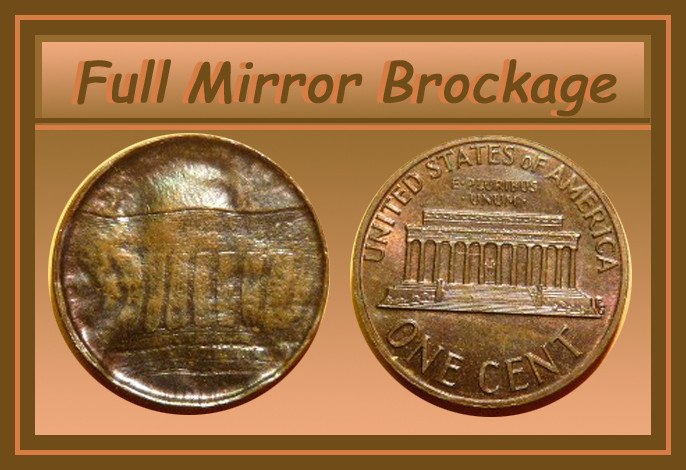
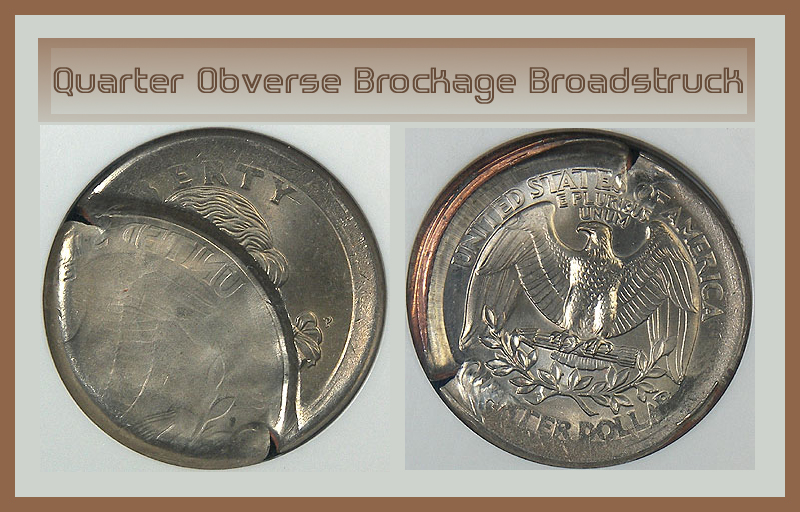
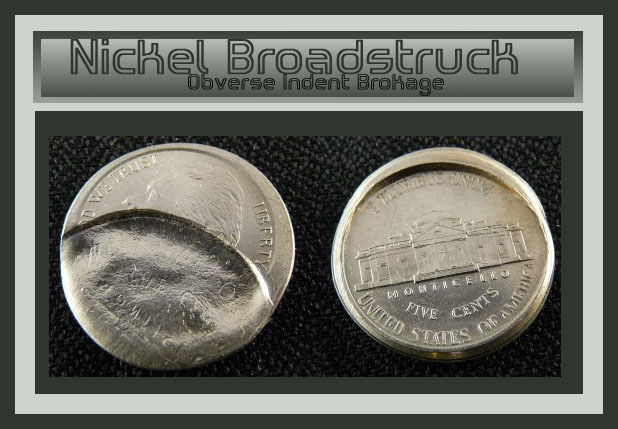
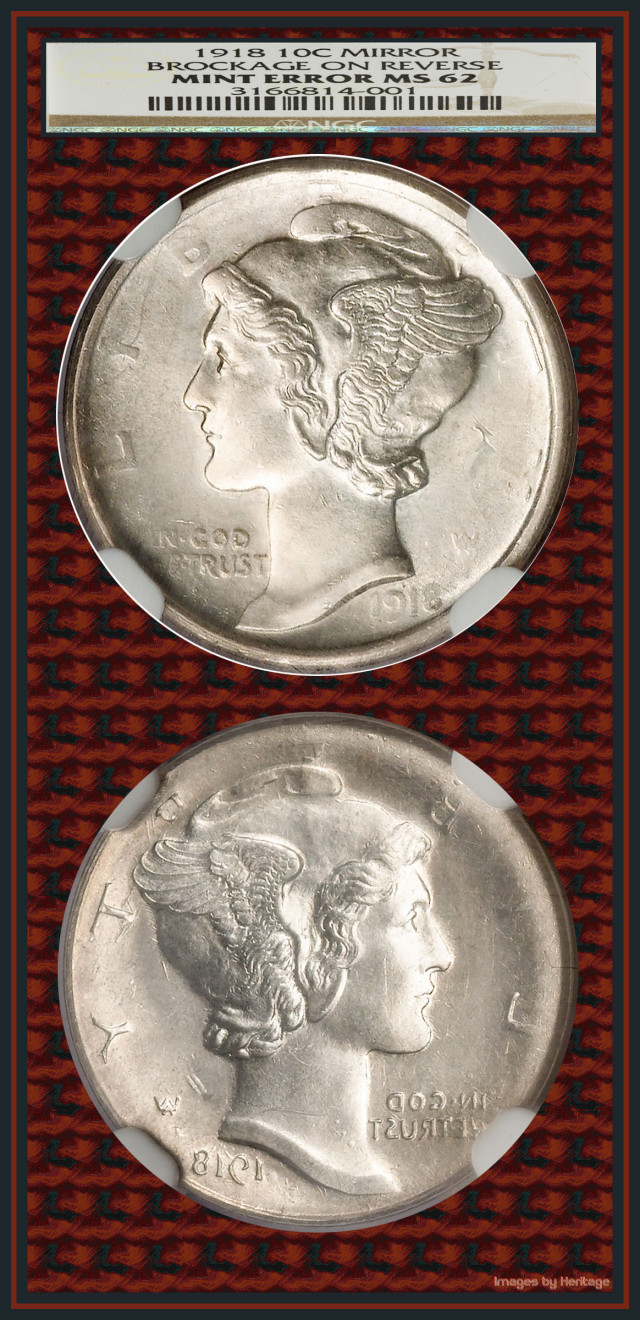
So what exactly happens during the minting process to create a brockage? Just curious. This may be a bit long, but it should be clearer that way. OK, for starters let's examine how a normal coin is struck. The feed fingers drop a planchet into the collar where it rests on the anvil die and the fingers move back out of the way. The hammer die comes down and strikes the coin. The hammer die goes back up. The anvil die rises pushing the coin out of the collar. The feed fingers push the struck coin out of the way. The anvil die drops back down. The fingers drop the next planchet in the collar and the cycle repeats. Now for how the brockage is created. As above the planchet is dropped in and struck by the dies. But this time when the hammer die rises up, the coin sticks to it and come up out of the collar and stays stuck. The anvil rises and the fingers come forward but there is no coin to push out of the way. The anvil goes back down the planchet is dropped into the collar and the fingers go back. Now in this case the planchet is sitting on the anvil die, but up above it instead of the hammer die is a struck coin and it is same design and the anvil die but the die is incuse and the coin is raised. The hammer die comes down again and the planchet is truck between the anvil die and previously struck coin. When that coin then comes out of the collar it will look like the last picture that Coop posted. That is a full brockage. If the coin continues to stick to the hammer die it will continue to strike brockages, but as it does so the coin on the hammer die will start spreading sideways and start wrapping itself around the die. As it does this the image facing the planchet in the collar is also "spreading out" and after a few strikes the the brockages being produced will look more like the first picture Coop posted. Personally I would not call this a brockage, I would call it struck through a late stage capped die. This is because the design of the die is starting to show through the intervening coin (die cap). If it continues to strike more planchets eventually the expanded reversed design disappears completely and more of the hammer die design shows through until it almost looks like a normal coin but slightly distorted like it was struck through a thin layer of foil (Which n fact it was.) Another way a brockage can form is after the first coin is struck instead of sticking to the hammer die, the anvil die fails to rise up and push the coin out. Then when the fingers come forward they drop the planchet on top of the already struck coin still in the collar. When the dies come together again it will also form a brockage similar to the last one Coop posted, but it will also have a partial collar error (or possible even a full broadstrike) because the second coin can't fit down inside the collar. And you can have a partial brockage. In this case go back to my first example but before the dies have a chance to com together and form a full brockage, the coin falls off of the hammer die and only partially overlaps the planchet in the collar. Now when the dies come together the coin in the collar will have the normal image from the anvil die, part of the image from the hammer die, and the rest of the coin will show the reversed incused image from the intervening coin. It will look something like Coop's second and third pictures except that those were also broadstrikes (The collar was forced down and not restraining the coin.) |
|
Bedrock of the Community
United States
62064 Posts |
I think the main difference between a capped die strike and a brockage is that a coin was blocking the strike during the minting process. Probably only affect one coin. The difference between a brockage and an indent is that the planchet struck though hadn't been struck previous the the strike of the affected coin. 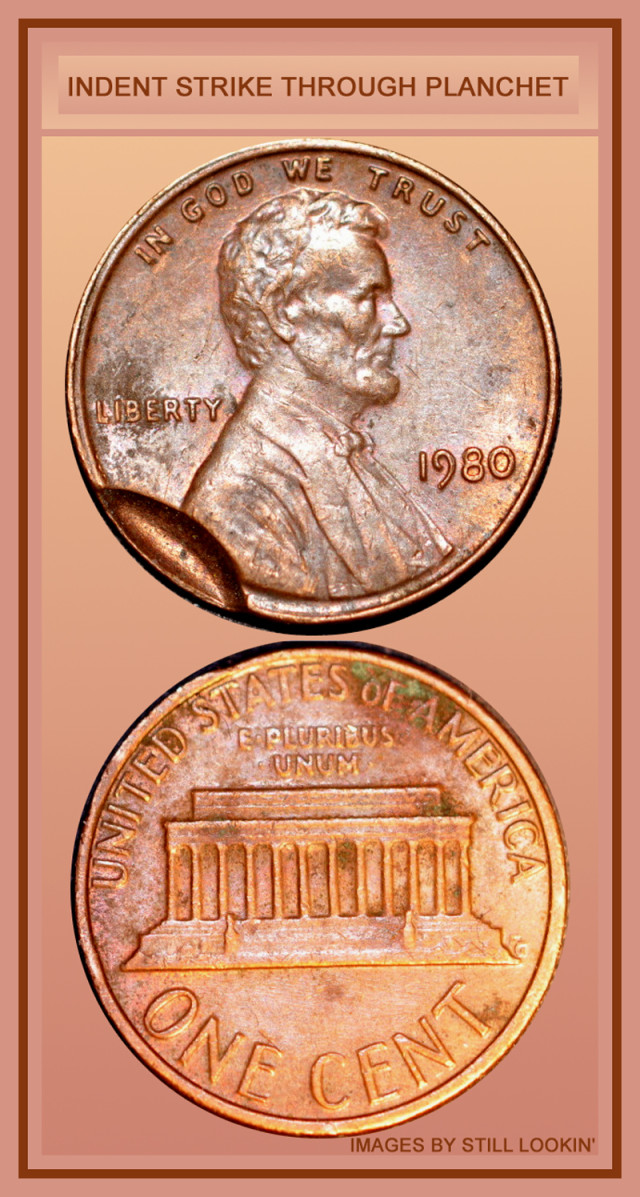 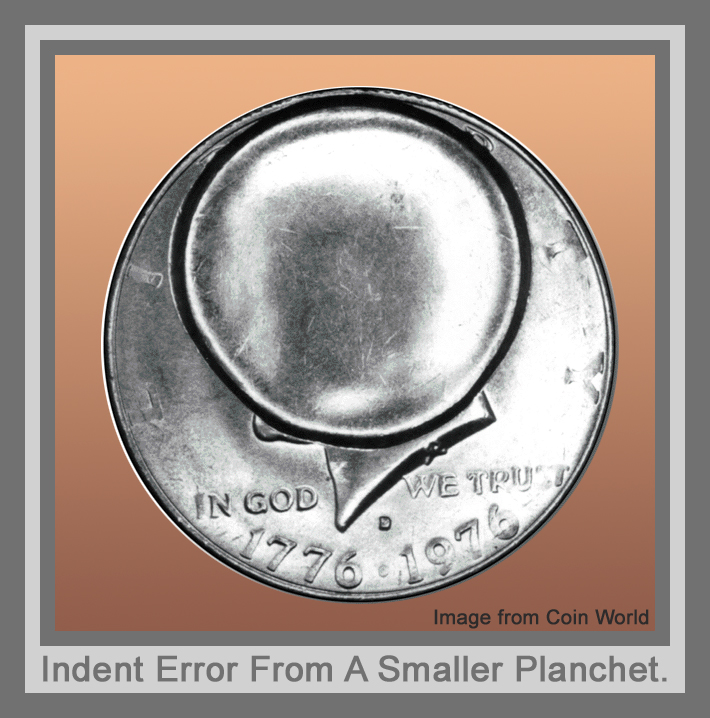 |
|
Valued Member
United States
462 Posts |
Thanks for taking the time to write that Condor.
And continued thanks to COOP for always having a great didactic picture at the ready.
Edited by Pinenut
08/01/2010 3:06 pm
|
|
Valued Member
United States
314 Posts |
And once again, my goal of learning something new today has been achieved. Many thanks Conder for taking the time to post that information. I have a much better understanding of how brockages are created. Certainly, that would not appear to be the case with the Three Cent pics. Now, I've got to go find a brockage error. |
| |
Replies: 11 / Views: 2,825 |
|







 Posted 07/29/2010 2:14 pm