| Author |
 Replies: 49 / Views: 15,072 Replies: 49 / Views: 15,072 |
|
|
|
Valued Member
 China
106 Posts |
swamperbob Thank you for your detailed information, before you metion that I am not aware that this coin have so much suspicious spots.Anyhow this coin have full physical struck strength which I think could not be struck by a private mint or a copy factory. Slightly Double struck is common in both in portrait 8r and pillar.As for the colour factor,i think it was cleaned one time, so there was not oringinal luster reserved.I spend $340 in total to purchase this potosi coin, caouse I have 3 Mexico pillars and 1 Lima 1768 pillars,not potosi pillar. The colombia NR pillar and Chile Santiago pillar together with Guatemala pillar are to expensive for me.By the way I found nearly all Guatemala pillar date 1760 both on US ebay and Spain ebay are fake,so I do not dare buy G pillar through ebay.I'll buy it from Heritage action or Long beach action or from subasta action in spain. Recently I'll post some of my collection mainly spanish colony coin in this forum,I hope your guys make commens on my coin collection.Thanks again for you careful advice,I really appriciate for this! |
|
Pillar of the Community
United States
5362 Posts |
jfransch Those two look a lot more reasonable to me. nicolashsing The kinds of clues I look for are accumulative. Alone any one can be legitimate, it is the combination of factors. But all a photo review can result in is an opinion. 1. The fact the coin is clean means it will not likely be graded. 2. I know that there are some people operating screw presses large enough to make an 8R - so while it may be uncommon IT IS NOT IMPOSSIBLE for a modern counterfeit to be as well struck as any original. You say: Quote:
Slightly Double struck is common in both in portrait 8r and pillar. That is true - double struck coins are very common. It was a manual screw press and the coin was removed by hand. But your 1770 is NOT DOUBLE STRUCK. The die is double hubbed (double punched). Since it is a die feature caused by an error in the manufacture of the die itself - all copies made from this die pair will all have the SAME DOUBLING of the image. Counterfeit 8R coins of all times are often double hubbed. I have perhaps 150 examples of double and triple hubbing caused by the way forgers make their dies.
Edited by swamperbob
08/19/2010 10:27 pm
|
|
Valued Member
China
106 Posts |
jfransch
Your two potosi 1770 pillar looks wonderful!The 1770 potosi without dot is scarer than the one withi dot.
In my humble opinion, the 1770 without dot is about XF40 but has a environmental damage obviously on the right pillar on obverse,what indicates it was cleaned inappropriate long ago.But for the one with dot I think it at least can reach a NGC EF45 or above if lucky enough.
I eager to see more of your spanish colonial coin collection!
|
|
Valued Member
China
106 Posts |
swamperbob I appreciate your professional knowlege in pillar mint.To discuss with you about pillar coin issues I made a lot of progress in this field. One more thing I wanna discuss with you is about cleaning.I heard that NGC can bear cleaned coin as long as the cleaning didn't hurt the surface of the coin. Here I have a example for you. I got this coin uncertificated from a Mexico seller on ebay,I taken photos when it arrives.From the photo you can see it was no doubt slightly cleaned at some spots near legend on obverse,especially on 12 o'clock.But reverse has original luster. SEE picture 1-3 And then I send it to NGC,NGC had graded it as AU55 although it was cleaned. SEE picture 4-6 So it proofs that NGC does grade coin with slight cleaning,so does PCGS,cause I saw a lot of Chinese silver dollars (in the early 20th century )was cleaned and cerfiticated by PCGS even reach MS63 or higher. 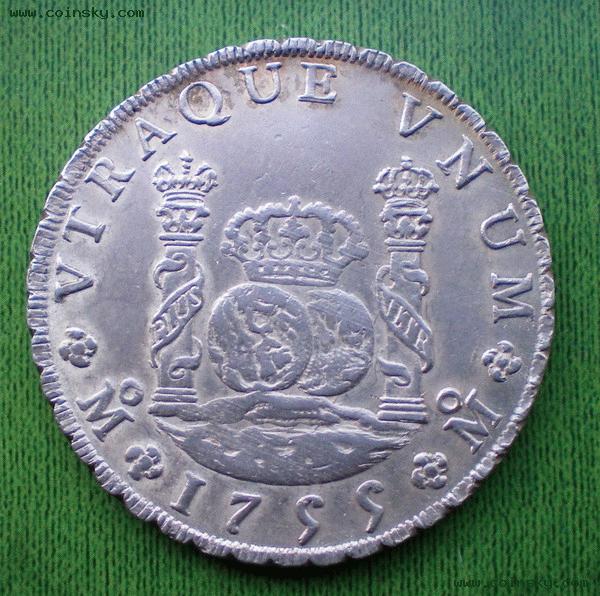 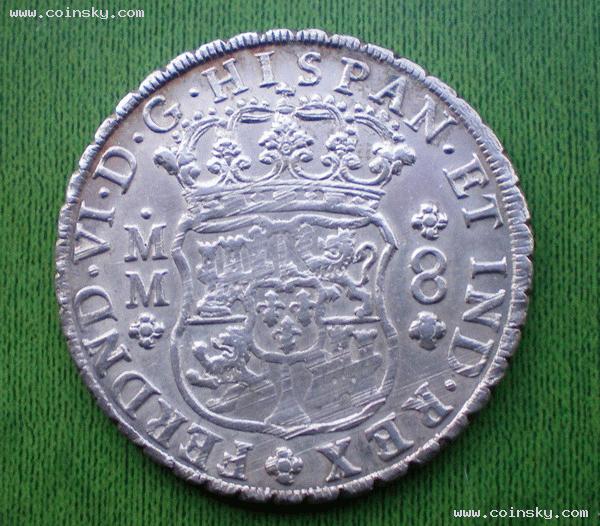  4-6 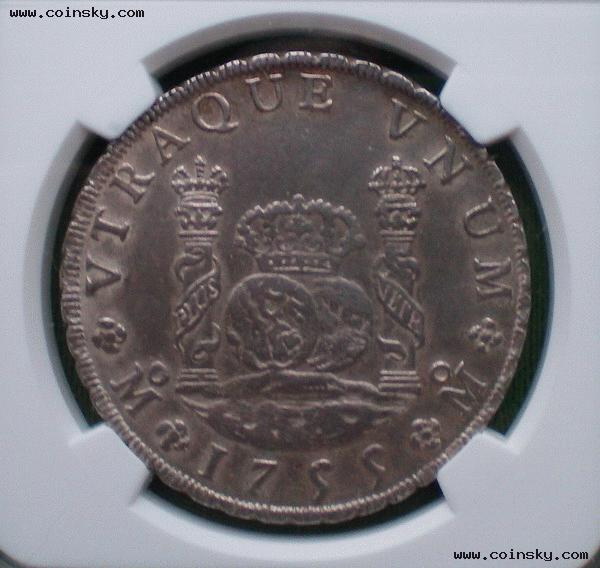 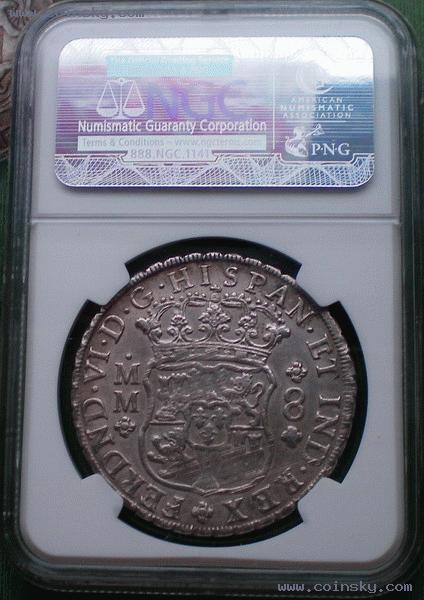 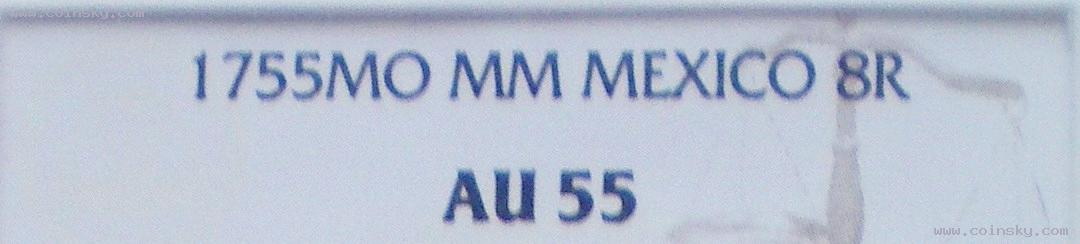 |
|
Pillar of the Community
United States
5362 Posts |
There is a key difference between the surfaces of the 1755 and the original 1770 we are discussing. The 1755 clearly shows retained mint luster in and around the lettering and protected areas. There is NOTHING similar on the 1770 - that is why I suspect a chemical cleaning that removed all of the surface. I can not tell for sure from a photo - but the 1770 has a dead looking surface - scrubbed off - but the 1755 has significant intact surfaces and was obviously cleaned only in a small area of corrosion at QUE. NGC will grade a coin with "minimal cleaning" but a coin that has no original surfaces is a risk to grade. The chemical removal of the surface can cover traces of forgery. Of course when discussing certification, I know for a fact that the graders will encapsulate counterfeit coins on some occasions. This is not done intentionally - it is done precisely because they often fail to look in the right places. In two cases, which I have discussed on earlier posts, coins which I had determined were forgeries were in fact slabbed as originals and were graded. Those two had traces of edge seams because they were casts but they were graded and placed in the older holders that did not show the edges. This circumstance may be inevitable because Counterfeit Detection takes time and the commercial graders do not take much time at all in the authentication process for COMMON coins. Rarities get more appropriate treatment but more is at stake. For coins with lower values they take no more than a minute to determine authenticity and grade. |
|
Valued Member
Philippines
386 Posts |
Indeed a very enlightening postings... Quote:This circumstance may be inevitable because Counterfeit Detection takes time and the commercial graders do not take much time at all in the authentication process for COMMON coins. Rarities get more appropriate treatment but more is at stake. For coins with lower values they take no more than a minute to determine authenticity and grade. This could be one of the reason why I tend to see fake coins graded by TPG companies, or not all of these companies have experts in the field of Columnarios... We are now luckier that we are able to discuss and get familiarize with the counterfeits. Swamperbob : your book about counterfeits is really needed to be spreaded out in our world of numismatics  |
|
Valued Member
Malaysia
59 Posts |
HI I 'm xiang and I'm a newbie in this community...i would like to ask you guys especially swamperbob and pandesalapi abt identifying authentics and counterfeit 8 reals coins...well cause recently I m quite intrested in these coins and my fren's trying to sell me one...so hope you guys could giv me some tips on the diffrences of authentics and counterfeits...I'm sorry tat I cant post the pic since it's still in his hands...ty
|
|
Pillar of the Community
United States
5362 Posts |
Xiang Hello and welcome.
You as a simple question that has NO SIMPLE answer. However, I can provide a few tips that may help.
Before anything else get a few tools. First a good (inexpensive) digital scale is a must. Get a 10X loupe with a WIDE field. Get a small magnet. The follow the clues below.
1. Counterfeit examples of the 8R series have been around for many years so a coin bought 50 years ago is almost as likely to be a forgery as one bought yesterday. Age of the original collection is NOT A GUARANTEE OF AUTHENTICITY.
2. The 8R was a silver coin made to HIGH standards so deviations in weight and volume over a few percent ARE NOT ACCEPTABLE. The weight should be over 26 grams and under 27.5 for decent grades. Wear and corrosion DOES NOT REMOVE 4 or 5 grams from any collectible coin. AVOID LIGHTWEIGHT COINS EVEN IF WORN. Watch for mined originals.
3. Always check an 8R with a magnet. This will identify coins made of Iron and Nickel. But not all non-magnetic coins are real. Keep going.
4. Check the edge of the coin - look for the appropriate design and look for appropriate application technique. For this you need to know what the original edge looked like and how it was applied. Check my postings on edge application.
4A. No 8R coins have REEDED edges.
4B. No collectible 8Rs have plain edges.
4C. There are NO SEAMS on real 8Rs.
4D. There are TWO overlaps in the edge design 180 degrees apart.
4E. Edge overlaps are EQUAL in length.
4F. The edge dies were well made so VARIATION in segments is BAD.
4G. For the colonial edges (rectangle-circle) look for circles with SQUARE corners they are FAKE.
5. Real 8Rs were normally struck (there are a few - VERY FEW - war time exceptions). Know what cast coins look like. You have to be able to tell the difference.
5A. Castings often have porous surfaces. Some are air bubbles in the metal. BUT newer injection molds have few bubbles.
5B. Casting molds often have small holes in the surface resulting in LUMPS on the coin surfaces. Molds (plaster or plastic) also break faster than dies. Know how to spot real die cracks.
5C. Castings do not have mint luster.
5D. Castings can have NON-RADIAL erosion lines.
6. Know the feel, color and sound of silver.
6A. Electroplated copies will be darker because 100% pure silver is darker than silver alloyed with copper.
6B. Debased coins often look yellow because of too much copper.
6C. Coins made with zinc and some pewters have a greasy feel.
6D. Ring will detect some alloys (not really good for debased or nickel copies).
6E. Streaks in the metal alloy (changes of color) are often seen on counterfeit alloys.
6F. German silver is brittle and does not flow well - cracks in the flan are more common on counterfeits than originals.
6G. Changes in color in worn areas can identify Sheffield plate copies - white metal cores can resemble silver so the deviation can be subtle.
7. Common misconceptions
7A. Chop marks guarantee a coin is real. FALSE many chop marks were copied onto molds or dies - look for evidence of the chop occurring POST STRIKE.
7B. Post strike chops have been added to counterfeit coins as have counterstamps. LOOK at the DEEPEST part of the chop to see if the chop was made with ONE puncheon.
7C. Double strikes are far more common on counterfeits than originals.
7D. Overdates and double hub impressions are far more common on counterfeits.
7E. Counterfeiters often mule dies incorrectly - so if your 8R has a misspelling or the wrong King's name it is much more likely to be a forgery than an original.
7F. All counterfeits are of value - that is not true. But not all counterfeits are valueless either. Some forgeries are more valuable than the originals.
7G. Evidence of die clashes proves a coin is struck - NOT NECESSARILY. Evidence of a clash can be copied onto a forged die or mold. In the case of dies, forgers have been known to intentionally clash the fake dies to produce a higher value fake.
I could go on in far more detail, but that is a decent start.
If you have ant questions or need clarification - let me know.
BE CAREFUL - do not be OVER ANXIOUS to buy before you know. Remember there are rarely any super bargains (usually forgeries) and unless you are spending 10s of thousands of dollars - all of these coins will appear again.
There is NO RUSH.
|
|
Valued Member
Malaysia
59 Posts |
 you must be a veri experience and an expert in collecting coins...I'm glad that you could help me out since I trouble you to type so long and gave me so much info..and I would like to THANK you very much...i would like to stay in touch not jus onli in CCF but in msn and facebook if you dont mind?  |
|
Pillar of the Community
United States
5362 Posts |
No problem. I have been at this a long time.
I am easier to reach here or by email. I have a facebook account set up by my kids but do not use it.
|
|
Valued Member
Malaysia
59 Posts |
i will post the pic of the pillar coin ASAP(as soon as possible) after I get it frm my fren...o.o I seldom use e-mail more on fb...ya it is weird cause I'm 16 and seldom use e-mail...btw I think it's hard for me to find a friend around my age gape interested in collecting coins...and my parents dont really encourage me as they say it's jus waste of $$...oh well at least I get to join you guys and who's more experienced in yr of collecting coins...
|
|
Pillar of the Community
United States
5362 Posts |
Well good luck it is nice to see young people involved in coin collecting. I started when I was 8 years old and have been at it for 55 years now.
Don't let anyone tell you it is a waste of $$. When I was 16 I could buy a US $20 gold coin for under $50. Of course $50 at that age was nearly two weeks take home pay so I didn't buy many.
|
|
Valued Member
Malaysia
59 Posts |
thanks 4 support..only my uncle(a coin collector) did support me....oh well it's nice for you to support and help me up... |
|
Valued Member
Malaysia
59 Posts |
|
|
Pillar of the Community
United States
1801 Posts |
Xiang,
Welcome to the world of collection pillar dollars and other 8 reales coins.
The coin in your post above is a poor quality counterfeit. Aside from the fact that it looks completely wrong, no pillar dollars have a reeded edge so that is the first thing that screams fake. However it is a great coin to learn from because almost every aspect of the coin looks wrong. Compare the coin to a real pillar and you will see that all the design elements look wrong. The globes are wrong, the pillars look wrong, the lions in the shield look wrong. You will start to recognize the look of a real pillar and just as important, recognize the look of a fake. Go through the list of features that Swamperbob listed above and check each one against this coin. Hold it up to the pictures I posted of the 2 1770 pillars and you will see how wrong it looks. There are many of us here on the forum who are willing to help you, you just need to ask questions and study the answers. Reading Swamperbob's posts are like taking classes in numismatics, I have collected pillar dollars for 35 years and learn new things from him almost every time he posts.
|
| |
Replies: 49 / Views: 15,072 |








 First Page


 Posted 08/19/2010 10:13 pm


