| Author |
 Replies: 49 / Views: 15,026 Replies: 49 / Views: 15,026 |
|
Valued Member
China
106 Posts |
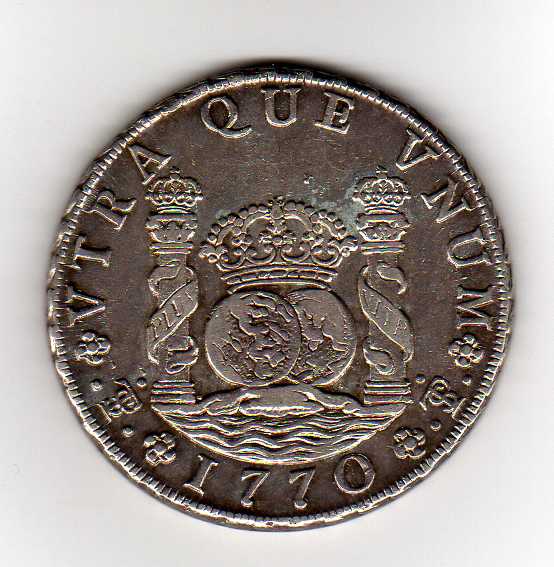
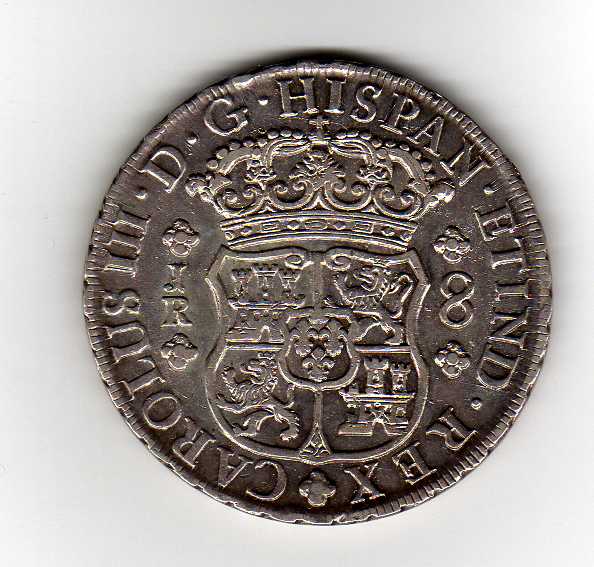
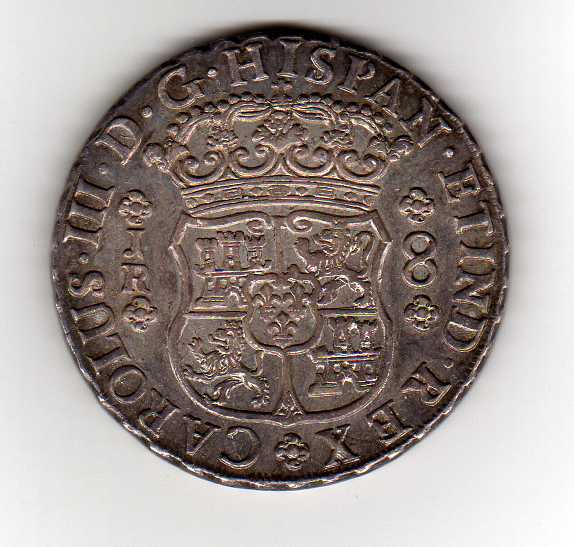
Hi, I am a Spanish colony coin fan in Beijing China,and I recently acquired this 1771 Lima pillar 8r coin. It's a little bid weird to me,cause the assayer's name J is different from other Lima pillar dollars. The condition is well above AU, and the actual weight is 27.12g,a little bid overweight than the normal standard 27.07g. So please tell me is this coin fake or genuine? 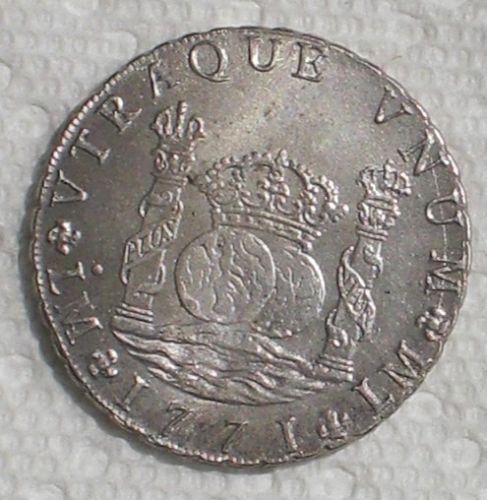  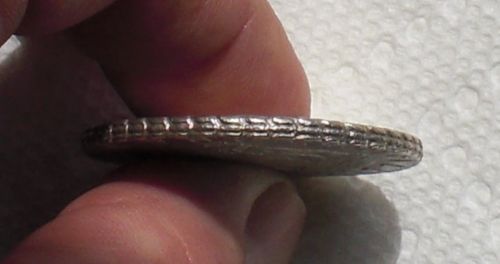 |
|
|
|
Valued Member
 China
106 Posts |
I bought this coin from ebay,a seller that location is NC United States. So it can't be a Chinese copy if it is fake. Does anybody give me some advices about this coin? |
|
Valued Member
Philippines
386 Posts |
Hi Nicolashsing  to the community I am afraid to note that your recently acquired pillar has all the redflags that indicates it's counterfeit based on my little knowhow in Dos Mundos. Among others... 1.00 the edge has the usual design I normally see on fake ones. 2.00 the three fleur de lis design in the center of the crown is not symmetrical with each other. 3.00 the letterings are inconsistent specially the letter Q 4.00 the four petals of the rossette are not the normal ones. 5.00 and once the weight exceeded, I am pretty sure it has some problems. I started collecting these ones in almost 2 decades ago and mind you, collecting these pillars really has a lot of risk involved. Thru experience, I have acquired numerous fake ones and that's the main reason why I already stopped on Pillars and shifted to other types by which I am now more comfortable investing with...  |
|
Valued Member
China
106 Posts |
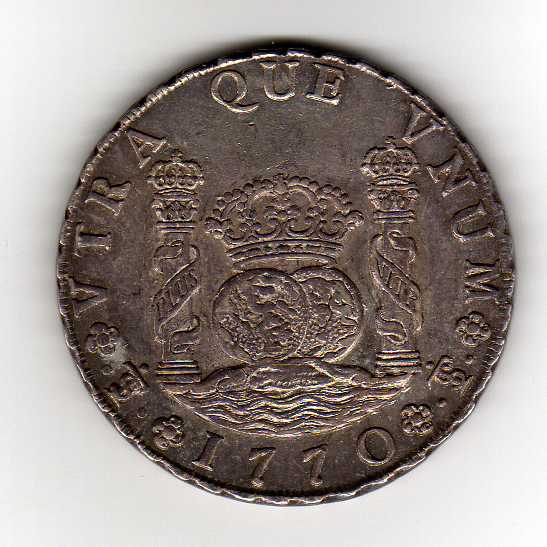
TO Pandesalapi Thank you very much for your information, now I am 100% sure that this coin is a fake one. I collect spanish colonial pillar for about 2 years,and this is my first time bought a fake pillar on ebay. My other purchases are quite successful, I bought two mexico pillar from ebay and sent them to NGC,one is 1747-mf philip V certificated AU-58,anther is 1755-mm NGC AU55. This potosi pillar is one of my new items, I'd grade it as AU50 or above,what's your opinion?  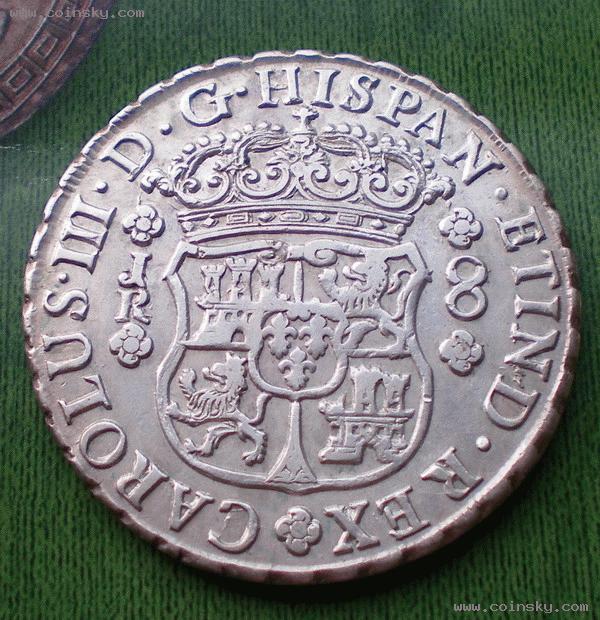  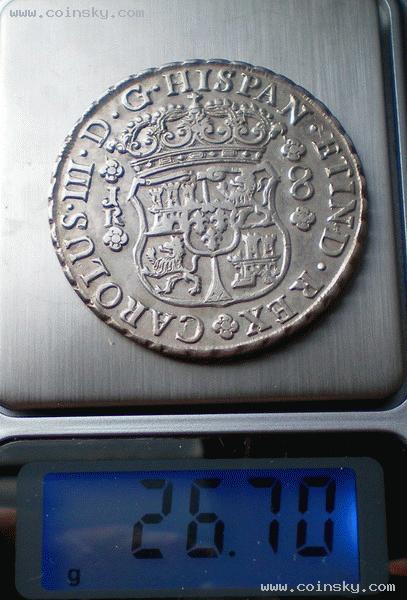 |
|
Pillar of the Community
United States
1801 Posts |
Hello Nicolashsing and welcome to the forum. In my humble opinion the 1770 Potosi pillar you have posted is a fake. I will not point out specific features, I just don't like the flat/washed out look to all the detail. The coin "looks" wrong, and I have found over the years, when the coin looks wrong, it probably is.
|
|
Valued Member
Philippines
80 Posts |
+1. I would agree on jfransch assessment. I saw some red flags.
|
|
Pillar of the Community
United States
5362 Posts |
I agree with the assessments that both coins are forgeries - but they are NOT TRANSFER images. That is the key problem I see here. Transfer images are much easier to spot by texture. Dies that are hand made with punches can be improved and errors can be removed. Striking fakes also allows the use of proper methods and materials. The forger especially in the second case could be getting close. But I really wanted to comment on the following: Quote: I bought this coin from ebay,a seller that location is NC United States. So it can't be a Chinese copy if it is fake. The location of the last sale is NOT A GUARANTEE that the coin was not made in China. |
|
Valued Member
Greece
425 Posts |
It's difficult being collector in China.All the time you have to prove that your coins are not fakes.I think this thing have nicolashsing in mind, when he mentioned ''I bought this coin from ebay,a seller that location is NC United States. So it can't be a Chinese copy if it is fake.'' |
|
Pillar of the Community
United States
5362 Posts |
I understand about the comment you make about Chinese collectors having a problem with the way they are perceived. I too would not like constantly being accused of forgery.
But the greatest number of forgeries today are coming from China. That is a well attested fact.
The thing he points out in this auction is that a seller from the US (or any other country)is NO BETTER than a thief if he re-posts a forgery to TRY TO GET HIS MONEY BACK. Just because the seller got taken - there is NO JUSTIFICATION for swindling the next guy.
If you get taken - accept it. Suck it up and take your lumps. You got taken - learn from it don't scam the next guy.
|
|
Pillar of the Community
United States
1801 Posts |
You bring up a great point Bob, the nightmare is just beginning. I believe the real nightmare comes when the thousands of Chinese well made counterfeits that have entered the country through ebay etc start to reappear on 2nd and 3rd tier dealer lists and in dealer cases at local coin shows, with no intentional malice, just lack of knowledge. Maybe they bought it in a batch of coins and didn't give every coin the "fine tooth comb" treatment. Then the local collector buys the coin, thinking it real because it has provenance now from a "dealer". I believe everyone who comes in contact with a modern counterfeit has an obligation to the hobby as a whole to mark it "copy" before passing it on through the food chain. |
|
Valued Member
Philippines
386 Posts |
Quote:
I believe everyone who comes in contact with a modern counterfeit has an obligation to the hobby as a whole to mark it "copy" before passing it on through the food chain. True indeed, or better yet, do not resell it. Have an album to make a collection of counterfeits. But the most important of it is teach and share it with your childred the act of not passing on to others(thru reselling fakes) the experience of being hooked-up by counterfeiters. Again I hope time will come soonest that these forgers will get what they deserved in their lives afterall "they will definitely reap what they sow ! " For us, let's just continue our every effort available to expose and share the experience for others to be familiarize with FAKE ones as what Swamperbob has been doing to this community - Knowledge Sharing. |
|
Pillar of the Community
United States
5362 Posts |
I DEFINITELY agree that Counterfeits should only be sold or traded to knowledgeable individuals and that ALL MODERN COUNTERFEITS should be marked in compliance with the HPA - IMMEDIATELY UPON IDENTIFICATION. The word COPY can be stamped into EVERY modern coin with no material damage to the information it contains about forgery, so there is no value lost. I have heard that some collectors do not like to deface their "filler" coins - even the modern forgeries. But besides being illegal that practice keeps the coin in play as a potential fraud. Even if it stays in place for 20 or 40 years IT WILL BE RE-SOLD. For anyone keeping a "Counterfeit Set" or "Filler Copies" for educational or display purposes, I have one caution. Make sure that the modern ones are marked and that everyone in the family KNOWS they are counterfeits. I have had three collector friends die recently and suddenly. In each case, I know they each kept significantly large "Counterfeit Collections" but in 2 of the 3 cases - the family members sold the collections without segregating the forgeries. (The third case is too recent to know.) So in those 2 cases, the forgeries are now back ON THE MARKET someplace. I don't even know if they were properly marked. The odd thing was that before he died one of the three said to me - Quote:
I don't want to be around when you die and your collection of forgeries hits the market. That statement got me into high gear and I marked all of my counterfeit coins clearly. Modern junk is stamped COPY and Contemporary Forgeries (legal ones) are isolated and clearly labeled on EACH holder. |
|
Valued Member
Philippines
80 Posts |
These being said -- how about making this current situation a turning point for the hobby. As the saying goes -- 'every crisis is an opportunity'. What if a 'grass root authentication movement' could be organized, where local clubs or groups or friends band together for authentication purposes. I'm not talking about yet another TPG, but a way of looking for cheaper authentication service WITHOUT slabbing, as these entails added cost. Photo-documentation would be a way to 'encapsulate' the coin, as each one is unique and has distinctive signature. |
|
Valued Member
China
106 Posts |
I fully understand you guys' furious about the Chinese fake coin, me too.So I bought coin on ebay and Heritage action,and the two pillar I post here are form North carolina and New york state seperately. The lima pillar is definetly a fake when it on my hand,now I'll open a case on ebay about refund.As for the potosi pillar,in my shooby experience is a guenuin one. The postosi pillar has a different stuck style from Mexico city and Lima.It always seem to be very crude struck, and you can see it from the Freeman Criag&Co. mail bid action catolog,so I keep reserved opinion about the potosi pillar. I'll send it to NGC to determin it is genuin indeed. You guys can guess the following potosi pillar's scores,it was 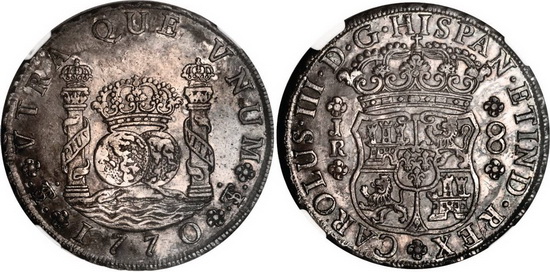 slabbed by NGC. |
|
Pillar of the Community
United States
5362 Posts |
nicolashsing I agree with what you are saying in general. But not having the coin in hand, I can only go by what I see in the pictures. The coin may be real and certification is the proper route to decide. However, in the meantime, here are the issues that I think "when taken together" pose a problem for authenticity. 1. The color and appearance of the fields is "flat" or "Dead" looking. This is subjective I know, but if I encountered this coin in an inventory I would immediately be drawn to it as suspicious. I would also be concerned that it may have been chemically cleaned altering the surfaces which might make grading impossible. 2. The crown on the top of the shield is clearly double hubbed. The crown was set as a unit on real dies and this may be real, but I have NOT encountered another die with such a wide double set crown. In fact, I can not recall ever seeing doubled hubbed originals in this series from Potosi. Certainly it is a feature that causes added suspicion. 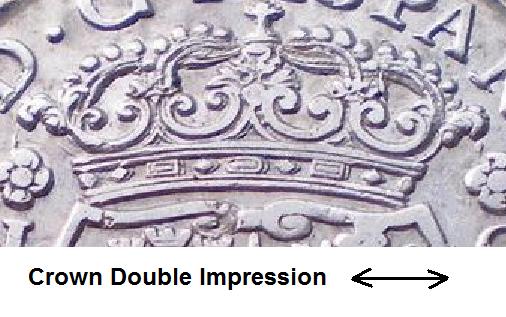 3. The outline of the shield itself seems to be engraved or punched with more than one punch. The top was clearly set independently from the sides because a clear doubling (or overlap) of the two punches occurs at the widest point on the shield. I have reason to believe that the shield outlines were the "King Punch" in the matrix for the 8R and that the outline was the pattern to which all other elements were positionally related. (The detail for this belief follows). 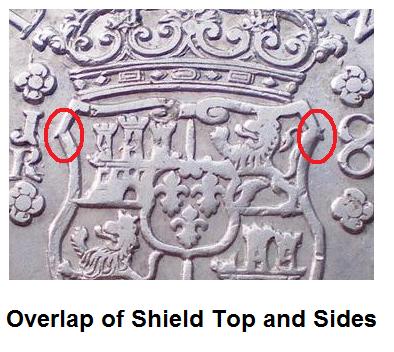 4. The 4 quarter elements the Castles and Lions were distinct punches and they are not correctly set - the upper left castle is on the horizontal line that crosses the shield. All photos of 1770 Potosi 8Rs I have seen - it is set above with a clear separation. That gap is typical - so this die once again is suspicious. The Lion in the upper right quadrant is positioned so low that the paw extends across the line into the castle quadrant slightly. This is poor position when compared to other 1770 coins and the general Pillar series. Again the coin may be real and the dies may have been made by a sloppy die sinker but the elements are suspicious. 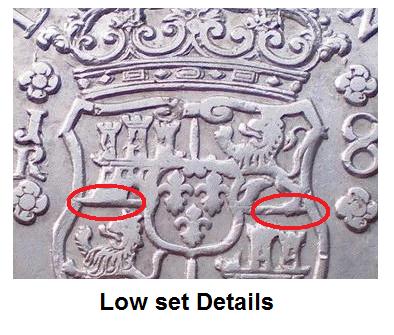 4. In the fields of the obverse die I see several gouges which result in raised lumps on the coin. The largest is between the N and D in ET IND. There are other smaller lines at the two upper rosettes as well and near several other letters. These field dings should have been ground out in the final die finishing. Once again, not proof of forgery but something to make me look closer. 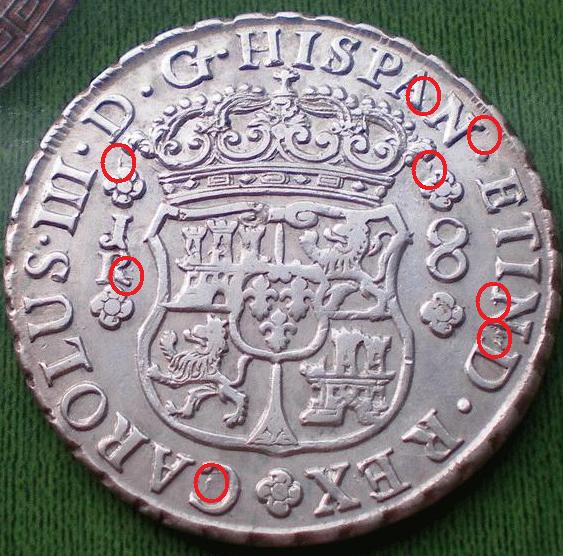 5. I am bothered by the way the letters fail to match in the fine details of the punch - the two S's are clearly different as if made with different S punches. 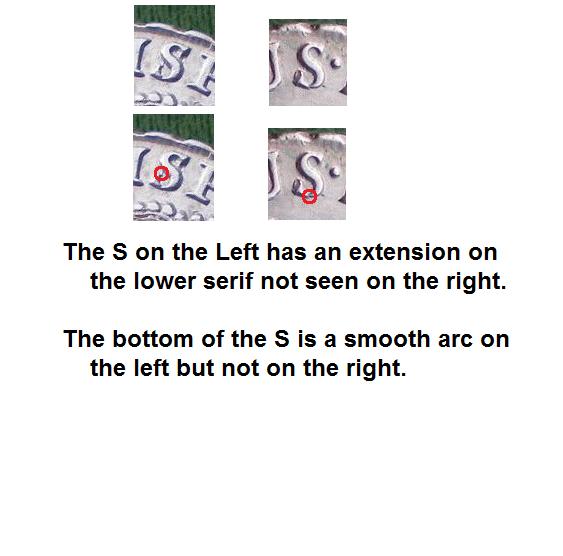 6. On the reverse dies one of the first things that drew my eye was the NON-radial denticles (or dentils) from the left mint mark to the T in VTRA. The dentils were a punch element seen on the standard punch blocks. 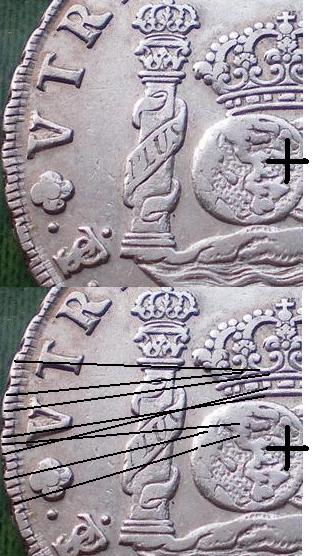 So when you say: Quote:
As for the potosi pillar,in my shooby experience is a guenuin one. The postosi pillar has a different stuck style from Mexico city and Lima.It always seem to be very crude struck, and you can see it from the Freeman Criag&Co. mail bid action catolog,so I keep reserved opinion about the potosi pillar.
I'll send it to NGC to determin it is genuin indeed. I certainly agree that the coins of Potosi were not up to Mexican standards, but your coin appears to be cruder than expected based on pictures I have. The way I read Gilboy - the Matrix used to create the working dies for 8R coins consisted of a series of punches made from Master punch blocks prepared in Spain. These were NOT made locally. The punch elements were set one at a time in a pattern to create partial hubs. The hubs omitted lettering and some details because of the limitations of the presses. At Potosi they may NOT have used partial hubs (Gilboy does not say) but at a MINIMUM they die use punches cast from the punch blocks. Gilboy illustrates a Madrid punch block from 1770 on page 271 of "Columnarios". The key element of this illustration is that the SHIELD OUTLINE was presented as a single element. To me this makes far more sense than using TWO or MORE punches to create the shield outline. If the Crown with all of the detail could be hubbed - then the outline also could be done as ONE press. If you set the shield first in the center of the die face - then the other elements can be punched in one at a time. The shield outline I see on all Potosi 1770 dies for which I have photos appears to bear out this theory - but yours clearly does not. The coin may be real but I would have to accept that this one die pair included at least 7 suspicious anomalies to do so.
|
|
Pillar of the Community
United States
1801 Posts |
|
| |
Replies: 49 / Views: 15,026 |










 Posted 08/17/2010 05:04 am