bobby131313 - thanks for the improved scans - I don't follow how you did it (non-technical guy here from the era of slide rules

) but the pictures still leave me a bit uncertain.
There are coins that simply hide their identities very well in pictures. In person that is rarely the case, but I have seen some forgeries that were so good that they do get slabbed routinely as real.
Anyway, on these scans I noticed some Iron staining. There are several spots "reddish" - these are seen often on sea salvaged coins that are stored in or with iron. Examples - Liberty's Right Hand holding the Olive Branch and just below the Cotton Bale she is seated on (obverse). On the reverse they are more pronounced - the NE in Fine which may show some added contact corrosion - the N in UNITED and ICA in AMERICA also with apparent contact corrosion. Unfortunately the counterfeiters have adopted the sea water bath with iron filings as a way of "aging" their work. But on most real sea salvaged items iron contact occurs on ONE side NOT BOTH. If the coin was so isolated that it had iron contact on both sides it would likely be far more corroded.
I also noted some lines that cross letters and the "field levels" in between them. See the word DOLLAR especially the AR.
Finally I note with concern what appear to be "hollow" dentils. See the area below the word TRADE.
I have a "gut feeling" this one might be a fake - but I can't be certain. It is a very common date - so it is possible it is actually real. If it is real, the damage and cleaning would make it of limited value.










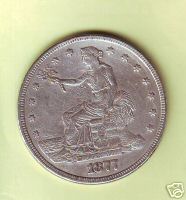 3b_2[1].jpg
 14_0[1].jpg


 Posted 08/10/2006 7:16 pm


