| Author |
 Replies: 5 / Views: 1,576 Replies: 5 / Views: 1,576 |
|
|
Pillar of the Community
United States
1582 Posts |
Guys, there's just enough left of this one to tell it's an 1806 - pointed 6 - stem through claw, but not much else - low grade-low value, but what I really want to know about is the "error"(?) on the reverse at seven o'clock - what is it? Is this common for the type? Any info will be appreciated. Thanks. Ralph 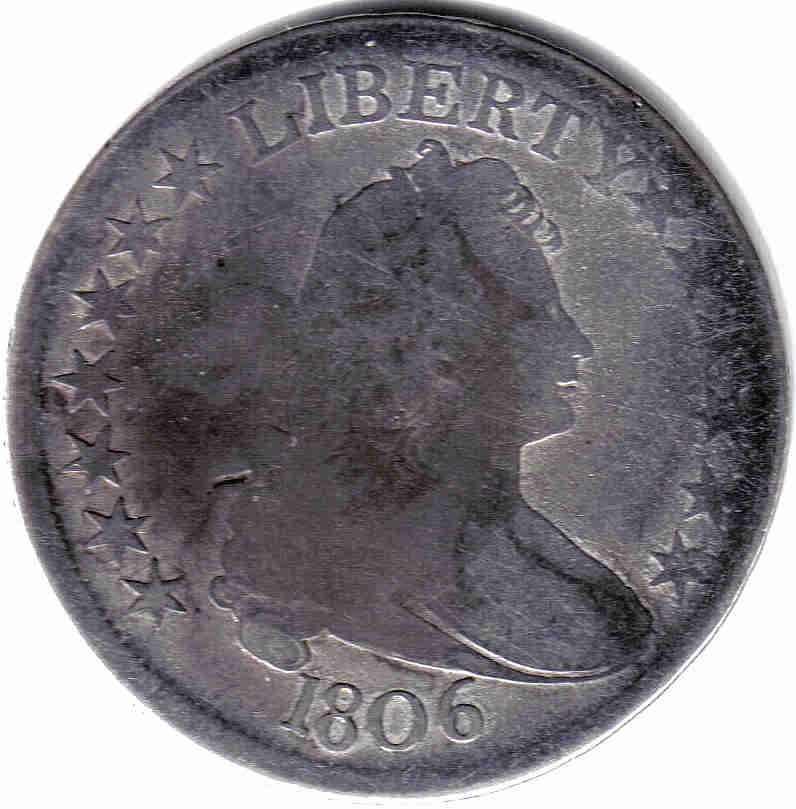 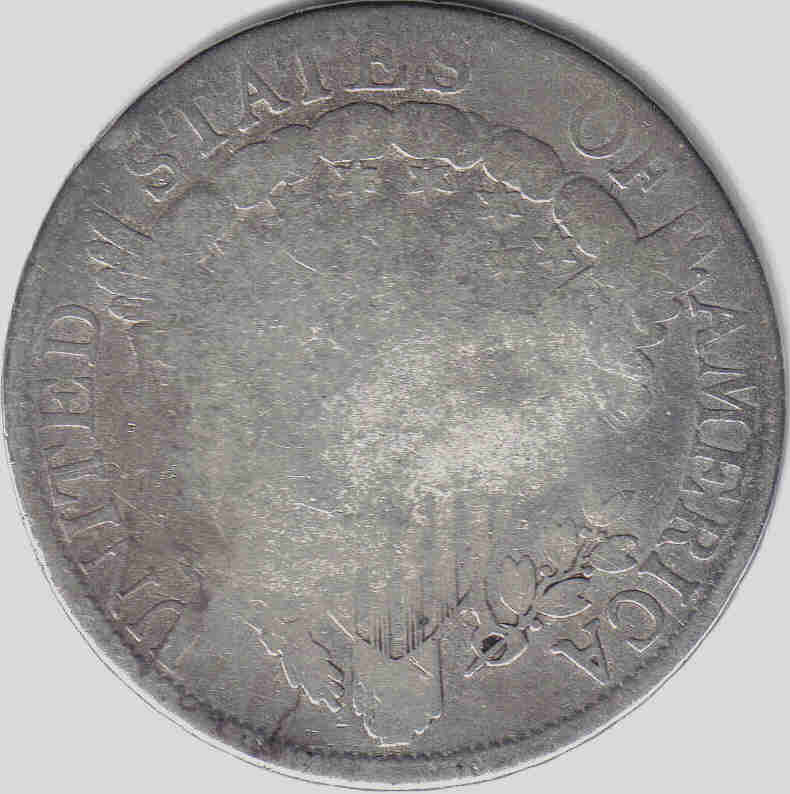 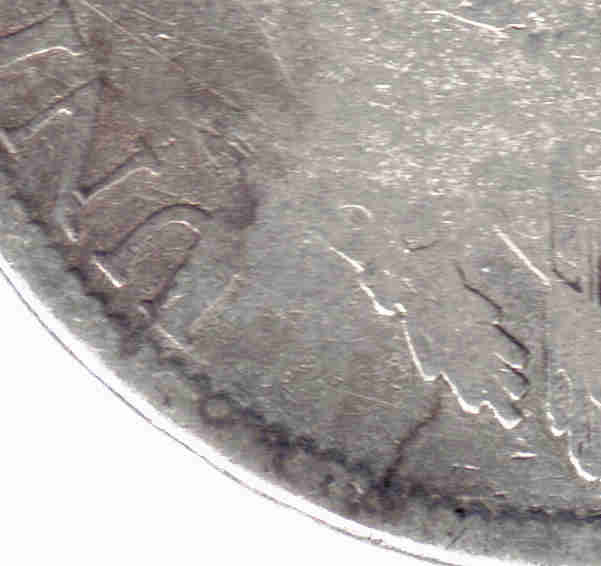 |
|
|
|
Bedrock of the Community
United States
10982 Posts |
At 7:00 reverse it looks like you have a Retained Cud from a die break. I don't know the variety or how common it is but that's what it likely is, not an error. These pieces are worth some money even in rough shape. |
|
Pillar of the Community
United States
2760 Posts |
there are 3 cuds/retained die breaks listed in my book for this 1806 Draped Bust Half, and this one isn't one of the 3 that are listed.
|
|
Pillar of the Community
3660 Posts |
Yes, it does appear to be a Retained Cud......This is O-119a (R-3), and those are cracks from the rim through the 'U' and from the rim into the arrow feathers, but the die was also sinking badly, so what appears to be a Retained Cud is actually caused by metal displacement from the sinking die. Some folks may call this an error, but some may not because it is inherent in the deteriorating die, and all specimens of this variety will show this effect to lesser or greater degree....This coin is so worn that circulation wear becomes a factor in disguise. |
|
Pillar of the Community
United States
2760 Posts |
zeewool - thanks for that little lesson, I didn't know a suncken die could cause what appears to be a Retained Cud. Here's my question, if we had no knowledge of the particular die, would we be able to differentiate between the cause of the 'error'? thanks! |
|
Pillar of the Community
3660 Posts |
That would depend on the condition of the coin......If the coin was in VF or above condition, you would probably see what looks like wear in the left wing and left of the bird's leg area. A sunken die means that the planchet metal has a lot more room to spread out into areas of the die that it normally should not. As for the other side of this coin, the obverse die was also beginning to sink, and the area affected is left of center (behind her head, around the area where the hair ribbon is located). Sinking dies were a fairly common problem in this era of mint dies, and the reason was ineffective annealing techniques. If a grader is not familiar with the variety, the coin may appear to have been more heavily circulated than it actually has been due to inherent die fallacies.
The answer to your question Rob, is probably not, especially on this coin.
|
| |
Replies: 5 / Views: 1,576 |
|







 Posted 11/18/2010 06:46 am





