| Author |
 Replies: 34 / Views: 4,991 Replies: 34 / Views: 4,991 |
|
|
|
Pillar of the Community
United States
1534 Posts |
Also stephen, who would make the TPG graders get liscensed? Grading companies are businesses and when you send coins to them you are paying for their opinion. If you don't like the way they grade then buy and sell only raw coins or just learn to grade coins well inside slabs wihout putting any weight on what the TPG graded it. The same wih most other hobbies, in coins it is the buyer's responsibility to get educated. |
|
Pillar of the Community
 United States
2448 Posts |
 What wheatguy said. Great discussion but please keep the government out of this. If you want the ANA to come up with recommended grader credentials...fine. Just remember that the ANA has had its problems in the past also. Any system you design will be subject to question and eventually abuse. Just buy the coin, not the holder.  |
|
Bedrock of the Community
United States
12437 Posts |
The day the government sticks its nose into Numismatics and regulates it is the same day I sell off my entire collection, resign my ANA membership, and never look back... |
|
Moderator
 United States
16697 Posts |
Could not have said it better Bob. I don't want Government in my life at all.
swcoin.ecrater.com
|
|
Valued Member
United States
149 Posts |
I love this topic-can you imagine the Gov't trying to oversee a hobby/investment with any degree of expertise-it would be no different than the Gov't overseeing Persian rugs or antiques. I'd like to give the younger numismatists that post here a little background lesson. For us longtime collectors, there was a time when there were no TPG's. Here's what we did-we learned about the series/s that we were interested in. For most of us, that would've been Lincoln cents. We became knowledgeable by looking at hundreds, if not thousands of coins. If you became good enough, you could tell in an instant whether a particular dealer had his coins overgraded/ overpriced. You learned quickly to avoid those situations. If you didn't like a coin for whatever reason, you didn't buy it. I am proud to say that in 50 years of collecting, I have 4 coins that are slabbed; I purchased them that way. I bought a 1909 SVDB from a respected dealer in 2006 for $1,000 that was raw.(XF-45) I didn't need this dealer to tell me the diagnostics to tell if the coin was real or fake-I knew what they were! I also spent 45 minutes at her table at the Long Beach show deciding on which one of four I was going to buy. Am I worried I made the wrong move? NO! So the point of all this is to learn how to grade, buy from a reputable dealer, if you're buying on the internet (I don't) make sure that you are dealing with a dealer with an excellent return policy, and you'll be fine. Just because someone gave a coin a 10 second look and assigned a grade doesn't make it so! Regarding investment time, I say that coins should be considered long term investments. Can you make money buying a coin for 100 dollars and selling it the next week for a 1,000? Yes, but those instances are rare. I've never done that, and I'm in my 51st year of collecting. Sorry for the dissertation, but this is no different than investing in stocks, bonds, or Real Estate. |
|
Bedrock of the Community
United States
10982 Posts |
Quote:The day the government sticks its nose into Numismatics and regulates it is the same day I sell off my entire collection, resign my ANA membership, and never look back... I agree. The quote I posted earlier should have been credited to Coinage Magazine. There's an excellent article in the December 2010 issue's "My Two Cents" column that is related to this thread and I grabbed a few sentences from it to post. The PCGS/FTC issue started with a New York Congressman going after Glenn Beck and Goldline and grew from there.... |
|
Bedrock of the Community
United States
10045 Posts |
Wow--a lot of interesting opinions on the subject! Without reading everything, I think that slabbing began to fill a legitimate need--to verify authenticity of high-value coins. From there it progressed into a sales vehicle to make coins an easily-traded commodity back in the credit-expansion days. Consider all that volume pushed through auction houses, deemed more liquid by that slab. Outside of the original function, I'm not sure TPG grading fulfills a real collector need. Just try collecting coins of any quantity, all slabbed.  Quote:
Their opinions are really no different than yours and mine except they do it full time. Precisely--opinions that vary by experience. So, if somebody could produce just one definitively accurate guide on grading--would TPGs really be needed. Of course, that's as implausible as a 100% accurate slab (imho).  |
|
Valued Member
 United States
206 Posts |
I would not even consider government to be involved with licensing graders..it would be a dog and pony show.. Licensing should be volunteer.. No mandate. The ANA could add it to its correspondence course with a test at the end as it does presently with its very successful correspondence program..Thus a compromise and a beginning. A certified professional grader would add creditability and add a layer of public confidence to TPG coins and raw coin graded coins. On this very provocative topic I read "buy the coin not the holder" mantra. That statement alone proves TPG grading is inaccurate..and could be off 13 points....Still want to know how the 1804 half climbed from a VF35 to a AU58 only leaving its shell long enough to add another point or two. This is certainly a great topic for beginner collectors do not hesitate to voice your views here or questions you will not be ridiculed on this site. |
|
Valued Member
United States
250 Posts |
This is an interesting discussion. I personally do not believe the grading houses should be licensed. I think there are several reasons including: 1.) There is no "ultimate authority" to oversee and regulate such licensing. 2.) Cost of certification will be driven up. 3.) It does not matter if a coin is certified or not, it does not change the fact that their will always be disagreement as to the grade of a coin. I buy slabbed coins only and yes, there can be differences in grades assigned by the different TPG's. One of the main reasons for this is that the different grading houses have different standards by which they grade based on their internal grading philosophies. I don't necessarily think that means one is better than any other, I think it means that you need to decide which standard you like better for what you collect. I own coins certified by NGC, PCGS, ANACS and ICG. For example, between NGC and PCGS they use a different standard for grading Full Bell Lines and Full Torch on Franklin halves and dimes respectively. Originally, when PCGS and NGC started grading coins, they definitely graded based on very strict technical grades. There was so much flack in the market place that they did end up loosening their stardands to more "market friendly" grading. There were many people who made a lot of money by buying older slabs and cracking them out to send in for upgrades as a 1 point swing in grade could literally mean thousands of dollars in increased value. Books were even written about playing the crack out game! If you like collecting raw coins, keep doing so. If you like collecting certified coins, keep doing so. But, leave licensing out of it! |
|
Bedrock of the Community
United States
17884 Posts |
Quote:
Without reading everything, I think that slabbing began to fill a legitimate need--to verify authenticity of high-value coins. From there it progressed into a sales vehicle to make coins an easily-traded commodity back in the credit-expansion days. Close, The AUTHENTICATION service were created to fill the need to verify authenticity of high value coins. There were authentication firms around for YEARS before slabbing began and it was those firms that reduced the bulk of the fake coins from the market. Then slabbing came along to try and make coins a fugible commodity. One MS-65 is the same as any other MS-65! A concept that failed miserably. But slabs remained because it was easier to read a label than to actually learn how to grade. |
|
Pillar of the Community
United States
1534 Posts |
Quote:That statement alone proves TPG grading is inaccurate..and could be off 13 points....S The thing is, grading is an art, not a science. No matter how much experience and lessons a group of graders get, they won't grade the same, and that will be true unless some strict universal standard is adopted. Yes, TPG grading can often be inaccurate. But so can dealer grading and collector grading. Quote:
A license to grade coins for compensation is a MUST. And why do you think that would make all graders equal and be perfectly accurate? No matter how many guidelines and requirements there are grading will still be subjective and each coin will have a variance in grading opinions. |
|
Moderator
United States
16697 Posts |
Grading will always be subjective no matter how much experience an individual has. What I would call a VF25, you are going to have opinions on the same coin that can swing from VF20, to XF40. I have seen this happen in the case of a buddy of mine who sent the same coin to PCGS twice, and NGC once in the hopes of a higher grade. It came back all three times with a different grade assigned. As long as the human factor is present, and I believe it always will to some degree, there is no point in licensing graders. Subjectivity will always be there.
swcoin.ecrater.com
|
|
Pillar of the Community
United States
3592 Posts |
Let's see now...are all licensed plumbers equal ? How about real estate agents ? Mechanics ? Doctors ? Lawyers?
|
|
Valued Member
United States
206 Posts |
Great coments... Maineman All professionals are licensed and more! even to drive a car. And I agree they are not equal. As with drivers on our roads if they are questioned for going over 13 points (sorry miles) over the speed limit. Should they get a ticket or warning? If they are caught often driving to many points over the speed limit or have to many points on there license. Should they lose there license? A Doctor Who makes many mistakes on the examination table, a lawyer who fails to do his homework on a case, a real estate agent who over grades the condition of a house, mechanics who botch a brake job and some one dies (I have seen this one) And plumbers will take short cuts (however being paid by the hour not the coin they tend not to)... I think subjectivity is the nature of grading a point in either direction is acceptable grading, as a mile or so over the speed limit is. But not 13 miles over unless its us of course then its OK. On the other side of the coin we are injured by a driver going 13 miles over the speed limit the shoe is on the other foot. If you thinks its OK to subjectively grade way over acceptable limits remember.. speed kills. And that is the problem can you fathom grading 1000 coins in and hour? This is done daily at TPG As Wheat man says "Yes, TPG grading can often be inaccurate." |
|
Valued Member
United States
206 Posts |
Just bought this coin anybody able to grade it? The bottom band looks worse then the photo with a loop 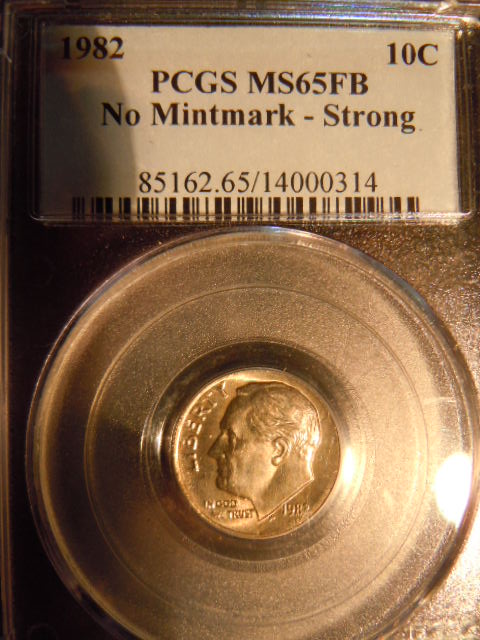 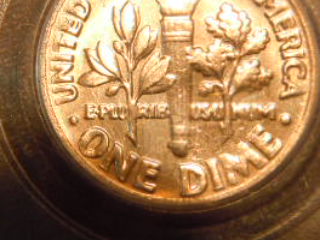 Edited by stephen
12/06/2010 5:09 pm
|
| |
Replies: 34 / Views: 4,991 |








 First Page


 Posted 12/02/2010 12:37 pm


