| Author |
 Replies: 12 / Views: 1,733 Replies: 12 / Views: 1,733 |
|
|
Valued Member
France
285 Posts |
I disagree with the administrator of numismatic website about obverse and reverse of coins. I asked to France forums and opinions are divided. In these coins, where are obverse and reverse ? 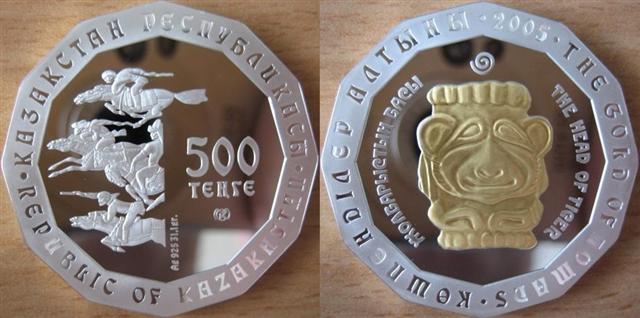 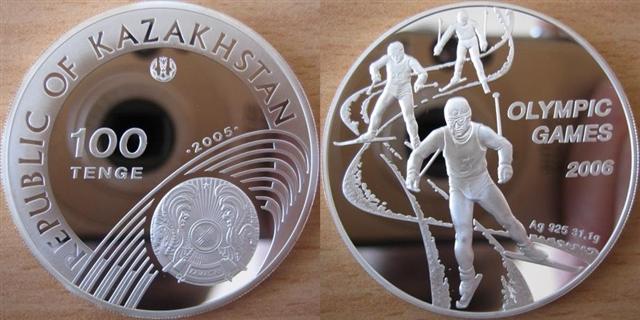 I am sure of my opinion but it is not evidence for other people. I wait for your aswers. |
|
|
|
Pillar of the Community
United States
4846 Posts |
i believe both pics on the right are the obverses.
|
|
Pillar of the Community
Norway
510 Posts |
I agree with Adam_E that the pictures on the right are most likely obverses technically speaking.
When it comes to placing coins in my albums I regularly disregard what is technically speaking observe and reverse. I would definitely place the top coin with the left side facing up if I aquired it.
|
|
Moderator
 Australia
17031 Posts |
For the bottom coin, I would consider the obverse to be the left-hand-side picture, because that's the side the national symbol / coat of arms is on.
The top coin doesn't have a national symbol, but the gold head thingy isn't "portrait-like" enough for me to be happy classifying that side as the obverse, so again I'd have to say the obverse is the left side, where the country is named.
Don't say "infinitely" when you mean "very"; otherwise, you'll have no word left when you want to talk about something really infinite. - C. S. Lewis
|
|
Moderator
United States
56855 Posts |
Wouldn't the side of a coin with the date the coin was minted be the obverse side?.When I put a coin in a folder the side with the date is showing.
John1 
|
|
Valued Member
 France
285 Posts |
This is my opinion : Obverses are on the left as Sap said because authority of country is on this side. On Kazakhstan National Bank website obverse is still emblem of Country or authority. http://www.nationalbank.kz/?docid=381I checked it with many certifcates of authenticity I have for many countries and for all it is written that emblem or authority of country on obverse. For me it seemed logical but apparently not for many people  |
|
Moderator
Australia
17031 Posts |
The "side you want facing up in a folder" isn't necessarily the obverse. Take Canadian coins: the side with the portrait of the monarch is definitely the obverse, despite the fact that all the really important information you want to know about the coin (country, denomination, date) is on the reverse, and it would be the reverse you'd have facing up in an album.
Don't say "infinitely" when you mean "very"; otherwise, you'll have no word left when you want to talk about something really infinite. - C. S. Lewis
|
|
Valued Member
France
285 Posts |
I agree for Canadian coin but portrait of the queen is emblem of the monarchy so obverse :)
|
|
Pillar of the Community
United States
5362 Posts |
The obverse and reverse designations are often different based on where you are. If you look at my avatar - a Mexican 8R coin. The picture I use is the OBVERSE. It has the name and symbol of Mexico. It is the obverse by definition - a definition that goes back to the Spanish Colonial era. So that is one method. In the US, the convention is normally to place the date on the Obverse. The Reverse typically has the Country name and symbol as well as the denomination. That is a second system and is in total conflict with the first. The coins of the UK have the monarch's portrait on the obverse by definition, but who wants to look at all that repetition. The interesting stuff is always on the other side. That is a good system if you are enamoured with your ruler. But will bore you out of your skull if you get to look only at one side. Some people classify coins by die - anvil die is reverse and hammer die is obverse. This is good for stacking coins because many hammered coins were slightly cupped. That is a fourth system but a bit dated and who knows which die is the hammer anymore? But with the newest US dollar coins having the date on the edge - how do you put them edge up?  But I have a better question. WHO CARES?  I say it is your coin so put the side you like best facing upward and to heck with the experts.  |
|
Moderator
Australia
17031 Posts |
And I don't necessarily always agree with the "official definitions" of obverse and reverse, as defined by the country that issued the coins.
Mexico, for instance, has officially defined the obverse as always being the side with the coat of arms on it (which all Mexican coins are required to bear). I would agree with this assertion... except for those Mexican coins that have portraits on them, in which case the portrait side becomes the obverse. Maybe it's because I live in a monarchy, maybe it's because I collect ancient Greek and Roman coins (for which it is almost always technically true), but portraits are of primary significance to me in determining "obverse-ness".
I have a heirarchy or flowchart of questions I ask, to determine which side of a coin is the obverse.
1. Is there a portrait?
- if yes, then the side with the portrait is the obverse.
- if no, go on to question 2
- if there are portraits on both sides of the coin, then the side bearing the portrait representing the authority under which the coin was issued (ie the current ruling king or prince of that country) is the obverse. If there is no clear "seniority" of one portrait over the other, go on to question 2.
2. Is there a coat of arms, national badge, national logo or other distinctive national symbol?
- if yes, then the side with that symbol is the obverse.
- if no, go on to question 3.
- if there are such symbols on both sides, then whichever symbol is most commonly used on the coinage of that period or most distinctive of that country is to be considered the obverse. If this is not obvious or distinct, go on to question 3.
3. Does the name of the country, or of the ruler of the country, appear on the coin?
- if yes, then the side with the name is the obverse.
- if the name of the ruler is on one side and the name of the country on the other, the side with the name of the ruler is the obverse.
- if no, then choosing between obverse and reverse is somewhat arbitrary. Whichever side bears a device which is most prominent or is most commonly repeated on the coinage of that country is probably a good guide.
Don't say "infinitely" when you mean "very"; otherwise, you'll have no word left when you want to talk about something really infinite. - C. S. Lewis
|
|
Moderator
Australia
17031 Posts |
As for the question, "Why is it important?", well, the coin database program I use has two fields where I can input descriptions of the "obverse" and "reverse" of each coin. So for each coin that goes into my collection, I'm forced to ask and find an answer to the question, "Which side is the obverse?".
Don't say "infinitely" when you mean "very"; otherwise, you'll have no word left when you want to talk about something really infinite. - C. S. Lewis
|
|
Valued Member
France
285 Posts |
thanks swamperbob and Sap for your very interesting and complete analysis It confirms my opinion. |
|
Pillar of the Community
United States
2605 Posts |
The start of my coin collecting career "occurred" in Russian. In said language there are no terms "obverse/reverse" which presume front and back sides of a coin. In Russian it was more neutral - "eagle/lattice" but always said in this order. "Eagle" being an old imperial symbol/coat of arms.
The order "E/L" could be purely alphabetical (in Russian too), but when I "translated" my collecting into English I translated "E/L" order into "O/R". Which means I too consider the symbols of statehood being on the obverse. I checked Russian Mint's website in English, they follow that rule too.
But then all the commemorative USSR coins have People's portraits on the reverse (and surely the reverse goes face up in my albums).
|
| |
Replies: 12 / Views: 1,733 |
|







 Posted 12/03/2010 08:20 am


