| Author |
 Replies: 5 / Views: 7,287 Replies: 5 / Views: 7,287 |
|
|
New Member
United States
5 Posts |
I have an Atocha coin that my grandmother wants me to research. From what I can find, I think it is 8 reales. I need some expert advice though.
Most important, is it authentic? How can I determine its authenticity without a certificate of authenticity? If I were to sell it, how could I prove its authenticity?
Assuming it is authentic, how much is it worth?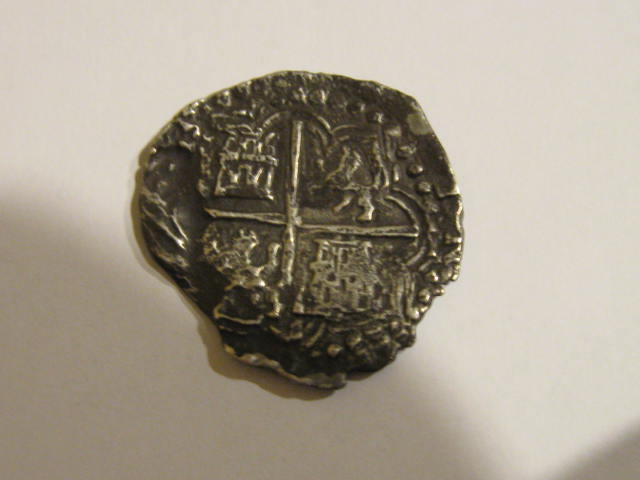 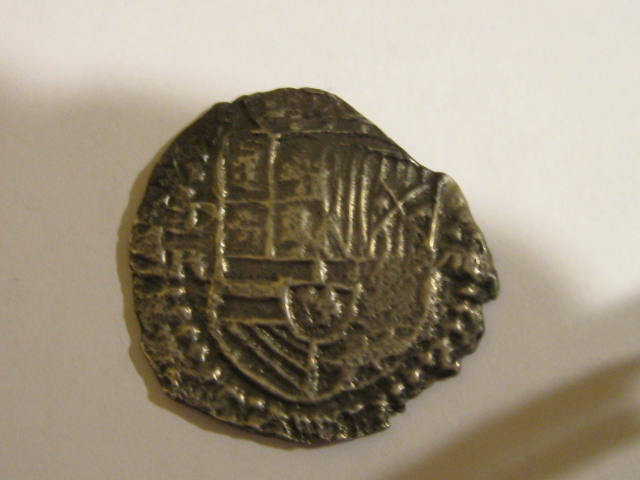 Also, the coin is 36mm in diameter. Moved to World Coins forum - Sap Edited by Motu88
12/21/2010 11:34 am
|
|
|
|
Valued Member
Guatemala
357 Posts |
A question... How do you know it's Atocha? A far as I know, all Atocha coins that hit the market legally were sold with a certificate of authenticity.
|
|
New Member
 United States
5 Posts |
It has all the traits and markings of a typical Atocha coin, and I don't have any obvious reasons to think it's fake. I'll ask my grandmother today exactly where she got it.
|
|
Valued Member
Guatemala
357 Posts |
I didn't mean to imply that it's fake. The heraldic device on your coin does not appear to be that of Phillip III, but rather Phillip II. While the vast majority of coins found in the Atocha salvage were Phillip III, there were a few earlier coins found. But, the salvage and resulting sales are pretty well documented, due to legal issues surrounding the recovery of the artifacts.
Coins from the wreck command a certain premium beyond their value as coins, but buyers and collectors will want to see proof. I do appraisals in the rare book and paper world. I had someone recently ask me to appraise 'a pile of letters Eva Peron wrote to his uncle"... Well, they arrived yesterday. No envelopes with the letters. Now the person who asked this knows I handle Eva Peron merchandise from time to time, but has no idea I actually have several pieces framed above my desk, each hand written, and well documented. Well... The letters are fake. I hate to sound cynical, but in my line of work, I have to start from the bottom. If I see a coin, it's just a piece of metal, until I can establish some facts. While a penny is probabally a penny, if I see a blob of something that looks strange on it, it's still only a penny, unless someone else agrees with me, or knows more than I do.
My point here is, you have a coin which appears to be late 16th or early 17th century. A whole lot of coins were made in the new world during that time frame, and a small minority were on a boat that sank in 1622. People who can afford the cachet of owning an Atocha coin will be looking for authentication, be it a letter of authenticity from Mel Fisher, Paper Napkin, or someone else directly involved with the salvage operation. With Atocha coins, it's not unheard of for one coin to have more than one certificate.
As I said, I did not mean to suggest your coin was fake. Quite the opposite, I hope it's real. But you do have a bit of a task ahead of you, without proper provenance.
|
|
New Member
United States
5 Posts |
Well this is kind of embarrassing...
My crazy grandfather likes to make replicas of things. (Don't worry, he doesn't sell illegal fakes.) He made a replica of a real coin his friend had just for fun. I have to say, he did a pretty good job, it looks pretty convincing. Unfortunately, I had my hopes up.
Thanks for taking a look anyways.
|
|
Pillar of the Community
United States
2669 Posts |
That's certainly an interesting spin. How does he make the replicas, do you know? And if you have any others that he may have had some fun with, you can always post those, as well, for authenticity opinions  |
| |
Replies: 5 / Views: 7,287 |
|




 Posted 12/21/2010 11:32 am





