| Author |
 Replies: 9 / Views: 2,334 Replies: 9 / Views: 2,334 |
|
|
Pillar of the Community
United States
4000 Posts |
Is this the coin listed in trends as a 1979 double date? While researching it, I seen an old thread with a link to 1979 DDO that was  . But, I digress. If this is the double date, how is this not Machine Doubling? Am I missing something? There is a little bit of doubling at the bottom of the 7 in the same direction as that of the 9, just doesn't show in the picture. 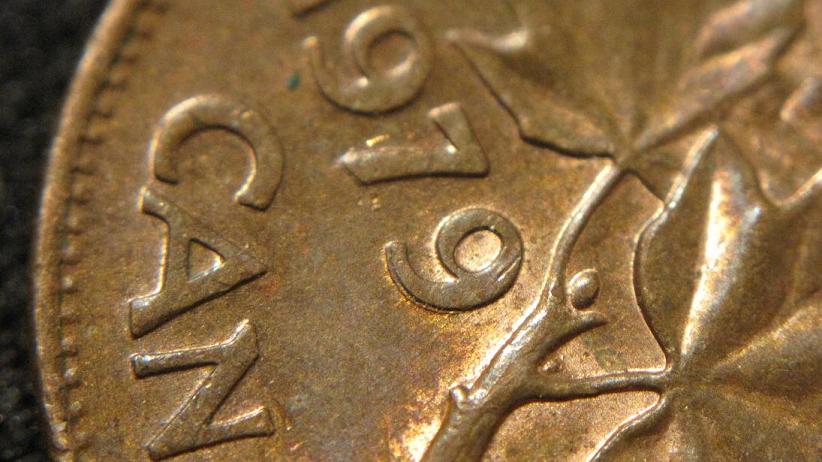 |
|
|
|
Valued Member
Canada
64 Posts |
|
|
Valued Member
Canada
306 Posts |
|
|
Pillar of the Community
 United States
4000 Posts |
Not trying to  , just trying to understand. Can't figure out why Machine Doubling and/or Die Deterioration would be something desirable enough to list as a premium collectable. Why wouldn't deterioration affect more of the die than just the bottom of the date? It still looks like Machine Doubling to me, but I always thought that MD was random, random, random. And apparently, there are enough coins with this error consistent enough to list, so maybe deterioration is the answer. castor, thanks for the links, but I can barely read English, much less French.  (Yes, I saw the translate button on the first one.) |
|
Valued Member
Canada
287 Posts |
I've always like this variety and since it is not an intended feature than it is an error. Here is one that I have with doubling not only on all numbers of the date but also on the leaf. Not sure how that fits into the deterioration theory, but here's a pic all the same. 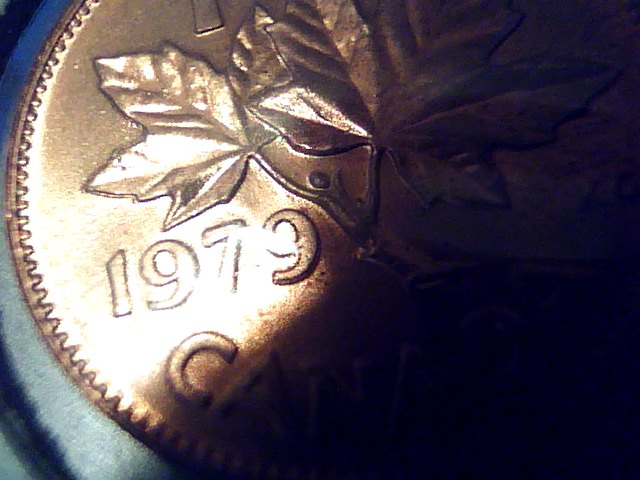 |
|
Pillar of the Community
United States
4000 Posts |
Quote:
I've always like this variety... That's what I can't get my head around. If it were a variety it would be minted on EVERY SINGLE coin the same way. The variety would be on the dies themselves. I would agree that it is an error, but not a variety. But, a collectable error? We have machine doubled and die deteriorated coins left and right here in the US. Is it because of your QC that makes this desirable? Maybe the mintage is limited to a particular die state before they get pulled? I'm just trying to understand the premium on what (down here) is considered the normal life cycle of a die. |
|
Valued Member
Canada
287 Posts |
Looking at it closely with my loupe I can see how it would be attributed to a damaged or deteriorated die. There is a step down, almost a slope on the leaf doubling. And it does not apppear on other details, nor is in one consistent direction on all of the doubled surfaces.
|
|
Valued Member
Canada
64 Posts |
These are good questions, I'll try to answer them well. The 1979 double date is an error and loosely given the term 'variety'. It is listed as having a premium because of its popularity and appeal. I, my self can find them easily and see the CCN premium being high. I had read that these errors come from different working dies and increased as the striking proceeded. With that knowledge I tracked and mapped 13 different examples from 2 or more working dies. If I take into account die clashes and Obv. doubling, I get 38+ varieties of this error. Some of these are easier to find than others. I even have one that has both mechanical and deterioration doubling on the reverse. Die Deterioration Doubling is uncommon on Canadian cents, 1967 is another example. This doubling is clean and even on cents but becomes jagged and clumpy when you find it on larger denominations. The examples of American cents I've seen resemble our higher denominations. Its simply a different game here in Canada. Since doubling on cents is ignored and unexplored the prices are inaccurate and sometimes inflated. |
|
Pillar of the Community
United States
4000 Posts |
Thanks for your input. Quote:
It is listed as having a premium because of its popularity and appeal Demand drives price, and we have a few "errors" that command silly money that I wouldn't give 10 cents for, like a 3-legged Buffalo or a 1922 No D. Both are instances of die polishing and those coins go for stupid money. So, I guess that must be it. |
|
Pillar of the Community
Canada
838 Posts |
Scooby: You're right in a more general sense that a few of our interesting Canadian varieties are not true "varieties", but rather "consistent errors". I'm thinking of the 62 double date nickel, the attached leaf 1947 dimes, the 64 extra water line nickel (a simple die crack), and certainly the 79 double date cent here.
Let me add to what was already said.
As a collector, I am interested (to a small extent) in these "consistent errors" because (1) they are often common enough to be "found" for face value or bullion value, yet not so common as to be completely standard and (2) we lack a lot of the typical varieties in 20th century Canadian coinage. (I get bored after completing the modern date sets in other words!)
Finally, I don't see a huge difference between collecting a variety and a mass-produced error. It's not as though the US mint truly intended all XYZ million of the different 1960-D RPMs. By the same token that die-cracked 1964 Canadian nickel might have been used after the crack was "known" to the mint worker!
Having said all this, I'm totally with you on the 1922 no D and 3-legged Buffalos. They, along with certain of our varieties north of the border, are simply hyped by dealers. (But the 1979 doubled cent is an innocent hype if it is a hype at all -- it's so cheap.)
Edited by bibd
01/04/2011 05:11 am
|
| |
Replies: 9 / Views: 2,334 |
|










 Posted 12/22/2010 11:53 am


