Coin Community Family of Web Sites Join Thousands of Coin, Bullion, & Money Collectors
Coin, Banknote and Medal Collectors's Online Mall Royal Canadian Mint products, Canadian, Polish, American, and world coins and banknotes. Specializing in Modern Numismatics Royal Estate Auctions - $1 Coin Auctions300,000 items to help build your collection! Join Thousands of Coin, Bullion, & Money Collectors Vancouvers #1 Coin and Paper Money Dealer


Username:
Password:
Save Password
Forgot your Password?


This page may contain links that result in small commissions to keep this free site up and running.

Welcome Guest! Registering and/or logging in will remove the anchor (bottom) ads. It's Free!

Proof Coins

To participate in the forum you must log in or register.
Author Previous TopicReplies: 7 / Views: 4,148Next Topic  
New Member

United States
7 Posts
 Posted 09/20/2006  11:06 am Show Profile   Bookmark this topic Add bigtrain0 to your friends list Get a Link to this Message Number of Subscribers
I am new at this and keep seeing the word PROOF. Can anyone explain to me what this means and how to tell if a coin is PROOF or not?
Pillar of the Community
Tpatna's Avatar
United States
1626 Posts
 Posted 09/20/2006  11:24 am  Show Profile   Bookmark this reply Add Tpatna to your friends list Get a Link to this Reply
What's a proof coin?
A newly minted proof coin is also Un-circulated, however it is the way it is made that causes a difference in appearance and qualifies it as a "proof". To understand this, let's look at how coins are made. Coins are produced when two dies strike a blank piece of metal with tremendous force. One die is engraved with the front (obverse) design for the coin. The other die has the back (reverse) coin design on it.

A proof coin is made with a specially polished and treated die!
By treating the die in a special way, the coins it produces have a different appearance. Modern technology allows the high points on the coin design to be acid treated (on the die). The background (field) design of the coin die is polished, resulting in a mirror-like look on the coin it strikes. This gives the finished coin a frosted look (frosting) on the raise parts of the design, with a mirror like finish on the background. This contrasting finish is often called "cameo". (See picture below.) On some older coins a cameo appearance is quite rare. The attribute "CAM", when added to a coin's description, means cameo appearance. "DCAM" means deep cameo, and indicates the cameo appearance is strong and easy to observe.

Proof coins are struck twice, or more!
Not only are proofs made using specially treated dies, each coin is struck two or more times by the coin die. By striking it more than once the metal is forced into all the crevices of the die, thereby giving a very fine detail to the image on the coin. This fine detail does not appear on some non-proof coins.

The coin on the Left is Uncirculated and the Coin on the Right is Proof. Hope this helps.

Proof-Coins Proof-Coins

Tim
Edited by Tpatna
09/20/2006 11:26 am
New Member
United States
7 Posts
 Posted 09/20/2006  12:03 pm  Show Profile   Bookmark this reply Add bigtrain0 to your friends list Get a Link to this Reply
Tpatna, Thank you so much for the help and taking the time to give such a thorough answer. I believe I have a complete understanding of PROOF now. Again, thank you very much.
Valued Member
Guido's Avatar
United States
390 Posts
 Posted 09/24/2006  02:29 am  Show Profile   Bookmark this reply Add Guido to your friends list Get a Link to this Reply
Great Explanation! Thanks :)
Pillar of the Community
Snooba's Avatar
Australia
1360 Posts
 Posted 09/24/2006  03:49 am  Show Profile   Bookmark this reply Add Snooba to your friends list Get a Link to this Reply
I found the following information from the Royal Australian Mint and the photographs from cruziscoins.com interesting and informative regarding the making of proof coins:

"Proof coins are the masterpieces of our craftsmanship. Clean, good quality steel is used to make proof dies. The die impression is grit-blasted with very fine zirconium sand to give the surface a frosted finish - the common term for this is sand-blasting. The surrounding background is then highly polished.

Hand polishing of the sections of the die face is performed under a microscope and takes two to three hours. To achieve a mirror-like finish, different grades of diamond lapping paste are applied to the surface and polished with wooden sticks (usually soft birch wood). This is followed by polishing with a soft felt pad attached to a dental drill.

The entire face is covered with clear tape and then, using a fine scalpel, the tape is cut away leaving the design exposed. This area is sand blasted again and given an even frosted appearance and a clean sharp profile around the impression.

After polishing, the die is chrome-plated or titanium nitride coated to resist damage from minute foreign particles and to extend the die life. This in turn reduces the number of times the die is refurbished.

Proof coins are manually and individually coined in a specially designed and air conditioned environment. Laboratory coats, hair ties, gloves, sticky mats on the floor, lint free material to wipe dies, and fans continually blowing air across the die in the coining presses are some of the measures taken to minimise the risk of blemishes on the coins.

On each manually operated press, using forces of up to 360 tonnes, we can produce about 500 proof coins per day.

Within the coining press a collar is used to restrain the blank. The size and shape of the collar determines the shape of the finished product.

Operators, with gloves and/or tongs, place the blank onto the coining press and strike it up to 4 times. The number of strikes is dependent on the size and the depth of relief. The die is wiped with alcohol, to remove any dust, before the next coin is struck.

The operator inspects each coin and then Quality Control randomly examines coins within every batch. If one fault is found the entire batch is thoroughly examined.

Finally, proof coins made from bronze, cupro nickel, aluminium bronze and sterling silver are sprayed with a nitro-cellulose lacquer to protect against oxidation. The coins are inspected once more."
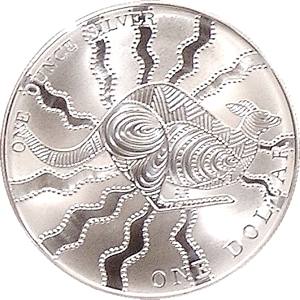
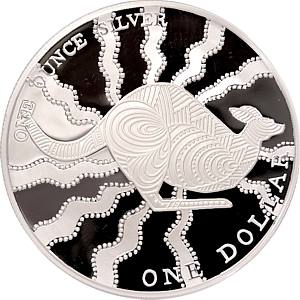
Proof-Coins Proof-Coins

(http://www.cruzis-coins.com/Kangaroos/index.html)
(http://www.ramint.gov.au/making_coi...e=proof.cfm)


Valued Member
Silver Dollar's Avatar
United States
287 Posts
 Posted 10/26/2006  10:11 pm  Show Profile   Bookmark this reply Add Silver Dollar to your friends list Get a Link to this Reply
A interesting piece of information. In the early years dies used to make proof coins were treated with Cream of Tarter.
Pillar of the Community
Snooba's Avatar
Australia
1360 Posts
 Posted 10/30/2006  02:17 am  Show Profile   Bookmark this reply Add Snooba to your friends list Get a Link to this Reply
Cream of Tarter? Seriously? Wow, I did not know that!
Rest in Peace
muckeye's Avatar
Australia
661 Posts
 Posted 10/31/2006  07:01 am  Show Profile   Bookmark this reply Add muckeye to your friends list Get a Link to this Reply
Re Snooba's mention of lacquer being used. Did anyone notice that the Mint mentioned the use of lacquer being used on mint set in the mid 1990's. I queried one of the mint engineers and was told that the lacquer was a product called 'Interlac' and was developed by NASA for use in the space programme. It's available in Wattyl spray cans, about $20 a can. I dont know if the mint stopped using it or they just stopped mentioning it in the fine print? I've tried it with no adverse results.
regards, Muckeye.
ps Sorry I got the trade name of the lacquer wromg.'Incralad' is the correct name. Also it was developed in conjunction with the International Copper Reasearch Association. regards, muckeye
Edited by muckeye
10/31/2006 7:32 pm
  Previous TopicReplies: 7 / Views: 4,148Next Topic  

To participate in the forum you must log in or register.


Disclaimer: While a tremendous amount of effort goes into ensuring the accuracy of the information contained in this site, Coin Community assumes no liability for errors. Copyright 2005 - 2026 Coin Community Family- all rights reserved worldwide. Use of any images or content on this website without prior written permission of Coin Community or the original lender is strictly prohibited.
Contact Us  |  Advertise Here  |  Privacy Policy / Terms of Use

Coin Community Forum © 2005 - 2026 Coin Community Forums
It took 0.25 seconds to rattle this change. Forums

