| Author |
 Replies: 9 / Views: 2,156 Replies: 9 / Views: 2,156 |
|
|
Pillar of the Community
 United States
1910 Posts |
OK experts-- tell me what I've done. Good news or bad, imma big boy; I can take it. I've read a lot of these threads discussing this coin series, and I can say quite frankly that the information is somewhat overwhelming and more than a little discouraging. I had no idea there was so much fakery going on, and that it is also an old phenomenon. What a rude wake up call! Yes, it's an ebay coin, purchased some months ago from a seller in Spain with good feedback. I only ever intend to buy one of these, just to have the type. I looked at lots of them on the 'bay before choosing this one, based on the seller's reputation, eye appeal, and the silly fact that it is dated exactly 200 years prior to my own birth year. Now that I have given away my age, feel free to advise me that I am a doddering idiot, if this specimen acquired by a raw beginner turns out to be not quite what it is supposed to be. Pics are the best I can do with the camera I have. Thanks for your attention, and any information you care to provide. 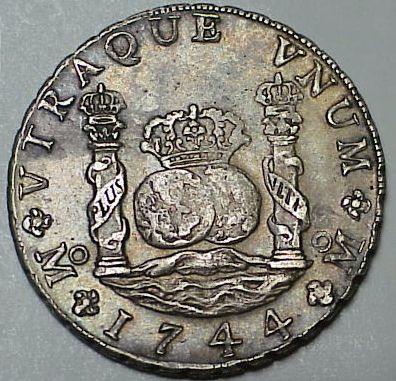 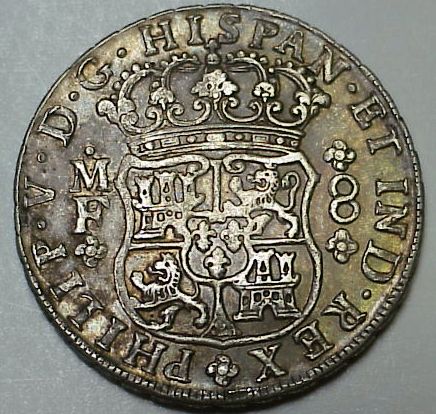 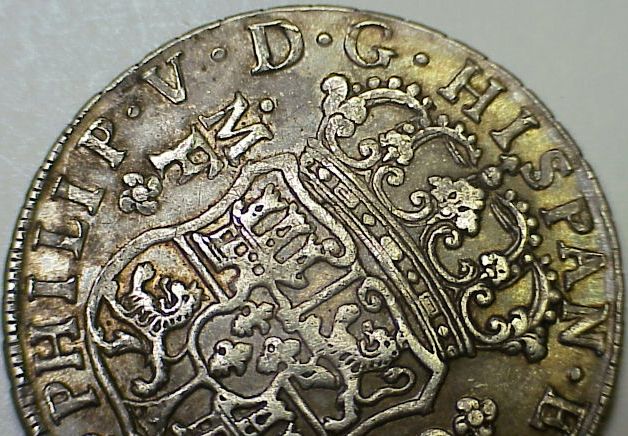 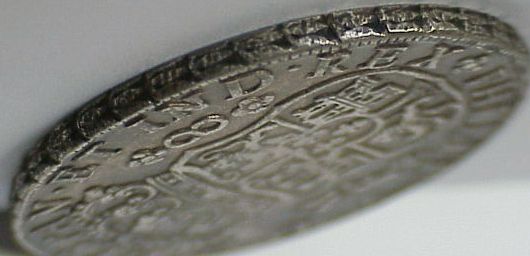 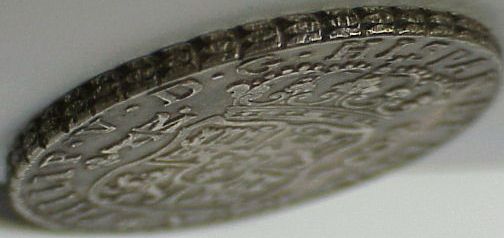 |
|
|
|
Valued Member
United States
425 Posts |
OK, I will go out on a limb here and say that I see nothing that screams "FAKE". The edge and the flowers looks good and all the coin seems to have general damage as if harmed or dropped, (maybe like a 200 year old vending machine?).
I see those same lines/shadows on the "N" and the "S" of HISPAN and IND, but I am told this does not mean a fake, just a recutting of the die.
The "P" in HISPAN is also fallen and a little funny shaped?
Swamperbob, help us out here!
Could you give us a weight in grams and maybe a SG test result. Also, the edge design should have two odd places on it, are they directly across from one another?
|
|
Pillar of the Community
United States
5362 Posts |
mysilveryears Nice photographs. I think I recall seeing this one on ebay a short while ago - or at least it's twin. I recall the out of round globe on the left as being a bit troubling (but possible). The toning appears to indicate some chemical treatment of some sort as well (also possible). But now seeing the edge - I am concerned it might not be real. Have you done an accurate weight and a Specific Gravity? The problem I see with the edge is the rather unifrom level of surface damage none of which occurs on the face of the coin. I am always suspicious about things like that and I realize that post strike conditions do cause odd damage BUT...... (once again possible). Question - I would expect that the edge design reverses as I believe I can see here. Can you post pictures of the two joins so that we can also see the lettering around the shield. I would like to see the priority of the laps if possible to rule out two passes with one die. Second on the letters QUE do I see Machine Doubling of the image? I hope the coin is real. I just have to get why answers for a few things I think I see.
|
|
Valued Member
Philippines
386 Posts |
Quote:
But now seeing the edge - I am concerned it might not be real. I am afraid and sad to note that this type of edge is a common counterfeit that I am very well sure of. There are lots of factors though to look to on the above specimen that would show its status : 1.Letter "Q" is not the right type in form. 2.Blotchiness of its color particularly on its obverse. 3.Irregularity on its letters (more pronounce on the letter "P" on HISPAN) 4.the forms of the 3 Fleur-de-lis at the middle of the crown looks more wornout than the keystone of the castle on the lower right portion. These are just among the few red flags on a Pillar Dollar that we should all be aware of. Its actual weight (dry) would even exceed the full weight of 27.03grams for a Pillar Dollar. Having bought it from ebay, you may write your seller if it's still possible for a return/refund. At least it's worth a try. And I am sure that if the ebay seller always cares for his name, he/she will refund your payment no matter how long it was from the time of your transaction. So I guess this could be a bad news for you, but we are all hoping a good news for you in case your seller returns your money. |
|
New Member
United Kingdom
41 Posts |
|
|
Pillar of the Community
 United States
1910 Posts |
Thanks for the replies so far. Some more pics provided. I will have to fetch my antique Ohaus triple beam balance from cold storage to check the weight.  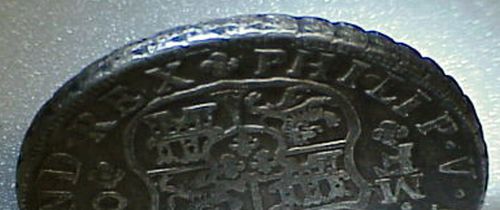 the directional change here is between the first 4 and the P of Philip. 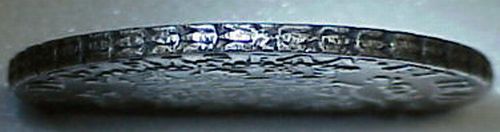 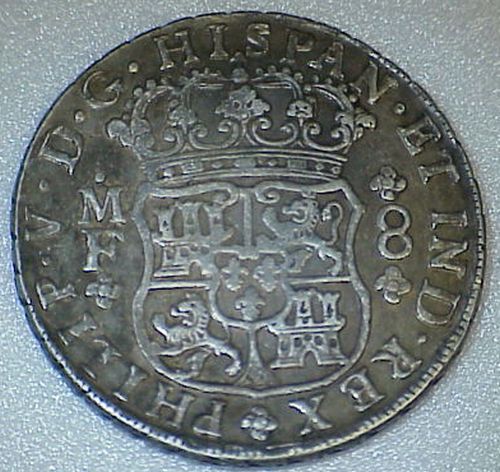 Here the change is between the -U- of QUE and the P of HISPAN. 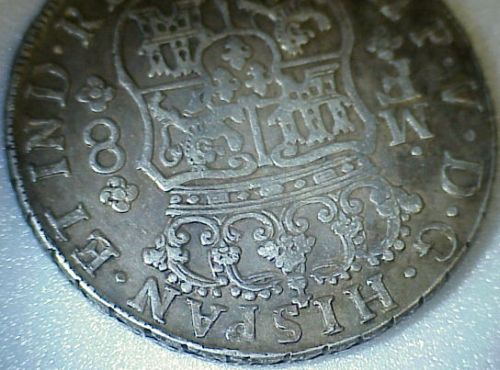 The P seems to be incompletely struck. The N appears double struck. 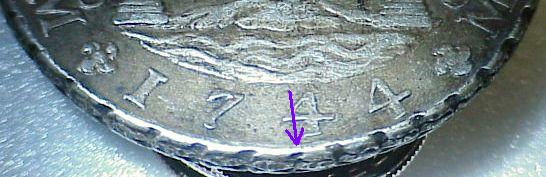 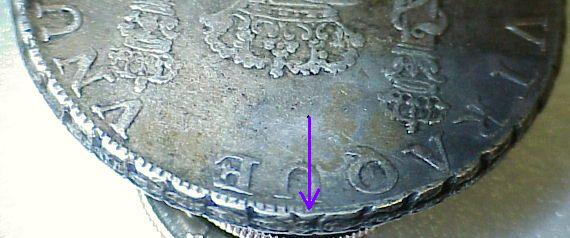 Also it's pretty funny how *you* cannot post the naked letter --> U without the hidden chatspeak editor asserting its right to alter your meaning! |
|
Pillar of the Community
United States
5362 Posts |
mysilveryears The edge details to me indicate you have a VERY recently manufactured Numismatic Forgery. It will likely be silver. I own two that are made with alloys in the 760 to 840 range. I believe yours is VERY recent because the older ones made 10-20 years ago rarely got the edge that good. The forgers are definitely starting to use two die edgers but they often use a wimpy flywheel mechanism to rapidly add the edge design and it does not cut the edge detail in well enough to fully obscure the grinding they do on the edges to get the blanks (or struck coins)ready for edging. They eventually will remedy this problem but for now it is a good marker to look for. I am hopeful that getting this step right will be one of those that adds significantly to the production costs. Making it ultimately less profitable is the only way to stop forgery. I am not certain about why the edges always have that same rough texture - it could be because they may be casting the blanks and they have a seam to obliterate. It could be because they adjust the weight by grinding the edges instead of the faces of the balnk. I am not 100% sure. In some cases, it is clearly because the coin itself is cast (injection molded) but most forgers have adopted a press to strike coins because buyers can spot casts too easily. But as I said above, for now - the roughness that shows through the edging is a bad feature seen on many very recent forgeries but it is a perfect way to identify them. I would try to get my money back from the seller and then (since you are only looking for 1 example) buy a certified copy from a reputable dealer. It is really the only way to be sure with this series. Previously I have posted the results of my annual semi-scientific survey of ebay postings and the Pillar 8Rs seen on ebay are far and away predominantly forgeries. If asked for an estimate I would say this year is running close to 10 to 1 (forgeries or suspected forgeries versus coins I would bid on as real). I contrast that with the early date Cap and Ray series where the ratio is reversed.
Edited by swamperbob
03/05/2011 9:15 pm
|
|
Bedrock of the Community
Australia
21792 Posts |
With higher valued items, I will always buy from a reputable dealer, and keep all of the purchase information. Some of that information is now over 30 years old. I used to deal with Seabys and Spinks in London.
Since I am a World collector, I will still buy items up to $100 without any documentation, and rely on very many years of experience, which in not infallible, and and simply take the risk. Easy, when a lot of my coins are less than $5 in value.
I have a pillar dollar that was given to me by a missionary that used to live in Lima for many years. Even then, without examination, I don't think that is a guarantee of it being genuine.
|
|
Pillar of the Community
United States
1910 Posts |
Thanks, swamperbob et.al.
It would seem to me that the escalation of fakery of a highly popular type would eventually reach the point where the suspicion level is so high that the entire category is degraded to the extent that few collectors will take a chance on any of these coins offered in the public market.
If not for this forum, I probably would never have questioned the genuineness of my 'coin'.
Now I suspect I have some other candidates for examination by discriminating retinas.
|
|
Pillar of the Community
United States
1801 Posts |
Here is another 1744 pillar for comparison. I am unable to post pictures of the edge because I only have access to a flat plate scanner. The edge design all runs one direction with barely discernible overlaps at 180 degrees. 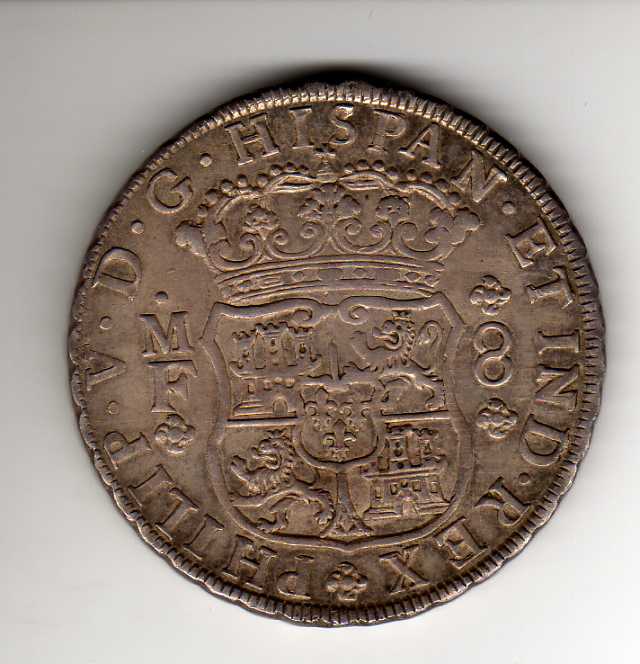 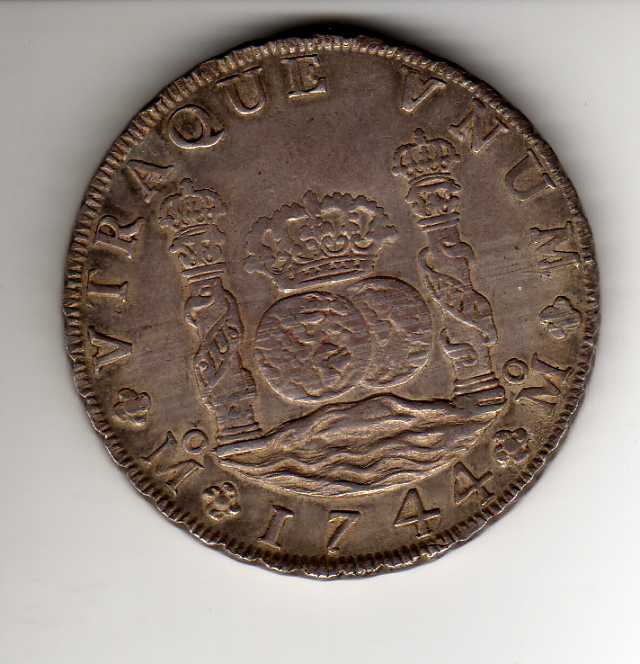 |
| |
Replies: 9 / Views: 2,156 |
|








 Posted 03/05/2011 3:50 pm


