No...a common RPM can be easy to identify, depending on its characteristics. There are over 200 of them that I can readily identify just looking at the coin, and they can range all the way down to F-VF in grade and I can still ID them. And I am not special in this regard. A number of people can do the same, because in searching through coins the same RPMs tend to come up more than others, and after a few times searching through the listings to find the same ones over and over again, the die numbers and markers "stick" in our heads and eventually we memorize them.
The minor ones are what I am talking about in my post. "minor" being those that have very little to identify them as RPMs to begin with. Only a small hairline separation in one area, or a very faint separation. These can be impossible to identify to a given die for the reasons I stated, then posted in a different thread for the general populace of this board to read.
Please do not mix or confuse "common" with "minor". Some of the most common RPMs are not minor at all. It just so happens that the more common RPM dies saw a long life and have a lot of surviving examples. To mind immediately come two very nice RPMs that are also very common. 1954S RPM#4 and 1960D RPM#2. Both are very common but are very dramatic examples of RPMs.
Some of the more minor RPMs are actually very scarce and some are very valuable. 1960D RPM#4 comes to mind...quite minor and could be skipped easily as being nothing at all by a novice, yet they sell for $50-$100 in uncirculated grades because they are very difficult to locate (in more than 15 years of searching thousands of 1960D rolls, I have yet to find one searching).
I was specifically referring to holding back and attempting to identify minor RPMs that are found in circulated sources. In almost all cases their potential as new discoveries is very low because a lack of distinguishable markers or characteristics renders them useless. In other cases, where they can be identified, all but the rarest are hardly worth the time and effort for resale in identifying them. It can often take half a day to identify a worn or damaged RPM that wouldn't bring 50 cents even identified and certified as a particular die by an attributor.
In a nutshell, this is the case: When looking through more heavily circulated coins for RPMs, go somewhat quickly and pick out the more dramatic examples - those are the only ones that will have numismatic value to a collector. For the coins that are AU or better, slow down and work for the 'new discoveries'. The pay-off will likely be little more than having your name in print, but that should be about all you're looking for in a hairline split serif anyway - you won't impress many generalist collectors with a 50 cent oddity that you have to drag out the stereo-zoom microscope to show them.
Believe me when I say that I understand why people are pulling out and posting every little find...if I were just getting started in this day and age I'd be doing the same thing. When I started back in the 1980s, we had nothing more than a couple of sparsely illustrated books to use in figuring out what we were doing. Identifying RPMs accurately with the measures we had at the time was about as scarce as snowstorms in Miami and about as accurate as hitting a fighter jet with a slingshot. It took years - YEARS - to learn the difference between the
Machine Doubling and the real deal, and we did it with little or no communication with other collectors who had the same affinity for finding the minor oddity with a glass. We were considered as silly back then by most as we are these days by quite a number fewer...but at least now we have technology on our side. Not only for the beginning collectors, but for the attributors like myself who catalog hundreds of new discoveries each year because we not only have the technology to receive news of the finds, but the technology to share them with the world.
A completely different story exists in the near refusal by most of the attributing entities to use this technology to its fullest potential.




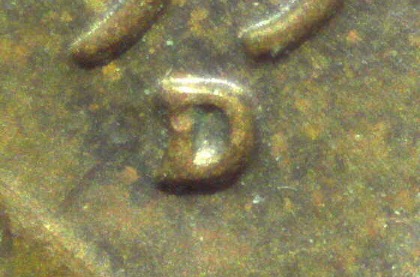 1954 D d over d east Normal.jpg
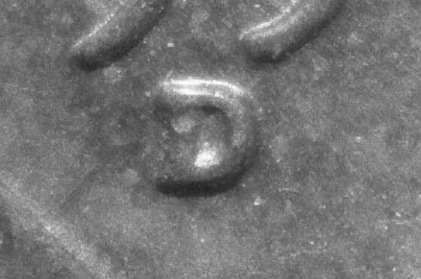 1954 D d over d east Grayscale.jpg
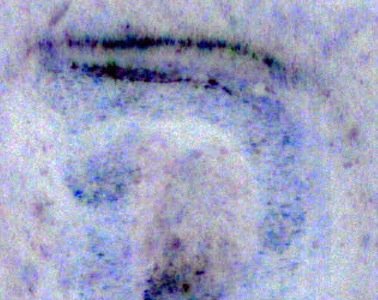 1954 D d over d east Negative.jpg


 Posted 10/20/2006 01:34 am





