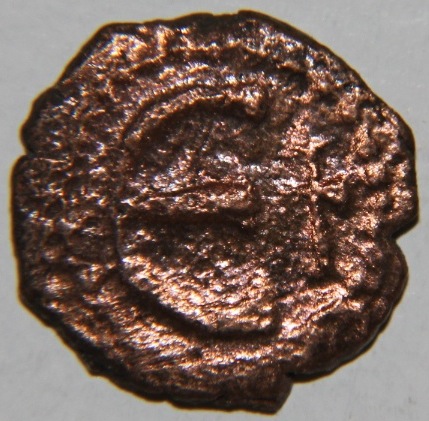
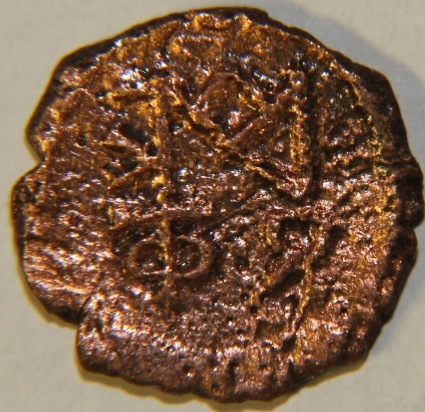
#1: Byzantine. The large E-shape is the Greek letter epsilon, the Greek numeral for "5". The denomination is therefore a "pentanummium". Your pic of the monogram on the other side is upside-down. Attributed to the Theoupolis (Antioch) mint, during the reign of Justin II.
Wildwinds example.
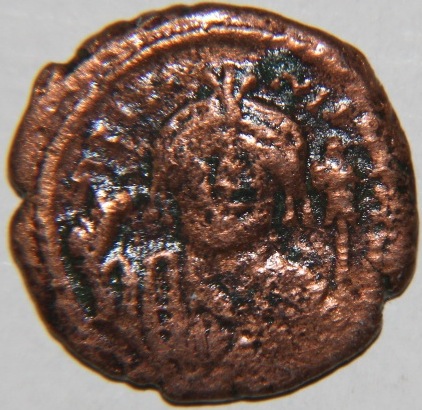
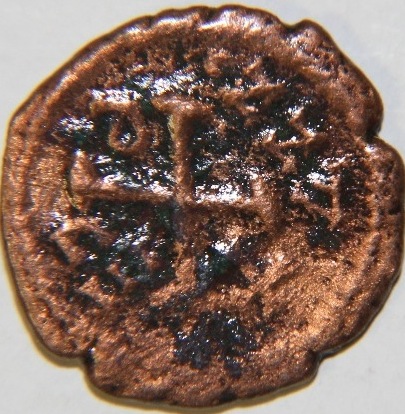
#2: The reverse doesn't depict a Spanish-style cross, but a large letter "X" - the Roman numeral "10", this is a decanummium. The year is 8 (IIIV) The emperor's titles are unclear (something that often happens on coins of this period), but the use of a roman numeral "X" instead of a Greek numeral "i" narrows it down; I think emperor Maurice Tiberius is the best fit.
this example is from Year 1. If my guess to the emperor is correct, the coin dates from 589-590 AD.
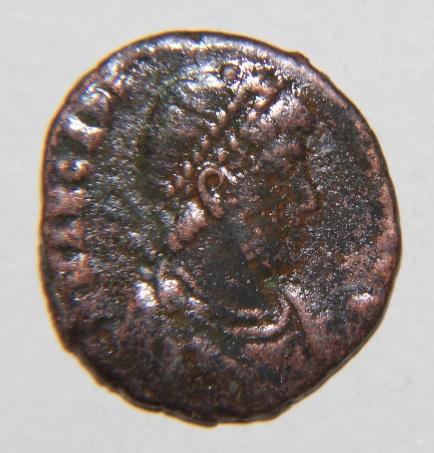
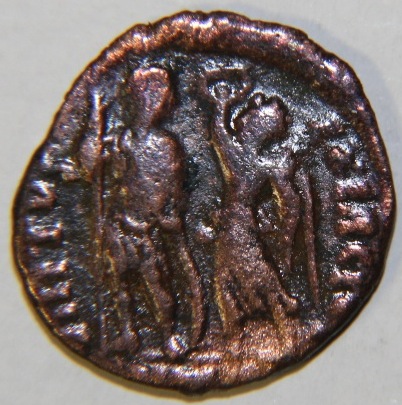
#3: Late Roman: Arcadius, reverse VIRTVS EXERCIT (valour of the army), Victory crowning emperor with wreath.
no mint legible.
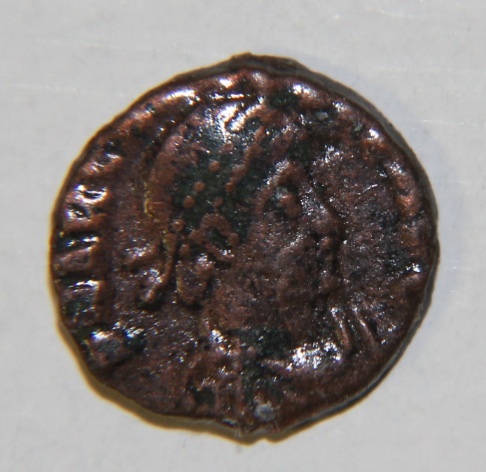
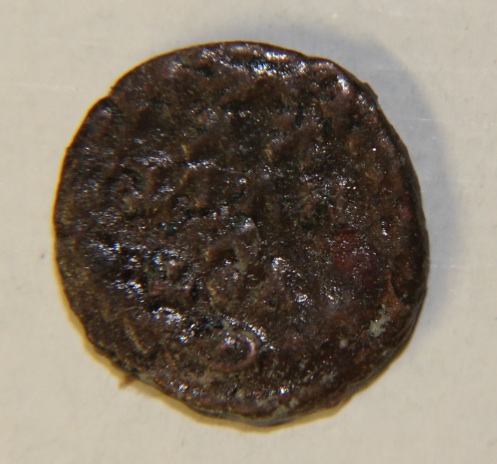
#4: Late Roman: Arcadius, reverse VOT X MVLT XX in wreath. Again,
no mint legible.
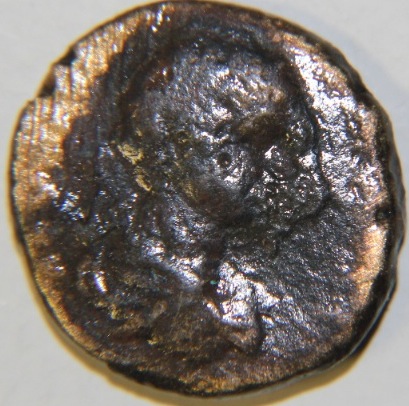
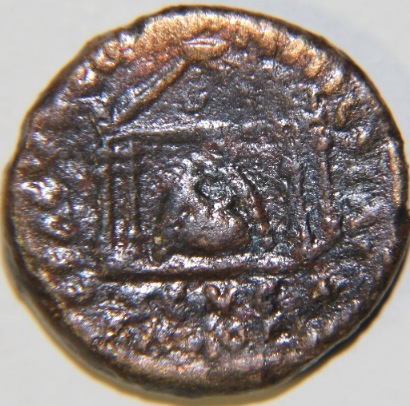
#5: Roman Provincial, I believe - the legends aren't clear enough to tell whether it's Greek or Latin, but the object inside the temple clearly isn't a conventional statue - I think it's a "baetyl", a sacred stone, typical of the various cults in the eastern half of the Empire, where most of the local coinages were in Greek. The city of Perga was quite proud of it's baetyl of Artemis and put it on lots of their coins; see
this example and
this one. However, your coin does look unusual to me - the temple appears to be shown in "3-D" oblique view, something rarely seen on ancient coins - temples were usually depicted front-view, as in the examples I showed above. Unfortunately, I can't read any of the script or identify the obverse portrait, so this curious little piece might have to remain a mystery.
Don't say "infinitely" when you mean "very"; otherwise, you'll have no word left when you want to talk about something really infinite. - C. S. Lewis






 Posted 05/17/2011 10:53 pm





