| Author |
 Replies: 15 / Views: 8,284 Replies: 15 / Views: 8,284 |
|
|
New Member
United States
8 Posts |
Any idea on the striping on this penny? 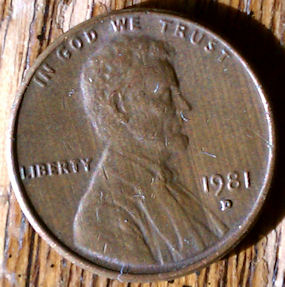 |
|
|
|
Pillar of the Community
United States
689 Posts |
looks like an improper alloy mixture to me.
|
|
Bedrock of the Community
United States
12437 Posts |
Those stripes can occasionally be found on 95% copper Lincolns from the 1970s and 80s. I attribute them to contamination issues on the rollers used to set the thickness of the metal stock before the blanks are punched. Some refer to them as "improperly mixed alloy" but I do not think that is the case due to distinct visual differences between these coins and earlier Lincoln wheaties with known alloy issues. These lines are thin, perfectly parallel, and dark. Alloy streaks are exactly that- streaky.  Alloy issues also go through the planchet, not just on the surface. I have previously been able to remove the lines but the coin's patina is completely stripped in the process. However, that does prove that the lines are on the coin and not in the coin. |
|
Valued Member
United States
59 Posts |
Mint roller. Gold Silver Copper all color differently due to the temperature that is reached when assayed. A 15 degree temp difference in gold makes a green color, a 45 degree makes a red color. Same with copper. The streaks are the folding of ingots of different temps.
|
|
Valued Member
United States
337 Posts |
biokemist6 very interesting thoughts. I have never heard this reasoning given for the "wood grain" like appearance of some pennies
I definitely see the point though. The woody pennies from the 30's and back that I have don't look anything like the striations on the wood grained coins from the 80's
interesting
|
|
Valued Member
United States
337 Posts |
another thing is on those 80's coins sometimes the reverse isn't affected at all, it has no stripes on it, my older coins have wood grain everywhere. If it were an alloy problem the whole coin, front and back would be affected you would think.
|
|
Pillar of the Community
United States
3755 Posts |
No because those occur on other coins as well. I have a beautiful Ike and several Kennedy halves with the same. I believe it comes from marks from die polishing. I could be wrong though. I will post a pic later of the Ike at least. The Kennedys too if I can find them. |
|
Pillar of the Community
United States
4897 Posts |
I dunno but tend to agree with Bio. Reason being the striations are pretty even most die polishing marks seem to be all over the place. Just MHO.
|
|
Pillar of the Community
United States
3755 Posts |
Here's the Ike....  It may not be die polishing, but its definately something that happens on multiple coins |
|
Bedrock of the Community
United States
12437 Posts |
It has nothing to do with die polishing. As I mentioned earlier, it is caused by the rollers setting the thickness of the metal stock.
|
|
Pillar of the Community
United States
1147 Posts |
Any idea what that contamination might be to cause this and is it date specific?
|
|
Bedrock of the Community
United States
12437 Posts |
I surmise that the lines would be caused by a combination of metal grit and grease embedded in the roller surface. I have seen this phenomenon primarily on 1970s and 80s issues but I have also seen some State Quarters affected as well. |
|
Pillar of the Community
United States
3755 Posts |
So you feel it is when the metal is rolled as a sheet to make the planchets, something on theroler is causing the striations. That would certainly explain the uniformity of the lines.
|
|
Bedrock of the Community
United States
20061 Posts |
Quote:
Those stripes can occasionally be found on 95% copper Lincolns from the 1970s and 80s. I attribute them to contamination issues on the rollers used to set the thickness of the metal stock before the blanks are punched. Some refer to them as "improperly mixed alloy" but I do not think that is the case due to distinct visual differences between these coins and earlier Lincoln wheaties with known alloy issues. These lines are thin, perfectly parallel, and dark. Alloy streaks are exactly that- streaky.
I like your theory and I think it does apply to the more modern, Memorial woodies. However, you knew it was coming (LOL), I think when you removed the grain from the "surface" you simply removed the toning. The subtle differences in the metal would not be visually apparent until the surface tone differently. I believe the improper alloy mix is pretty tried and tested over some decades now. I see the problem as bits of imcompletely mixed alloy that are rolled out in the presses. Just like rolling cookie dough, those bits get pressed and elongated during the planchet manufacture. On my wish things of to do in the lab. I'd like to put a woody on the SEM/EDXRF and check for differences in composition, i.e. streaked vs non-streaked areas. Then, I'd like to acid clean the surfaces and recheck for differences. This would prove beyond doubt either your theory or mine.  Apparently this numismatic challenge is going to left for me to complete before I die. I don't believe there's anyone else in the world that would undertake this job.  |
|
Pillar of the Community
United States
1147 Posts |
Thad that would prove wether it was an improper mixing alloy or surface contamination from the roller. Would be quite interested in seeing your results.
|
|
Pillar of the Community
United States
830 Posts |
Wouldn't alloy mixing be done in a molten state? I can't see it not being mixed better than that.  |
| |
Replies: 15 / Views: 8,284 |
|







 Posted 06/01/2011 11:33 pm


