

 Posted 06/15/2011 3:18 pm


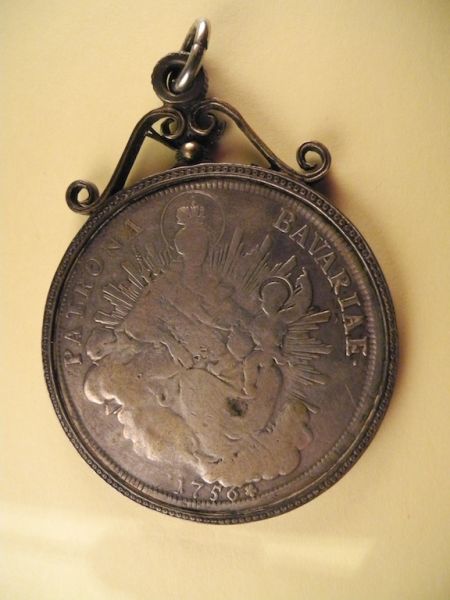
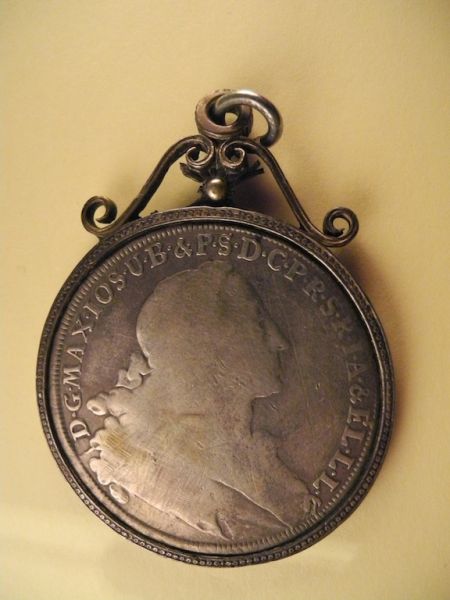
guebj00 The coin is a Bavarian Thaler. At the time this coin was issued Bavaria was a Dutchy (ruled by Duke's). Bavaria was independent until the unification of Germany. The ruler was Maxmillian III Joseph the Duke of Bavaria who ruled from 1745-1777. The catalog number is KM#234.1. The coin was a common issue and treated as a Trade dollar in many areas.
sel_69l There is a simple reason for parallel grooves on the surface of a coin of this age. They are referred to as "Adjustment marks".
To understand what they are you need to understand the way coins WERE made at this period of time.
The process of creating rolled sheets of silver was MANUAL - done in a hand cranked rolling mill. Therefore the result was a more or less uniform sheet of silver.
After the sheet of silver was created it went to the blanking machine. This resembled a large hand cranked cookie cutter. The blanks were cut from the sheet one at a time.
The next step was VERY important - the blank was weighed very accurately. If it was too light in weight it usually went back to the melting pot. (Every once in a while a hole was drilled in the blank and an over weight plug was added. Once the total weight was correct - the plug could be hammered flat into a uniform surface.) But if the blank was too heavy - the person weighing the coin "adjusted" the weight with a file. The adjuster had several files he could use and varied the selection by the amount of silver that had to be removed. This adjustment was NEVER made on the edge. It was always done across the face of the blank with a file. This procedure left gouges on the surface of the blank. These grooves varied from very fine to VERY DEEP.
The next step added the edge design if there was going to be one. The planchet (the blank becomes a planchet when it is edged) is then washed in acid to remove dirt and grease and it is heat treated (annealed) to soften the metal for the strike.
Finally the coin was struck. This was done in a manual press - usually a screw press. If the strike was hard enough AND the adjustment lines were light enough - the final stuck coin might show very little of the adjustment lines. BUT a weak strike especially combined with deep adjustment grooves often left the adjustment lines clearly visible after the coin was struck.
That is how adjustment lines got onto coins until the advent of the high power presses and mechanized rolling mills.
But this begs the primary question of is that what you have here.
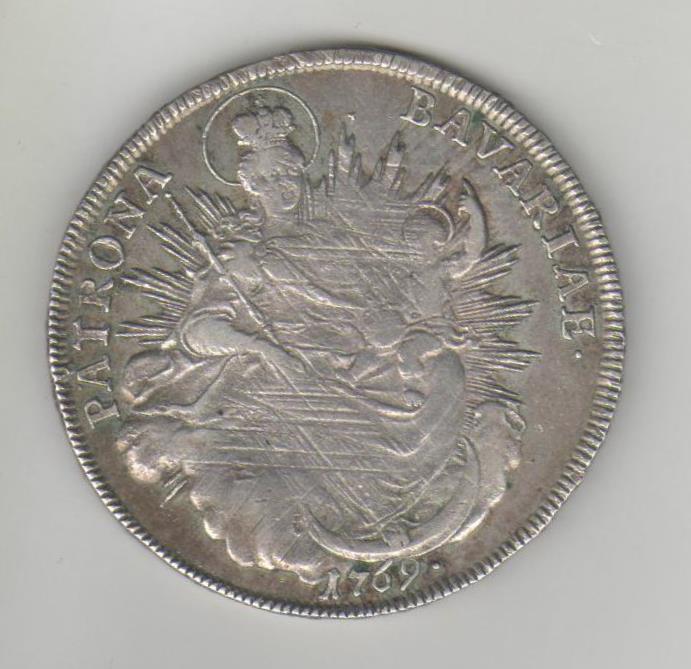
The 1769 coin pictured here is known to have been copied by the Chinese. I own a couple forgeries of this date. So you need to be cautious of forgeries. The surfaces of the coin are dull and should be checked closely. Also multi directional adjustment marks while known to exist are always of concern because typically the adjustment was done in ONE direction when the heavy file was used.
On the surface of this coin I detect at least 4 or 5 directionalities of the deep grooves. That is VERY suspicious.
Carefully examine the grooves - a real adjustment line does not start and stop but crosses the surface edge to edge (or nearly so). The places the grooves show most should align with the deepest portions of the die. BUT the grooves HAVE TO EXIST all the way across - where the die was shallowest the lines are just CRUSHED. They are still there or should be - LOOK FOR THEM.
If they are not there - it is a fake or the damage is post strike and the coin is bullion value.
I am close to certain that this coin is a COUNTERFEIT but I could be incorrect.
Have you got an accurate weigh?
What does the edge of the coin look like?
sel_69l There is a simple reason for parallel grooves on the surface of a coin of this age. They are referred to as "Adjustment marks".
To understand what they are you need to understand the way coins WERE made at this period of time.
The process of creating rolled sheets of silver was MANUAL - done in a hand cranked rolling mill. Therefore the result was a more or less uniform sheet of silver.
After the sheet of silver was created it went to the blanking machine. This resembled a large hand cranked cookie cutter. The blanks were cut from the sheet one at a time.
The next step was VERY important - the blank was weighed very accurately. If it was too light in weight it usually went back to the melting pot. (Every once in a while a hole was drilled in the blank and an over weight plug was added. Once the total weight was correct - the plug could be hammered flat into a uniform surface.) But if the blank was too heavy - the person weighing the coin "adjusted" the weight with a file. The adjuster had several files he could use and varied the selection by the amount of silver that had to be removed. This adjustment was NEVER made on the edge. It was always done across the face of the blank with a file. This procedure left gouges on the surface of the blank. These grooves varied from very fine to VERY DEEP.
The next step added the edge design if there was going to be one. The planchet (the blank becomes a planchet when it is edged) is then washed in acid to remove dirt and grease and it is heat treated (annealed) to soften the metal for the strike.
Finally the coin was struck. This was done in a manual press - usually a screw press. If the strike was hard enough AND the adjustment lines were light enough - the final stuck coin might show very little of the adjustment lines. BUT a weak strike especially combined with deep adjustment grooves often left the adjustment lines clearly visible after the coin was struck.
That is how adjustment lines got onto coins until the advent of the high power presses and mechanized rolling mills.
But this begs the primary question of is that what you have here.
The 1769 coin pictured here is known to have been copied by the Chinese. I own a couple forgeries of this date. So you need to be cautious of forgeries. The surfaces of the coin are dull and should be checked closely. Also multi directional adjustment marks while known to exist are always of concern because typically the adjustment was done in ONE direction when the heavy file was used.
On the surface of this coin I detect at least 4 or 5 directionalities of the deep grooves. That is VERY suspicious.
Carefully examine the grooves - a real adjustment line does not start and stop but crosses the surface edge to edge (or nearly so). The places the grooves show most should align with the deepest portions of the die. BUT the grooves HAVE TO EXIST all the way across - where the die was shallowest the lines are just CRUSHED. They are still there or should be - LOOK FOR THEM.
If they are not there - it is a fake or the damage is post strike and the coin is bullion value.
I am close to certain that this coin is a COUNTERFEIT but I could be incorrect.
Have you got an accurate weigh?
What does the edge of the coin look like?