









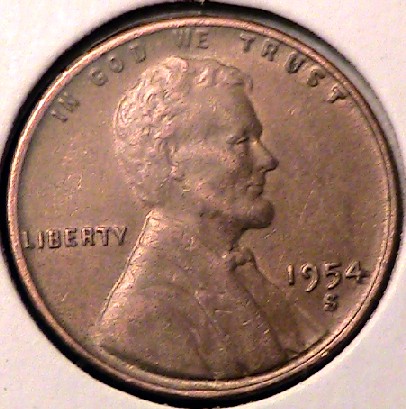
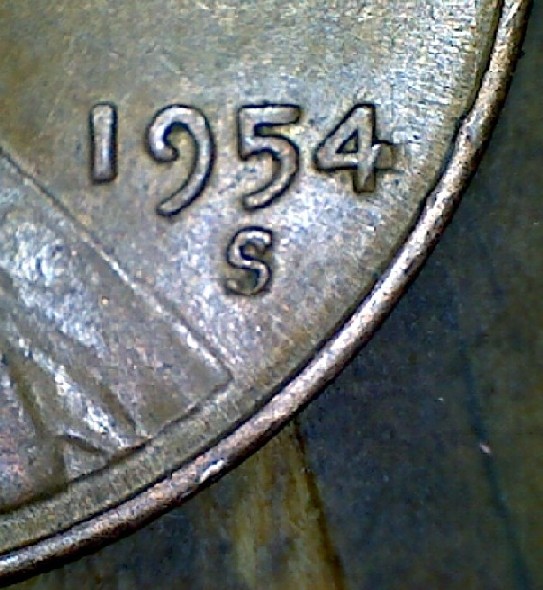
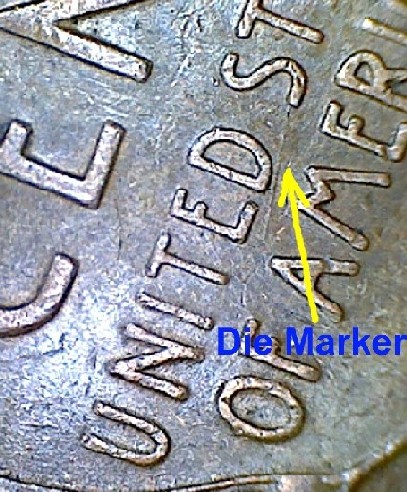

 I think you have it....Nice find


 Posted 07/07/2011 10:57 am


Sometimes when some markers are missing, it may be earlier, other times it may mean later than the example on the site.
1. Die scratches on the fields may be light on one example and strong on another examples. These flatten with time in the open fields, but if you check closer to devices, they remain stronger in that location.Light die scratches fade faster than stronger examples.
2. Die clashes usually get polished off so they are may/may not be there. Sometimes there may be a second clash altering the first clash or on top of the previous clash/polishings. Some times a die will be replaced if the polishing is noticeably not removing the clash or the die experienced a crack/chip/break. So going struck with a different opposite die will not have the same markers as the published dies images.
3. Die dots/cracks/chips/breaks/cuds may progress as the die ages. Sometimes these warrant replacements. Some varieties the opposite die may be exchanged when the previous die is retired. This happens and all coin struck after that will be missing the opposite dies markders.
4. Die gouges/dents may happen during a dies life. Usually these are present the rest of the dies life, so they are longer lasting markers. So those with out the marker were struck before the event happened and will be an earlier die state.
So not all die makers last the whole life of the die. A stronger marker on an EDS coin might have this mark the rest of it's life. Some markers may last a short time/medium amount of time. So if your coin doesn't have this marker it's no biggie. Your coin may be earlier or later than the die published. The best way to tell is die wear. Knowing what to look for will be a clue. Remember also that some dies may be replaced as needed. Hope this helps.
1. Die scratches on the fields may be light on one example and strong on another examples. These flatten with time in the open fields, but if you check closer to devices, they remain stronger in that location.Light die scratches fade faster than stronger examples.
2. Die clashes usually get polished off so they are may/may not be there. Sometimes there may be a second clash altering the first clash or on top of the previous clash/polishings. Some times a die will be replaced if the polishing is noticeably not removing the clash or the die experienced a crack/chip/break. So going struck with a different opposite die will not have the same markers as the published dies images.
3. Die dots/cracks/chips/breaks/cuds may progress as the die ages. Sometimes these warrant replacements. Some varieties the opposite die may be exchanged when the previous die is retired. This happens and all coin struck after that will be missing the opposite dies markders.
4. Die gouges/dents may happen during a dies life. Usually these are present the rest of the dies life, so they are longer lasting markers. So those with out the marker were struck before the event happened and will be an earlier die state.
So not all die makers last the whole life of the die. A stronger marker on an EDS coin might have this mark the rest of it's life. Some markers may last a short time/medium amount of time. So if your coin doesn't have this marker it's no biggie. Your coin may be earlier or later than the die published. The best way to tell is die wear. Knowing what to look for will be a clue. Remember also that some dies may be replaced as needed. Hope this helps.


