| Author |
 Replies: 28 / Views: 4,548 Replies: 28 / Views: 4,548 |
|
Pillar of the Community
United States
2254 Posts |
Am I correct in assuming that old currency from smaller reserve banks are more rare than a five dollar note from say Philly or NY? Do the current currency books even have values for bills that came from the little towns throughout the US, or do they focus on the large reserves only? Thanks all,
Tighe
|
|
|
|
Valued Member
United States
270 Posts |
|
|
Valued Member
United States
270 Posts |
The book I have lists the value of each bill by what city it came from
|
|
Valued Member
United States
270 Posts |
is there a certain year you are looking at?
|
|
Pillar of the Community
 United States
2254 Posts |
Well, I inherited quite a few. Here's what I've gone through so far: Large 20 from Burnham Pa. Series 1902 w/ 1918 date on it Small: 20 from philly 1929 20 from reading pa 1929 10 from york Pa 1929 10 with Hawaii stamp 1934a 10 from shickshinny Pa. 1929 5 from hatfield Pa. 1929 The rest are all 2 dollar bills all with red and/or stars from numerous years ranging from 1928-1963. Thank again for any help. Guess I need to get all of them graded. Or at least the ones that look to be in pretty good shape. |
|
Pillar of the Community
United States
882 Posts |
You interested in selling any of these notes?
|
|
Pillar of the Community
United States
2254 Posts |
Not at this time. What I need to do is put a price on them as they are an inheritance that is actually for four grandchildren. Once I have an approximate value for the currency and coins that I have acquired, I need to Buy out the remaining three grandchildren. From there, all coins and currency will be mine to do as I wish. Until then, I need to separate, and get values. Any help in that regard would be great for now.
|
|
New Member
21 Posts |
quote:
Originally posted by tights24
Not at this time. What I need to do is put a price on them as they are an inheritance that is actually for four grandchildren. Once I have an approximate value for the currency and coins that I have acquired, I need to Buy out the remaining three grandchildren. From there, all coins and currency will be mine to do as I wish. Until then, I need to separate, and get values. Any help in that regard would be great for now.
Hi Tights24, I just saw your message posted about a month ago inquiring about the old currency in your possession. I can give you a bit more information about the notes that you are describing. The notes with names of small town banks with brown seals (1929 series) and blue seals (1902 series) are National Bank Notes. There were over 14,000 national banks chartered in the US from 1860s-1935. The notes from some of these are quite rare with dozens with no notes presently known (but they were issued). There are two censuses showing exactly what is known from each bank. My copy is a bit out of date but, for example, The First National Bank of Burnham, PA, charter #11257 was chartered in Oct 1918 and placed into receivership at the height of the Great Depression on Jan 10, 1934. It issued $347,330 face value in currency but only $950 face value in large size notes (they issued small size, too) was outstanding as of 1935. As of several years ago when my book (Kelly) was written there were just two large size notes known on the bank and four small size (1929 series). A current census would give the breakdown by denomination of what is known. You note might have the ONLY large size $20 surviving from this bank. In any event, this one is quite rare. My guess as to value is somewhere between about $300 and $1000 depending on grade, a bit more if this is the only $20. The 1929 series small size notes with brown seals are either national bank notes or federal reserve bank notes. Both say "National Currency" across the top frame line but the ones with bank names that begin with "Federal Reserve Bank of ..." are FRBNs, not national bank notes. National bank notes will have the charter number in black on the face and these numbers will range up to 14,000+ depending on when the bank was chartered. The other 1929 notes from the smaller PA towns are all national bank notes and I can give you some idea of rarity, especially with a picture or scan. The Philadelphia note may be a national but if it reads "Federal Reserve Bank of Philadelphia", it's not a national but a FRBN. A $20 FRBN from Philadelphia is probably worth $25-$75 depending on condition unless there is a star next to the serial number which will increase the value of this note substantially. The Hatfield National Bank had 14 small size notes reported as of 10 years ago and a note from here might be worth $50-$150. Reading had several national banks with Farmers National Bank (charter #696) and Reading NB (#4887) being the most common. Notes from these are probably worth $40-$75. FNB of Shickshinny is of comparable rarity (16 small, 7 large known) and value to the Hatfield note. York had half a dozen national banks, most are common and notes are worth $40-$75. Uncirculated or serial #1 notes are worth more. -Russell Kaye |
|
Pillar of the Community
United States
2254 Posts |
Thanks Russell. Great information. I will post some pictures tonight for everyone to peruses, although there's not too many into notes on this forum. Please feel free to give me any opinions on grade etc, and which if any I should actually get graded.
Thanks,
Tighe
|
|
Pillar of the Community
United States
2254 Posts |
Here are a few pics. Hopefully they are large enough. Sellitstore, what book are you looking in for this info? Thanks. LARGE NOTES 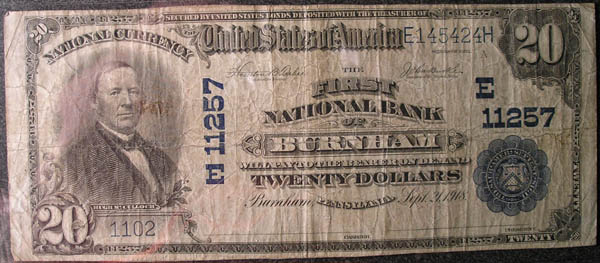 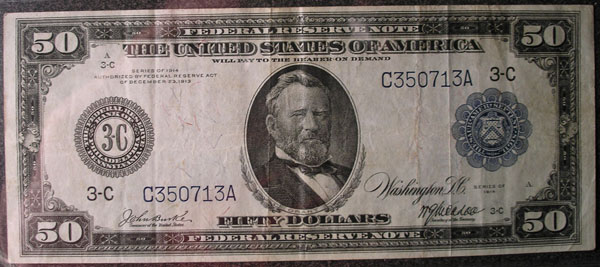 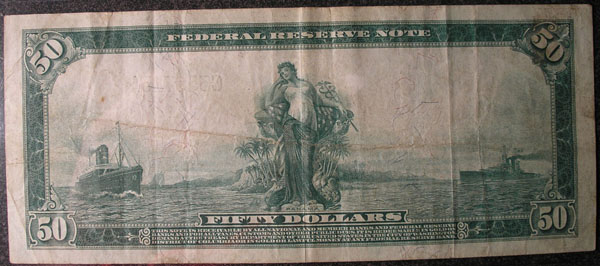 small notes 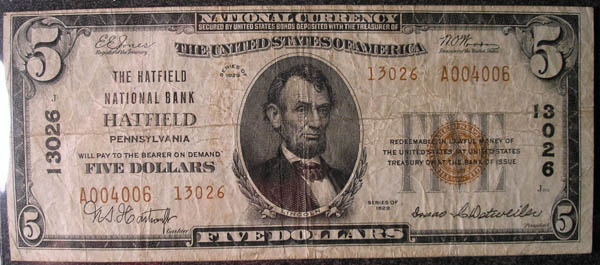 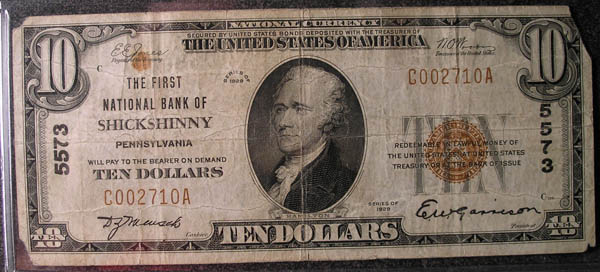 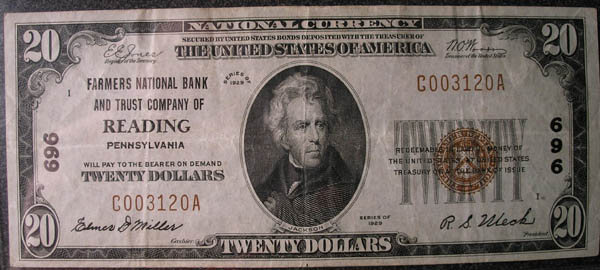 This is it for tonight. I will post more tomorrow. What's weird is they actually look worse in the holders...seems to show more creases than I originally saw. |
|
Pillar of the Community
United States
882 Posts |
Those 1929 notes are very nice. The ten and twenty are pretty low serial numbers. I think you will get quite a bit for these notes.
Good things,
Ty
|
|
New Member
21 Posts |
quote:
Originally posted by tights24
Here are a few pics. Hopefully they are large enough. Sellitstore, what book are you looking in for this info? Thanks.
LARGE NOTES
Hi Tights24,
The book that I am using is "National Bank Notes, A Guide with Prices" by Don Kelly, 3rd Edition It was published in 1997. There is a more recent edition and CD out now. I have inquired and been told that Kelly reports 5 large size notes and 5 small size notes are now known from this Burnham, PA bank. Your $20 represents the sixth known large size note and only the second $20 from the bank. A value of about $250-$500 has been suggested by the individual who provided my with the latest information. PA doesn't have as avid following of collectors of National Bank Notes as some of the other states, but the note may very well be worth towards the upper end of the $250-$500 range. A comparable note from NJ would be worth $1000+
National Bank Notes and large size notes are also listed in two different censuses. "Track and Price" lists over 300,000 notes of both types combined, while "US Paper Money Records" by Martin Gengerke only lists large size notes.
The latest population figures on the 1914 $50 note, Philadelphia district, indicate that yours is the 21st reported with this signature combination. It is a scarcer combination cataloged as Friedberg #1032. The most common signature combination has 112 examples reported follow by another with 40 known examples. Yours is the second rarest with 21 examples and the rarest has just 11 known examples. An example very similar to yours (same signatures) was sold earlier this year at just over $700. It was just a bit nicer, so yours should be worth $400-$500, maybe a bit more.
The three other 1929 PA nationals are worth pretty much what I had previously indicated. The Reading is in nicer condition and worth toward the upper range that I indicated, perhaps $60-$75. The Shickshinny note is probably towards the lower end due to condition, maybe $40 or so. The Hatfield is a bit scarcer and I would guess $75-$100 in this condition.
The serial numbers on these would be low if they were regular notes of which millions were printed and serial numbers run well into the 8 digit range, but this is not so for nationals which typically have only a few thousand sheets printed and therefore lower numbers. For example, only 4122 sheets of the Reading, PA $20s were printed so the serial numbers run from 000001-004122. Prefix letters A-F were used (these were printed six to a sheet), so there are six #1 notes, A000001, B000001, C000001, etc. So, there were over 24,000 20s printed, six of each number but with different prefix letters, A-F. There were 3702 Shickshinny, PA $10 sheets of six printed, so the serial number range for these were A000001-F003702.
I hope that this info helps. -Russell Kaye, Sellitstore
small notes
This is it for tonight. I will post more tomorrow. What's weird is they actually look worse in the holders...seems to show more creases than I originally saw.
|
|
Pillar of the Community
United States
882 Posts |
Are there corners missing from that $10 PA note? Or are they just folded under the back?
Ty
|
|
New Member
21 Posts |
quote:
Originally posted by Tykimeister
Are there corners missing from that $10 PA note? Or are they just folded under the back?
Ty
Having them graded probably doesn't make much sense as there isn't any question of authenticity on these, and grade can easily be determined by good scans. High quality uncirculated notes might be worth having graded if there are any of these in your holdings but value must be high enough to justify a $20-$25 grading fee per note. -Russell Kaye, Sellitstore |
|
Pillar of the Community
United States
2254 Posts |
Tykimeister, the corners are missing. I know, it's a bummer.
Russell, Thanks again for all of the info. At this time, these notes belong to myself and my three other relatives(grandchildren). I am trying to find values to either buy them out at a fair deal, or sell and split the money four ways of course. I will post links to anything I may sell in the future if I am forced to.
Thanks again for all of the great info.
|
|
Forum Mom
 United States
5877 Posts |
From the research that I've done, I don't think ebay is your best option. You've got mail.  |
| |
Replies: 28 / Views: 4,548 |





 Posted 11/29/2006 5:18 pm





