| Author |
 Replies: 10 / Views: 3,015 Replies: 10 / Views: 3,015 |
|
|
New Member
United Kingdom
5 Posts |
Hello to all. This I think is a coin which I'm finding hard to identify. A russian friend of mine say's that it doesn't make sense as to what is written on it and was wondering if anyone here can help. Kind regards, James. 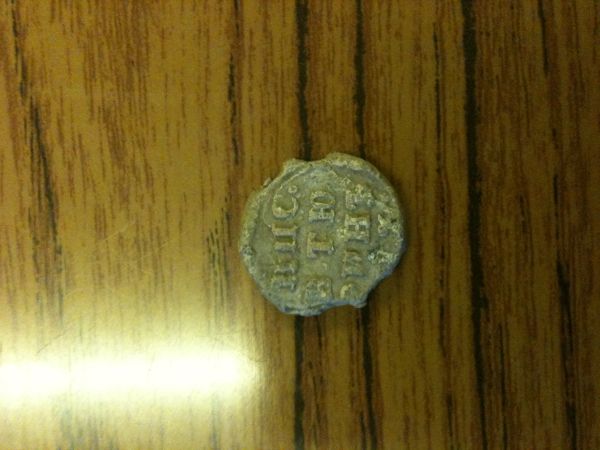 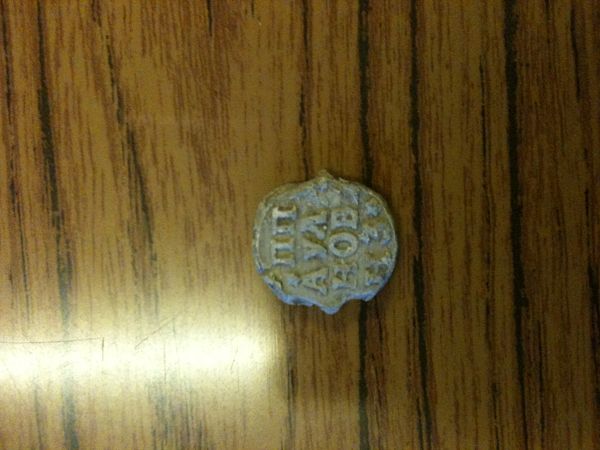 Identified - moved to Exonumia forum - Sap Identified - moved to Exonumia forum - SapEdited by James21170
08/15/2011 10:27 am
|
|
|
|
Pillar of the Community
United Kingdom
575 Posts |
If its possible-better pictures please.Use free image optimiser to crop pictures and adjust size.
Edited by valdiman
08/15/2011 11:36 am
|
|
Rest in Peace
United States
1729 Posts |
A long shot - but could this be Bulgarian and not Russian? Both used the Cyrillic alphabet.
|
|
New Member
Russian Federation
18 Posts |
I think this is not a coin.
It looks like a lead seal
Is it heavy?
|
|
New Member
 United Kingdom
5 Posts |
Yes it's heavy..
I've described it as a "coin" but yes your thoughts of it being a seal are what I had thought too.
The only trouble there is that the picture is of both sides of the item. One item.
If it was a seal, wouldn't one side be flat.?
It is I think lead..
Kind regards.
|
|
New Member
United Kingdom
5 Posts |
My Russian friend has found out that the two nn at the top of the item is Russian for PP and has referenced this to the war time postal service.
Regards, James.
|
|
New Member
Russian Federation
18 Posts |
Hey! I've found the article about Russian merchandise lead seals in England! Russians sold wheat flour to England and they were using lead seals on the packs. It was in the beginning of 20th century Here is the link for russian friend: РУССКИЕ ТОÐ'АРНЫЕ ПЛОМÐ'Ы Ð' АНÐ"ЛИЙСКОЙ Ð- ЕМЛЕ http://poisklegend.ru/index.php?topic=248.0ПП could mean "пшеничный помол" (wheat milling) or just the initials of the owner |
|
New Member
United Kingdom
5 Posts |
That's superb information.
It does look like some kind of ID tag I must admit.
I'll let her take a look at the link.
Thank you very much.
|
|
Moderator
 Australia
16994 Posts |
Correct. It's a "Russian bale seal". See this page and these pages for several dozen different types. The ones from the late 1700s / early 1800s resemble yours. Don't say "infinitely" when you mean "very"; otherwise, you'll have no word left when you want to talk about something really infinite. - C. S. Lewis
|
|
New Member
Russian Federation
18 Posts |
Edited by Romario
08/16/2011 06:12 am
|
|
New Member
United Kingdom
5 Posts |
This is all fantastic information.
I'm pretty convinced with this information that the bale seal is what it is.
Thank you for all your help to everyone..
Excellent work.
Very kind regards, James.
|
| |
Replies: 10 / Views: 3,015 |
|










 Posted 08/15/2011 3:57 pm


