| Author |
 Replies: 12 / Views: 1,053 Replies: 12 / Views: 1,053 |
|
|
Valued Member
Netherlands
52 Posts |
is it roman or is it a greek 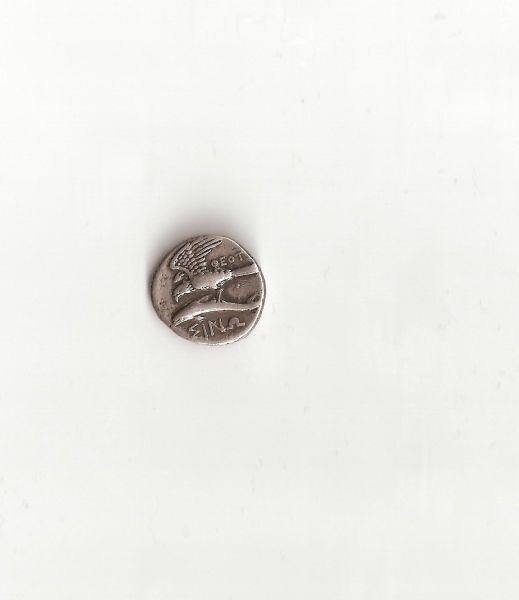 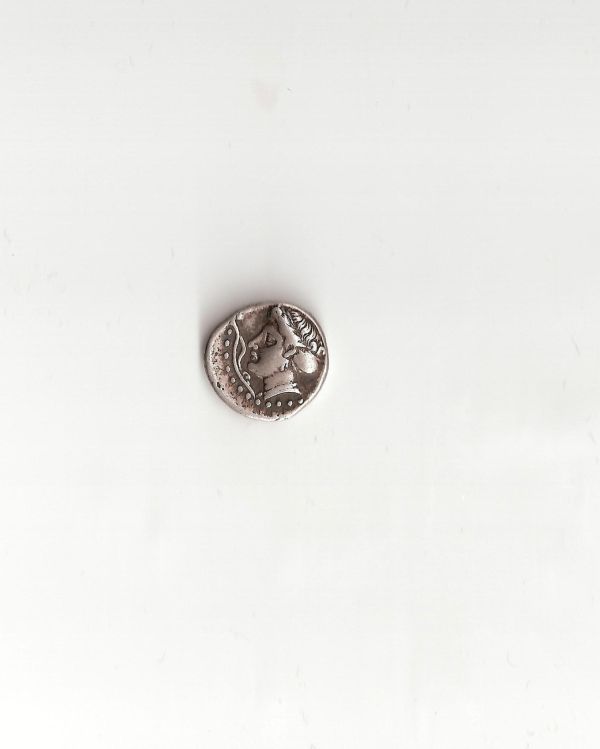 greek |
|
|
|
Pillar of the Community
United States
4778 Posts |
Well it doesn't look Roman to me, so I'm inclined to say it's Greek. As to the specifics or authenicity of it, I don't know. Someone here might know more about it.
|
|
Valued Member
 Netherlands
52 Posts |
how can you tell that it is greek I'm just a beginner
|
|
Pillar of the Community
United States
4778 Posts |
Well, just the general style of it. When you look at a lot of Roman and Greek coins, it becomes easier to tell the difference. Also the words on the reverse look Greek and not Latin.
Edited by VisigothKing
09/21/2011 5:50 pm
|
|
Valued Member
Netherlands
52 Posts |
The roman republic is that a early stage of the roman empire or at the end of it
|
|
Pillar of the Community
United States
4778 Posts |
Yeah, its just that I was going say that some Roman Republican coins look Greek and that for beginners it may be harder to tell the difference.
|
|
Pillar of the Community
United States
4778 Posts |
BTW the Republic comes before the Empire.
|
|
Pillar of the Community
United States
4778 Posts |
I believe I found the info on it: Greek PAPHLAGONIA, Sinope. Circa 330-300 BC. AR Drachm (20mm, 5.96 g, 6h). Phageta-, magistrate. Head of nymph left, hair in sakkos; aplustre before / Sea eagle on dolphin left. SNG BM Black Sea http://www.coinarchives.com/a/resul...Nymph+Sinope (coin number 6) |
|
Valued Member
Netherlands
52 Posts |
thnx but I see a difference writing in the right upper corner what does that mean.
On every coin its different.
Whats the reason of that
|
|
Pillar of the Community
United States
4778 Posts |
Again, I don't know the specifics. I am more knowledgeable in Roman imperial, so Greek coins are a whole different setting for me. This may or may not be the coin; this was the closest to yours that I found on the Internet.
|
|
Valued Member
Netherlands
52 Posts |
thnx jangofett for your interrest hope that somebody can help me with it
|
|
Pillar of the Community
United States
1549 Posts |
Many Greek coins, including this Sinope, were issued by magistrates whose names appear on the coins. This looks like Theot; my example has ETY. If you had a list of who held office when, you might be able to assign a closer date than the range but I don't know if this series has been written up that way or not. Below the dolphin is SINO abbreviating Sinope so that should be the same on all (except it is off the flan on many).
Many Roman Republican coins also had names of office holders but that practice ended soon after the start of the empire.
|
|
Moderator
 Australia
17005 Posts |
Quote:
how can you tell that it is greek I'm just a beginner "Roman" coins have text in Latin, a language which uses much the same shapes of letters as English (or Dutch, for that matter). So if all the letters make sense but you can't read the language, it's probably a Roman coin. While some letters of the Greek alphabet (like iota "I" and nu "N") have much the same shape on ancient coins as the equivalent letters in the Latin alphabet, other Greek letters are highly distinctive to Greek. The Greek letter sigma (equivalent to the letter S) looks like a sideways "M". The Greek letter omega (pronounced as a long "O", or the "oa" in "boat") is shaped like an upside-down U, with feet. Theta, pronounced as "th", looks like an "O" with a dot in the middle or a horizontal line through it. Both sigma and omega occur in the inscription below the dolphin, which reads "SINO" in Greek; theta occurs in the inscription above the eagle, "ThEOT". Don't say "infinitely" when you mean "very"; otherwise, you'll have no word left when you want to talk about something really infinite. - C. S. Lewis
|
| |
Replies: 12 / Views: 1,053 |
|







 Posted 09/21/2011 5:40 pm





