| Author |
 Replies: 23 / Views: 2,726 Replies: 23 / Views: 2,726 |
|
New Member
United States
25 Posts |
Hello everyone!
Can someone please tell me the definition of..
R-1, R-2, R-3, or R-4
Is there more? When was this rating system last updated?
I have a coin that is supposedly rated R-2. (7-10 known to exist) Actually I have more than one. Would it be worth trying to find more?
It's a Licinius I AE Follis RIC VII 24. Jupiter standing left holding Victory & sceptre, palm to left Z to right. SMN in ex. Sorry I don't have a picture for you guys. I still haven't bought a camera.
The thing that supposedly makes it R-2 is the Z to the right?
Can someone please shed some light on weather this rating system is still accurate?
|
|
|
|
Pillar of the Community
United States
7842 Posts |
Info removed, my apologies, I did not notice the Ancient grouping. ...exit stage left.  Edited by oih82w8
10/04/2011 5:02 pm
|
|
New Member
 United States
25 Posts |
Thanks oih82w8.. Looks like I got some bad info on my coins.  So R-2 really means 751 - 1000 known to exist. Not 7-10.. This ebay seller pulled a fast one on me. I wonder if it even says R-2 at all in RIC for this coin I'm still new.. I don't have a way to check what it really says in RIC for this coin. Thanks for your help! |
|
Pillar of the Community
United Kingdom
2838 Posts |
I think the tables oih82w8 has provided may be more geared towards modern coins - unfortunately the RIC ratings are not consistant across the 10 volumes. They were written over a period of about 100 years so I guess we can forgive them that. Below is the best overview I can come up with, taken from Danes 'Helvetica' website: http://www.catbikes.ch/coinstuff/coins-ric.htmRIC I (New edition, 1984) C: Common to very common S: Scarce R: Rare R2: 11-15 known R3: 6 to 10 known R4: 2 to 5 known R5: Unique RIC II (late 1920's), RIC III (1930), RIC IV-1 & 2 (1934), RIC V-1 & 2 (1927/1933) CC: Very common C: Common S: Scarce R: Rare R2-R5: "additional degrees of rarity" (R5 is usually unique) RIC VI Rarity ratings (1967) C2: Common in every major collection C: In every major collection S: In most major collections R: 26-50 known R2: 11-25 known R3: 6-10 known R4: 2-5 coins known R5: Unique RIC VII Rarity ratings (1966) C3: more than 41 known C2: 31-40 known C1: 22-30 known S: 16-21 known R1: 11-15 known R2: 7-10 known R3: 4-6 known R4: 2-3 known R5: Unique RIC VIII Rarity ratings (1981) No information at all (at least, I can't find it!) Presumeably similar to RIC VII RIC IX Rarity ratings (1933) C3 - C: "increasing degrees of commonness" S: Scarce R - R4: "increasing degrees of rarity" R5: Unique It must also be remembered that these were all based on what coins were found in major collections while the books were being compiled so while they do give a relative rarity rating they can be misleading. After R5 I guess you get 'Not in RIC' which means the coins were not in any collection studied when a particular book was compiled but the coins have been discovered and recorded since. http://www.forumancientcoins.com/no...c/index.htmlYour coin was RIC VII R2 so that means that in the 1960s in the collections used to compile that volume only 7-10 were known of. I'm afraid I dont know how many collections they used to compile their figures. |
|
Pillar of the Community
United Kingdom
2838 Posts |
Forgot to say  to the forum. Another thing that should be noted is that sometimes a coin can be rated R5 but it is still not that desirable to a collector. Legend brakes, clothing, slight differences in posture etc, etc can make a coin 'new' and 'rare' but it could be from a family of very similar very common coins so people often wont know or even care that it is for example an R5. Its likely these minuscule differenced will only ever be collected by people who perhaps only specialise in a single mint or even a single coin. There has never been and prob never will be a ' RedBook' type publication on ancients, thank god  . Where was your coin minted? - If you let me know I'll look it up in RIC for you. Edited by bobbyhelmet
10/04/2011 3:58 pm
|
|
New Member
United States
25 Posts |
Thanks bobby! That makes me feel a little better.
I don't even know what the Z on that coin means or stands for.
I actually have 7 of these coins.. I can't find anymore.
|
|
Pillar of the Community
United Kingdom
2838 Posts |
Just re-read your first post and realised you had stated SMN as the mint, sorry. Here is a bit more info on your coin: IMP LICINIVS AVG - 'Commander Licinius Emperor'. IOVI CONSERVATORI AVGG - 'Jupiter, preserver of the Emperors' - 'AVGG' implies two emperors, in this case I think the other Emperor it refers to is Constantine I as they joint ruled for a while. SMN - Sacra Moneta Nicomedia - 'Sacred money from Nicomedia' (Greece). The palm is what is know as a series indicator and just helps the mint keep track of what they are producing etc The 'Z' is the workshop number, as Nicomedia was in the East they used the following system: 1 = A 2 = B 3 = Î" 4 = Î" 5 = Æ� 6 = Ïš 7 = Î- - Your coin was produced in workshop 7 between 317 and 320  |
|
Pillar of the Community
United States
4253 Posts |
Forgive me from butting in, but if you, a relative new comer to this area of numismatics, have seven coins of one type rated a supposedly R2, something smells fishy to me. Its possible, I admit, but not probable. I have a substantial collection and only have half a dozen or so that are considered rare. And as Bobbyhelmet has pointed out, there have been tons of coins discovered since these coins were last rated. And every time a hoard is discovered, it is likely many rare issues are found not to be rare any longer. I have never purchased a coin because of its rarity. Rather because I want it, like it, or need it for my collection. Many times I look at coins I have not seen for sale before and find I have an interest in this coin's appearance. That may mean it is rare, but it could also mean just that I haven't seen it before. I'm currently watching one one ebay now. I like the coin. I'm not watching it because it may be rare. Bottom line is that if you buy coins that are rare today for their relative value based on that rarity, tomorrow, when they find another 10,000 coins somewhere, your coin may be worth, well, whatever common coins of that type will be worth. I hope your coins turn out to be whatever you hope for, Good luck. Oh, and Regards, JW Edited by Bing
10/04/2011 4:23 pm
|
|
Pillar of the Community
United States
4778 Posts |
Yeah I have noticed that rating system, but I never really bought it. Like on some ebay auctions, a oin that supposedly is only one of 7-10 known being won at 8 or 10 dollars. Really? |
|
Pillar of the Community
United States
4253 Posts |
After I wrote last, I did a very quick search and found at least three coins I think match your coin and none say anything of rarity. Does this coin look like yours? 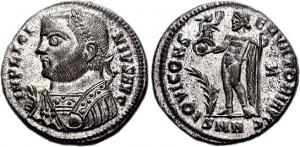 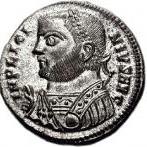 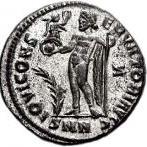 The mere fact I could find these relatively easily and quickly is telling in and of itself. JW |
|
Pillar of the Community
United Kingdom
2838 Posts |
The RIC numbers do need to be taken with a huge pinch of salt, like said earlier they are perhaps useful for relative rarity to other coins in the same book but thats about it. I would suspect R4s and R5s sell daily on ebay for just a few pounds as nobody is looking for these minisculey different common issue coins. It is also important to understand if it is the coin that is rare or the issue, a coin population made up of 1000s of slightly different 'rare' issues will be less desirable than a common coin that only came in one issue. Hope that makes sense. I have 3 RIC VII R4s '2-3 coins known' I bought all 3 for a total price of £14.95, and that included P+P! I had no idea when I bought them that they were R4s I just needed / liked them. If I tried to sell them tomorrow I'd prob get the same £15 back. |
|
Pillar of the Community
United States
1549 Posts |
No! RIC rating numbers to not pretend to indicate the number of coins in existence. When the books were written, the authors surveyed a number of big public collections - mostly museums. The number of these institutions that had the coin was reflected in the are number. If almost all had it, the coin was a C; a few might be R1 and only one would be R5. As Bobby's chart shows the exact counts varied by volume. There is nothing about the system that would count the coins in my collection or yours or the 100,00 other people who own ancient coins. If an unknown coin was found in a hoard and the finding museum gave one to each of their fellow museums, the coin could be common even if there is not another specimen in existence. If a pot of one million examples of something previously unknown was found after the RIC volume went to press it would be possible for you to have a handful of an R5 and each of us could, too. I was once shown a group of 5 examples of the same R5 so 'Unique' was not the word to use.
It is a guide but don't take it too seriously. On average it is pretty good but the 2-3 known business is a joke used by those who don't know to fool people who know even less.
|
|
New Member
United States
25 Posts |
Wow! Thanks for all the help guys! jwharper: Yes that does look like the coins I own. Except, the "Z" on the coin you posted appears to be backwards? None of mine are like that. Can you please tell me, or provide a link to other coins like the ones in question that are for sale? Thanks! Also, to address why I started collecting this coin. And why as a new collector I own 7 of the same "rare coin". My Ancient coin collection is made up of mostly "rare" or valuable coins only. I don't have any real theme other than that at this time. I do think the coins are cool and remarkable considering the age. But my only theme so far has been "rare" or highly collectable coins. Weather that be Hadrian, Licinius, or others.. When I first came across this coin I didn't have a lot of time to research and back up the claims of the person selling the coin.. ( ebay auction) I did a couple of quick searches on Vcoins and ebay. I only found a few. I thought to myself that it would be a cool little collection if I could collect all of the 7-10 known to exist. So I bought it. Then over a few more months I bought the others I could find. Total investment = 500 bucks. Price range was 17.00 to 150.00. Keep in mind that until today I thought the info of RIC VII R2 = 7-10 was at least close to accurate. And that collectors believed and went by that rating system. I knew there was a chance that over the last 45 years more coins just like this one would be found. Or that in the future there could be more found. That's part of the gamble I took. I know many who read this story may think that collecting coins in this fashion is just down right crazy! But hey, I'm coincrazyy  It looks as though my inexperience has cost me 500 bucks that I may never get back! I'm not all that upset. They are still cool coins that I'm happy to own. |
|
Pillar of the Community
United States
4253 Posts |
Everyone has their reasons for collecting and for collecting a particular subject matter. I started out trying to get at least one of each of the accepted Roman emperors. I'm shy of that by better than a dozen and I've been at it for some time. Of course, I've branched off to other areas, i.e., the first 12 Caesars. As I said, I would never collect based solely on rarity, but rather on desire. Good luck to you and hey, stay connected on this forum. Its very interesting and educational. Fun too.
JW
|
|
Pillar of the Community
United Kingdom
2838 Posts |
As JW says reading the threads on here is a good way to build up knowledge and the only stupid question is one not asked. Everybody starts at the beginning knowledge wise and its not something to be ashamed of and shouldn't be mocked by those 'in the know'. Quote:
I know many who read this story may think that collecting coins in this fashion is just down right crazy! But hey, I'm coincrazyy I like your attitude - for people who have collected modern US coins switching to ancients can be a shock. Many of the 'rules' completely change and the main-stays of tight grading, known populations and price estimates go straight out of the window. Its good fun though - join us on the 'dark side' where 'slab' is a dirty word, your allowed to touch your coins, beauty is in the eye of the beholder and your coin is only worth what someone else is prepared to pay for it on any given day. Quote:
the 2-3 known business is a joke used by those who don't know to fool people Most sellers on ebay who use terms such as 'rare' and head items like this '*****RARE-WOW*****' should generally be left alone - they dont know what they are doing and most reputable sellers go no further than to sometimes use terms such as 'scarce' or 'un-common'. In truth there are very few truly rare Ancient coins and most of these were bought up by museums long before any of us were born. Welcome to a fascinating new hobby. |
|
Pillar of the Community
United States
4253 Posts |
I don't know Bobbhelmet, I was born some time ago, in the long forgotten days of yesteryear.  JW |
| |
Replies: 23 / Views: 2,726 |










 Posted 10/04/2011 3:30 pm


