Coin Community Family of Web Sites Join Thousands of Coin, Bullion, & Money Collectors
Join Thousands of Coin, Bullion, & Money Collectors Royal Canadian Mint products, Canadian, Polish, American, and world coins and banknotes. Royal Estate Auctions - $1 Coin AuctionsVancouvers #1 Coin and Paper Money Dealer Specializing in Modern Numismatics 300,000 items to help build your collection! Coin, Banknote and Medal Collectors's Online Mall


Username:
Password:
Save Password
Forgot your Password?


This page may contain links that result in small commissions to keep this free site up and running.

Welcome Guest! Registering and/or logging in will remove the anchor (bottom) ads. It's Free!

Good Glass

To participate in the forum you must log in or register.
Author Previous TopicReplies: 8 / Views: 1,490Next Topic  
Pillar of the Community
aladinslamp's Avatar
United States
3076 Posts
 Posted 10/07/2011  01:51 am Show Profile   Bookmark this topic Add aladinslamp to your friends list Get a Link to this Message Number of Subscribers
GOOD GLASS this is a term I here constantly, from many forums......the simple fact is, over time there have been many manufacturers of lenses, that have become obsolete due to the fact you cant connect them to the newer or modern cameras....This makes them OBSOLETE..yet if one can convert or adapt those old great lenses which can be had at much cheaper prices than the new glass lenses one can take some pretty phenominal photo's as we have seen by some members here...
Most high end lenses are designed to work with the newest of camera equipment, and hence the high prices....some go for thousands
of dollars, in there own right they are better suited for the general public of "PLUG AND PLAY ERA" people...
'''''''''''''''yet there are many who still play with the old school scrap junk lenses that have adapted the quality of the old school lenses and have a great time of capturing
great shots with out spending a fortune...

I would like to address this small point, or the use of old lenses used with new equipment and there results...The lenses and the why's.....
For the general public, I ask this question due to the fact that there is lots of old junk selling for multiple thousands of dollars,,up to $10,000.....of these I am only interested in the forgotten lenses available which have quality for our purposes of macro...I'm interested in the old school lenses that worked for you and the out come and why..Thanks
Moderator
Learn More...
SsuperDdave's Avatar
United States
23522 Posts
 Posted 10/08/2011  12:17 am  Show Profile   Bookmark this reply Add SsuperDdave to your friends list Get a Link to this Reply
You would be seriously surprised at the number of obsolete lenses which can be made to work, and work well, with a modern dSLR camera. Adapters exist for virtually every older lens mounting system which was produced in any real numbers, and machining a mount for one which doesn't exist is a relatively easy task for any experienced machinist.

You'll be giving up the "automatic" functions, of course, but a dSLR is not designed to work on "automatic" anyways. That's basically a lowest-common-denominator effort by the manufacturers so they can sell expensive cameras to people who don't really want to learn how to take pictures. With an obsolete lens, you're 100% manual in almost every case, including focus. You have to figure out how they want to work together - aperture I most difficult. Maybe you'll want to set the camera wide-open and adjust aperture at the lens; maybe vice-versa.

Here's a few rules of thumb for experimenting with older lenses, and by this I mean "regular" photographic lenses as opposed to the dedicated copying lenses which rmpsrpms has so ably demonstrated do not have to be expensive to be good:

1) Prime, not zoom. Prime lenses work at only one focal length, and are as a result far less complex than zoom lenses, and include far fewer compromises to optical quality. Use *any* prime before *any zoom,* even if that zoom is a $2000 Canon L-series (well, maybe....)

2) Get a lens with the widest-possible maximum aperture. This will be indicative of higher initial quality, as it is a real challenge to create a lens offering both optical quality and great light-gathering capacity. For lenses under 85mm focal length, settle for no less than a maximum aperture (lowest numerically) of f/2.8 or less, preferably at least f/2. The longer the focal length, the more you can adjust this number and still expect quality. Over 100mm, a minimum of f/3.5 is quite acceptable. But....

3) Keep it short. As in, focal length. As in, 50mm and not much more. We're talking about shooting entire coins here, not microscopic details (although most primes react very favorably to various means of making them magnify, like bellows and extension tubes). Focal lengths of greater than 50mm begin forcing you to back the camera further and further from the coin in order to get the whole thing onto the sensor, and older lenses (except those of the highest quality) tend to have greatly-increased minimum focus distances as their focal length goes up; a 150mm telephoto may require you to be 3 feet from a coin before you can achieve focus.

This does not apply, of course, to dedicated "macro" lenses designed to focus at shorter distances.

For many years - pretty much forever - 50mm was the "standard" lens focal length. Everybody made them. There is a bewildering array of obsolete lenses available in this focal length, and wider apertures are not expensive. At 50mm, even with cheap older lenses, a maximum aperture of f/2.8 represented an inferior product. f/2 is where you start seeing quality at 50mm with older lenses.

I have a rather nice original Asashi Pentax SL film SLR with a Super Takumar 55mm f/2 lens which I am frothing at the mouth to mount on a Canon dSLR to see what it'll do with a coin. Pentax Takumar lenses use the M42 screw mount, which mount was used by a staggering number of differing cameras and lenses. Adapters to modern Canon, Nikon and other dSLR's are easily available for M42 and cheap - a whole lot of people are doing this and a whole lot of lenses are available for a pittance on ebay.

Keep in mind, we as coin photographers have the ability to work around the limitations of a lens like few other specialists. All we require is a lens which will achieve focus with a coin at a reasonable distance from the sensor. Chromatic problems we can compensate for with custom white balance and postprocessing. Aperture limitations we can defeat by bringing as much light as it takes to illuminate the coin.

Coins don't crawl away. We have plenty of time to tweak things to make it right.

I can see myself, in the future, getting bored with using great optics to shoot coins. It's not a challenge. Then it'll be time to start using "inferior, obsolete" lenses to achieve the same quality I could with bespoke glass. Kinda like abandoning the rifle in favor of a handgun for hunting (which I did back in my hunting days) to reintroduce the "challenge" to the process.

So, if you want to shoot coins using cheap older lenses: Learn the process. I mean, learn it until you're instinctively changing settings in the right direction. That won't take as long as you think.

Acquire a lens of around 50mm, no more than 85mm, and a maximum aperture of no worse than f/2.

Shoot pictures.

Pillar of the Community
aladinslamp's Avatar
United States
3076 Posts
 Posted 10/08/2011  01:23 am  Show Profile   Bookmark this reply Add aladinslamp to your friends list Get a Link to this Reply
Thanks Dave, for the overview...this is the point of my post...For the newest of camera's the glass is good enough to get you what you want..yet in the MACRO field...its still a crap shoot in some respects...My meaning is, over the years the new expensive glass is way out of the average persons pocket book,, yet with the adapters some lenses give amazing results, If we take the time to play the old time lenses or "tinker toys"..for you old timers...and combine them with the new technolegey...I think SD has it correct..its a matter of learning how to use the lenses...But is that not so....EVEN with a new camera?
I mean for coins and macro...you don't quite get what you want unless you do the manual thing.... yet out of the box its great...
Pillar of the Community
Learn More...
United States
4038 Posts
 Posted 10/08/2011  03:35 am  Show Profile   Bookmark this reply Add rmpsrpms to your friends list Get a Link to this Reply
Since they are round and thus only take up the middle of the image field, and are also relatively flat, coins are ideal subjects for close-up photography and demand less from a lens than most any other macro subject. But the lens must still be capable of focusing sharply over the whole coin surface. Unfortunately for coin photographers, most lenses either old OR new are not optimized for having this "flat field". The result can be acceptable at the center of the coin but lack sharpness near the edges.

The classic way around this has always been to reverse the lens, pointing the end that normally points toward the flat film or sensor surface instead toward the coin. You will almost always get a better macro result from a reversed non-macro lens. This is also a good way to put to use lenses from obsolete camera mounts since what matters for reverse mounting is the filter threading, which is more standard than the lens mount. So-called "reverse adapters" are available for most all cameras, though usually for the "standard" filter threads associated with those cameras. For instance, the standard filter for older Nikon lenses was 52mm, so the BR2/A reverse adapter has 52mm threads. Lucky for the coin photographer a multitude of step-up and step-down adapters is available to go from virtually any thread to any other. Having to use multiple adapters to get from one thread to the other is not a problem.

A concern when reversing a lens is the aperture setting ability. To effectively reverse a lens, you have to be able to manually adjust the aperture. Newer lenses often have eliminated this feature and are thus poor candidates for reversing. In this respect most any older lens with manual controls can be made to work better for coin photography than most newer non-macro lenses.

Ray

Contact me for photographic equipment or visit my home page at:
http://macrocoins.com
Moderator
Learn More...
SsuperDdave's Avatar
United States
23522 Posts
 Posted 10/08/2011  03:37 am  Show Profile   Bookmark this reply Add SsuperDdave to your friends list Get a Link to this Reply
There are no shortcuts to doing it right, unless you're lucky. The only way to take good pictures of coins, just like good pictures of anything else, is to learn how to take good pictures. This is a skill. It's not free.
Pillar of the Community
aladinslamp's Avatar
United States
3076 Posts
 Posted 10/10/2011  01:22 am  Show Profile   Bookmark this reply Add aladinslamp to your friends list Get a Link to this Reply
Thanks again Dave and Ray for the "to the point" facts of glass, and how its for the coins not the general public's needs.. I have also been researching, and as RPM says the adapters from virtually almost everything is available on ebay if you know how to type in what your needs are, I even found one ebayer who will custom make what ever you need for about $20 bucks....
One thing I have been noticing from my old camera to my new camera, the new has much higher pixles, yet when I crop them one cannot expand the photo without the picture degrading, I believe this is because my lens is not a true macro lens, the picture was taken at a farther distance so most of the high definition or megapixles were cropped out of the picture...it leaves me with a good picture but if I expand it it goes poof....I see this with many of the online photo's...I still have yet to get my CD to see if things change, but the canon 18-55 get a decent shot, but fails to capture the greater detail
I am expecting, but then again its not a dedicated macro lens for general pictures WOW...I got a few things on ebay this week and can't wait to play with them..I'm stoked..need a printer to save all the great info you guys have been sharing! now the wait GRRR LOL
Pillar of the Community
Lobby's Avatar
United States
548 Posts
 Posted 10/11/2011  5:57 pm  Show Profile   Bookmark this reply Add Lobby to your friends list Get a Link to this Reply
What a timely thread!

I'm struggling with taking coin pics, to the point that I've resorted to scanning them instead.

I use and Olympus E-420 dSLR and am generally happy with it. It's small for a dSLR, which allows me to carry it for my outdoor stuff.

But I've been wanting to find a "prime" macro lens for it, and have been looking through ebay for a 50mm macro lens.

Seems that the older Olympus OM mounts should work ok for this dslr format.

Thoughts?

Or are ya'll suggest I broaden my search to other lenses, as long as I can get an adapter for it?
Pillar of the Community
aladinslamp's Avatar
United States
3076 Posts
 Posted 10/12/2011  12:26 am  Show Profile   Bookmark this reply Add aladinslamp to your friends list Get a Link to this Reply
A very good point...Many an older lens I have been looking at are for the M42 type series or standard lens mount, I think though I could be mistaken, this falls into this class,,,In either case there is adapters which one can MOUNT an older good glass lens to the newer DSLR camera, but you must remember, the new lenses have electronics built into them, and the old glass does not, so one must Manually adjust your settings...some adapters come with the "FAKE" electrical contacts on them so the camera believes there is a usable lens now attached, but you still can't make the camera adjust the lens, as it has no electronics to use or auto adjust...with coins we find this is a totally different monster, and have to manually adjust any way...
With the readily available adapters you can easily connect virtually any lens....you just need to do some research to find out what exactly the industry calls your "port" or cameras body type..once you know that just do the research by reading the ebay lens listings, they usually tell you what they will match up with..Also a good friend is the GOOGLE search engine and search for review on the lenses your interested in....they tell you first hand from users
and there comments...
ALSO seek the "PRIME" lenses or DEDICATED MACRO lenses,, just because it says macro doesn't mean its truly a MACRO lens . that's because most general, say 70-200mm lenses simply means you can get closer to the subject, meaning most require a great distance of some meters to focus, the macro in this instance means you can zoom in from a much closer distance then the non 70-200mm macro lens..
For coins...
your actually just above a microscope level, to capture the fine details of the coin ..Prime lenses allow you to be withing say 4 to 8 inches of the coin and take a full shot of the coin and all of its full details....
as to the basics of my explainations I think I have this correct.."others" feel free to keep me on the right path or enhance my ideas...
Pillar of the Community
aladinslamp's Avatar
United States
3076 Posts
 Posted 10/12/2011  02:15 am  Show Profile   Bookmark this reply Add aladinslamp to your friends list Get a Link to this Reply
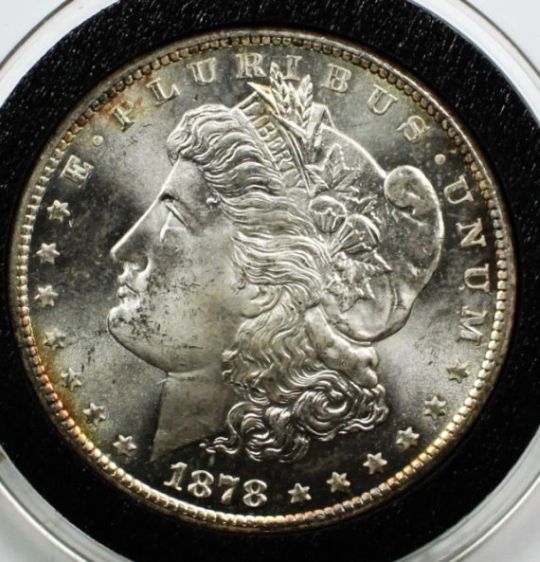
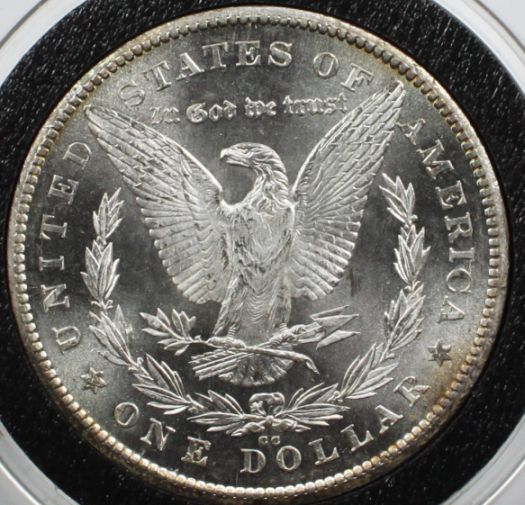
Finally got the camera to work again LOL....New camera, wrong settings and all blurr....LOL (OMG) Here's what I am talking about...When someone posts a picture, and you want to know what the true details of the coin is...many times when you "save as" and copy the photo and then zoom in it all GOES distorted ...these two are good examples of a nice picture from a standard lens.. by the way...zoomed into the coin to get the close up...had to crop 90% of the picture just to get the coin...so much more of the coins over all MEGA pixles are waisted....

Good-Glass

Good-Glass
The images by them selves came out good...but when I want to expand them..to see the greater detail , as the coin was already cropped from a much very larger and higher MP shot, most has been cropped away with a normal lens...
When I zoom in on these pictures, the detail is lost.. but from the first pictures they good..I have more to study..
  Previous TopicReplies: 8 / Views: 1,490Next Topic  

To participate in the forum you must log in or register.


Disclaimer: While a tremendous amount of effort goes into ensuring the accuracy of the information contained in this site, Coin Community assumes no liability for errors. Copyright 2005 - 2026 Coin Community Family- all rights reserved worldwide. Use of any images or content on this website without prior written permission of Coin Community or the original lender is strictly prohibited.
Contact Us  |  Advertise Here  |  Privacy Policy / Terms of Use

Coin Community Forum © 2005 - 2026 Coin Community Forums
It took 0.34 seconds to rattle this change. Forums