| Author |
 Replies: 17 / Views: 25,616 Replies: 17 / Views: 25,616 |
Page 2 of 2
|
|
|
|
Pillar of the Community
Canada
1161 Posts |
Hmmm from the pic provided of the date...it does appear to be doubled. The date appears to be much larger then one would expect. I could be wrong and the fact that the 9 and 5 are partially filled can give it the appearance of doubling.
Can not wait to hear what the others have to say.
|
|
Pillar of the Community
Canada
1161 Posts |
I tried to enlarge the pic but the detail is to grainy for make to make a decision. The doubling does appear to be flat. A clearer pic of the date would be nice.  |
|
Moderator
 United States
56855 Posts |
Machine Doubling on the date and a die chip on the B. It also looks like a die chip on the 9 and maybe on the 5. John1 
|
|
Pillar of the Community
United States
7629 Posts |
There is no such thing as calling a coin 'struck twice' a 'double die' - it would be called 'double struck'. Using the term (or anything close to) 'doubled die' in reference to ANYTHING other than true hub doubling is not only confusing, it's flat-out wrong. The coin in this thread is Machine Doubling from a loose die and nothing else. It's a rather common thing on 1957 cents. |
|
New Member
18 Posts |
@coppercoins - Thanks for the clarification! I didn't think there was a difference at first... What would you call the Wisconson extra corn leaf error? (double-struck?) (mis-print?)
|
|
Bedrock of the Community
United States
12437 Posts |
The Wisconsin quarters with extra leaves are the result of a die scratch/gouge, made either intentionally or inadvertently.
|
|
Valued Member
 474 Posts |
Quote:coppercoins: The coin in this thread is Machine Doubling from a loose die and nothing else. It's a rather common thing on 1957 cents. Exactly what description should I use for this coin. Unlike many persons who incorrectly claim that a coin is 'doubled,' I do not want to misrepresent the coin. THX |
|
Bedrock of the Community
United States
62064 Posts |
|
|
Pillar of the Community
United States
1944 Posts |
i think I might have a near relative...if not a twin. (very similar - at least) 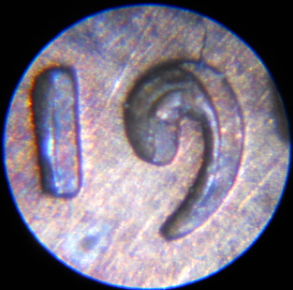 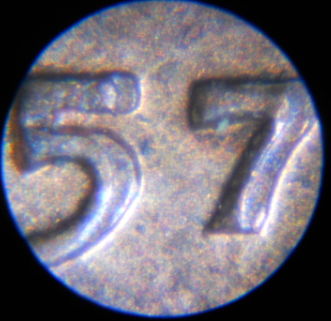 |
|
Valued Member
United States
58 Posts |
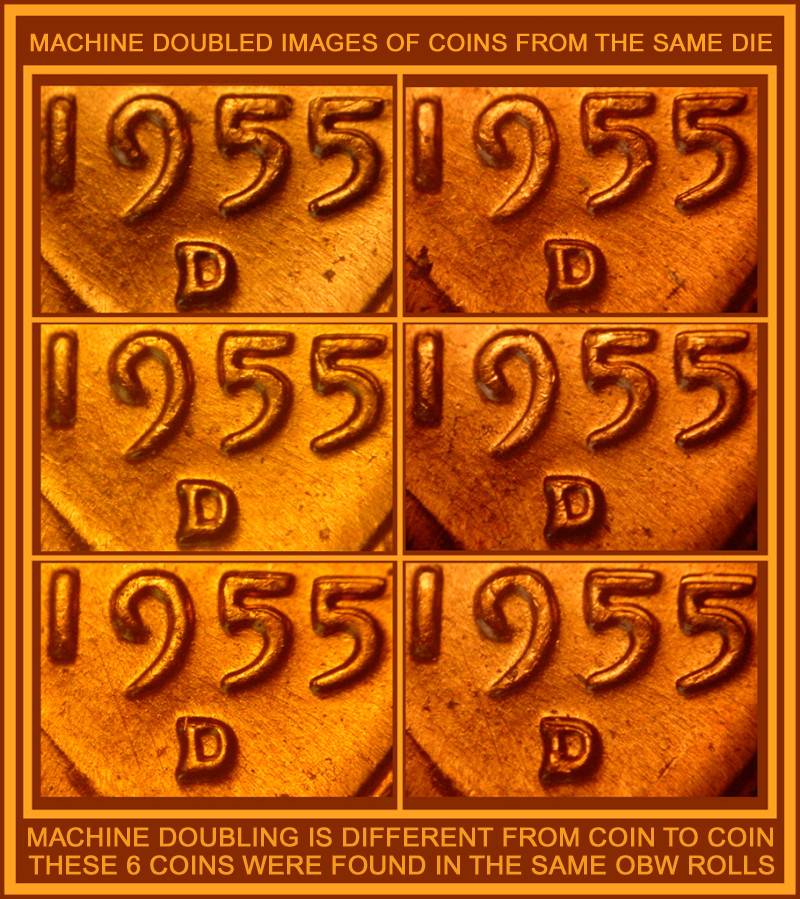
stupid question: Coop are those pics of 1955 "poor man's " Double die? Does Machine Doubling have any added collectibility or value to a coin? |
|
Pillar of the Community
United States
3516 Posts |
The poor mans doubled die upsets many expirienced collectors because it is just Die Deterioration and is actually very common on not just the 55's but all dates in the 50's. It should not generate the premium it generates. John Wexler says that if you were to search a BU roll you will find many examples of it. As for Machine damage, IMO there is a premium when it is very extreme, but others say it is not collectable whatsoever. |
|
Bedrock of the Community
United States
62064 Posts |
What makes a doubled die coin?1. A coin being struck? 2. A die that is deteriorating? 3. Die movement during the strike? 4. A die that has hub doubling that shows doubled devices on the die? Business strike coins are only struck once. So that could not cause what we are seeing on the OP's coin. (answer #1 is incorrect above) Die Deterioration happens on all dies until they are retired. We will see the devices that are closest to the time to be affected first on the sides that are facing the rim. They do not create a coin that is a doubled die. (answer #2 is incorrect) Die movement during the strike happens after the strike when the die dies bounce/hop/slide when the die is raising. This damages the devices, thus why I refer to it as Machine damage, as technically nothing is doubled, but damaged. (answer #3 is incorrect ) While we see the Die Deterioration is an issue with the OP's coin, it is not a doubled die, just a coin struck with a very worn die. Also the coin is showing evidence of machine damaged after the strike and thus is not a doubled die. The fourth answer is correct from up above. 4. A die that has hub doubling that shows doubled devices on the die?So the first coin to the last coin struck with a die that has hub doubling created on the die, will make doubled die coins. Does Machine Doubling add any value to a coin. I would say no as it is very common. We see them selling on ebay though, but people have to buy something there cause they feel it has value. A lot of times the junk coins will sell for more than a true doubled die at times. Give me two things on a coin. A true die variety in BU and a great die state coin. To me that is where the real value is. Hope this answers the incorrect answers that were post above on this thread.
Edited by coop
07/09/2016 11:22 am
|
|
Valued Member
United States
58 Posts |
thanks dustin and thanks coop, you guys both are great for sharing your infinite wisdom. I still have coop's chart on Varieties and Errors open as a reference. Still alot to wrap around my head but cool nonetheless. I found some more varieties and maybe an error or two. I will take pics and post as soon as I get a chance.
ps... So where does the doubling on the die come from? the die makers?
Edited by Lincun1909
07/09/2016 2:10 pm
|
|
Bedrock of the Community
United States
62064 Posts |
Have you ever used a rubber stamp? When you try to place a second stamp over a previous stamp you get something similar. You get widened letters in a certain direction, above or below the previous stamp. But in the case of dies, the hub that is used to make a die (which is positive) makes a negative (the die) to strike positive coins. When the alignment is not exactly the same, or a different hub is used, or a hub is warped, the die will show this on the coins struck. The classes of doubled dies indicate what happened during the die making process. So when you look at the 1972 doubled dies, the first 8 on the coppercoins list are all class 1 dies. Why are they called class 1? 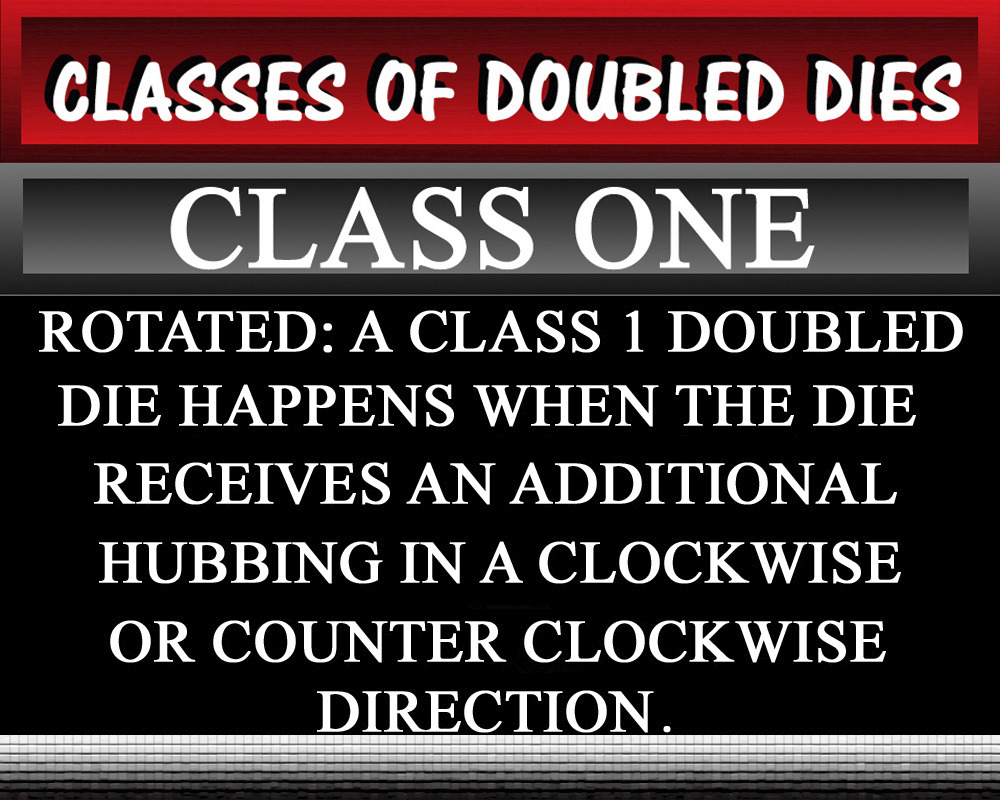 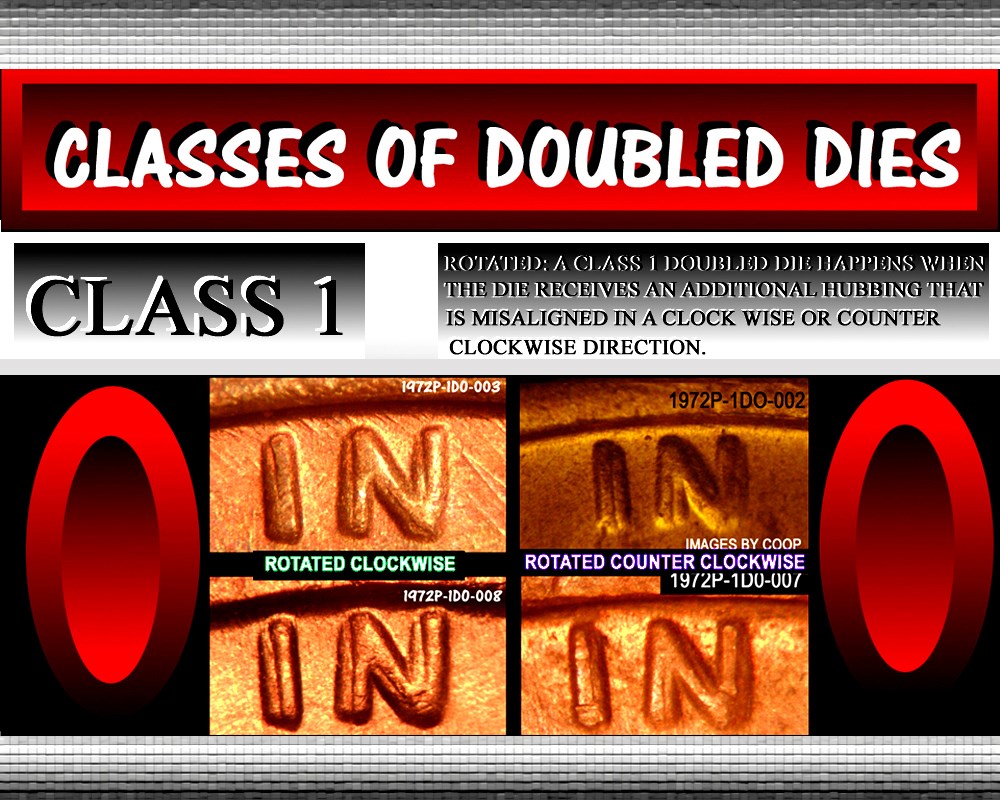 They are variations of the rotated CW or CCW rotation of the hubbing process. Each variety was hubbed differently. When attributing these dies, you need to consider what is different for each one and see how your coin matches with the attributed dies listed. Each device would have to line up, just like the attributed dies spreads. We just can't say that ours is the most valuable one. We have to check the spreads and see which die it matches up with. So back to the question, the hubbing alignment plays a large part to what makes a die a doubled die. It is not a striking issue, a die aging issue, the hub doubling is on the die making it a ....... doubled die Hope this helps answer the question. |
|
Valued Member
United States
58 Posts |
Thanks coop for your input on this one. Always a learning lesson. I have to keep referencing some of the stuff you post, still alot to grasp, understand and learn. thanks again.
|
|
Page 2 of 2
|
Replies: 17 / Views: 25,616 |
Page 2 of 2
|





 First Page

 Posted 02/15/2012 03:09 am