| Author |
 Replies: 20 / Views: 5,190 Replies: 20 / Views: 5,190 |
Page 2 of 2
|
|
|
|
Bedrock of the Community
United States
20050 Posts |
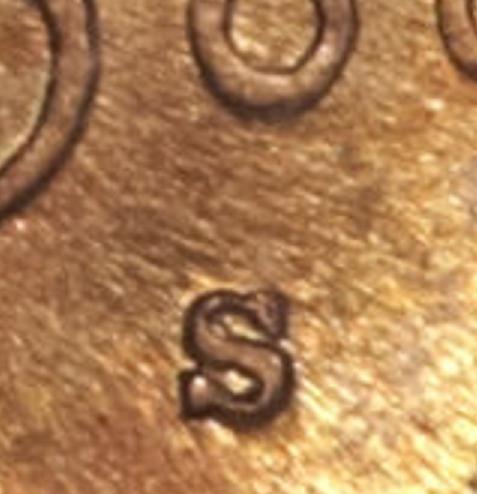
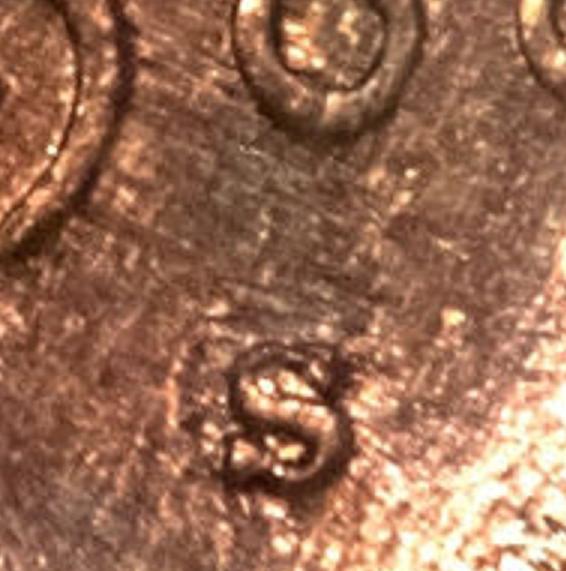
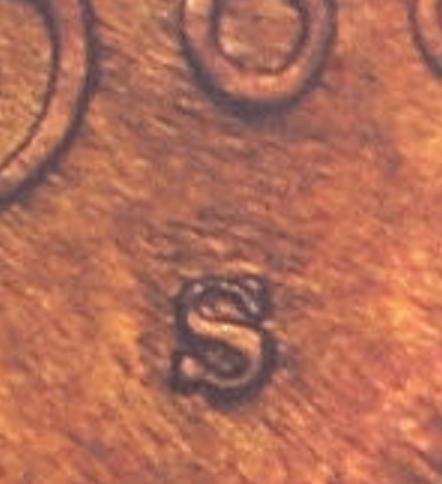
It actually looks legit, but it's been cleaned and the area around the MM makes is very suspicious.
|
|
Valued Member
United States
226 Posts |
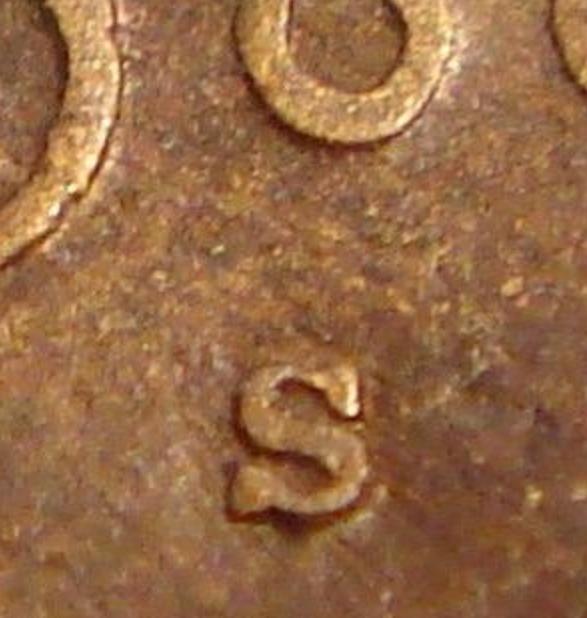
Definitely looks suspicious and I would keep far away from this one. When zoomed in, it appears that the MM is in a shallow bowl shaped depression and there are tool (or flow lines) which only appear in that depression.
|
|
Pillar of the Community
Canada
1747 Posts |
This is a Bricks and mortar coin shop, and has been in business for a long time (I have no association with them, or any dealings with them) It would in my opinion be a foolish thing for them to sell a fake coin.
I do not know their reputation as dealers, but if you have been in business for that long, you normally do not skirt the edges of business ethics.
If this is a legit coin, what do you think it is really worth?
|
|
Moderator
 United States
23522 Posts |
Quote:
If this is a legit coin, what do you think it is really worth?
Well, if it were genuine - it's not - it'd be in the $600 neighborhood. |
|
Pillar of the Community
United States
4233 Posts |
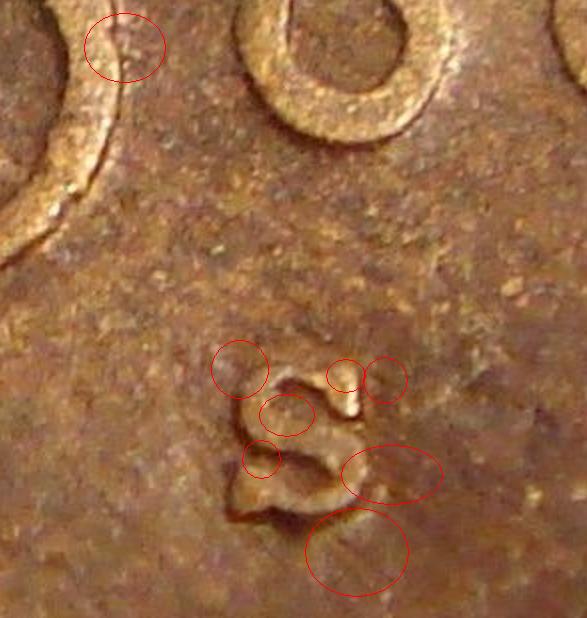
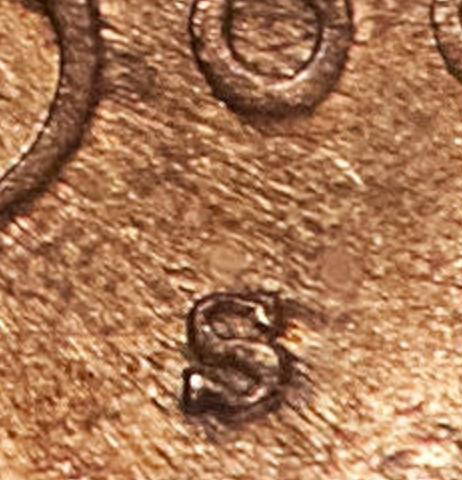
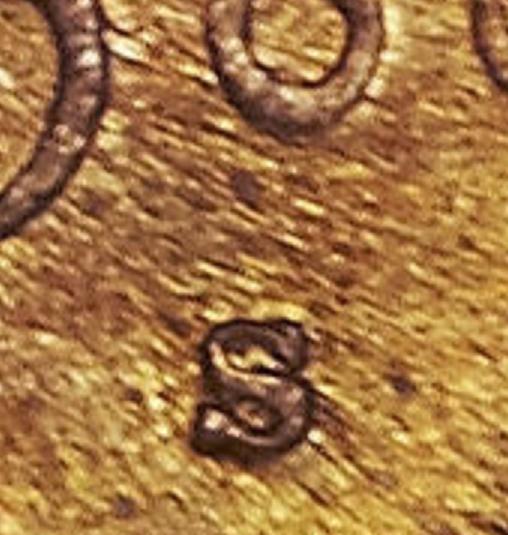
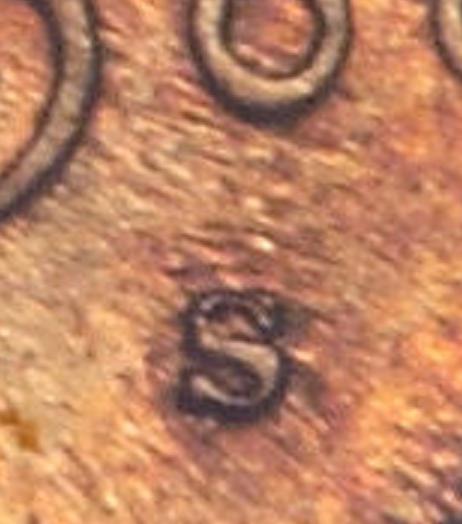
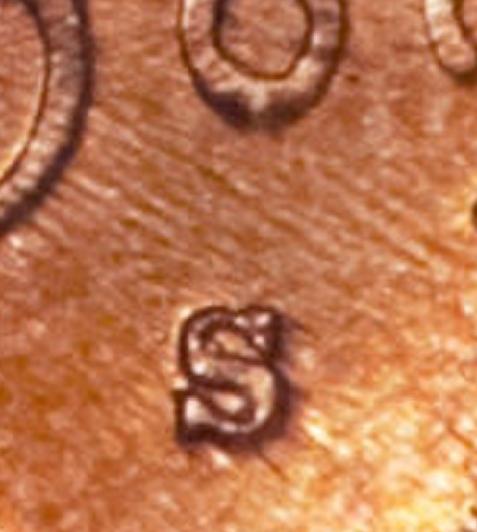
I've never had nor seen one of these, but I like analyzing images I guess. Left is the OP coin, right is an MS65 Red example from Heritage. Both mint marks have the appearance of being in a depression, and some of the "tool marks" radiating southeast from the S look exactly the same. I can't believe anyone could "move metal" so precisely, but I learn something new every day.  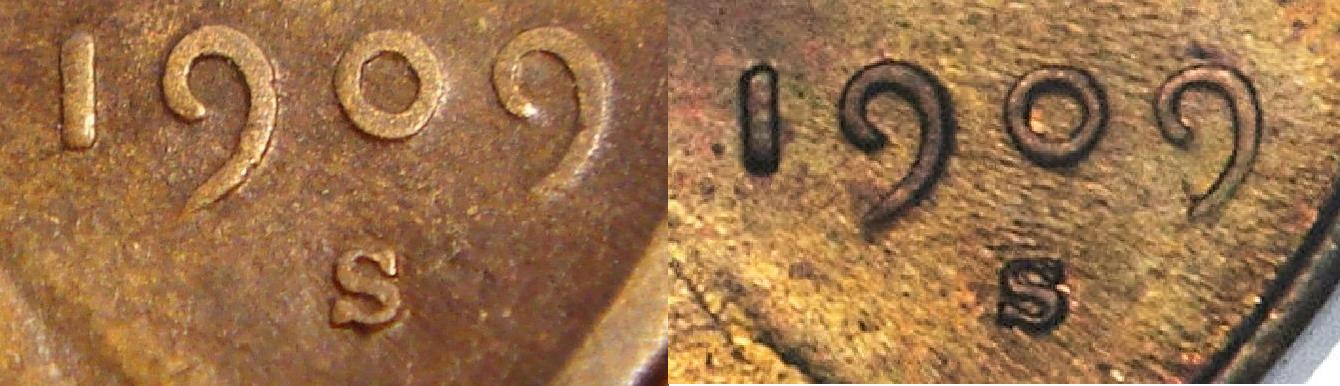 Edit: Sorry, I can't help myself. Below is another Heritage coin. Notice how the two striations running northwest from the lower serif of the S are duplicated on the OP coin, and the line running southeast from the upper right serif is evident on all three coins. 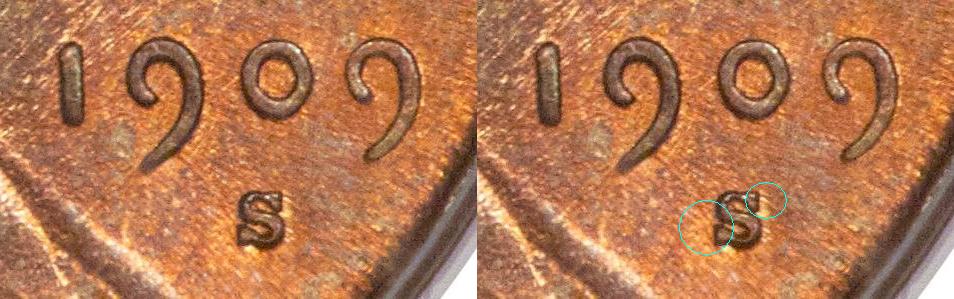 Edited by kbbpll
04/08/2015 02:30 am
|
|
Moderator
United States
23522 Posts |
Those are excellent images which clearly illustrate the fact that the auction coin is an added mint mark. The Heritage coin is clearly not - the striations around the S extend to above the 0. There's a vast difference between flow lines and tooling to the knowledgeable numismatist.
|
|
Pillar of the Community
United States
4233 Posts |
|
|
Moderator
United States
23522 Posts |
I'll concede the possibility that you're right, kbbpll, albeit any reasonable numismatist is going to distrust a raw 1909-S VDB first and be convinced by evidence.
On how many of the Heritage coins is the depression around the Mint Mark the only place where those striations exist? And on how many of them is the depression around the MM roughly square and that much larger than the MM itself?
If I'm going to be wrong, this is the direction in which I'm going to be wrong. The seller got his money anyway.
|
|
Pillar of the Community
United States
4233 Posts |
I don't want to beat a dead horse and I really respect the experience etc you bring to this forum SsDd. It was educational for me to investigate. I'm just hoping it might be a lesson to others to not jump to conclusions, and investigate instead. As far as your points, look at the images posted. The last and third to last are both coins with an obvious depression, and these coins are MS65. The OP's coin despite wear and who knows what cleanings etc still shows striations radiating out from the 9, and the NW-SE "striation" inside the 0 is the same in every subsequent image. Explain how anyone is going to "tool" a perfect S mintmark in exactly the right location, out of metal on the surface of a coin, while simultaneously duplicating the NW to SE "toolmarks" seen on dozens of other examples. We on this forum say "buy the coin not the slab", and then when it's not in a slab, we call it a fake. I object to that. Take some time to really investigate before you crucify somebody's coin.
Edited by kbbpll
04/14/2015 12:11 am
|
|
Moderator
United States
16697 Posts |
I think it's genuine but there is no way I'd buy one raw these days even having been at this for over 30 years.
The S and it's position appear correct.
swcoin.ecrater.com
|
|
Moderator
United States
23522 Posts |
Quote:
I'm just hoping it might be a lesson to others to not jump to conclusions, and investigate instead. A lesson I need to take myself. This is a case where you're very likely right, and me very likely wrong, but I remain unconvinced. You motivated me to go look at a bunch of other examples in the VF range. All were in slabs (Heritage archives). Some seemed to have this depression around the MM; many (most) did not and none of those which did showed that depression in similar size, or as clearly, as the coin being discussed here. Sometimes you can't drill down so deeply; you have to look at the whole surface of the coin in context. The things I object to are clearest in the seller's full-face images, which are pretty darn good and a rough size match for Heritage imaging so the comparison is valid. Looked at that way, this coin here is in a different league than the ones I looked at. I cast no aspersions whatsoever on the seller. He's a prominent dealer in the area where I went to High School; I'm actually predisposed to favor him. So, let's look at it from a slightly different perspective: What would cause that depression in normal Mint operations? For the record, I looked at an equal number of 1909-S with no VDB. That issue is still a $100 coin in slabbed VF, so there are plenty of them at Heritage. None of those which I looked at had this depression. At least, none looked at in the full image, in which it figures so prominently in the OP coin. I'm forced to think that maybe there are more added MM's than we think, and maybe there are quite a few of them in slabs. You and I would know exactly where the MM should be, and what it would look like, if we were going to add one. Don't give the counterfeiters credit for less knowledge. |
|
Pillar of the Community
United States
4233 Posts |
I did look through a few pages of Heritage in reverse order by price but the coins and photos were so bad I quickly gave up. I did find a couple that were well worn, had the appearance of a depression, and still had some striations. NGC Fine Details Obv Graffiti 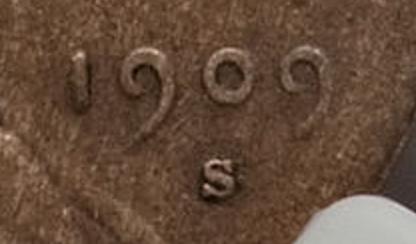 ANACS G6 Weak VDB 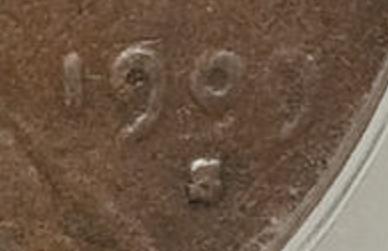 Having spent years analyzing aerial imagery for a major online map provider, I'm reluctant to judge vertical displacement based on two-dimensional images, which are often deceiving (think photos of lunar craters that look like raised plateaus). And considering the popularity of this coin, I seem to find very little information on die varieties other than the 4 mint mark placements. Just looking through the high-grade Heritage examples, it seemed like #4 (low S) has two varieties, one having a faint line going from about a fourth of the way up the first 9 southeast to the upper tip of the lower serif on the S, which you can see faint evidence of on the OP coin, but maybe they all have it and it just doesn't show in some photos. Well, it's been interesting but I'll probably never have one in hand anyway. Certainly you're probably right that there's more good fakes than we know about and some even in slabs. I was just struck by how many high grade examples I found within a short time that look very much like the OP coin. Edit: I just found this. http://www.procoins.com/images/1909svdb.pdfQuote:
One of the most unique characteristic of the #4 mintmark position is that in the late die states there is a
die chip in the upper loop of the B in Liberty Hmm - maybe? 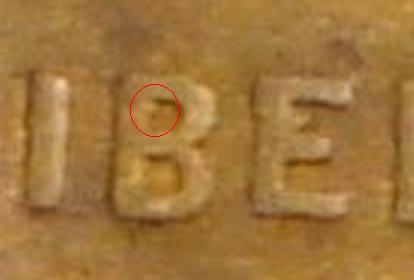 Edited by kbbpll
04/14/2015 12:39 pm
|
|
Moderator
United States
23522 Posts |
Each of those 4 mint mark placements should indicate a single unique obverse die. 4 is all it took to strike them all, and if their production went smoothly they could have done 484,000 with 2 dies.
That die chip just sent me on a mission that - to my standards - proved me wrong. Let me get some images and words together and I'll show you what I found.
|
|
Moderator
United States
23522 Posts |
Here's an LDS MM Position #4 in a very old PCGS MS64RB slab. The die chip in the B is clear, as is the "bowl" around the MM. Theory: This happened because the sudden ferocity of the MM being struck into the die caused a brittleness of the surrounding metal which gradually wore down in use. The slower squeeze of a hub -> die impression didn't have the same effect on the surrounding metal. This sort of Die Deterioration is something we see often. EDS coins won't show either the chip or the bowl.  |
|
Pillar of the Community
United States
6370 Posts |
I'd just stay away from all 1909 S VDB's altogether. Frees up $1000 and saves me the worry of buying a counterfeit.
|
|
Page 2 of 2
|
Replies: 20 / Views: 5,190 |
Page 2 of 2
|






 First Page


 Posted 04/07/2015 11:49 am