| Author |
 Replies: 27 / Views: 4,640 Replies: 27 / Views: 4,640 |
Page 2 of 2
|
|
|
|
Pillar of the Community
 United States
3479 Posts |
Now this has been helpful!  I agree with carl and John1 that maybe we should call it stripped when acid is used. What made the subject more aggravating is that there are a couple of folks in the grading section who use the term often that I suspect have no clue what it means. They just throw the term out there because they see other folks use it. No one learns anything in those cases. Edited by MikeF
03/26/2018 10:45 pm
|
|
Pillar of the Community
United States
837 Posts |
Quote:
Acetone seems to be accepted because it only removes organic matter and doesn't cause hairlines unless wiped with a tissue or cloth.
So can we identify which chemicals cause damage via dipping that is unacceptable? It would be helpful in future if posters would identify which dipping chemical caused their cleaned/dipped assessment. Otherwise, it just confuses everyone on which dipping mechanisms are acceptable and which are not. This is where I am getting confused when you say using acetone is acceptable. If you use acetone and it removes organic material isn't that cleaning? and isn't cleaning bad?  |
|
Moderator
 United States
195482 Posts |
Quote:
This is where I am getting confused when you say using acetone is acceptable. If you use acetone and it removes organic material isn't that cleaning? and isn't cleaning bad? Acetone removes organic material which is not part of the original coin, while dips alter the surface of the coin by removing part of the original coin material. |
|
Bedrock of the Community
United States
10065 Posts |
 If you spilled coffee onto a coin, would you not run it under water to get rid of the coffee? And, yes, it is best to use distilled water so no minerals will be deposited. My water here is so hard I know better than to rinse coins in it. You know the water will not hurt the metal of the coin or alter its appearance...except to get rid of the coffee stain. Think of acetone as being a similar kind of rinse. To remove organic substances, Acetone has the mettle, but won't meddle with the metal of you medal (or coin). ...Although some have reported acetone to give copper a pinkish cast. How much squash could a Sasquatch squash if a Sasquatch would squash squash? Download and read: Grading the graders Costly TPG ineptitude and No FG Kennedy halveshttps://ln5.sync.com/dl/7ca91bdd0/w...i3b-rbj9fir2 |
|
Pillar of the Community
United States
4507 Posts |
Below is a coin that had cardboard glued to the coin. The dark area on the wing is where the cardboard was glued to the coin. I soaked the coin in acetone for about 4 hours and removed the cardboard and glue, then another 4 hours to see if the stain would come off. Once I determined that the stain was not going to come off with acetone, I left the coin alone. This is an example where removing the organic material helped the coin. 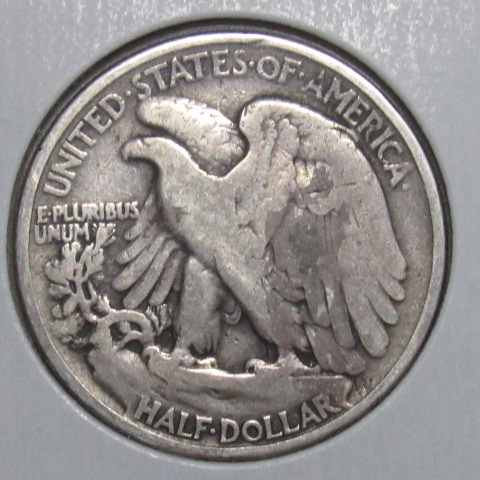 |
|
Bedrock of the Community
13014 Posts |
Quote:
Could mean anything depending who is saying it. That's true, but it doesn't mean they're using the term properly. Dipping is supposed to refer to a specific process with a specific range of products when the only thing that is said is dipped. Saying "I dipped this in xyz" is different than dipping. A lot of people throw around the term improperly |
|
Pillar of the Community
United States
837 Posts |
Would a coin that is "dipped in acetone" be designated with a clean details grade from a TPG? or an acceptable clean with a straight grade from a TPG? |
|
Pillar of the Community
United States
4507 Posts |
Quote:Would a coin that is "dipped in acetone" be designated with a clean details grade from a TPG? or an acceptable clean with a straight grade from a TPG? A coin soaked in acetone would not receive cleaned grade from a TPG for a acetone bath done correctly. A MS coin dipped correctly in an acid product like eZest can still receive a straight grade from a TPG. If fact, some coins have improved in grade from a TPG once dipped. Edited by Slider23
03/28/2018 6:36 pm
|
|
Pillar of the Community
United States
3479 Posts |
Quote:Would a coin that is "dipped in acetone" be designated with a clean details grade from a TPG? or an acceptable clean with a straight grade from a TPG? If it was dipped in acetone without any cloth rubbing the answer is YES. I would grade straight because it only removes organic matter and doesn't strip a layer of metal from the coin. So just to make it absolutely clear: Acceptable: an acetone soak WITHOUT any rubbing with a cloth is fine. Unacceptable: an acetone soak followed by rubbing with a cloth is unacceptable because it creates hairlines and removes metal from the coins surface. Does anyone disagree with this statement or does it need to be worded better? |
|
Pillar of the Community
United States
837 Posts |
I guess I see things a little different. To me cleaned is removing anything from the surface of the coin. Improperly cleaned is when you do damage to the surface of the coin. For example, when you wash your hands with soap you remove the organic material off of your skin but if you use a acid then it can remove a layer of skin. Is "dipping a coin in acetone" today's version of acceptable use for a straight grade?
|
|
Pillar of the Community
United States
3479 Posts |
Mike, I don't think the definition of market acceptable cleaning could be made anymore clearer. If you still don't get it, do this:
Take a junk coin from your collection and dip it in acetone without wiping. Note the results.
Next take another junk coin and dip it in acetone and wipe it with a rag to shine it up. Note the results.
Finally, take another junk coin and dip it in the acid-based jeweler's cleaning stuff that others have mentioned on this thread and note the results.
I think you need to visualized the results of the experiment before you fully understand the difference. I can't imagine that another member could explain the difference any better than what has already been written on this thread.
|
|
Pillar of the Community
 United States
5715 Posts |
For me, the end result is more important than the process in determining what is market acceptable. Anything that makes a circulated coin shinier than it should be is probably not market acceptable, including wiping, rubbing, whizzing, washing with soap, dipping in thiourea, acids, tarnish remover, etc. On the other hand, acetone rarely changes the appearance of a coin (except to remove green pvc slime or old glue), so it's almost always safe (as long as no rubbing, as Mike said). Dipping a mint state coin in acidified thiourea to remove toning falls somewhere in between—it can be market acceptable if not too much luster is removed, but will look cleaned if too much metal is removed and all luster is lost.
|
|
Pillar of the Community
United States
719 Posts |
If you have PVC on a coin, it will be rejected by TPGs. They look for it and can spot minute amounts - as I watched a fellow Barber half collector from eons ago trying to complete all in XF45 have several returned for PVC present.
If you have PVC on a coin of any worth to you (sentimental or financial), it would behoove you to learn about acetone baths and proper removal of the green slime before it erodes into your coin and causes permanent damage
And then avoid using the holders for your own coins that cause the issue in the first place. Mylar flips are the best if you store coins that way and not in albums.
Much more could be said, but acetone is not considered a 'dip' solution as has been stated above multiple times.
There are many other methods of 'cleaning' that are not dipping and beyond this topic of discussion - like wiping mentioned by the OP
|
|
Pillar of the Community
Canada
1267 Posts |
Although I am a strong proponent of originality, I have come to accept that in certain situations (to save a coin) conservation through dipping is better than losing the coin.
What is considered market acceptable at this point in time may not be so in the future. Remember, not that long ago cleaning was market acceptable. Today, we consider dipping to be market acceptable.
There are already more than enough dipped coins to go around- that is not the case for original coins.
As collectors and people who should know better, perhaps we should reflect on how future generations are going to look back on this time. I hope it is not with distain.
We knew better, yet nothing compelling was done to institute a fundamental change in connection with the thinking of originality and preservation.
Edited by hadleydog
03/30/2018 09:37 am
|
|
Bedrock of the Community
United States
10065 Posts |
When I clean ("conserve") a coin, muy goal is to make it so that it cannot be told it was changed from being substandard. I did this once with a 1931-S penny and it was then slabbed as MS. I used Heinz 57 - no kidding. But its a very slow, very cautious process. "Conservation" as we have now come to call it since the TPGs started cleaning coins and needed a new term, is not something magic. It takes trial and error on non-important stuff to see what works. I am still learning.
Yes, I rinsed the 31-S in distilled water for quite some time and then used acetone to make sure nothing organic was left. Heinz 57 is an old trick for restoring mint luster on some cents. Sometimes it works and sometimes not.
|
|
Page 2 of 2
|
Replies: 27 / Views: 4,640 |
Page 2 of 2
|







 First Page


 Posted 03/27/2018 09:47 am


