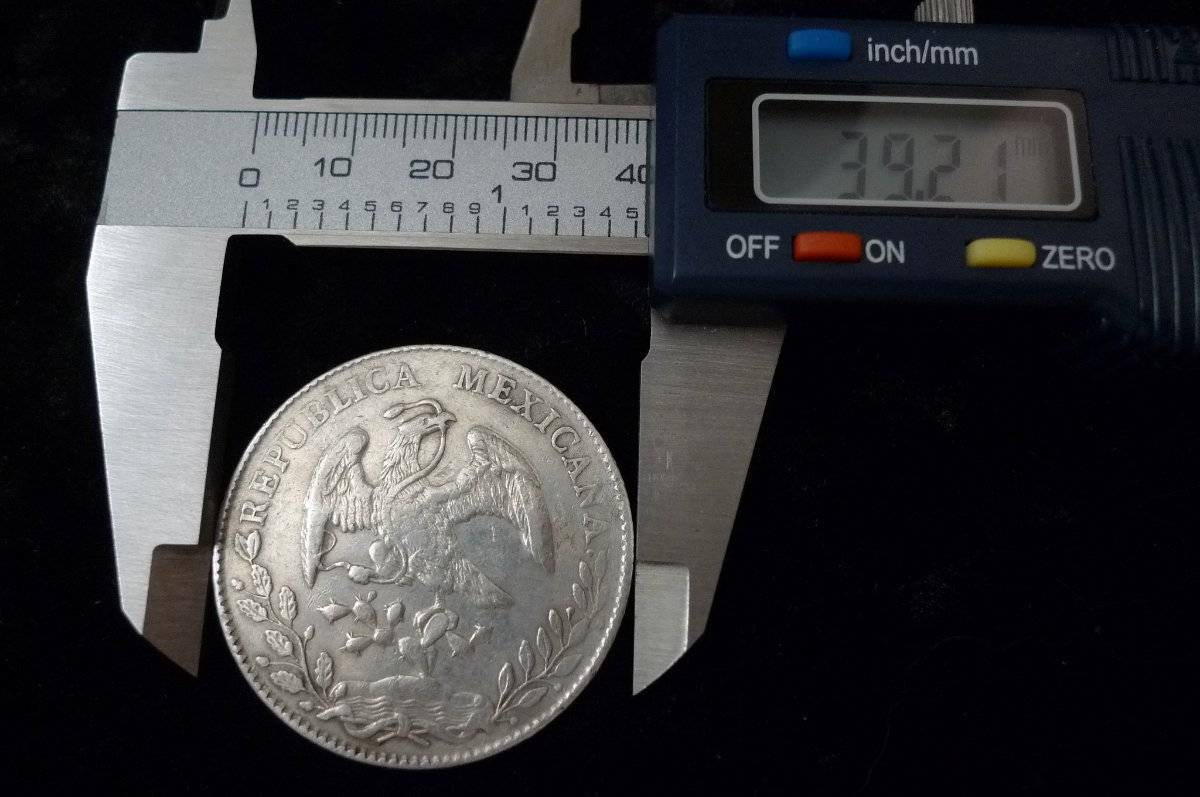
As it happens, I do have an ASE. I'll do the measurements and the calculation and report back. Thanks for the link to the post by swamperbob, that will come in handy.
OK, so because I'm hopeless at making formulas in spreadsheets, I did an alternative test described here:
EN3tlmQSUuI
*** Edited by Staff to add YouTube tags. [youtube][/youtube] Please use them in the future. We prefer embedded video. ***
Using the described method gave me a reading of 2.67, which in turn give me a specific gravity of 10.14 which, as I understand it, is still too low. I'm going to get in touch with the auction house regarding a refund.
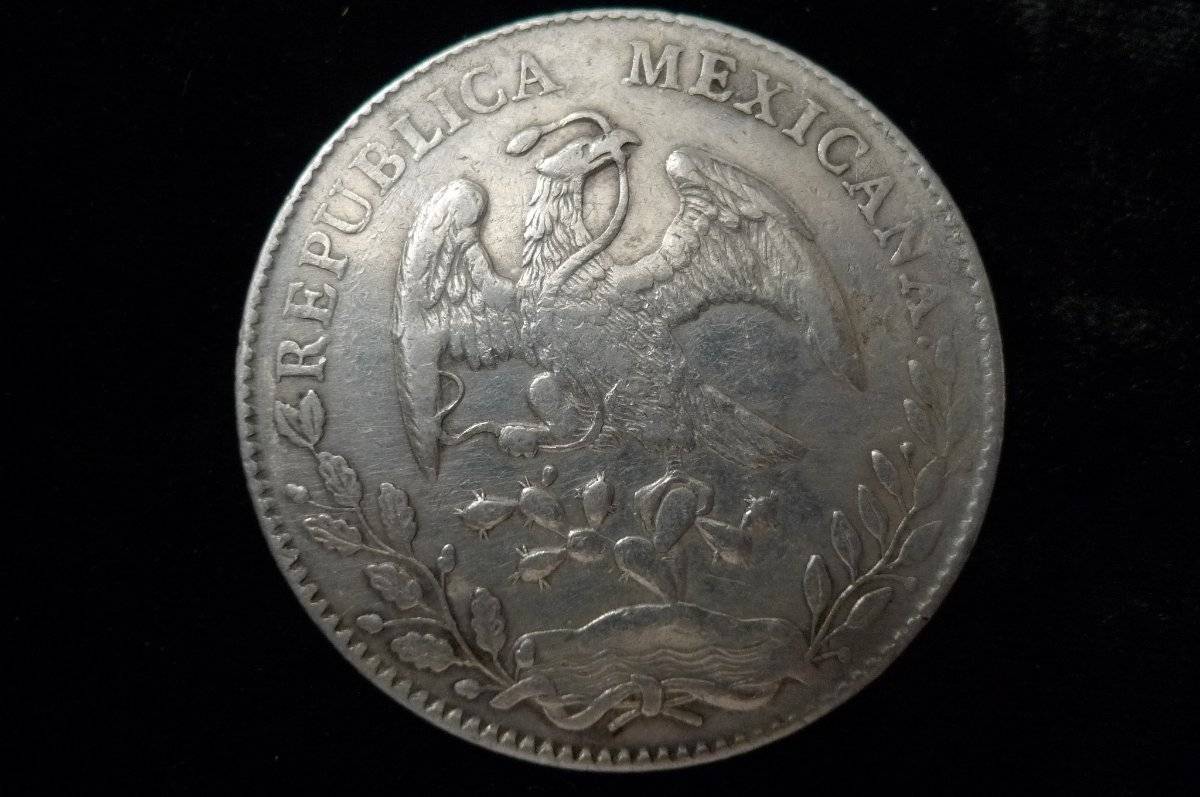
I would in no way be afraid of this coin. SG tests done at home without excellent equipment just do not have the required precision. This looks like a struck coin, of excellent quality too. Do not be too rash to call everything a fake. Even in the case of highly counterfeited series.
Quote: SG tests done at home without excellent equipment just do not have the required precision.
While I respect your opinion, if you read swamperbob's post he makes a convincing argument that a reasonable and useful level of specific gravity can be done with less than excellent equipment.
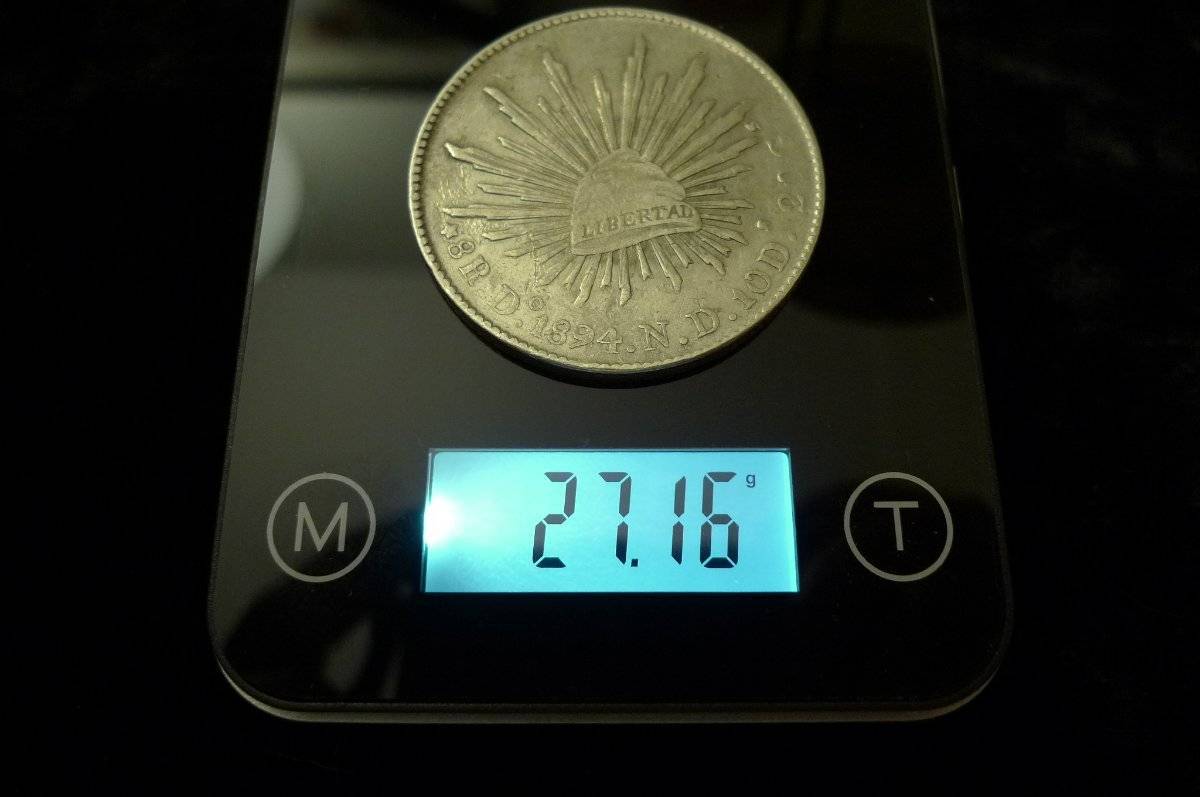
Swamperbob's post recommends measuring the thickness twice, at the thickest and thinnest points of the coin, and using the average of the two readings. Elsewhere in the thread he mentions that the thin reading tends to be around half a millimeter less than the thick one. By that system, if the coin is 2.43mm thick at the rim (probably the thickest point), then an estimate of the average thickness would be 2.18mm - which gives an SG result of 10.5.
That's a little too high I believe, but since we were only guessing at the average thickness it seems reasonable to think the coin geniune.
The guy in the Youtube video is submerging a loop of fat string along with the coin, and not compensating for its volume. Wouldn't that put his SG measurements off to the low side?
Let's hope swamperbob will comment on that 0.5mm difference in thickness. He was referring to an 1839 issue and we are currently discussing a coin minted over 50 years later. When did the Mexico City mint start using hubbed dies?
The very first thing I do is see if the coin is or is not dia-magnetic. I test density on my tech bench with good equipment that does have the needed accuracy and resolution if such a test is suggested.
jgenn, I got a bit caught up in my calculations there - I hope I didn't seem too argumentative.
From my own measurements I think it's very common with late C&Rs to find say 0.2mm variation in rim thickness when measuring the same coin at different points, even when the rim appears unworn and the strike is pretty well centered. So 0.5mm across the whole coin seemed reasonable to me even for 1893 - but I'm very interested in what others have to say.
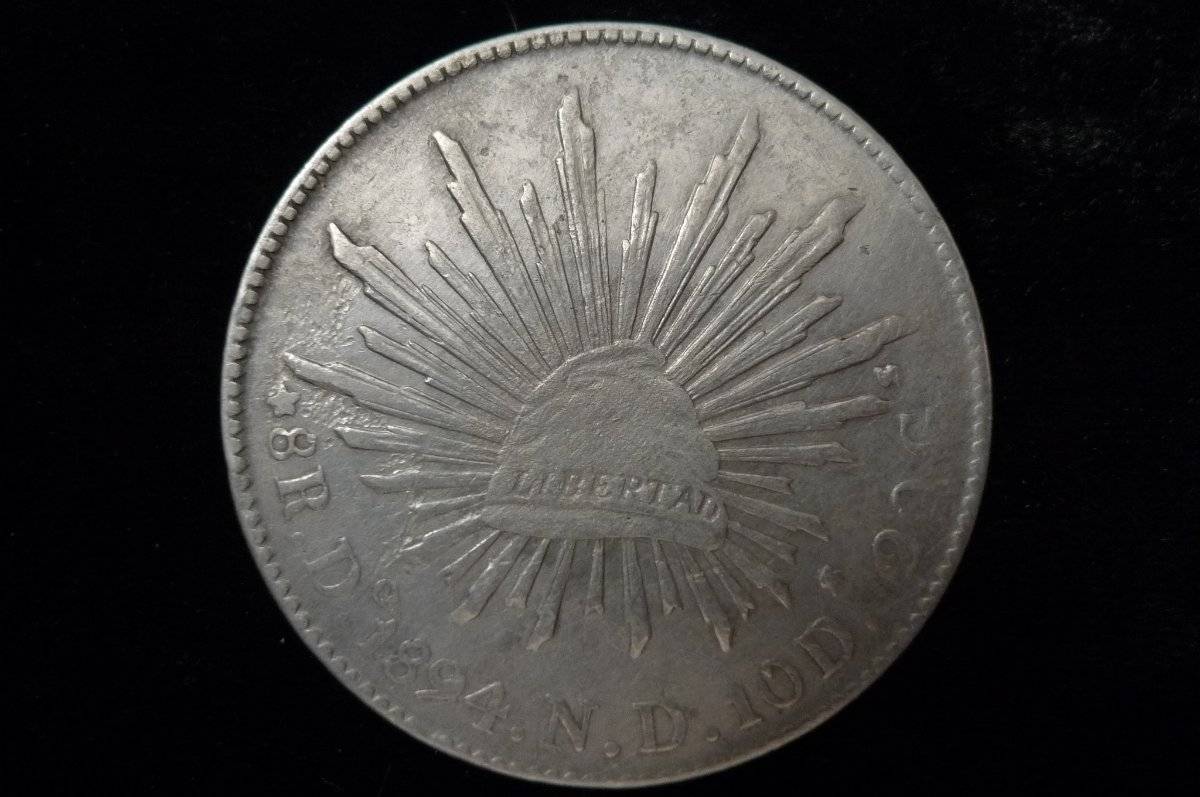
Volvicch Reviewing the pictures and data as presented - I would accept the coin as being genuine. Diameter was not fully standardized between mints or even within the same mint because of multiple rolling mills. Mexico City had the best control of all but it was not perfect.
As to the SG test. A scale accurate to 1/100th gram can give you an accurate test to ONE decimal point all other factors being controlled. It takes practice but completely repeatable results can be achieved using a good 0.01 gram scale. I suspect the problem is the volume calculation - that is the most difficult part to master. The weight lost in water (grams) exactly equals the volume of the coin in cubic centimeters.
jgenn In 1893 Mexico City was making dies for all the branch mints and working dies were hubbed. Variations appear due to multiple hubbing and die damage once they were placed in service. Mint marks and assayer initials were added locally. Touch-up recutting is also well attested.
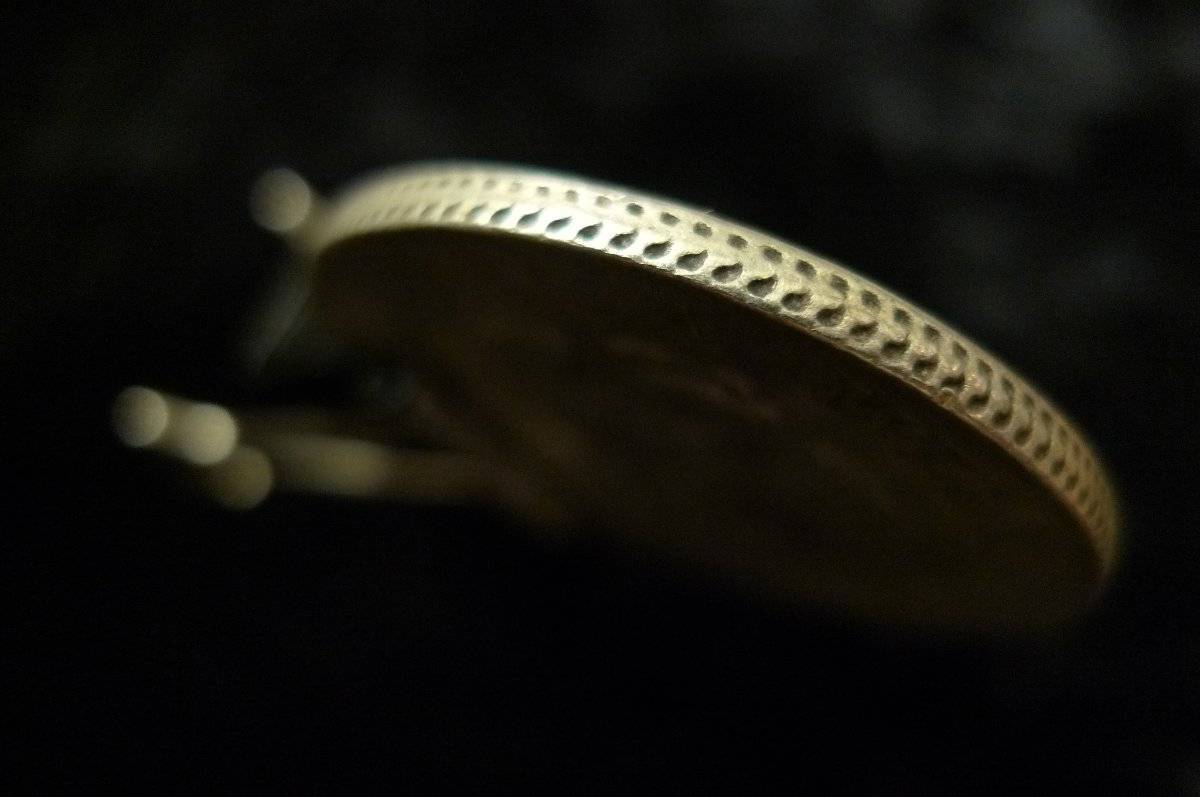
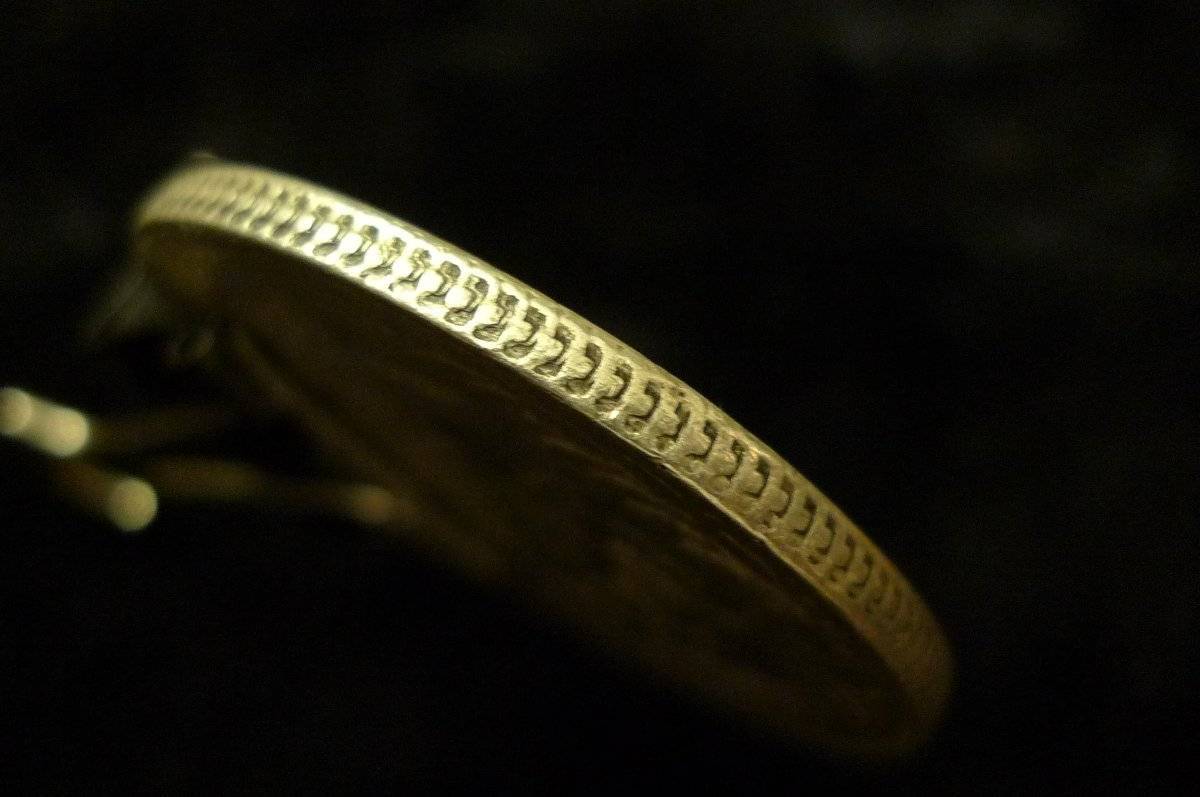
The planchet was edged in a multiple planchet edger and stuck in place for more than one revolution hence the multiple image on the edge.
I like my method of weighing the coin in air and in water because coins are often not truly round with uniform thickness. Some are struck in irregular blanks or may be oddly worn or damaged. So my method eliminates irregular physical measures. However, getting good equipment that make the best results is not cheap. In my case, it was well worth the cost. The required aspects of uncertainty, resolution, accuracy and repeatability was not obtained with lower cost weighing options I started out with. I'm glad I did pop for the high cost of a lab grade analytical balance with under-weigh ability. It gives me what I want when I document my collection of counterfeit coins.
@ Swamperbob Thanks for sharing your knowledge, I guess I will hang onto it.
@ xlrcable Yeah I noticed that as well. I managed to suspend the coin from a single loop of sewing thread, using a running knot so I don't think that would influence the result of the SG test at all.
I don't know what clean is, the mag should very slowly drag. Do you mean it did not slip off fast? I use your method at coin shows, but in my shop I suspend the magnets to see if a coin presents an opposing force. And I have a nice magnet slide. All useful, but not without false results for some other metals. But in those cases, the weights and density will prove to be wrong.
Disclaimer: While a tremendous amount of effort goes into ensuring the accuracy of the information contained in this site, Coin Community assumes no liability for errors. Copyright 2005 - 2026 Coin Community Family- all rights reserved worldwide. Use of any images or content on this website without prior written permission of Coin Community or the original lender is strictly prohibited. Contact Us | Advertise Here | Privacy Policy / Terms of Use








 First Page


 Posted 11/04/2018 03:34 am