| Author |
 Replies: 24 / Views: 2,692 Replies: 24 / Views: 2,692 |
Page 2 of 2
|
|
|
|
Pillar of the Community
United States
2752 Posts |
Error coin writer and researcher.
|
|
Pillar of the Community
5464 Posts |
|
|
Pillar of the Community
United States
2752 Posts |
Not by a long shot.
Error coin writer and researcher.
|
|
Pillar of the Community
5464 Posts |
Quote:
Not by a long shot.  I tried! Thanks for the feedback. |
|
Bedrock of the Community
United States
79404 Posts |
 To CCF! To me, they don't get any respect because they're super common to find. I find them all the time CRH (Coin Roll Hunting). Also, they are often on ebay and other websites being mislabeled as a Doubled Die when they're not. Errers and Varietys.
|
|
Pillar of the Community
United States
3207 Posts |
Great examples of DDD can be found on many early 1980s nickels, an era when the mint worked those dies to death. Mike, with that wide Machine Doubling on Lincoln's profile, why isn't there also much on IGWT? |
|
Pillar of the Community
United States
2813 Posts |
Wow, that 1991 cent is amazing.. Is that a variety or a unique error?
|
|
Bedrock of the Community
United States
62064 Posts |
Why are grains of sand not as valuable as gold? They are common.
|
|
Pillar of the Community
United States
2752 Posts |
IN GOD WE TRUST is not affected on this 1991 cent because its relief is lower. The die bounced up after impact, shifted to the left, and landed on the design with a bit of a secondary bounce. The die didn't sink into the design deeply enough to affect the motto.
Error coin writer and researcher.
|
|
Pillar of the Community
United States
2752 Posts |
CoinHI, this is clearly not a die variety because the abnormality is related to the strike, not the die. There are other examples of Machine Doubling that approach or match this level of severity. So it's not unique by any means, although examples this extreme are quite rare. The year 1991 produced some outstanding examples of double-sided Machine Doubling, of which this is one. I didn't bother showing the doubling on the reverse face. Error coin writer and researcher.
Edited by mikediamond
05/23/2020 12:47 pm
|
|
Pillar of the Community
United States
2752 Posts |
In case anybody's curious, my take on when the minting process ends is when a coin leaves the striking chamber for the last time. Any mishap that occurs within the striking chamber, or that affects the protruding portion of an off-center or expanded coin while the rest of the coin remains inside the striking chamber, is a mint error. The defect must be one that could not occur outside the coining press. Of course, the end of the minting process occurs later for small dollar coins with edge lettering. The lettering is applied well after the dollar has left the press. The advantage of my definition is that it incorporates such eye-catching phenomena as ejection impact doubling.
Error coin writer and researcher.
|
|
Pillar of the Community
United States
5240 Posts |
What Mr.Diamond said makes perfect sense. Here is a 1983 P, first quad MD I have ever heard of or have ever seen. 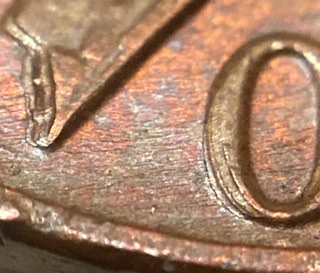 Edited by Jim0815
05/24/2020 10:20 am
|
|
Pillar of the Community
United States
2752 Posts |
That's an impressive number of shelves. I don't recall seeing a number greater than that on domestic coins.
Error coin writer and researcher.
|
|
Pillar of the Community
United States
5240 Posts |
Mr. Diamond, when I first saw this under magnification I thought I found a new DDR! It's in a 2x2 and is really quite impressive to see in hand. |
|
Pillar of the Community
United States
3237 Posts |
@MikeDiamond I like your cutoff point of the striking process ending when the coin leaves the striking chamber for the final time. Makes far more sense and captures errors like double denomination, die caps, and double strikes.
|
|
Page 2 of 2
|
Replies: 24 / Views: 2,692 |
Page 2 of 2
|








 First Page

 Posted 05/23/2020 09:56 am


