| Author |
 Replies: 21 / Views: 3,506 Replies: 21 / Views: 3,506 |
Page 2 of 2
|
|
|
|
Bedrock of the Community
United States
19625 Posts |
|
|
Pillar of the Community
 United States
5898 Posts |
Post Strike Damage from a soft die(?) in the shape of the indent? The flatness of the area on the reverse that lines up with the obverse seems to indicate something similar to a counterpunch by a counterfeit soft die? It's not double struck since there doesn't appear to be any secondary details except in the indented area. I don't think it could be a broken piece of the obverse die that was retained but "bounced" to strike the coin twice. And I don't think the damage (not a Cud) to the reverse would be there if this occurred at the mint. It will be interesting to hear Mike's comments if he stops by. Words of encouragement are one of the major food groups.
We need to consume them regularly to thrive and grow.
Edited by Petespockets55
10/11/2020 10:49 am
|
|
Bedrock of the Community
United States
62064 Posts |
The reverse says it all. Damaged. Note how the coin is out of round, the flattened area on the reverse? Looks like it got hammered.
|
|
Pillar of the Community
United States
1008 Posts |
 Note at about 6:30 on the reverse. It got flattened by something, probably by a hammer. |
|
Pillar of the Community
1110 Posts |
I'm thinking some type of dropped letters with struck thru "before" it was damaged.
|
|
Pillar of the Community
United States
2752 Posts |
As others have said, this is post-strike damage. A disc (perhaps an unstruck planchet) was driven into the coin, creating an indentation, while the coin rested on a flat, rough surface. The disc could then have shifted and been driven a second time into the coin. Incuse elements impressed into the overlying disc were pressed back into the coin, creating a set of accessory raised design elements. This all could have occurred during one impact, were the disc to have bounced during the process. I've seen this effect many times before.
Error coin writer and researcher.
Edited by mikediamond
10/11/2020 6:19 pm
|
|
Pillar of the Community
1110 Posts |
|
|
New Member
 United States
39 Posts |
Okay, but I still have questions. If it was a disc or planchet why didn't it go through the rim on the left above LIBERTY like it did above WE? Where did the weird outline come from that is between his head and IN GOD? It would not have been on the coin as originally struck. If it wasn't on the original was on what struck the coin? Why doesn't it go into the rim? It actually looks like it could be from a wreath on the reverse of an Indian Head cent. And where did the raised element between IN and GOD come from? It looks like the bottom of a 9 or top of a 6. If what struck the coin was soft enough to pickup the design from the coin would/could it be hard enough to imprint the design again on the coin? The more I look at it the more I want to know how it happened. Edited by gunbarrelcoins
10/12/2020 12:46 pm
|
|
Forum Dad
United States
24233 Posts |
You're asking the wrong question.
The are billions of ways that coins can be mauled, mutilated, damaged, etc.
There is a finite amount of ways errors can happen at the mint.
The question to ask isn't "How did this happen?" the question to ask is, "How can this happen during the minting process?" This cannot happen during the minting process.
|
|
Pillar of the Community
1110 Posts |
Quote:
This cannot happen during the minting process. So just to be clear.. You're saying all this "did not" happen during the minting process? 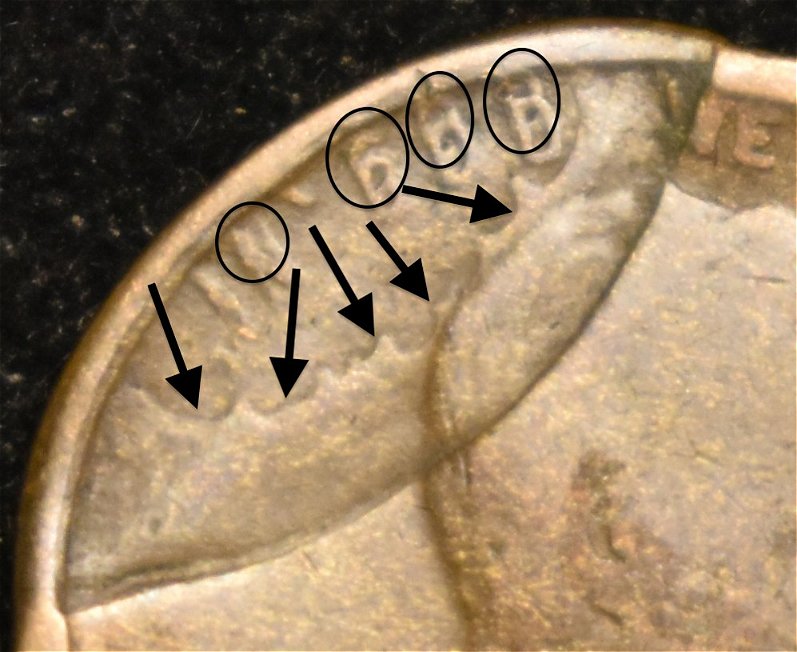 |
|
Forum Dad
United States
24233 Posts |
Yes, read Mike Diamond's post if you don't believe me.
Then after that explain to us how this does happen at the mint.
|
|
Bedrock of the Community
United States
94367 Posts |
Agree - this DID NOT happen during the minting process. C'mon, man!  |
|
Bedrock of the Community
United States
10635 Posts |
with ALL of the above. Mike is the authority who knows his stuff. We are lucky to have resources like him and coop available to us!  |
|
New Member
United States
39 Posts |
Yes, it is post strike damage given the flattening of the design on the reverse. Maybe I should re-title the post 1919-S Lincoln with interesting damage.
|
|
Pillar of the Community
1110 Posts |
Quote:
Then after that explain to us how this does happen at the mint. I can't technically explain how that happens at the mint. All I'm suggesting is, it's hard to believe that the doubling on "GOD" and that jagged line below (which looks like some type of struck thru) all happened as a result of PMD. I can see the circular line of another coin or planchet on the Obv Mike's talking about and the flattening on the Rev which is absolutely PMD. Again, I'm just suggesting that the doubling and that jagged line area was a legitimate mint error and the coin was damage after it left the mint. With that said, I have no problem conceding to Mike. I'm not an expert, just a bystander. |
|
Page 2 of 2
|
Replies: 21 / Views: 3,506 |
Page 2 of 2
|








 First Page


 Posted 10/11/2020 10:48 am


