| Author |
 Replies: 13 / Views: 1,734 Replies: 13 / Views: 1,734 |
|
|
Pillar of the Community
Mexico
1304 Posts |
I'm looking to sell a coin that was cut back in the day to make small change. It's a 1932-42 half real that was struck in the Guanajuato mint with a PJ assay. It is a detector find found less than 50 miles from the original mint. Your thoughts? 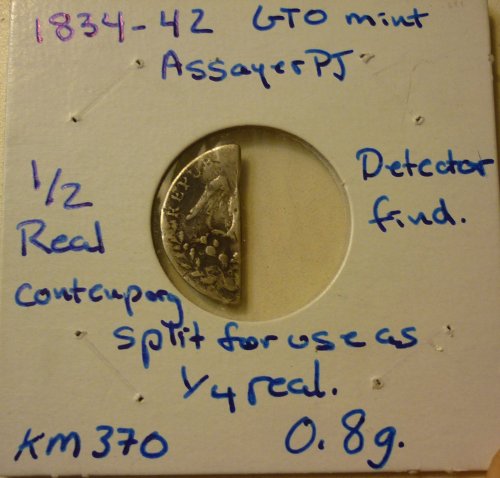 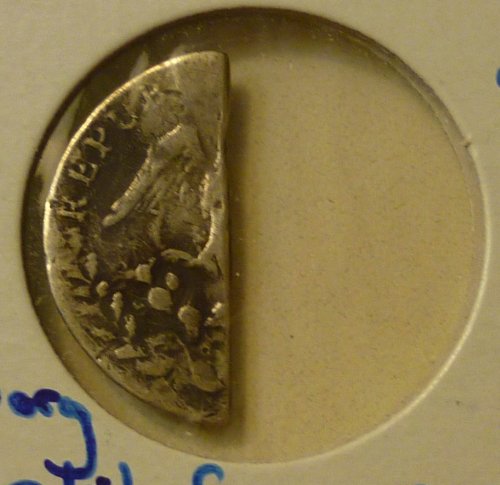 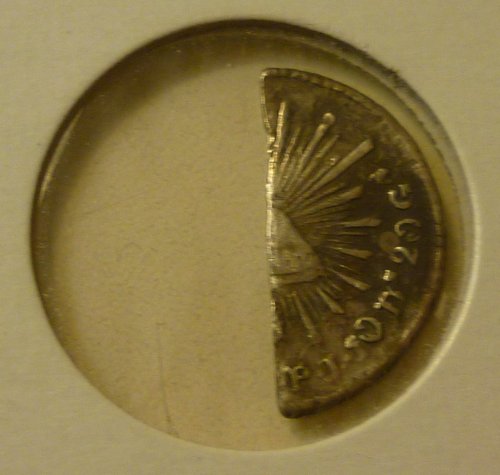 |
|
|
|
Pillar of the Community
United States
7842 Posts |
|
|
Pillar of the Community
United States
560 Posts |
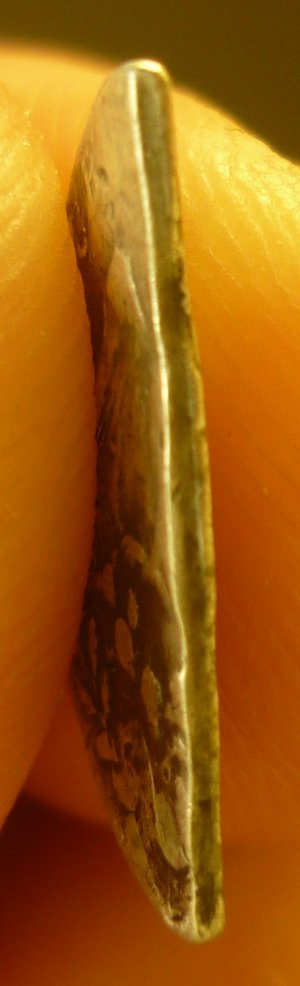
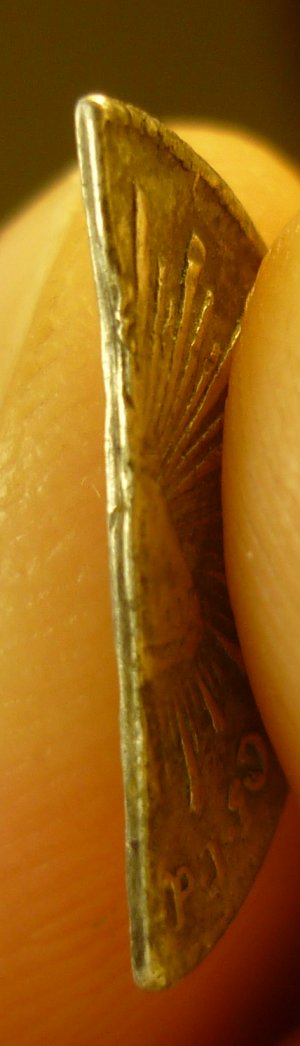
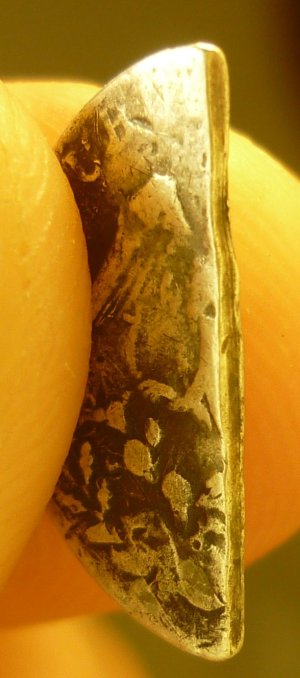
I agree. Melt value. It is interesting from a historical standpoint. I don't think that adds any value because it would be difficult to prove that the split took place in the 1800's (as opposed to now). I've seen a lot of fractional reales but haven't seen a split one before. Do you know if this was common practice at the time? There were circulating 1/4, 1/8 and 1/16 reales at the time. What does the split edge look like?
|
|
Pillar of the Community
United States
3345 Posts |
Well the edge, from this picture, looks worn, and therefore gives evidence that it might have been split closer to the time of it's creation.
|
|
Pillar of the Community
 Mexico
1304 Posts |
|
|
Valued Member
United States
108 Posts |
I like the provenance, I like the coin. Thx for the share!
-Jay
|
|
Rest in Peace
United States
4078 Posts |
 with Jarubla, but how do you prove it? |
|
Pillar of the Community
United States
560 Posts |
Very cool. Thanks for posting the photo of the edge. Thanks also for the explanation of how/where it was found. How long ago was it dug?
Harrison - do you see coins split like this often in Mexico? It's something I haven't come across before.
|
|
Pillar of the Community
Mexico
1304 Posts |
I have heard of coins being split like this, but frankly down here numismatics in general is quite rare, so I can't say that I have even seen it before.
I'm really not worried about proving beyond a shadow of a doubt that it is a contemporary break. It was found in the ground about three and a half years ago by a Mexican friend with a metal detector from the stone age. This same guy has found some other rare specimens that I have aquired like a Zacatecas 1810 2 real that was traded for about 10 oz of silver and an old copper hacienda token that sold for $70 to one of Mexico's leading token experts at a coin show about a year and a half ago. (My current avatar)
I was thinking about selling it, but I don't see much value in doing so, I doubt the sale price would cover the shipping! Thanks for the feedback guys!
|
|
Valued Member
United States
469 Posts |
I believe they were called "bits". If they cut a silver dollar in pieces they called they 2 bits or 4 bits or 6 bits a dollar.
|
|
Valued Member
United States
324 Posts |
Hi, The term bit was used to refer to a real long before the larger coins were cut for change. Around the time of the American Revolution they were called sharp shins. sharp because they were, well, sharp and shin was short for shinplaster, low value paper money. The ANA has a DVD called "cut coins of the American frontier" which gives a great history of these pieces. This link will give you so much info on the topic that all your friends will call you the expert. http://numismatics.org/wikiuploads/...stareens.pdfJoe |
|
Pillar of the Community
Mexico
1304 Posts |
Joe, great reading, thank you for sharing. In examining the various pieces on there, it was quite consistent that they split the coins down the lines of the cross, not just at random. This coin was also split in that same fashion. Again, great read, thank you.
|
|
Pillar of the Community
United States
560 Posts |
Wow - great link Joe. Thanks for posting!
|
|
Pillar of the Community
2087 Posts |
JUst a comment about the article in the link. It is really irritating when Coin collectors don't check their facts It states Quote:
The obverse is the shield side where Spains holdings over the Holy Roman Empire are displayed in heraldic fashion in a crowned coat-of-arms This is incorrect The arms do not represent "Spanish Holdings" The arms represent the arms of the Habsburg Family: meaning both branches Austrian and Spanish. Austrian Habsburg coins often bore the Spanish Habsburg arms but Spain never held Austria and Vice versa. In German the Holy Roman Empire is known as the Romanische (Roman) Deutsche ( German) Reich ( empire. For a substantial part of that Empires existence it was Ruled by Austrian Habsburgs BTW Given the provenance of your coin I suspect it, to the right person,n has a high value. However to test this theory you would have to put it up for Auction and I know if I had a piece like that I wouldn't want to sell it. Edited by austrokiwi
03/28/2013 05:19 am
|
| |
Replies: 13 / Views: 1,734 |
|










 Posted 03/26/2013 2:30 pm