



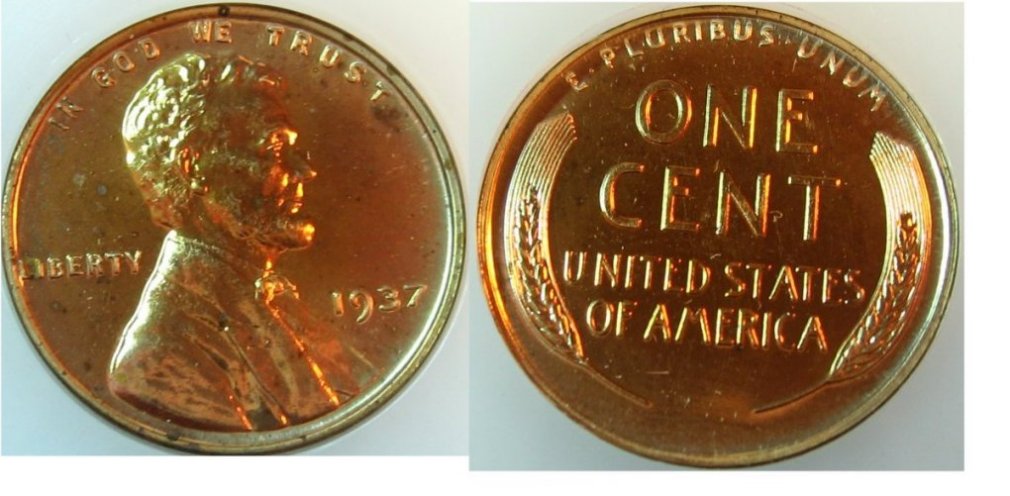
What is the easiest way to tell if a cent is a proof or just BU for the proofs with no mint marks from the late 50's early 60's. I sent one for the secret Santa and had no idea it was a proof I just though it was BU. Curious because I have some more cents that look similar to the one I sent and want to make sure I separate the proofs from circulation strikes.
Yeah, pretty much the rule would be, if it looks very mirror finished or reflective like a polished surface might, it's a proof. If it's got a nice luster but is not mirror-like or polished looking, it's likely a BU coin.
What about a BU coin that has been buffed/polished. Aren't proof coin dies made with sharper devices then non proof?,that would be a diagnostic right? John1
Quote: What about a BU coin that has been buffed/polished.
This raises a good point. In cases such as this I imagine one would look for signs of cleaning. Is the luster unbroken? Break out a loupe & check for whiz lines, crisp (or lack thereof) details.It wouldn't hurt to have a verified example to compare it to during the process.
In some instances it does get rather tuff. At a flea market I saw a guy demonstrating an auto polish. He used pennies and they all ended up looking like proofs.
On early coins the squareness of the rim could be used as a diagnostic to signify a proof. Not sure on the modern cents -- a more educated member can chime in on that.
Disclaimer: While a tremendous amount of effort goes into ensuring the accuracy of the information contained in this site, Coin Community assumes no liability for errors. Copyright 2005 - 2026 Coin Community Family- all rights reserved worldwide. Use of any images or content on this website without prior written permission of Coin Community or the original lender is strictly prohibited. Contact Us | Advertise Here | Privacy Policy / Terms of Use