What is a die gouge?
On each die, the devices on the die are negatives.
What does that mean? On a coin, what you are seeing is a positive. The bust is raised, the devices are raised and the lower part on the coin is the fields.
So if you were going to make coins stuck with a die, how would you need to create the raised devices, the incuse devices, and the bust that towers over everything, also the rim? In order to make these raised and incuse devices on a coin you would need a negative die, to strike up a positive coin. On the die, the things that are the tallest on a coin, are deepest on the die. So the bust, and the buildings, would need to be deep into the die. On the die, the devices are mid devices, that need to be raised, are incuse in the die.
(sunk into the die) Then the shallow devices, (small devices like inititals) are the just below the surface of the die. But the fields are the outside of the die.
(In order to make incuse devices on the coins, they need to be raised on the die)  (these are simulations)

So first off we note that the letters are mirrored. When the coin is struck they will appear normal and raised.
This is what a die looks like.
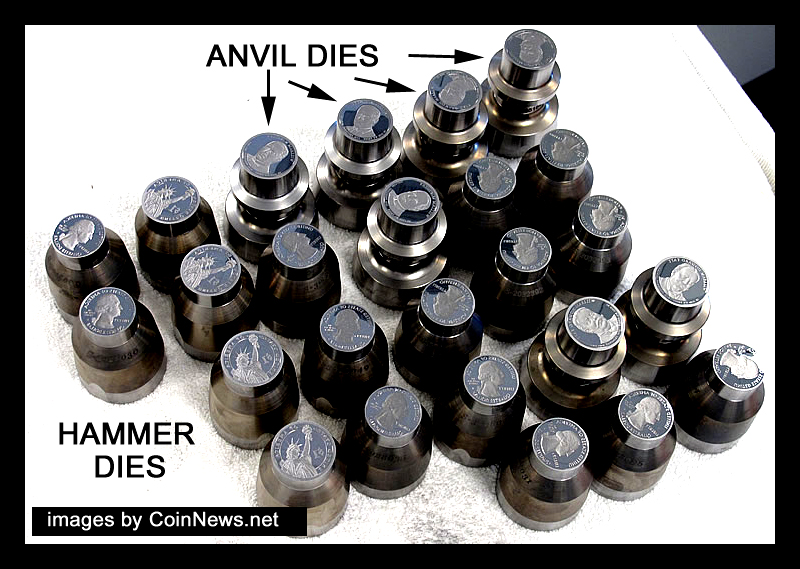
Here is a closer view of a real die: 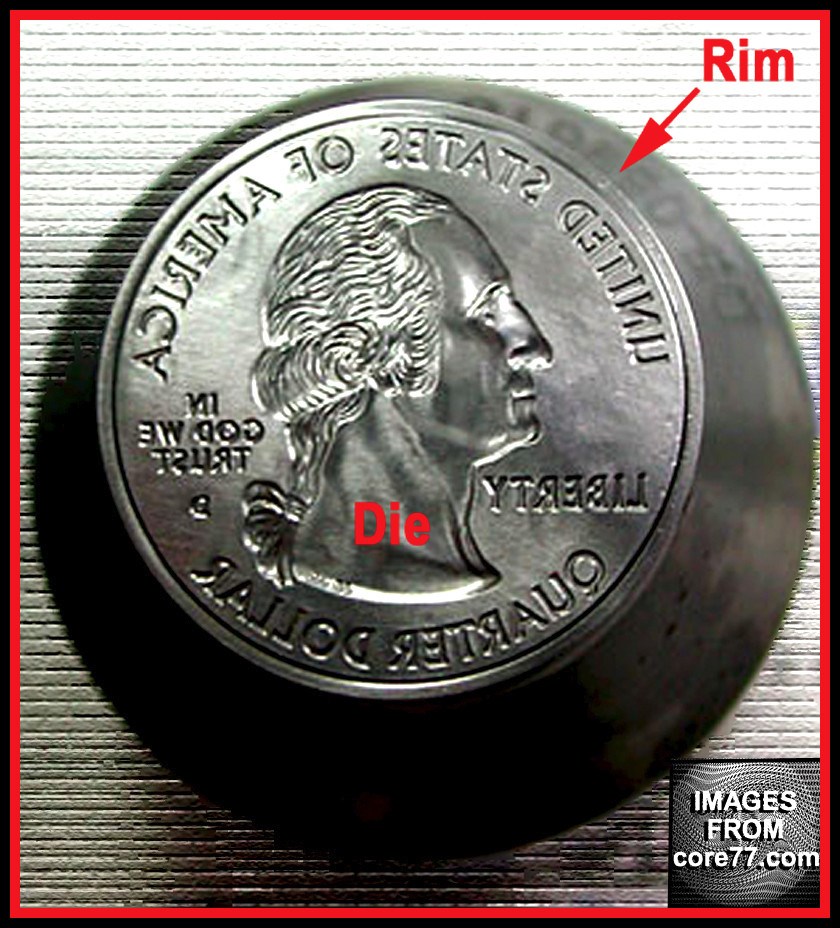
Now on this image the devices are incuse sunk into the die. But note the rim with the red arrow on this image. The die is rounded at the edge of the die, but the rim is formed by the step down of the die, with the collar keeping it rounded.
"But what has this got to do with die gouges? We are just getting to that."The fields on the outside face of the die, any die polishing can be done to remove minor imperfections that happen to a die. Usually die clashes and heavy die flow line removal. But when they are polished, they are not left in the machine to do this. They are taken to a shop inside the mint that handles this task:

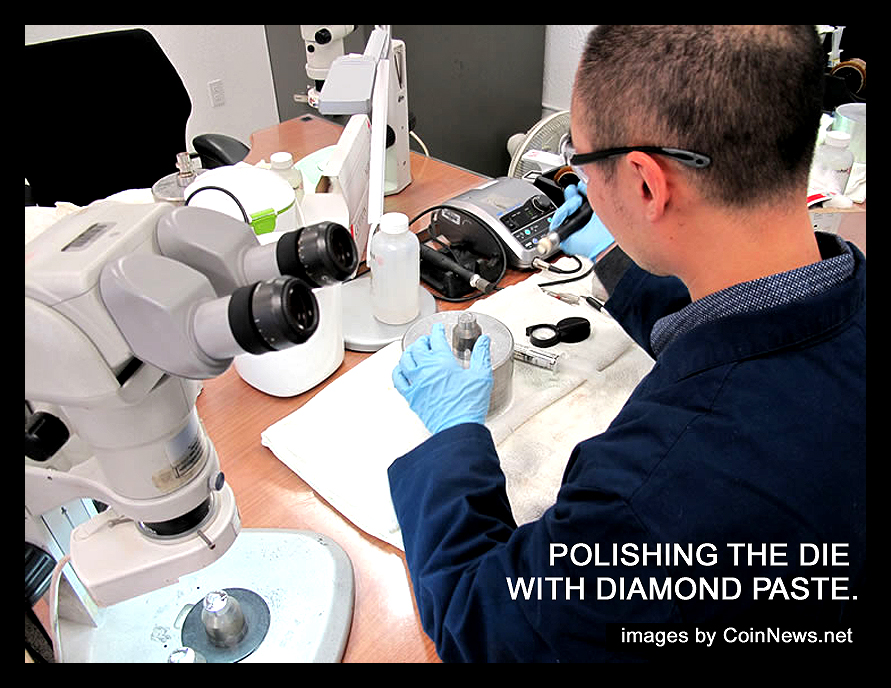
Sometimes while the dies are being handled, die events happen to the dies. Contact marks from other dies can place a dent on a die:
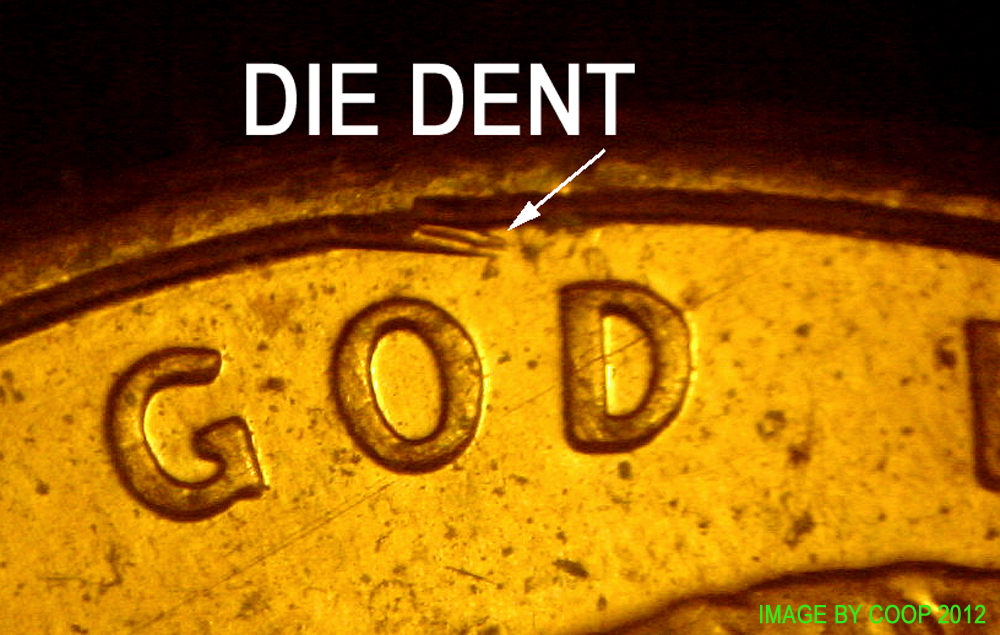
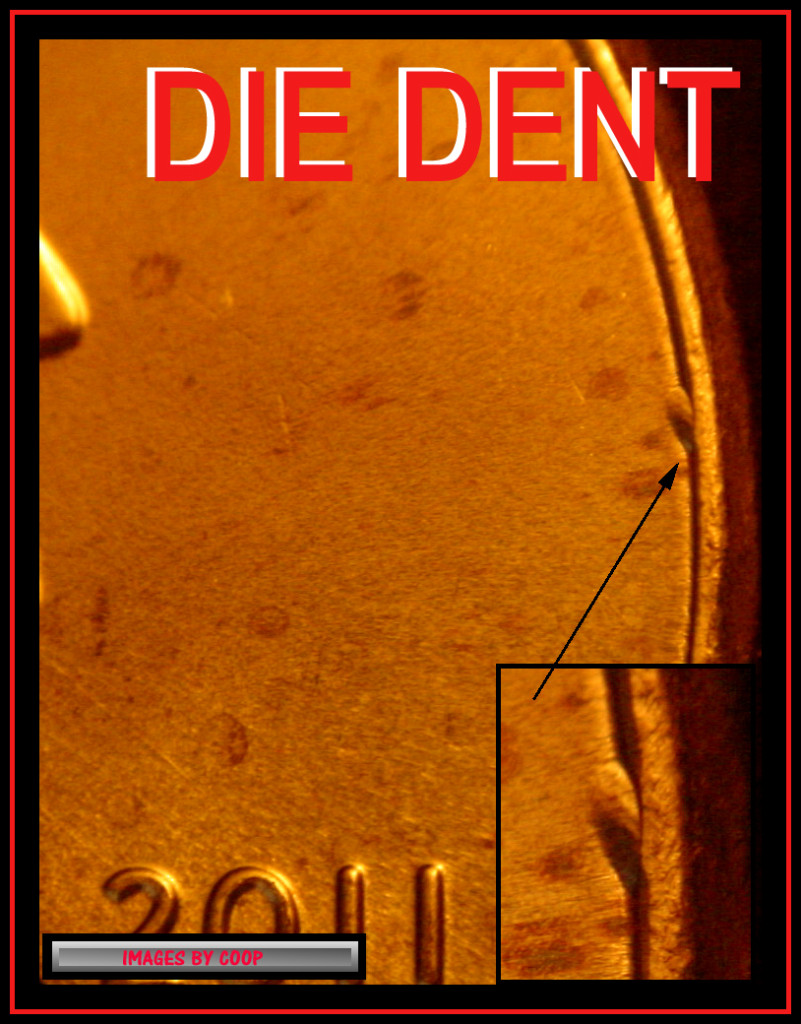
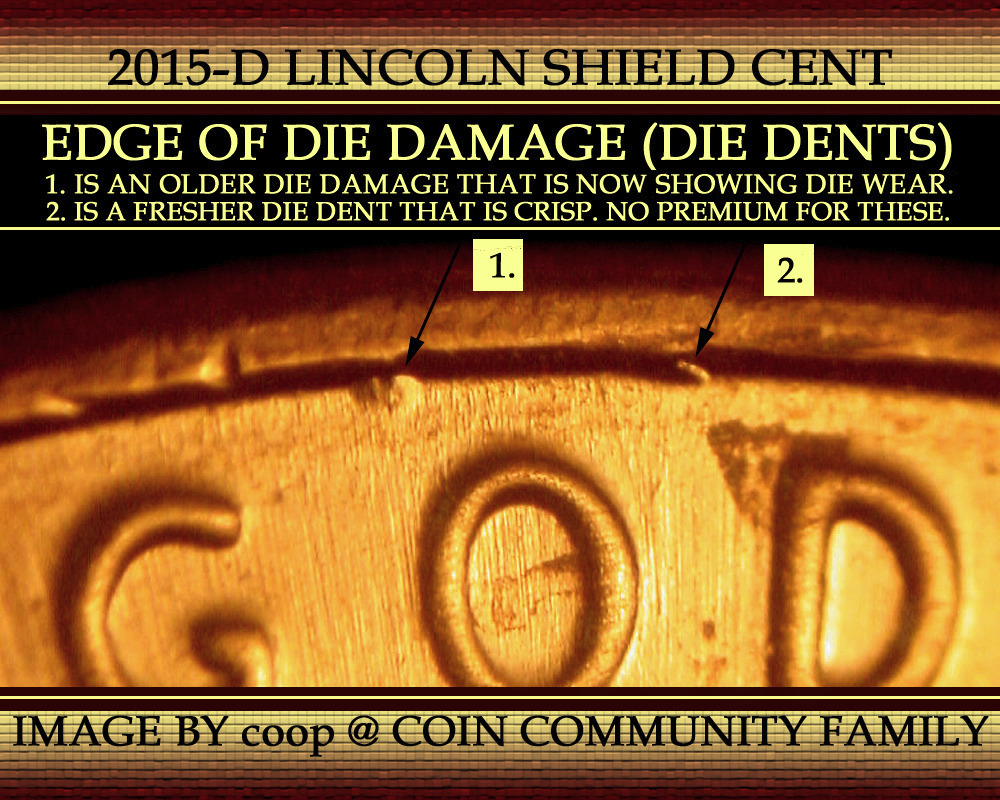
When the dies hit together they make an incuse mark, on the die. So when a die has an incuse mark, it will leave a raised area on every coin struck with it. If the die dent is deep, and it can't be sanded/polished off, then it has that mark until it is retired. To live out the dies life, with that injury to the die. (These are nice markers for Variety coin identification)
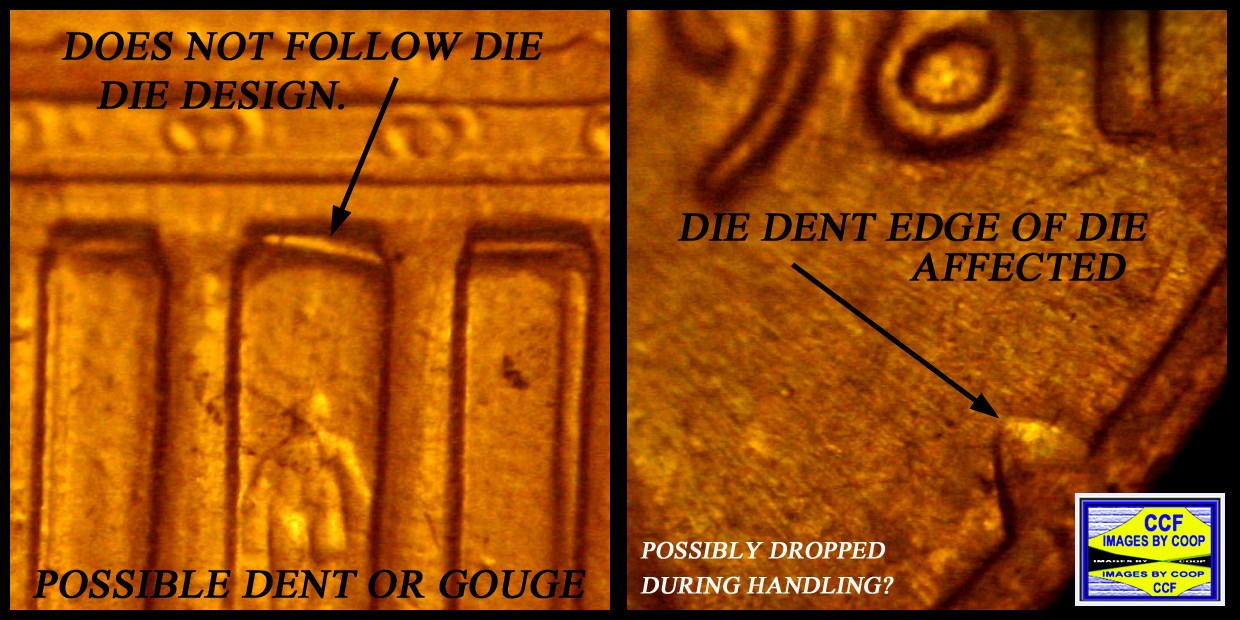
Sometimes they may drop off the table and damage an edge of a die.
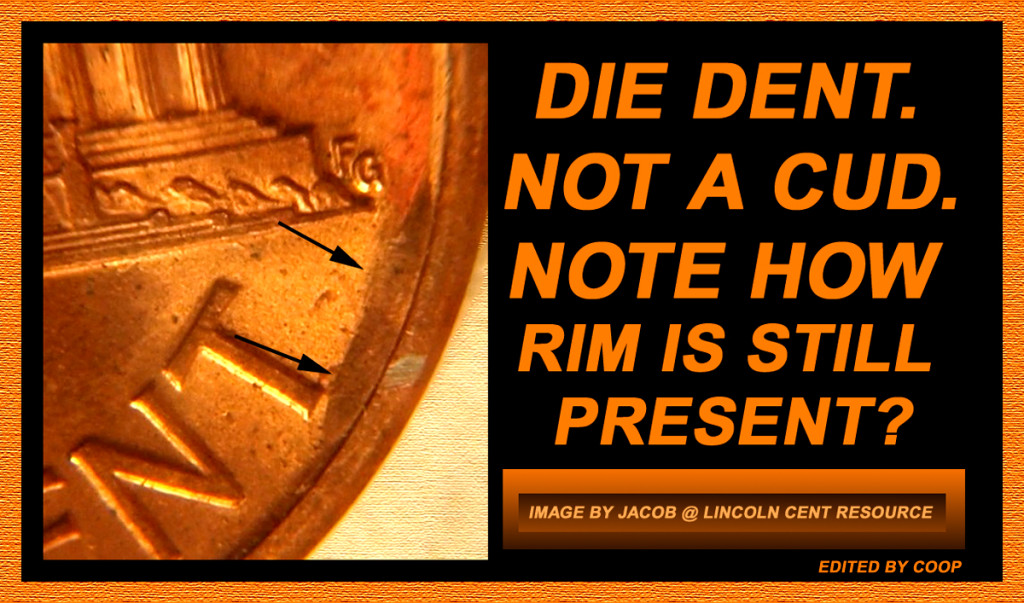 Now we are ready for the information about die gouges.
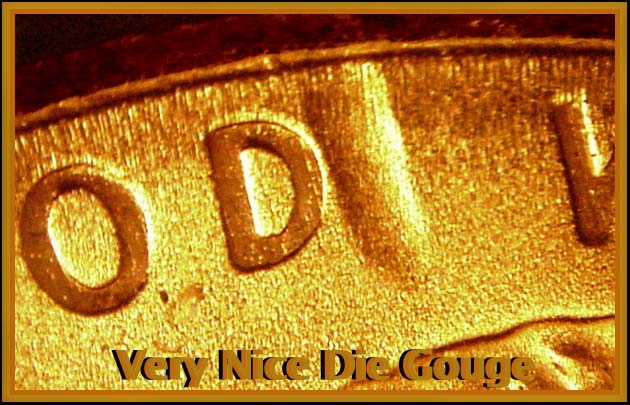
 A die gouge is a contact mark on the die from being miss handled. This is usually a line that is not part of the design of the coin. They are usually near the outside edges of the dies:
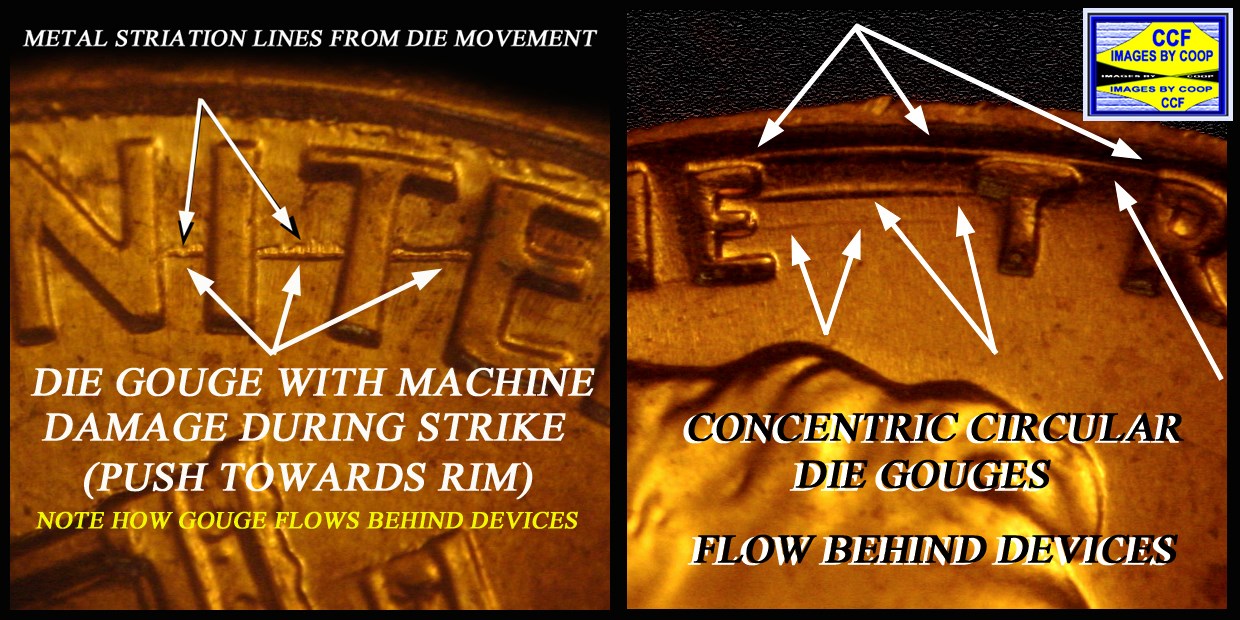
Die gouges, because they are on the fields, can appear to flow behind the devices:
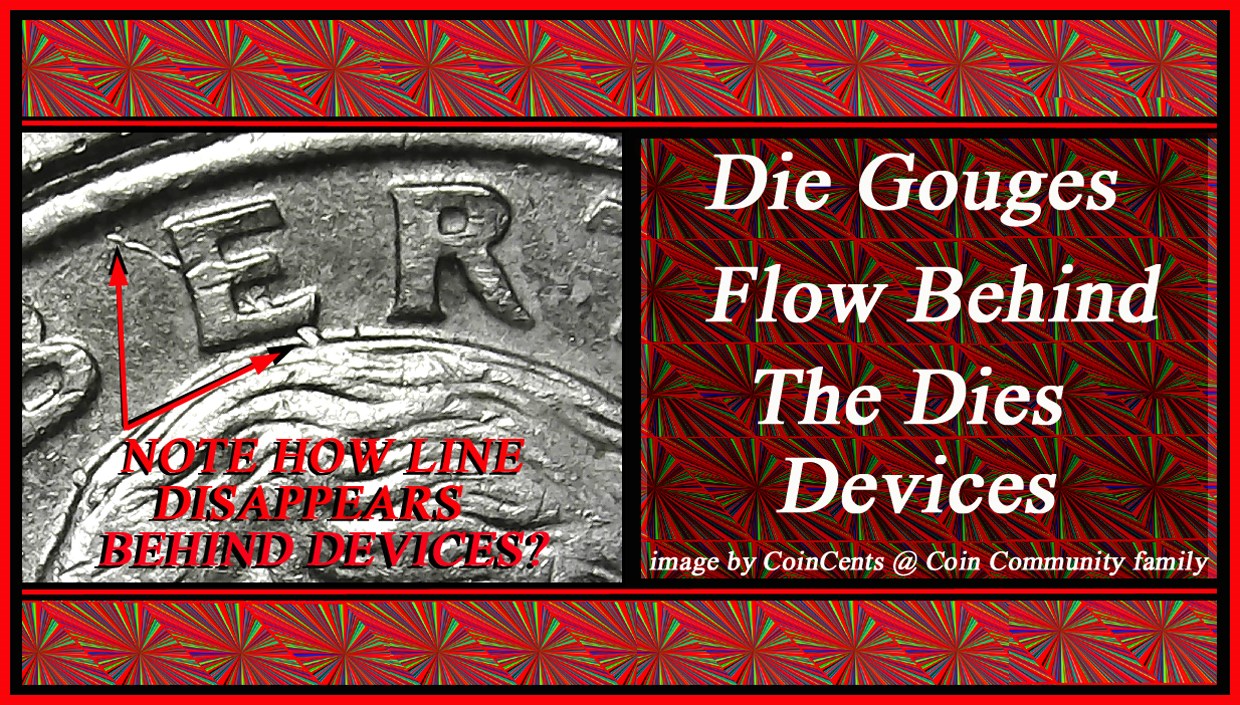
They are most of the time wider than a die crack.
Die gouges are not the same as die chips:
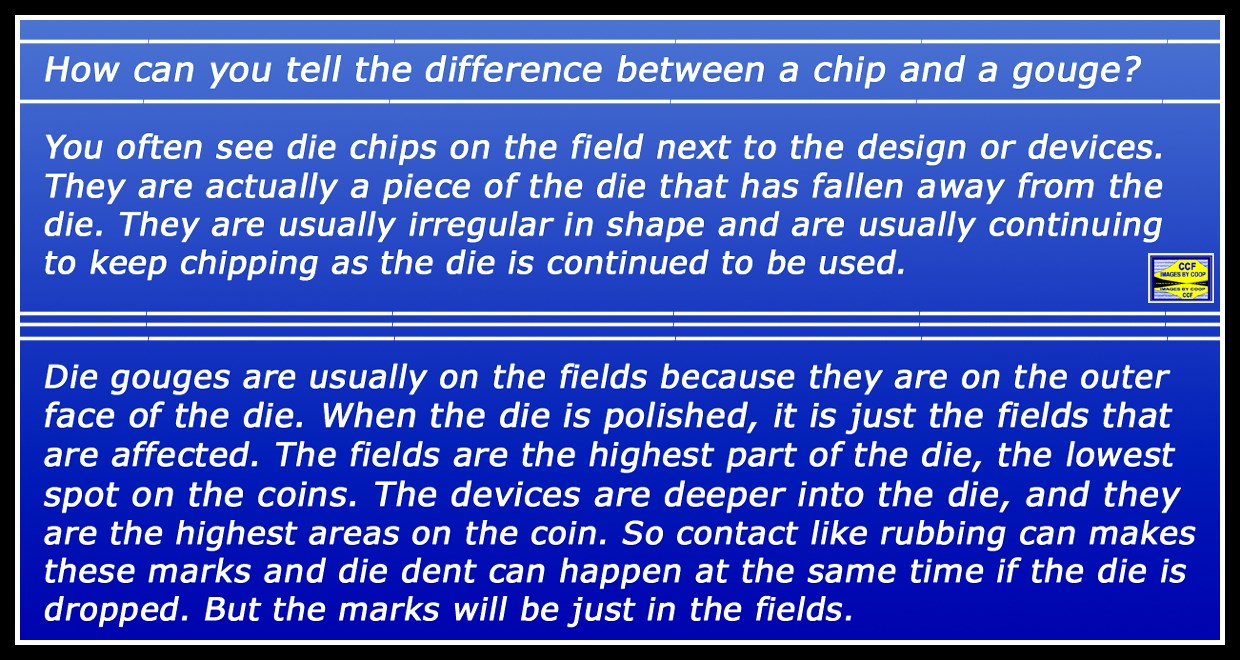
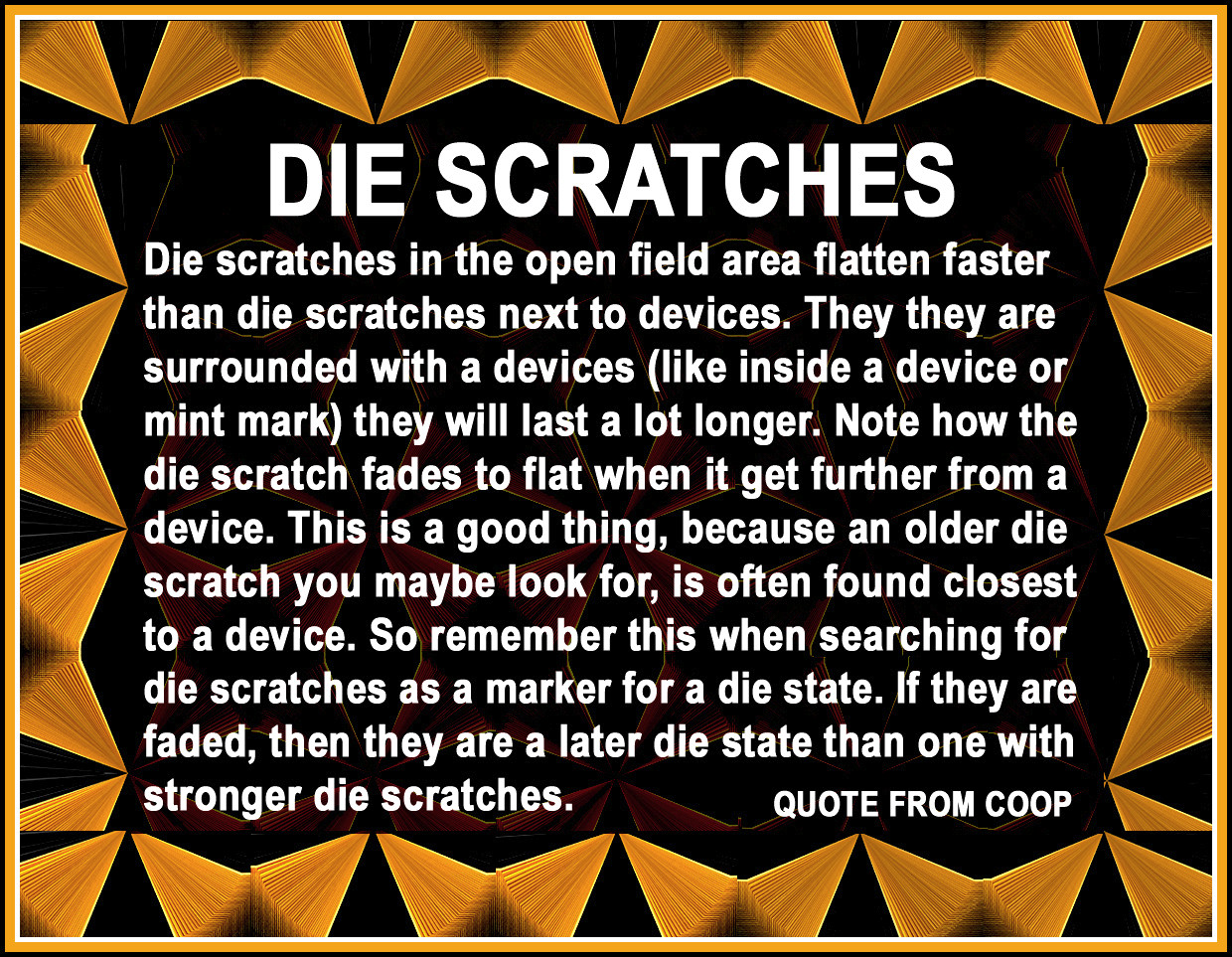
Die scratches are left over marks from polishing that were left over on the dies:
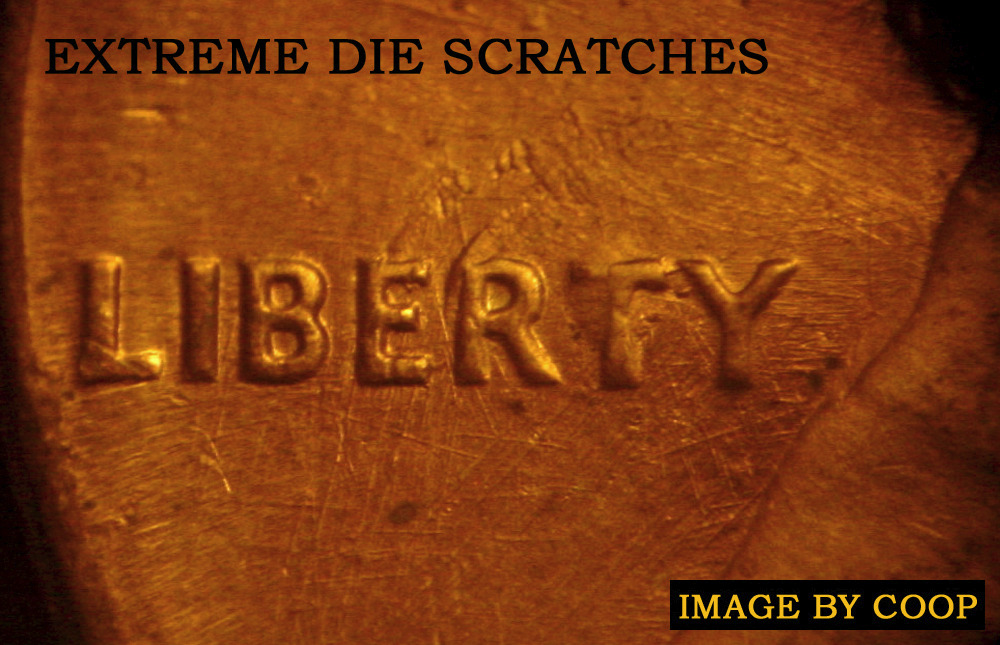
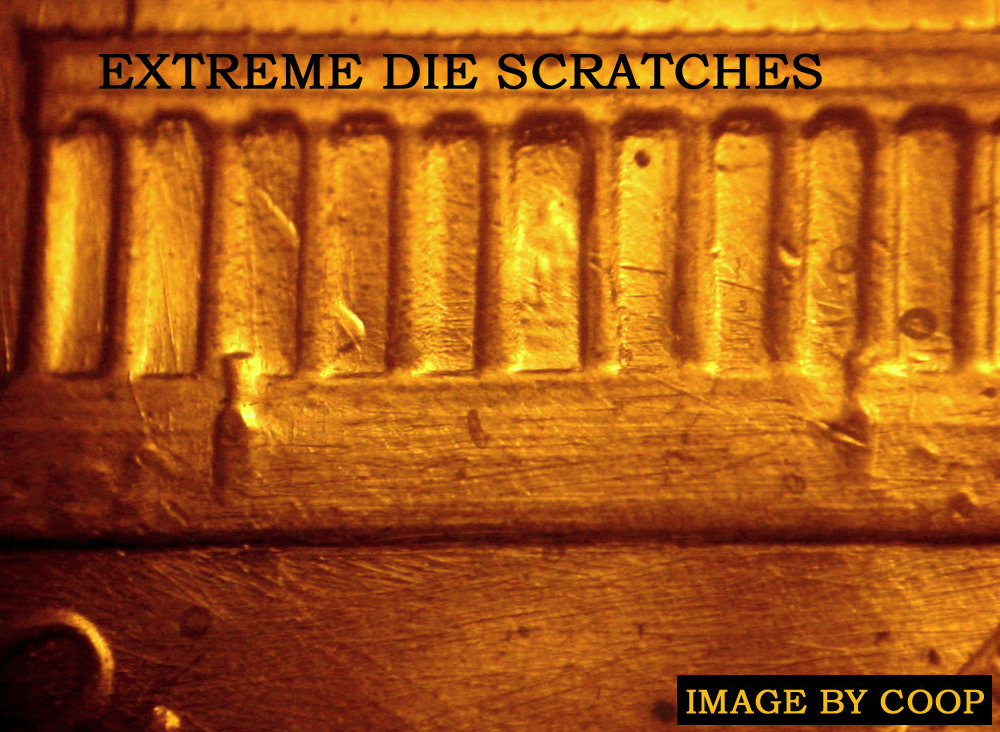
The big mark on the bay, is a new die clash mark, that happened
after the previous polishing.Die scratches can also disappear behind devices:
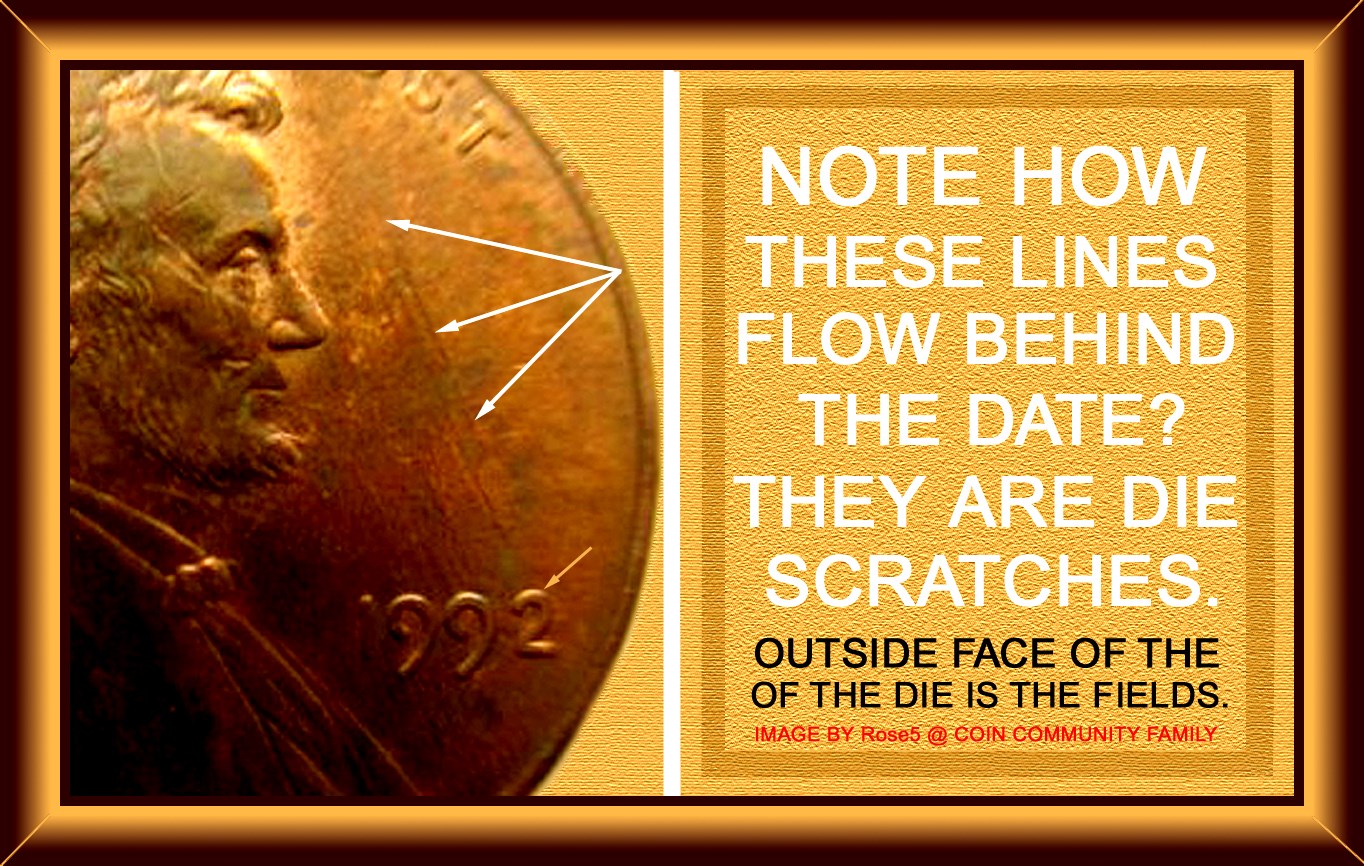
Because the dies are worked over with lapping a machine, the lines can flow behind the devices, because the devices and design is deeper into the dies than the field.
Hope this helps answer the question. Sorry for the long answer, but sometimes know why they happen, will help to realize what they are.
CoopHome : Gouge - chip - scratches - dents





 Posted 08/06/2019 10:52 pm





