




Coin Community Family of Web Sites
Specializing in Modern Numismatics Royal Canadian Mint products, Canadian, Polish, American, and world coins and banknotes. Vancouvers #1 Coin and Paper Money Dealer 300,000 items to help build your collection! Shop for APMEX Bullion on eBay!Shop CCF Members on eBay! Coin, Banknote and Medal Collectors's Online Mall


Username:
Password:
Save Password
Forgot your Password?


This page may contain links that result in small commissions to keep this free site up and running.

Welcome Guest! Registering and/or logging in will remove the anchor (bottom) ads. It's Free!

Counterfeit Detection: 1859 Indian Head Cent Judd-226 Pattern

To participate in the forum you must log in or register.
Author Previous TopicReplies: 6 / Views: 1,934Next Topic  
Press Manager
Learn More...
CCFPress's Avatar
United States
1420 Posts
 Posted 09/02/2023  11:18 am Show Profile   Bookmark this topic Add CCFPress to your friends list Get a Link to this Message Number of Subscribers
NGC - This type of fake is called a spark erosion counterfeit, and it often comes with plenty of clues about its spurious origin.

Cents underwent a stunning transformation in the 1850s, as the US Mint realized it was becoming cost-prohibitive to produce low-denomination copper coins that are bigger than today's quarters. The Large Cent era ended in favor of a coin less than half its weight: the Flying Eagle cent. That short-lived series was doomed by design problems, and its replacement, the Indian cent, carried the banner for the new Small Cents for a half-century run, beginning in 1859.

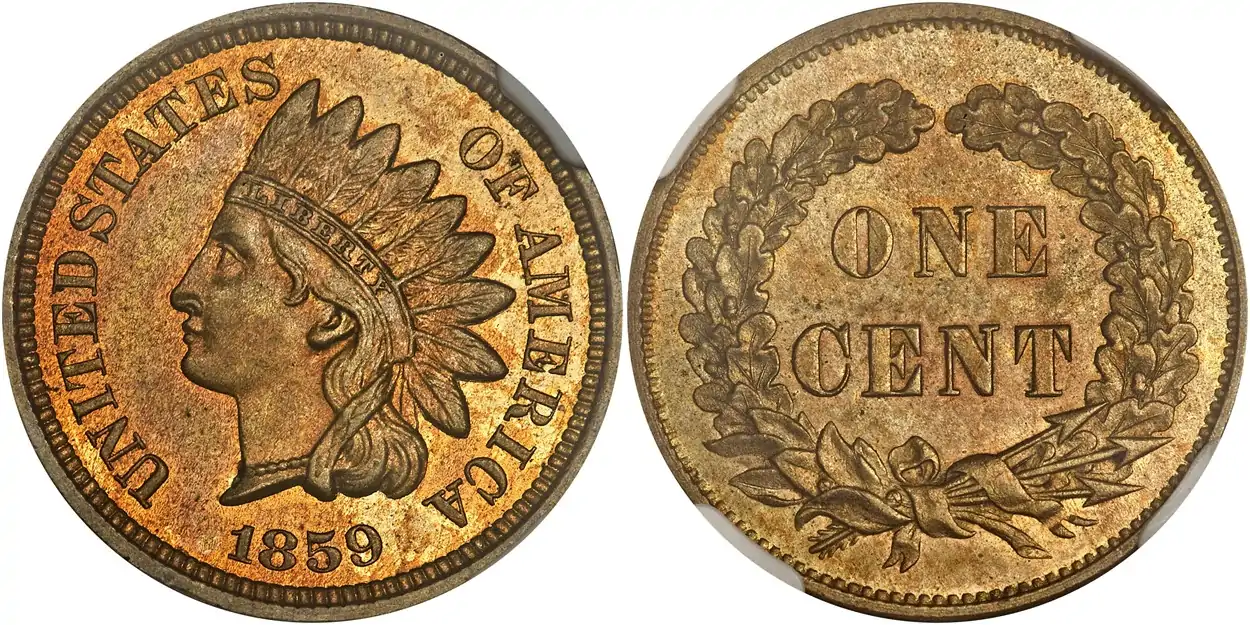
A number of patterns exist for 1859 Cents, including one that is identified by its catalog number as Judd-226. (Pattern coins are struck for the purpose of testing a coin design and are often among the rarest coins produced by any country's mint.) Judd-226 features a reverse with an oak wreath accompanying a bundle of arrows. Examples of this particular pattern are rarely offered at auction and generally sell for well over $1,000.

Counterfeit-Detection:-1859-Indian-Head-Cent-Judd-226-Pattern
Genuine 1859 Judd-226 Pattern Indian Cent

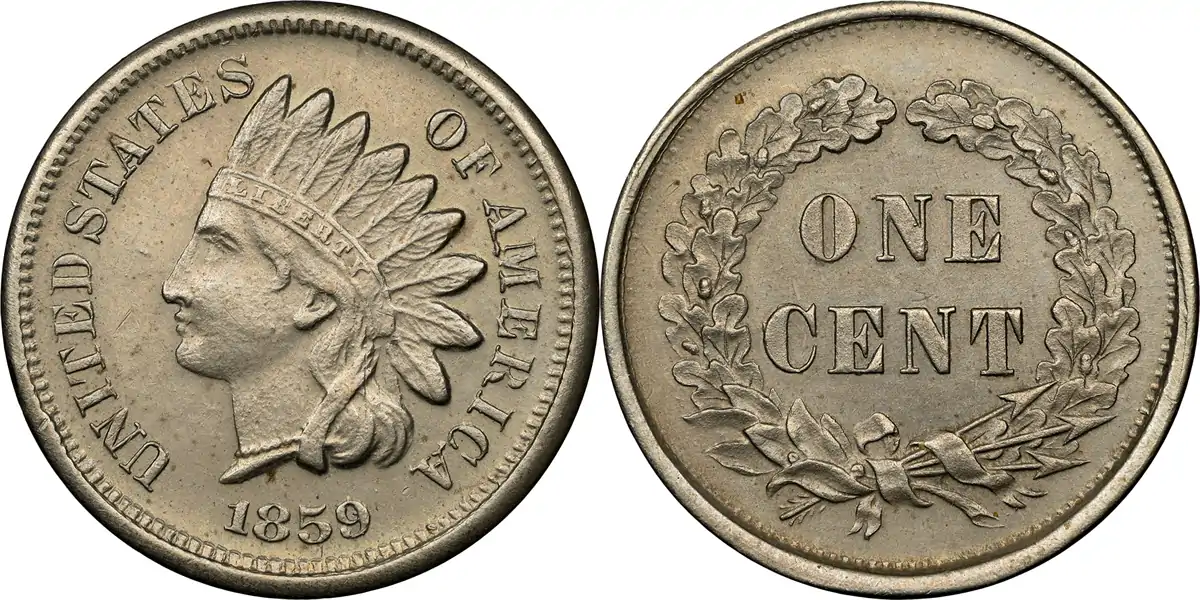
NGC recently received a purported example of a 1859 Judd-226 Pattern Indian cent. The coin weighs 4.83 grams, a bit more than the expected 4.67 grams. And a metallurgical analysis determined that the coin is 64% copper, 18% zinc and 18% nickel, instead of the expected composition of 88% copper and 12% nickel. Weight and composition aside, the coin has numerous red flags — including the general porosity of its devices — that make it easily identifiable as a fake.

Counterfeit-Detection:-1859-Indian-Head-Cent-Judd-226-Pattern
Counterfeit 1859 Judd-226 Pattern Indian Cent

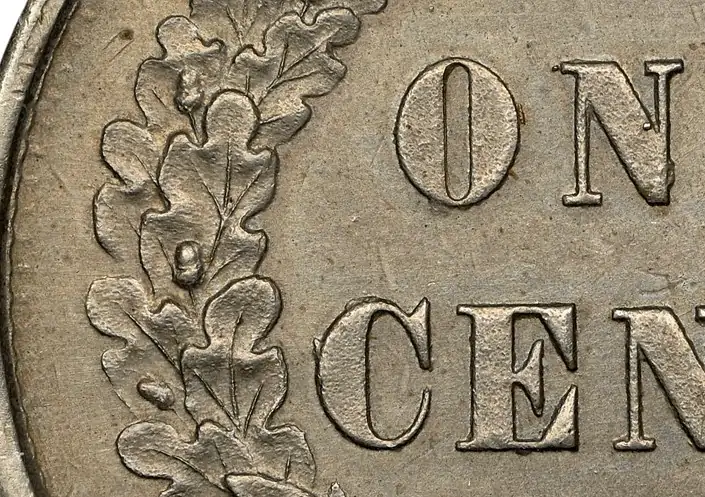
This fake coin was created with the spark erosion process, which typically targets small copper coins. The counterfeiter places a genuine coin in an electrolytic bath near what will become the counterfeit die. An electrical current is then used to etch the design of the genuine coin into the die. The process can leave behind pits in the die, which can show up as lumps, such as on the 'N' in ONE on the reverse.

Counterfeit-Detection:-1859-Indian-Head-Cent-Judd-226-Pattern
Close-up of counterfeit 1859 Indian Cent

The reverse also holds other important clues, including odd lines in the fields near the edge to the left of the word ONE as well as the missing or badly faded denticles seen in this area. The obverse has similar issues, including odd lines and raised areas in the field, including near the second 'S' in STATES.

Read More: Counterfeit Detection Series

Check out 1859 Indian Head Cents on ebay.
Bedrock of the Community
Coinfrog's Avatar
United States
94367 Posts
 Posted 09/02/2023  12:10 pm  Show Profile   Bookmark this reply Add Coinfrog to your friends list Get a Link to this Reply
Thanks for the info, most appreciated.
Valued Member
United States
202 Posts
 Posted 09/02/2023  1:33 pm  Show Profile   Bookmark this reply Add apcol258 to your friends list Get a Link to this Reply
Pattern pieces almost always exist in relatively low numbers making it easy to compare known examples. This PCGS graded coin from a past Great Collections auction would appear to be the host coin.

https://www.greatcollections.com/Co...e-AU-Details

I thought at first it may be the exact same counterfeit coin, but some of the rim grooves don't seem to match up. This is most noticeable on the reverse rim at K4, where the PCGS coin shows a rim groove while the NGC counterfeit from the article shows a smooth rim at this particular location.

The weak denticles and some of the other pickup points that NGC mentions are present on the PCGS coin though. Maybe someone with more experience on spark erosion counterfeits can add something more.
Moderator
Learn More...
jbuck's Avatar
United States
187446 Posts
Valued Member
United States
202 Posts
 Posted 09/04/2023  7:34 pm  Show Profile   Bookmark this reply Add apcol258 to your friends list Get a Link to this Reply
Do we know if the host coin is destroyed in the spark erosion process? Any guesses on if the PCGS coin from the Great Collections auction is in fact the host or is it just another copy from the same counterfeit die?
Valued Member
1buff2many's Avatar
United States
92 Posts
 Posted 09/04/2023  10:32 pm  Show Profile   Bookmark this reply Add 1buff2many to your friends list Get a Link to this Reply
Apcol258 really good spot on the GC PCGS AU details graded example, it sure does look like another copy from the same counterfeit dies to my eyes. Besides the same exact lump on the N in ONE mentioned in article on the spark erosion counterfeit, I am seeing the same bump outs into the field on the N in ONE and the C in CENT at least. You have the same badly faded denticles on the reverse and the very shallow features on the oak leaf wreath. Same wavy lettering on the obverse in the thin letter features. I am wondering if the AU details was some attempt to cover up the general porosity in the devices or a result of the poor counterfeit.

Valued Member
United States
202 Posts
 Posted 09/05/2023  10:45 am  Show Profile   Bookmark this reply Add apcol258 to your friends list Get a Link to this Reply
That's a great analysis 1buff2many. I'm starting to agree that the PCGS graded example is a counterfeit from the same dies as well. Patterns were often struck in different metal compositions for collectors, but the PCGS example sure looks similar in color to the fake NGC one in the article. The authentic 88% copper and 12% nickel examples do not seem to be as white/silver in color. I doubt PCGS did an XRF analysis on the one they slabbed as authentic, but it would be beneficial to know the composition of that piece and how it compares.

If that's the case then we know that at least two of these counterfeits were produced from the same fake dies. The NGC article is just from last month, but the Great Collections auction was from 2017. Meaning these have been around for at least 6 years and that there may be more either raw or incorrectly slabbed as authentic.
  Previous TopicReplies: 6 / Views: 1,934Next Topic  

To participate in the forum you must log in or register.


Disclaimer: While a tremendous amount of effort goes into ensuring the accuracy of the information contained in this site, Coin Community assumes no liability for errors. Copyright 2005 - 2026 Coin Community Family- all rights reserved worldwide. Use of any images or content on this website without prior written permission of Coin Community or the original lender is strictly prohibited.
Contact Us  |  Advertise Here  |  Privacy Policy / Terms of Use

Coin Community Forum © 2005 - 2026 Coin Community Forums
It took 0.28 seconds to rattle this change. Forums