| Author |
 Replies: 8 / Views: 1,309 Replies: 8 / Views: 1,309 |
|
|
New Member
United Kingdom
35 Posts |
Can anyone help with the identification of this rather worn, bronze Roman Coin please? It is about 21mm in diameter. Many thanks. 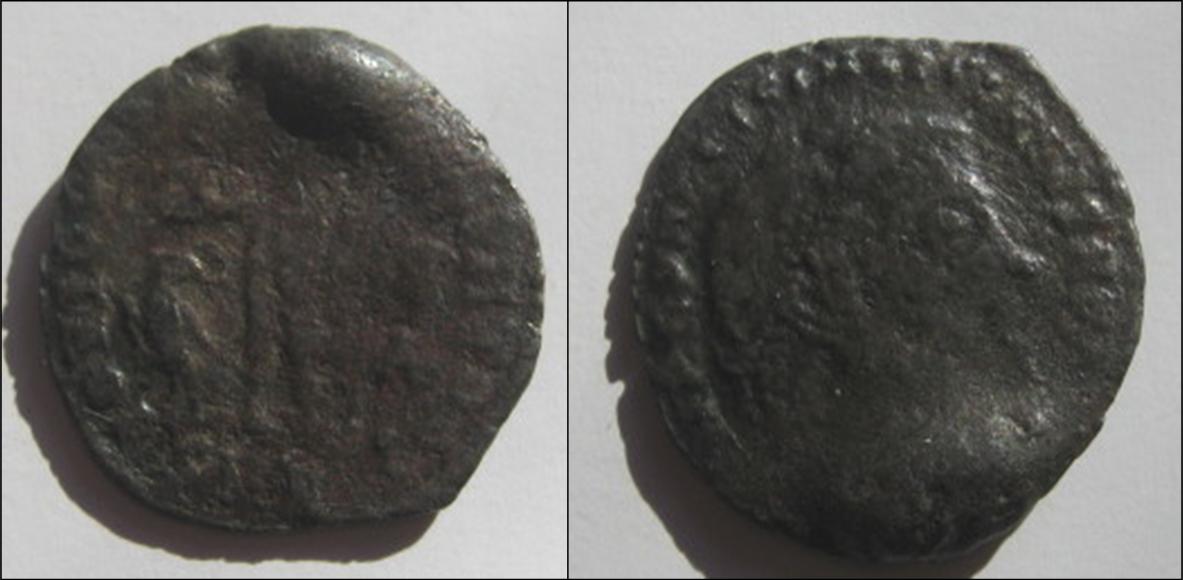 |
|
|
|
Pillar of the Community
United Kingdom
2838 Posts |
It looks like Licinuis with an IOVI CONSERVATORI reverse to me - I'll do a bit of digging on the net and see if I can add any more info.
|
|
Pillar of the Community
United Kingdom
2838 Posts |
I'm only 99% sure but think its the following: Licinius I / RIC VII Nicomedia 13
IMP C VAL LICIN LICINIVS PF AVG / IOVI CONS-ERVATORI
'S' in right field, 'SMN' for mintmark
Laureate right / Jupiter standing left, chlamys across left shoulder holding Victory on globe, eagle with wreath below left
Minted in Nicomedia (Turkey) between 313-317An 'SMK' (Cyzicus mint) example here:
 The 'blob' at 12 O'clock and 6 O'clock in your pictures maybe means the coin has been heated / melted in that area at some point - This is a guess, others may be able to give a better explanation of his anomaly. Edited by bobbyhelmet
10/28/2011 1:35 pm
|
|
Moderator
 United States
23731 Posts |
I agree with Bobbyhelmet, Licinus
|
|
New Member
 United Kingdom
35 Posts |
It never ceases to amaze me how quickly coins are identified on this forum. Brilliant! Many thanks bobbyhelmet & echizento for the information.
|
|
Pillar of the Community
United States
2044 Posts |
Would a coin in that condition stand for a good cleaning and would it improve the details?
|
|
Pillar of the Community
United States
4778 Posts |
I doubt it. Doesn't really have dirt or gunk that I can see that's obstructing any detail. Just looks really worn down. I could be wrong though. On another note, I wonder what that bulge is?
|
|
Pillar of the Community
United States
4253 Posts |
This coin is as good as I would want to get it. What we are seeing is a layer of patina which adds value in and of itself. There are those who might use a method called electrolysis, but this would completely remove the patina right down to the bare metal. And even then, it is a crap shoot as to whether the coin will be any more readable or not.
I would have attributed this coin the same as Bobbyhelmet except I was leaning towards ALE (Alexandria) or ANT (Antioch) mintmark. Bobbyhelmet is most probably correct.
The question of the bubble is interesting and as bobbyhelmet said it may have been caused by having been heated up say in a fire, but I think that would have affected the entire coin. The bubble you show on the reverse is at 12 o"clock. Is the bubble on the obverse directly opposite the reverse bubble? If not, I would image a raised flan or a die problem at the time of striking. Only guesses, and I suppose we shall never know for sure.
JW
|
|
New Member
United Kingdom
35 Posts |
Many thanks for all the replies. Just to confirm that the bubble on the obverse is directly opposite the reverse bubble. I did read on another coin forum ages ago about a similar bubble on a Roman Silver coin, but no definitive answer to the cause was given.
|
| |
Replies: 8 / Views: 1,309 |
|









 Posted 10/28/2011 1:30 pm


