|
This page may contain links that result in small commissions to keep this free site up and running.

Welcome Guest! Registering and/or logging in will remove the anchor (bottom) ads and the security checks. It's Free!
To participate in the forum you must log in or register. | Author |
 Replies: 26 / Views: 5,677 Replies: 26 / Views: 5,677 |
|
Moderator
 United States
23522 Posts |
Many of us carry cameras whenever we're away from home. Obviously, a bulky dSLR doesn't fit the "casual carry" bill - we want something we can stuff into a pocket or bag without gravity doing the inevitable (and sometimes embarrassing) thing. If you want that dSLR quality (or something close) while retaining portability, you have a few choices.
There are the EVIL (Electronic Viewfinder with Interchangeable Lens ) cameras: Micro Four Thirds, Sony NEX, Samsung NX, Leica M, Nikon 1. Some of them are small enough to consider carrying, but not exactly pants-pocket stuff. In addition, a lens with any sort of zooming ability immediately removes them from the idea of "pocketability." Not to mention, the price of admission is near-dSLR level, which is what you pay for near-dSLR image quality.
If the above turns you off, there's a huge range of point-and-shoot cameras on the market, all of which fit easily into a pocket. Megapixel counts are soaring - you can buy a 16MP point-and-shoot these days for less than $200. Telephoto ability is getting crazy - zooms of 18x are available in a camera which fits a shirt pocket. But there will be compromises in terms of controllability, lens quality and sensor quality. You can only cram so many megapixels, so much zoom, into a tiny package before things start suffering. You can only build-in a certain level of control to reach a given price point, not to mention the manufacturers tend to point these cameras at a demographic which really doesn't care about manual control; they just want to point the camera at something and push the button. Nor do they care about dSLR-quality images, which is good because they're not going to get them.
Those of you who lurk these forums have heard me say a hundred times something along the lines of a point-and-shoot being a chancy proposition for coin imaging, especially those models which lack much manual control. That's not to say CCF members aren't taking excellent images with such cameras - they are - but it's somewhat the luck of the draw based on which camera they've chosen. Further, the "sweet spot" where a point-and-shoot will shoot good coin images is very small, and one must get conditions exactly right to reach it.
There's a third category of cameras fitting the bill, those which we refer to as "prosumer" models. Canon's G-series and S90/95/100. Nikon's COOLPIX P7000. Samsung's TL500. Olympus XZ-1. And the subject of today's (typically for me) long-winded review: the Panasonic LX-5.
These cameras have been designed with fewer compromises than standard point-and-shoots: Bigger sensors deliberately packing fewer megapixels for higher image quality. Better lenses sacrificing total zoom range for higher image quality and lens speed, offering apertures as wide as f/1.8 for superior low-light performance.
And most importantly, full manual control. Quality costs, though - for one of these, you're looking at a price of admission at or above $400.
Needless to say, when it came time to upgrade my own carry camera, I fell into that latter category, and my personal research process ended up in the purchase of a Panasonic LX-5.
Next post: Introducing the LX-5.
|
|
|
|
Pillar of the Community
Canada
862 Posts |
I have a LX-3, I haven't touched my DSLR since I bought LX-3, it handles most situation perfectly. here is a coin photo from it, manual focus 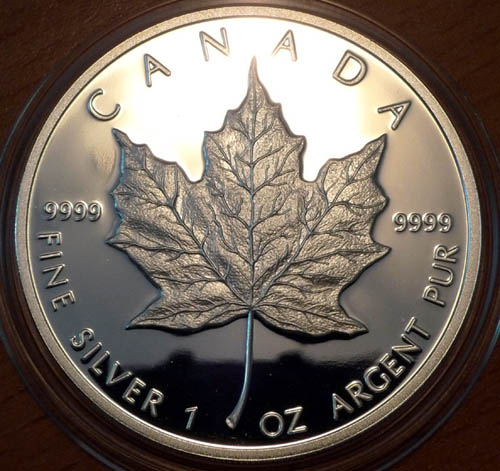 |
|
Moderator
 United States
23522 Posts |
For the record, all meta-images in this thread were shot with a Canon 550d using a 50mm f/1.4 prime, from a tripod. Introducing the Panasonic LX-5: 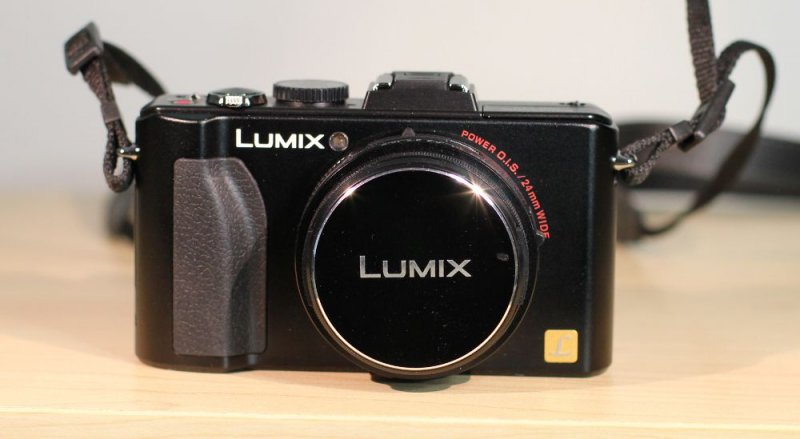 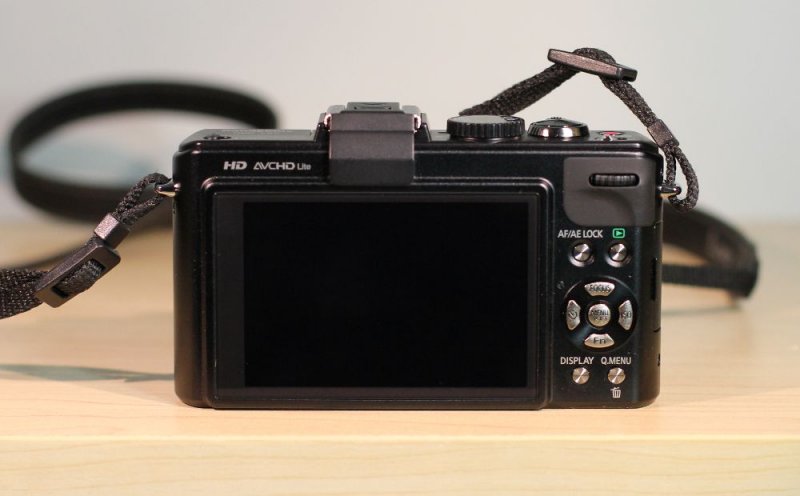 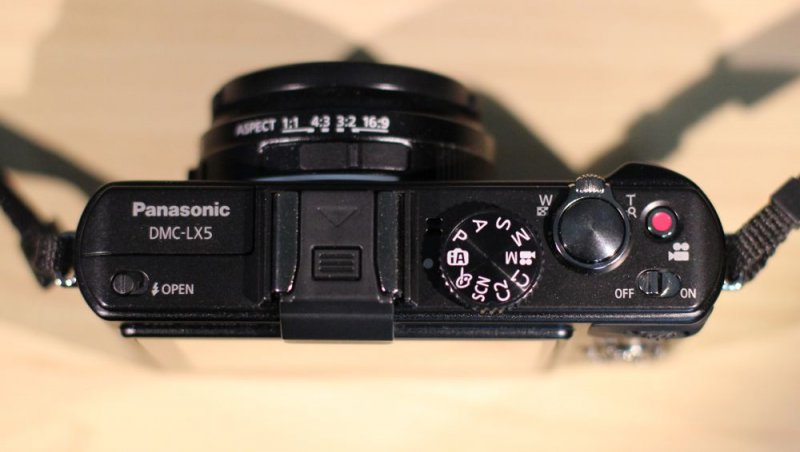 The LX-5 offers a 10.1MP 1/1.63" sensor mated to a very nice Leica lens. Zoom range is 24-90mm - 3.8x - and the 24mm wide end is wider than the competition, one of the features which informed my choice. Maximum aperture is a fast f/2 at the widest (24mm) zoom, and of equal importance is the still-fast f/3.3 available at 90mm (longer focal lengths compromise aperture in all but the finest lenses). Image Stabilization is present, of course. The lens will focus down to 1cm in Macro mode. 720P High-Definition video at 30fps is available in the AVCHD Lite format. It will shoot in 4:3, 3:2, 16:9 and 1:1 aspect ratios; only 4:3 offers the full 10.1MP imaging. Maximum image size (I'm interested in the largest vertical here, to get the largest-possible image of a coin) is 3648 x 2736 in 4:3 mode. Yes, it shoots RAW. OK, a few unrelated subjective impressions. It does beautiful .jpegs outdoors, punchy colors and fast, accurate focus. 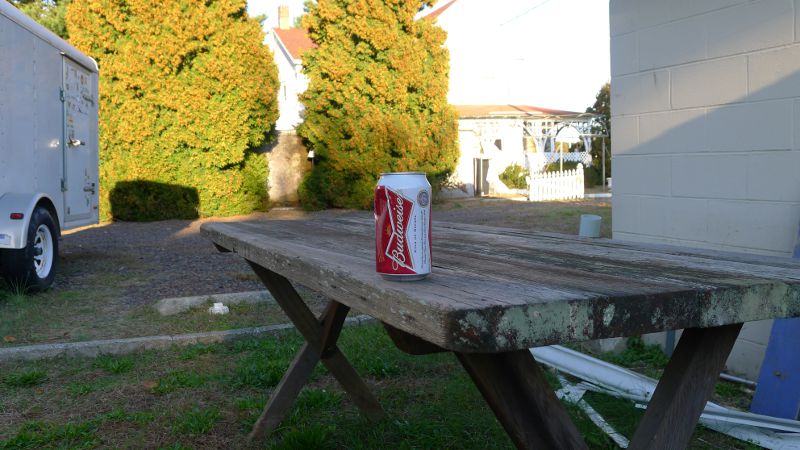 No, I don't drink Budweiser. No, I don't drink Budweiser. 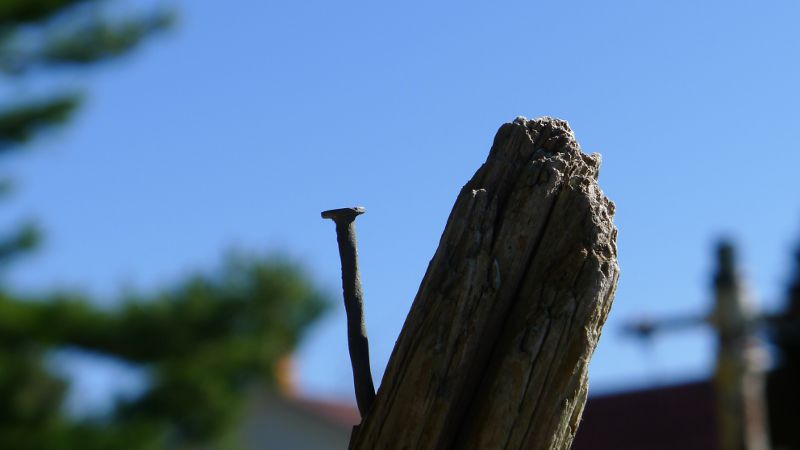 I deliberately threw a very high-contrast composition at it in Macro mode, and it acquitted itself well. I deliberately threw a very high-contrast composition at it in Macro mode, and it acquitted itself well.Indoors, using what Panasonic calls Intelligent Auto, it is quite frankly as good as or better than my dSLR, unless I'm using a bounce flash. The availability of f/2 is a great help. 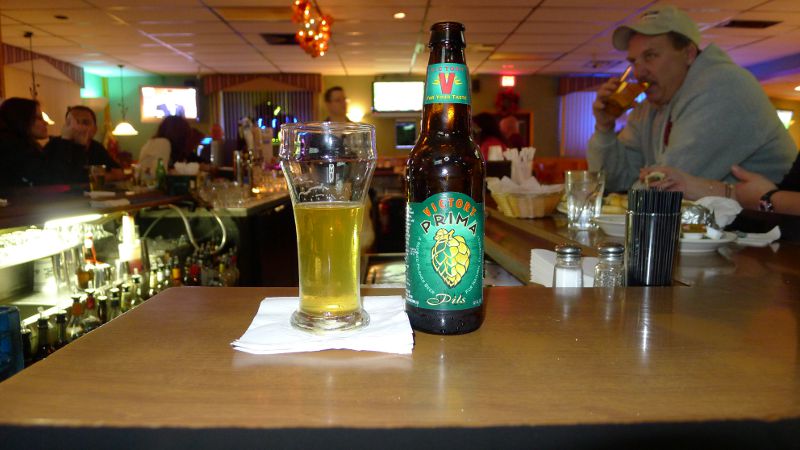 White balance seems yellowish, but the color of the beer in the glass is perfect. So was the beer. White balance seems yellowish, but the color of the beer in the glass is perfect. So was the beer.  So, yeah. This is everything I want in a carry camera, and on paper it sure looks like an effective solution for imaging coins as well. Let's find out, shall we? Next post: Introducing Santoku, my test rig. |
|
Moderator
United States
23522 Posts |
Introducing Santoku, my test rig: 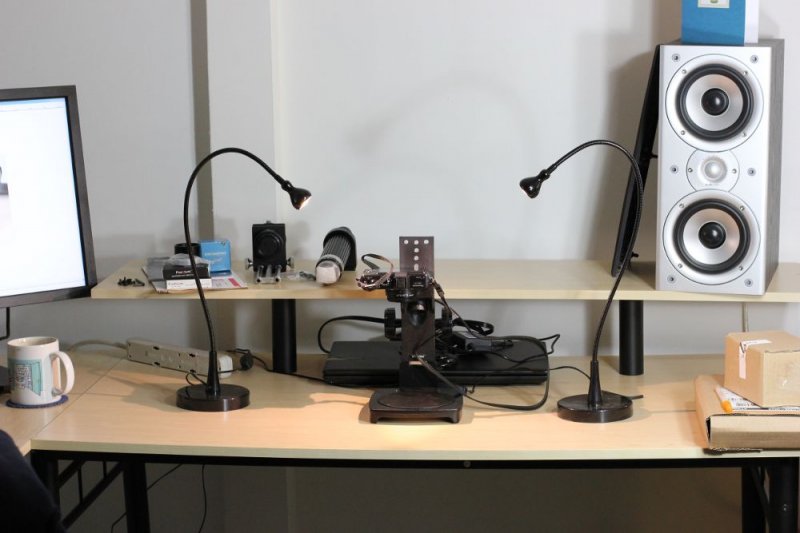 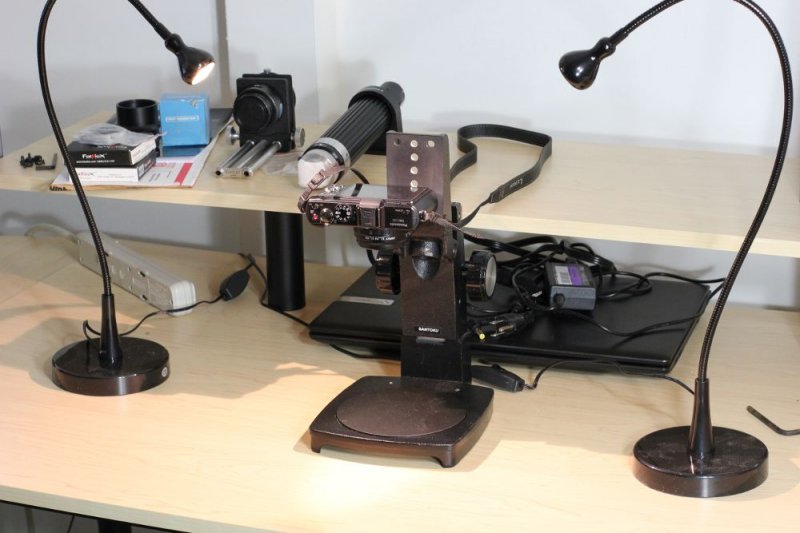 Forum member rmpsrpms built this nifty little gadget for me, based on a microscope stand. "Santoku" loosely translates as "three uses," indicating the varying abilities of the rig. As you can see, a camera can be directly mounted to it using the 1/4" tripod thread found on most cameras. In addition, it mounts a bellows/lens system; on the left above Santoku you can see the bellows with an attached Rodenstock 75mm APO-Rodagon D, which going forward will be my primary coin imaging lens. To the right of the bellows is Santoku's third mounting capability, a Leica Monozoom 7 microscope which will be the go-to tool when it comes time to really get up close and personal with a coin. Santoku is an absolutely nifty apparatus, and rmpsrpms is a true craftsman. It's quite possible you could talk him into building you something similar.... So this will be the test system, LX5 mounted to Santoku and eyeballed square - I do not expect depth-of-field to be a problem so there's no need to be completely precise with aligning the lens. If this proves not to be the case going forward, I'll make adjustments. Lighting will be two Jansjo LEDs throughout. Next: Let's take some pictures, shall we? |
|
Moderator
United States
23522 Posts |
OK, time to shoot coins. The subject will be a slider 1921-P VAM-41B recently cherrypicked from ebay. Plenty of mint luster remains. The background will be a stack of white printer paper: 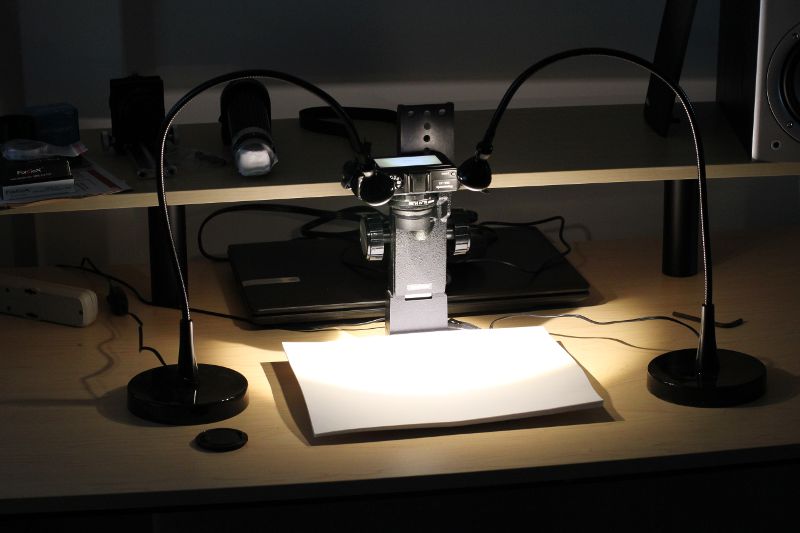 We may run into the possibility of too much light being reflected back into the lens; I'll reserve the right to switch backgrounds later. With the lens at a distance of 6" from the coin - Santoku's lowest setting; I'll raise the coin later if necessary - here's what we see in the viewfinder: 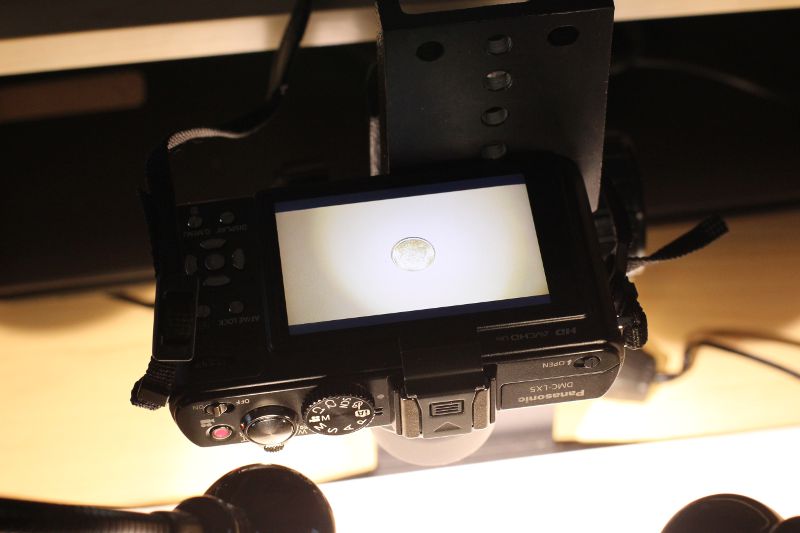 I'm inclined to think that's going to be a bit small on the screen, but here's where we start. I'm going to first use the Intelligent Auto function, where the camera makes all choices including White Balance: 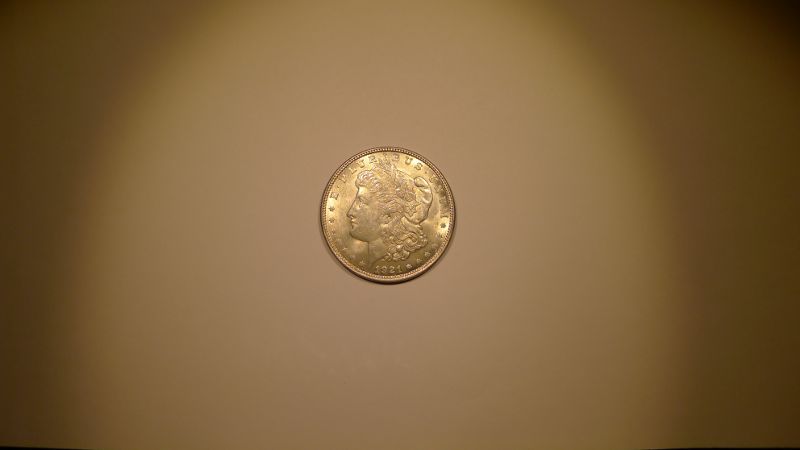 The coin seems fairly sharp, but white balance is obviously a problem. The LX5 chose ISO80, 1/800sec @ f/2. I'm thinking f/2 won't cut it for depth of field. The 100% crop: 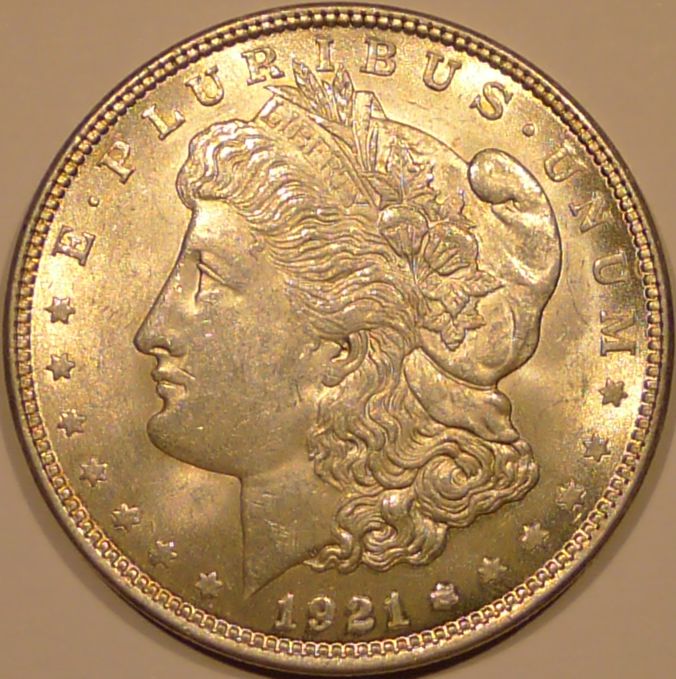 Yeah, a little fuzzier than I expected. Image size is decent, though, at 675 pixels; that's enough for reasonable grading here if I can get it sharp. We're going to switch to Aperture Priority Mode and force the aperture narrower, for more depth of field: 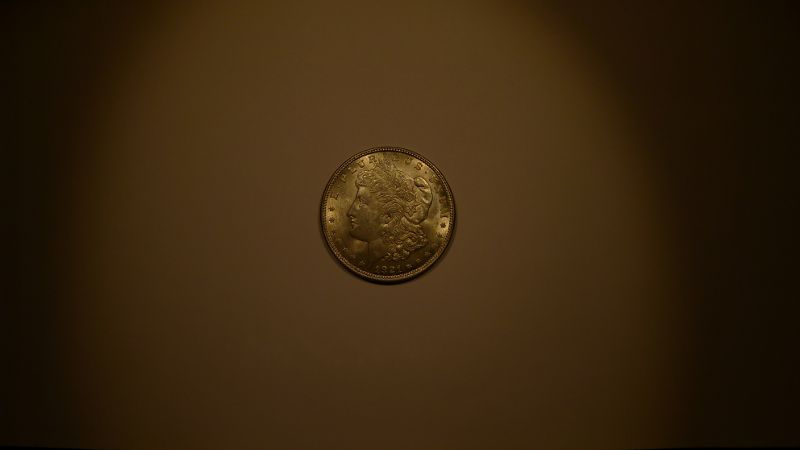 The Panasonic chose ISO80 & 1/500 at a forced aperture of f/5.6, where I suspect this lens' sweet spot will be. Um, Panasonic, you chose....poorly. Kinda dark, don't you think? Here's the crop: 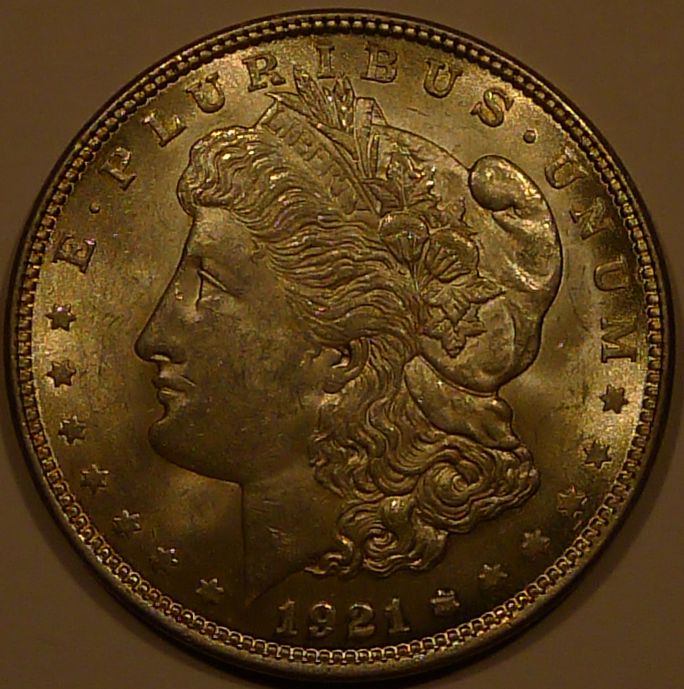 Sharpness is improved simply by moving the aperture, confirming that f/2 is too wide at least under these circumstances. Time to take full manual control of things, I guess. We're going to worry about White Balance later; I want to concentrate on size and clarity first. I'm quite sure we can get the color very close, but less-sure about the rest of it. |
|
Valued Member
United States
158 Posts |
SuperDave, your review and post are downright inspirational. I have struggled more than a bit with my own coin photography, and your setup has started me thinking on a whole 'nother level - a very dangerous path.  Besides a compact .45 auto, I also carry a Canon PowerShot SX-130 (with image stabilization)...with manual settings ! I might just have to obtain a rig such as your's. I'll be watching this thread awhile, and hope to put some of the info to good use. Keep up the great work - your posts are always well written and informative. |
|
Moderator
United States
23522 Posts |
Sorry; food intruded. What a timewasting habit, eating. I'm forcing the camera into 1:1 mode. The vertical pixels are the same, as should be the quality. Less wasted space. Furthermore, I forced it to ISO100; we're going to hold these ISO and aperture settings for the moment. OK. So we determined ISO80 and 1/500 were a bit dark; let's try ISO100 and 1/100. 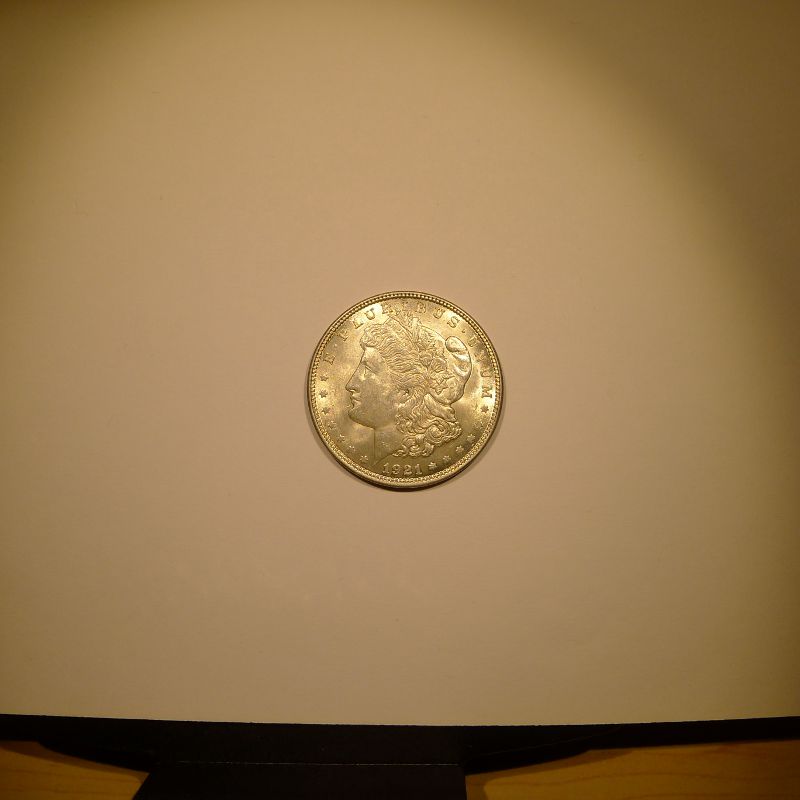 Much better. In fact, a little overexposed. 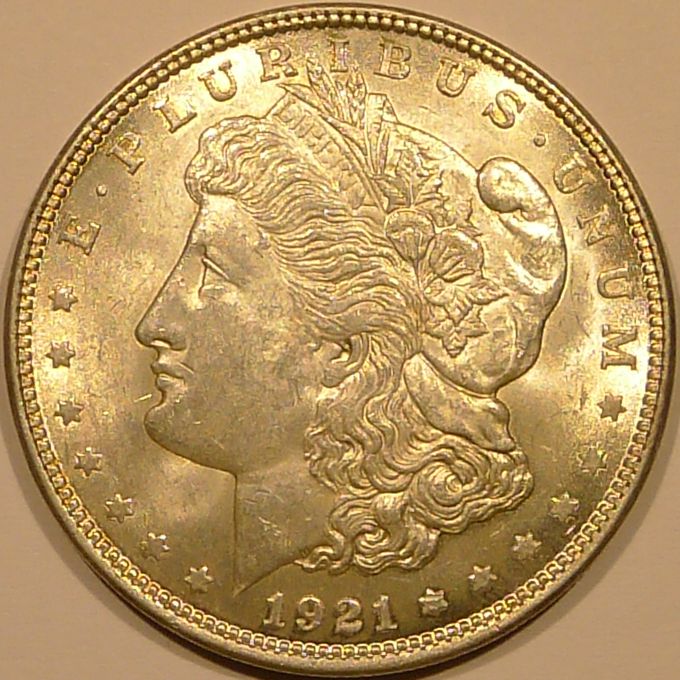 How about 1/200? 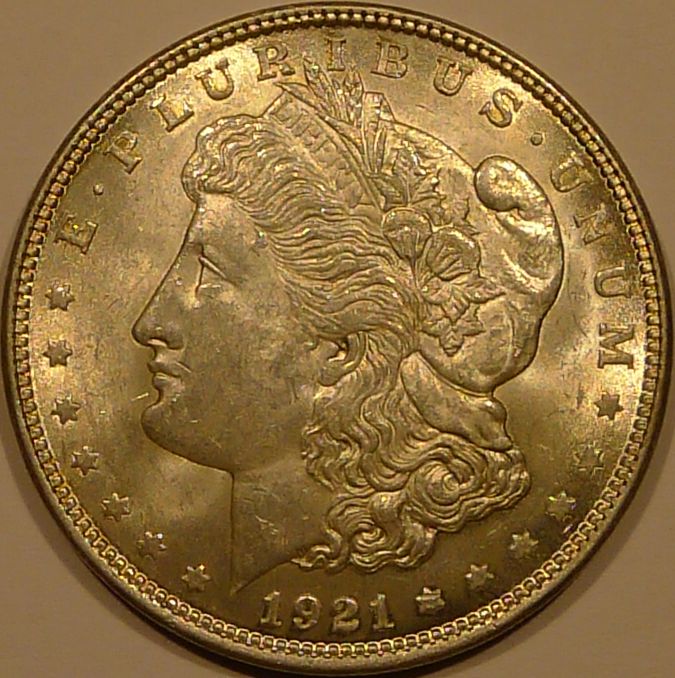 Yeah, that's better. Enough of the full images; we'll stick to crops from here on in. I have to admit, the color is breaking my mind. I have to adjust the White Balance. So, we're going to do a custom setting before the next shot. I don't consider this an actual "step" in the process. The next step is to get a bit closer, and see what that gets us. So I elevate the coin to about 2-1/2" from the lens. After my A720 test, I knew this was coming. The result: 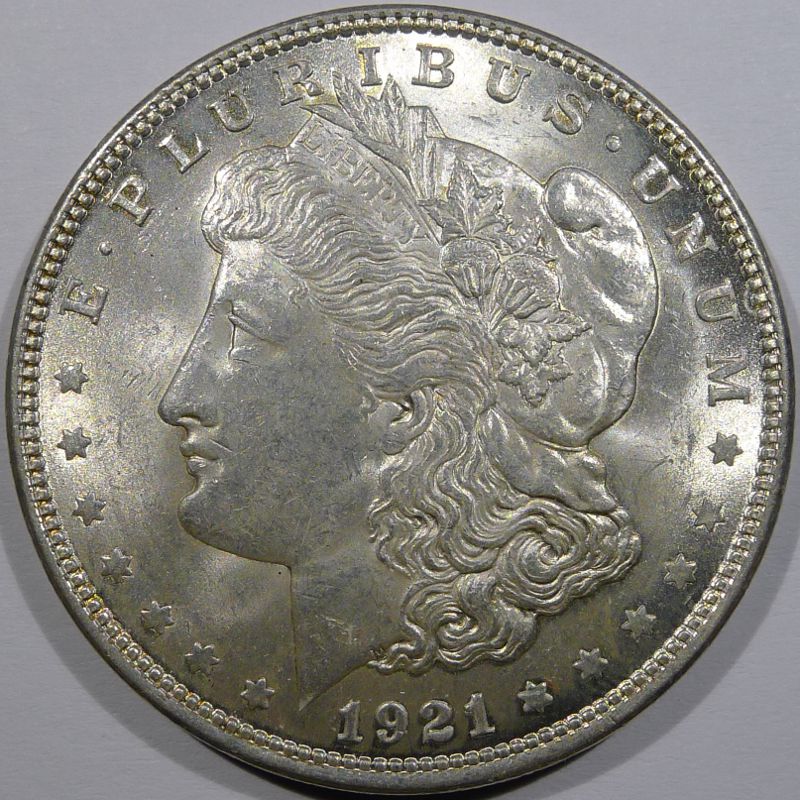 I'm liking it, and so is the Panasonic. Changed no exposure settings - ISO100, 1/200 @ f/5.6. These wonderful little Jansjo lights mean that, even this close to the coin, I can still get a favorable lighting angle. The image is noticeably sharper to me, but.... I had to size the image at 50% to make it post here - instead of 675px, we're now shooting coins that are 1600px on the screen. The downsizing, by nature, makes the image sharper. Cheating? Um, no. The goal is a nice viewable, gradable image for Coin Community and if this is what it takes to get it, fine. That's part of the reason I like to start with the largest-possible image. A 100% crop: 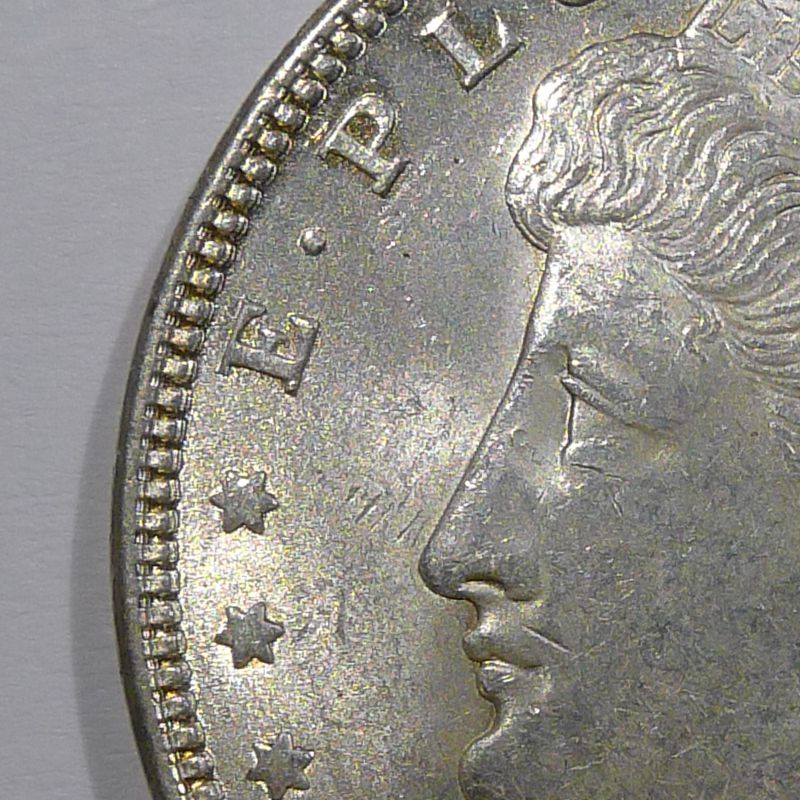 Not all that bad, in truth. I'm not satisfied with sharpness, and contrast is lacking. I think it's time to stop reflecting light back into the lens - this is a prime cause of loss of contrast. But that will be tomorrow. Tomorrow we get out the grey and black backgrounds, and I'm going to bring my halogen thermal weapons to bear to see if exposures in the 1/1000 range have an effect. I'll also throw one of my Brown Lincolns at it, to see what it thinks of copper. Thanks for reading. |
|
Pillar of the Community
United States
3076 Posts |
As ALWAYs Dave, absolutely impeccable train of thought and process... Trial and error results with Ideas of what adjustments, there results and what to tweak next...Absolute Basic's to the master piece...the how and why's seen by the eye...That's the most important thing....
Ray's quite a guy, Hasn't been here all that long..and is changing things as we see them...I like the set up he made for you....I have one Idea, an you can all take it with less than a grain of salt, as it only applies to maybe 1% of coin shooters....I'm still in the middle of moving, but I want to have some thought on this Idea....
A) the copy stand, is to stabilize and allow the camera to move closer or father away from the coin....
B) the bellows allows the camera LENS to be adjusted from the camera body...
C): alternative, is to be able to adjust the coin to the lens or camera...as in the bellows rail system that can adjust the coin on a platform/ minus the bellows, just the rail system....sometimes this is required...
and its an easy fix...it simply to have a rail system below the mount,, or should I say the zero point where the normal coin would sit, In general, most would not need this..but there are many instances where this could be benificail...comments?
|
|
Moderator
United States
23522 Posts |
Gene, I considered a rail system for the coin itself in the beginning, but chose not. Santoku extends sufficiently that I could mount a camera with a 100mm lens and still get enough relief to shoot coins (maybe not Morgans with 100mm). It's more than capable of doing all the adjustment I need, with the optics I'll be using.
The LX5 is a special case, and since It's likely unique, I'm just bringing the coin to the camera this one time.
Now, off to rig a mount for the halogens....
|
|
Pillar of the Community
United States
4051 Posts |
Many photomacrographers set up their studios to move the subject rather than camera. It's actually pretty amazing the range of setup styles folks put together to achieve their goals. A lot of microscopes, usually high power ones, have movable stages rather than moving the optics. I think it comes down to a couple principles:
- How large is your subject, and how stable is it on the stage
- How heavy is the optical system versus the subject
- Are you lighting from above or below the subject
If you are working at fairly high magnification, with lighting from above the subject, with a heavy or complex optical system, then a movable stage makes a lot of sense. The subject does not have to move very much so lighting is not affected. But if you are at low magnification, and changing magnifications quite frequently, and the setup is not too heavy, then a movable optical mount makes sense. Movable stages also make a lot of sense if you are doing lots of focus stacking. Small movements of the subject are often much easier than moving the optical system.
Edited by rmpsrpms
11/17/2011 12:11 pm
|
|
Moderator
United States
23522 Posts |
"Thermal weapons in position, Sir!" 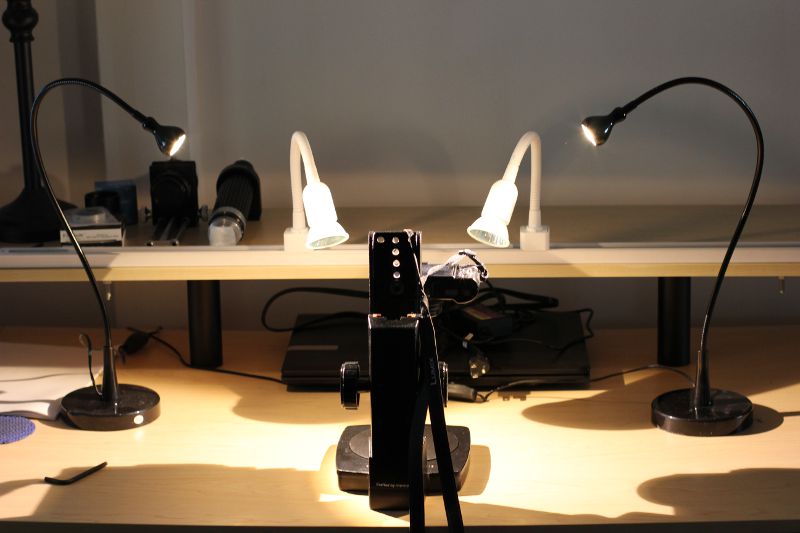 "Very well, Number Two. Engage." 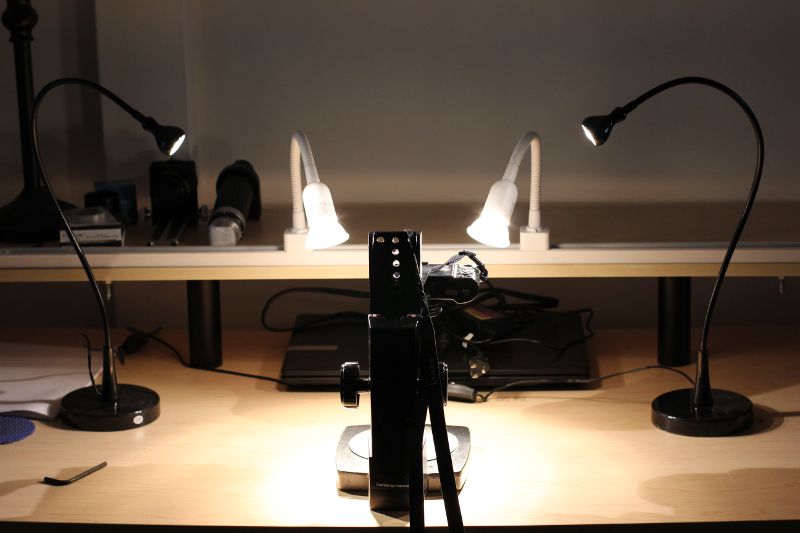 *snerk* I'm having too much fun with this. For the record, with the halogens pointing down, and the Canon over 8ft away, the exposure went from 1/10 to 1/50 when I turned them on. That is what 100 watts of halogen light brings to bear. So let's melt this Morgan. |
|
Moderator
United States
23522 Posts |
Let's digress for a minute. The human eye, yours and my ability to gather light for vision, has an aperture of f/1. Only the very most extreme lenses can reach that kind of light-gathering ability. And each increment of 1 stop (1 "f" number, approximately 1.41 times the number previous in actual numbers) means a factor of 2x in light-gathering ability. So, the change from f/2 to f/1.4 on my 50mm prime means it can gather twice as much light. Expressed the other way, consider the difference between my eye (f/1) and the Panasonic's f/5.6. The Panasonic is seeing a whole lot less light than my eye is. This helps to explain just how important adequate lighting is for coin images where we're stopping down hard for depth of field. An amount of light that would be painful for you to visually inspect a coin under, is just enough for a stopped-down digital camera. So why, when I brought my thermal weapons to bear on the Morgan, did the exposure only go from 1/200 to 1/320 for a similarly-bright image? 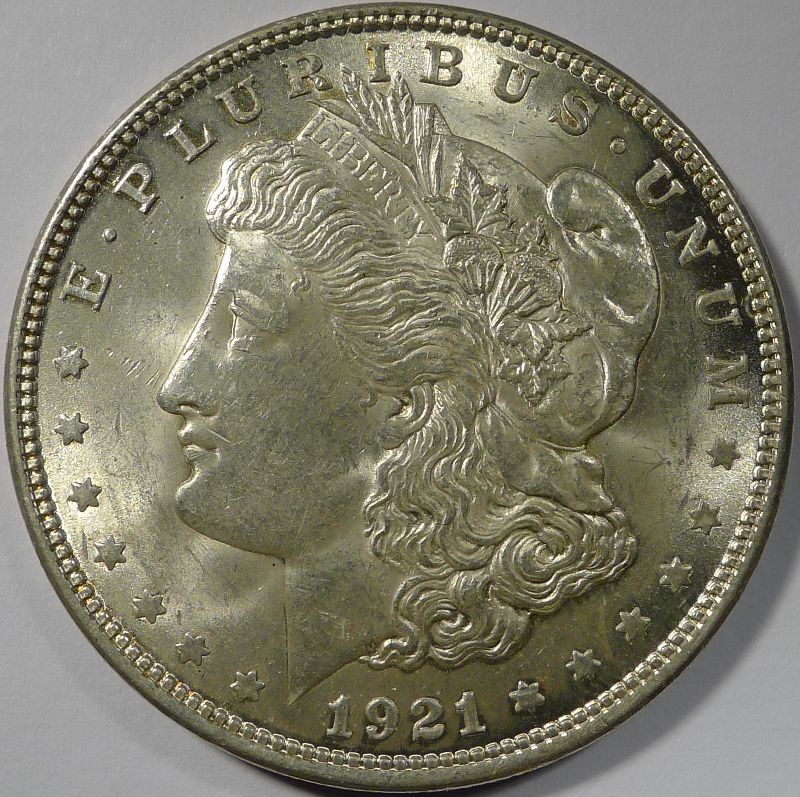 Well, the Jansjos are no slouch. Each is a 4w LED, roughly equivalent to a 40w incandescent. Their light is extremely well-focused - pointed straight down at a distance of 6" from the table, their total output is concentrated in a 7" circle. At the same distance, my 50w halogen spots have a very small area of concentrated light - about 3.5" - but much of their output is diffused over a very much wider area. So, in my opinion, the halogen experiment is a nonstarter. I like each of the last two images about equally; indeed, the 1/200 Jansjo image earns my nod in terms of light distribution. It may be time to park the halogens for good. And to think, I just drilled two holes in my desk to mount the track. Just for giggles, I brought the Jansjos and halogens to bear simultaneously, each at a corner: 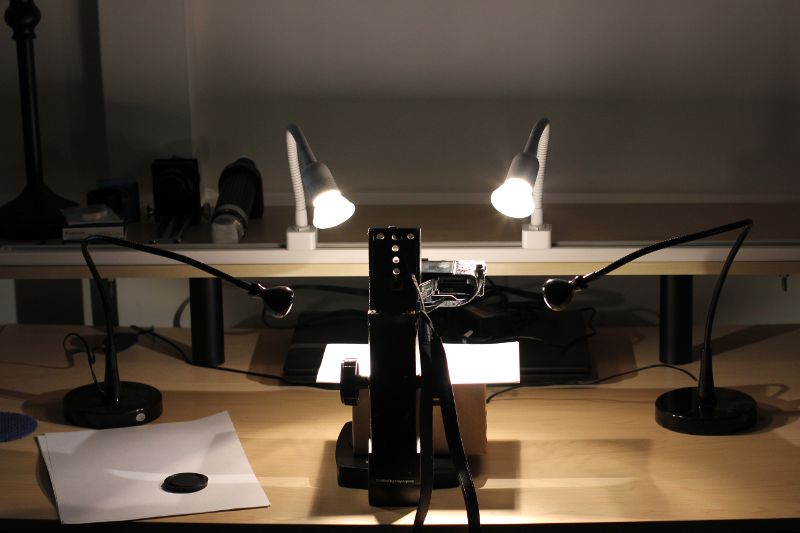 It bought me a 1/400 shutter speed, but I don't like the result: 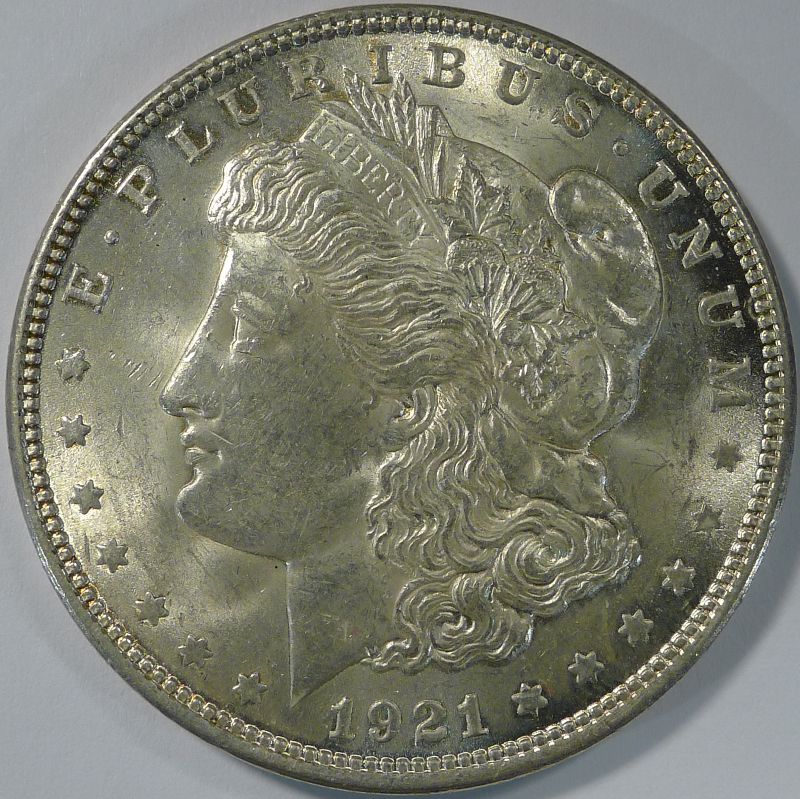 To my mind, the contrast is now wonky, and it just doesn't "look" right. This may be my conditioning to "10 and 2" lighting, but this, too, is another failed experiment. So the halogens will be deactivated to the rear, we'll proceed exclusively with the Jansjos and see if we can buy contrast with a non-reflective background. Time for a t-shirt to make the ultimate sacrifice. |
|
Pillar of the Community
United States
7842 Posts |
 SuperDave, novice photographer here, are you using the higher resolution, at farther distances, and cropping for close-up shots? Those images are so clear...I'm super geloso! Edited by oih82w8
11/17/2011 4:19 pm
|
|
Pillar of the Community
United States
548 Posts |
Dave,
One of the limitations I've feared about using Point and Shoot cameras for coin photography has been their ability to focus close.
Does your Panasonic have more capability in that area? Or are you merely content to take pics from farther away and you just crop?
|
|
Moderator
United States
23522 Posts |
The LX5 can focus at a distance of 1cm from the subject. The ability to get realistic light onto the coin is a greater limitation than minimum focusing distance. I'm 2-1/2" from the coin right now, and the image cropped to just the coin is 1600 pixels in diameter. I'm having to half-size them just to post here.
|
|
Pillar of the Community
United States
548 Posts |
Hmmm.
Now I've got to check the min focus distance of my P&S.
Thanks!
|
| |
Replies: 26 / Views: 5,677 |
To participate in the forum you must log in or register.
Disclaimer: While a tremendous amount of effort goes into ensuring the accuracy of the information contained in this site, Coin Community assumes no liability for errors. Copyright 2005 - 2026 Coin Community Family- all rights reserved worldwide. Use of any images or content on this website without prior written permission of Coin Community or the original lender is strictly prohibited.
Contact Us | Advertise Here | Privacy Policy / Terms of Use
|
| Coin Community Forum |
© 2005 - 2026 Coin Community Forums |
| It took 0.5 seconds to rattle this change. |
 |
|
| |
| |






 Posted 11/16/2011 5:10 pm


