| Author |
 Replies: 100 / Views: 16,796 Replies: 100 / Views: 16,796 |
|
|
|
Pillar of the Community
United States
1761 Posts |
The coinage and what kind of species we see being developed from Mexico's struggle with Spain is similar to the U.S. Colonial coinage State Copper series during our post-Revolutionary War period (c.1786-1790) with Britain - the only difference is silver instead of copper in most cases as with these cast overstrikes sort of like a New Jersey Copper Maris 56-n overstrike on a Connecticut copper due to a lack of good copper planchets ... specifically - in one case its a lack of good machinery and thieves in the hills in the U.S. case its a lack of these good copper planchets ... I consider Pradeau like Walter Breen ... in many cases he was right but in some cases some advancement or a slight change in direction may be required to the current gospel word ... lets see what happens with more pieces?
John Lorenzo
United States
Edited by colonialjohn
03/07/2013 1:17 pm
|
|
Pillar of the Community
United States
5362 Posts |
John I agree - research is always opening new doors and shedding new light on areas we did not suspect held unsolved problems. WE CAN NOT rest on the credentials of past great names - we need to think and challenge long held assumptions.
That is why I held off so long before writing - I fear later discoveries that make my work subject to question and or ridicule. However, I may not have decades left to publish perfection so before I leave I want to put down my theories as they are good and bad alike.
I just hope younger folks get up to speed and continue this journey from where we leave off.
|
|
Valued Member
Germany
194 Posts |
Colonialjohn,
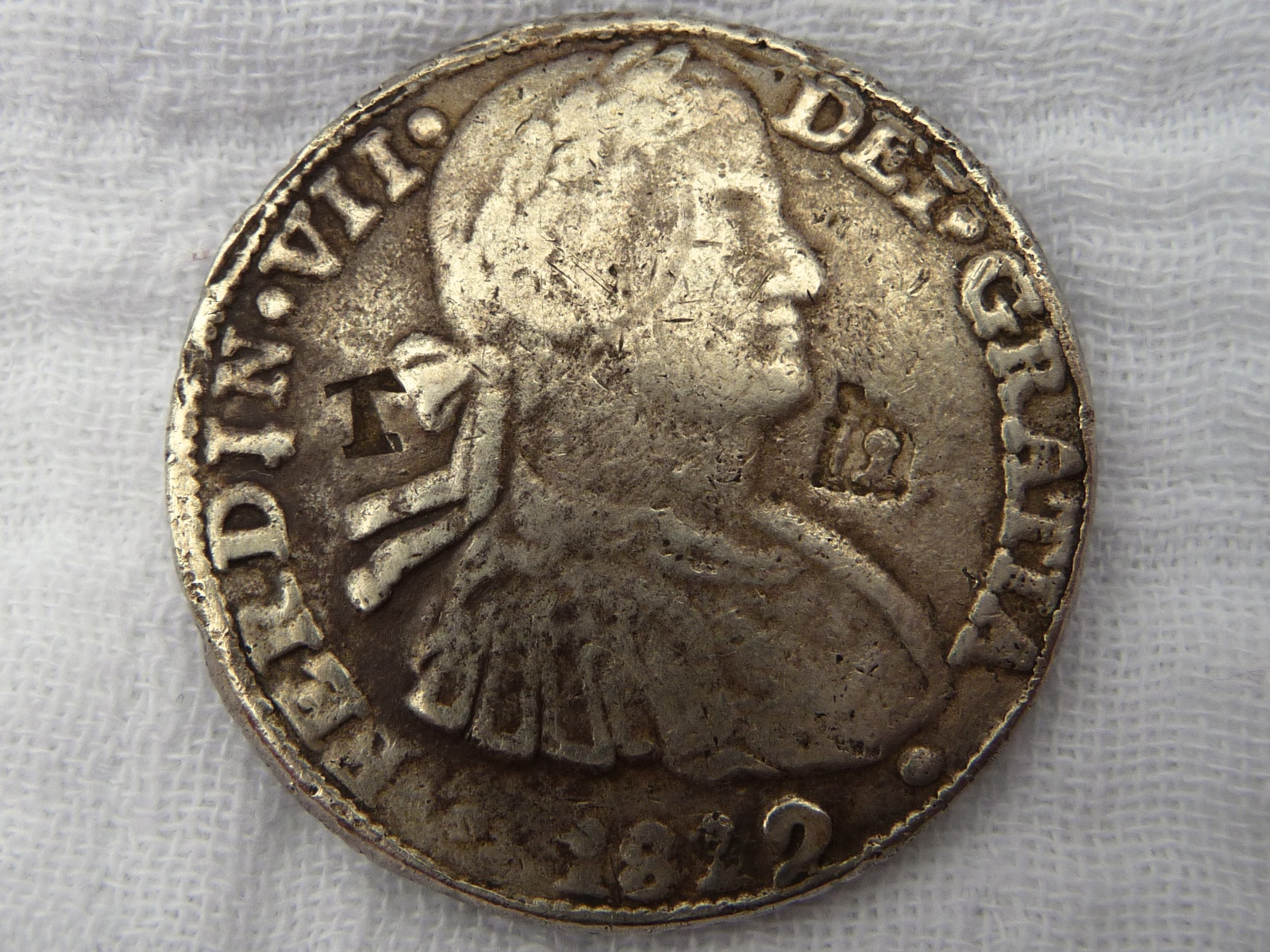
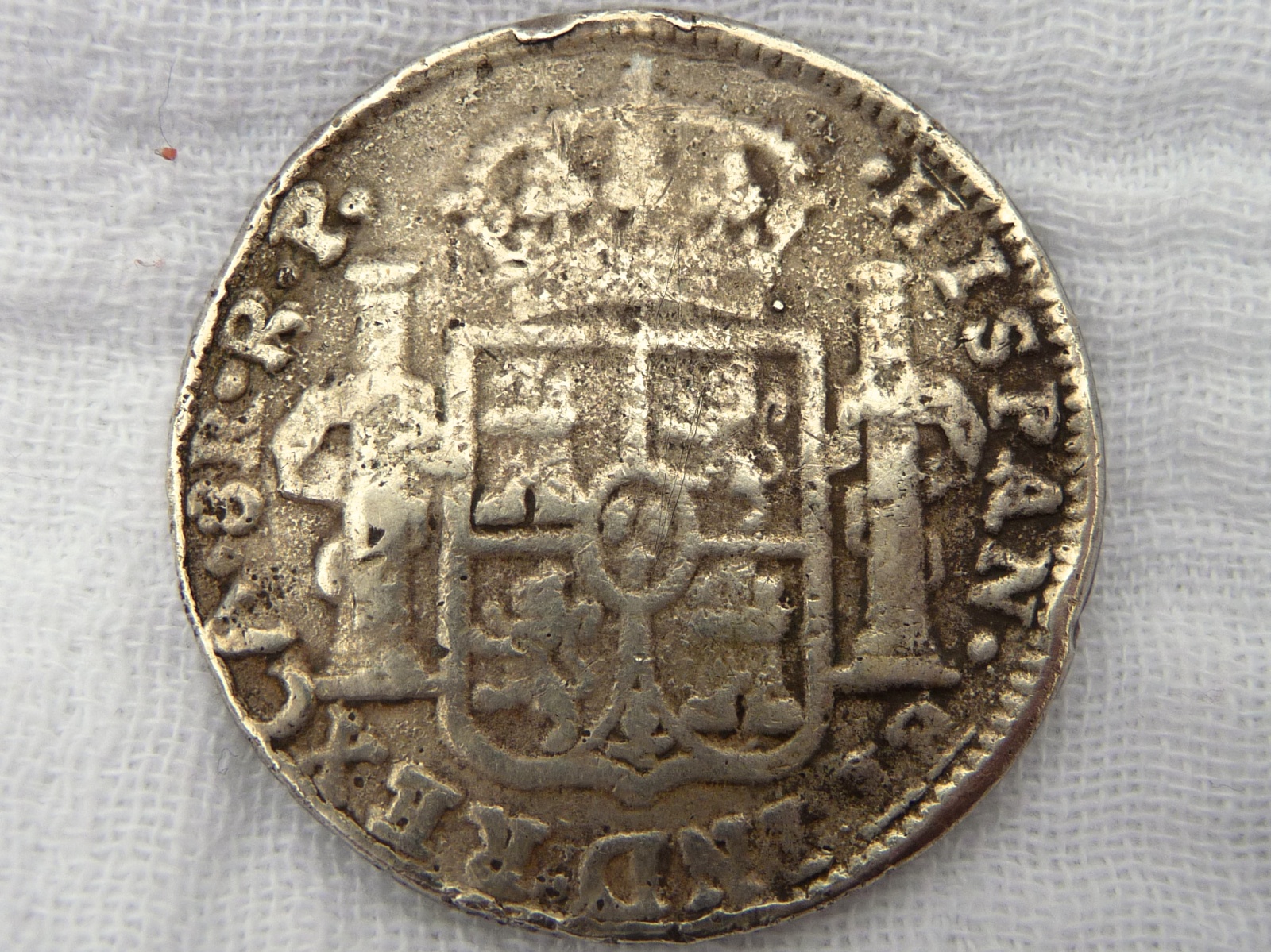
I think that there is some big misunderstanding and even lack of logic to the supposedly historical data of when the "T" and "pillars" punches were applied to the Chihuahua casts.
OrtÃz says that they started in 1815 (this is the text from his book the Cayón auction catalog refers to). But at that time, regular dies were already available, so instead of countermarking the old casts with the two punches, they would just have overstruck them. Which they actually did.
In my opinion, the "T" and "pillars" punches were applied to the cast coins right away, that is, from 1811 on, right upon issuance of the coins, and not at a later date, as Ortiz says. Obviously (and that is what might have happened to Mathieu's coin from the Cayón auction) a counterfeiting operation would also be able to fake two small punches - just like Swamperbob mentioned above. Maybe that's why the "T" is so fat and the "pillars" so detailed.
And maybe that's what the populace was complaining about - that counterfeits appeared, not of cast coins but of cast coins WITH these punches.
Which would lead to two types of coins: good ones with punches and edge design, and bad ones with punches but without edge design (implying that the mint was able to put an edge design on their coins but the counterfeiters not).
By the way, as far as I understand from what I have been told about Pradeau and Breen, there is one big difference between these two numismatic personalities:
Pradeau at times was led to errors by misinterpreting historical data, but unlike Breen he was not filling holes between bits of data by passing speculation as hard facts.
But all in all, Pradeau is only a starting point for the War for Independence series, and by no means a bible.
|
|
Pillar of the Community
France
1591 Posts |
Calico has that one on hold for me :  I'm asking them about the edge - it seems there is some faint circles. The counterstamps look as detailed as mine. I think I'll wait for another one, it looks good but I'd rather have a genuine one and a "fake" one (plus the later type which was overstruck) DosMundos - do you have pictures of your coins / edges of this type ? Here is another set from Numismatica General :    Edited by MathieuMa
03/12/2013 04:35 am
|
|
Pillar of the Community
United States
1761 Posts |
I viewed the ANS Collection yesterday on the War of Independence Issues. Will report in paper to MNA further observations ...
|
|
Pillar of the Community
United States
1761 Posts |
I am done with the XRF analysis. Give me a week and I will send a draft to Carolinas, Germany & France. I did excerpt information from this thread for the article.
JPL
|
|
Pillar of the Community
France
1591 Posts |
I've just sorted that coin back to its place (and updated it's documentation - thanks a lot Colonialjohn) - and noticed I had another one with a smooth edge. It's a 1811 Zacatecas - not the common type though but the "Moneta provisional" one - which may be a good reason for that coin to have a smooth edge (as for the LVO one) : 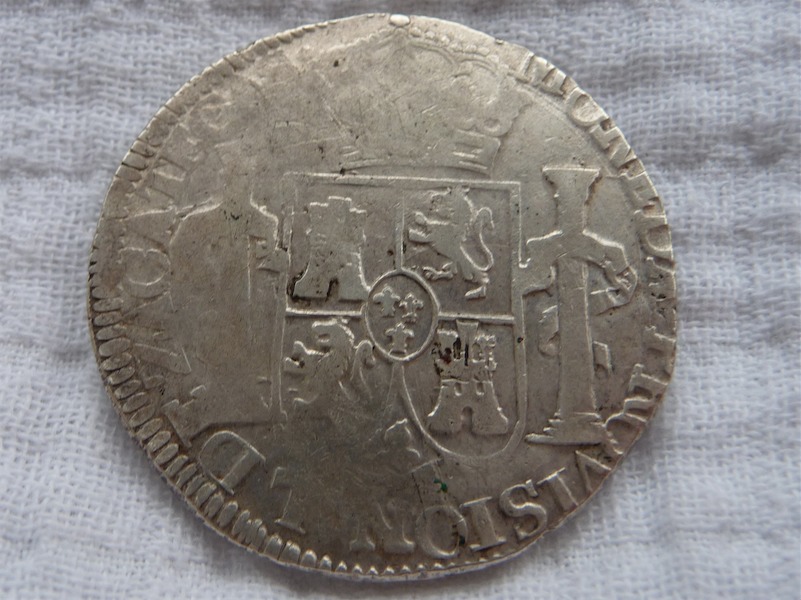 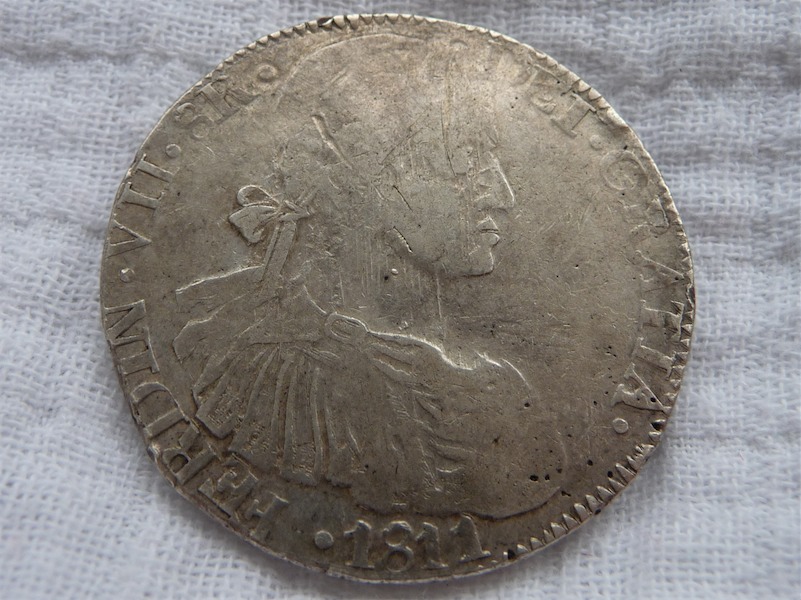 |
|
Pillar of the Community
United States
5362 Posts |
I really think that one of the first tests that should be done on every coin is Specific Gravity. It is a simple high school level test that can be done by anyone. A dollar sized coin is the perfect size. Riddell even suggests a simple method of making an apparatus.
Combined with a ring test - that is all you need to identify a debased coin. And in my opinion ALL debased coins are actually COUNTERFEIT.
I think that for about a generation we have been fed incorrect information about the extent of debasing of coinage by local authorities. In the process we got away from the simplicity of SG and a ton of fakes now pass as real especially within the War of independence issues.
Granted many of the coins are crude and some vary by weight or assay BUT FAR LESS than we have been led to believe.
Unless you can somehow disprove Eckfeldt's 1842 work on world coins - you face a very high hurdle to prove that ANY regular Dollar issue of any of the Spanish colonies or early republics was debased lower than 840 fine before 1830. There are NO reports of such coins EVERY being made.
The ones that were made were treated as what they were COUNTERFEITS.
Under 840 fine coins are perfect for detection by SG. Alternative metals like tin and lead do not ring.
|
|
Pillar of the Community
France
1591 Posts |
Swamperbob : you forgot the Potosi scandal ;) Like this one for example (Felipe IV, 1650, essayer O with dot inside, devaluated fo 7,5 reales with the crown counterstamp) : 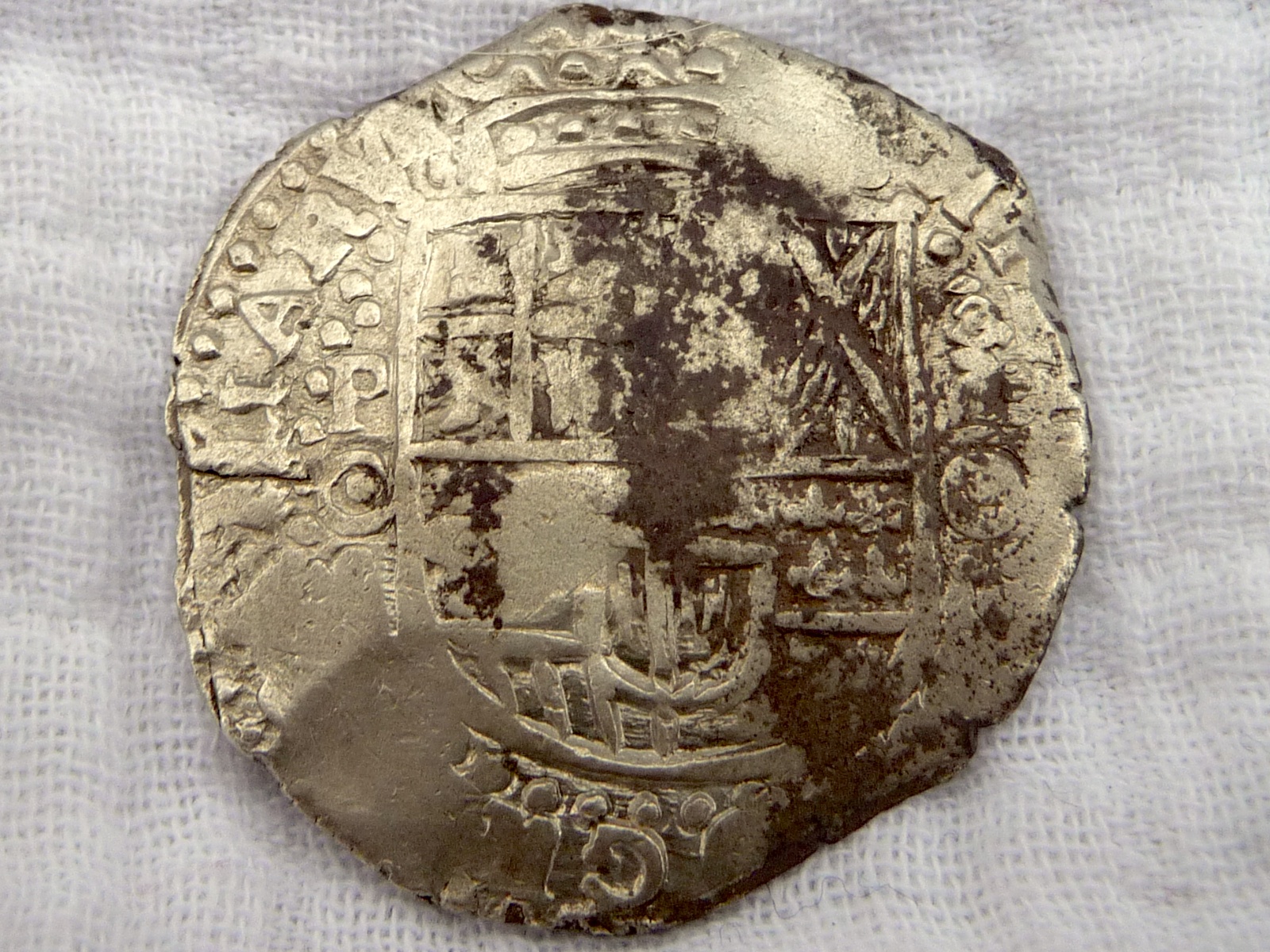 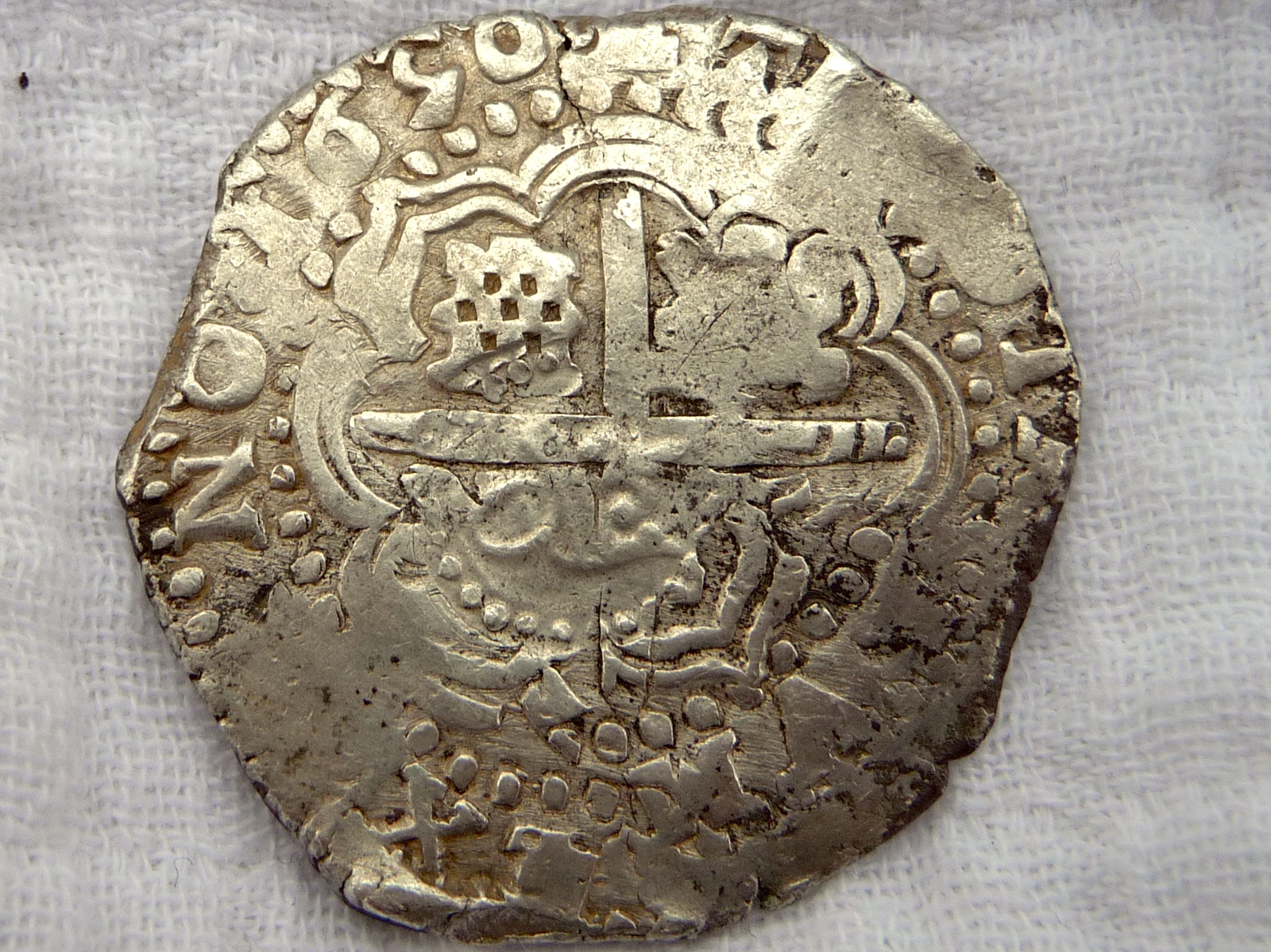 The stuff with SG - the reason why I didn't do it yet - is that I don't have an accurate scale ... I need to get a good one for myself (I went for a cheap Chinese numeric scale - which is not accurate enough). |
|
Pillar of the Community
United States
1761 Posts |
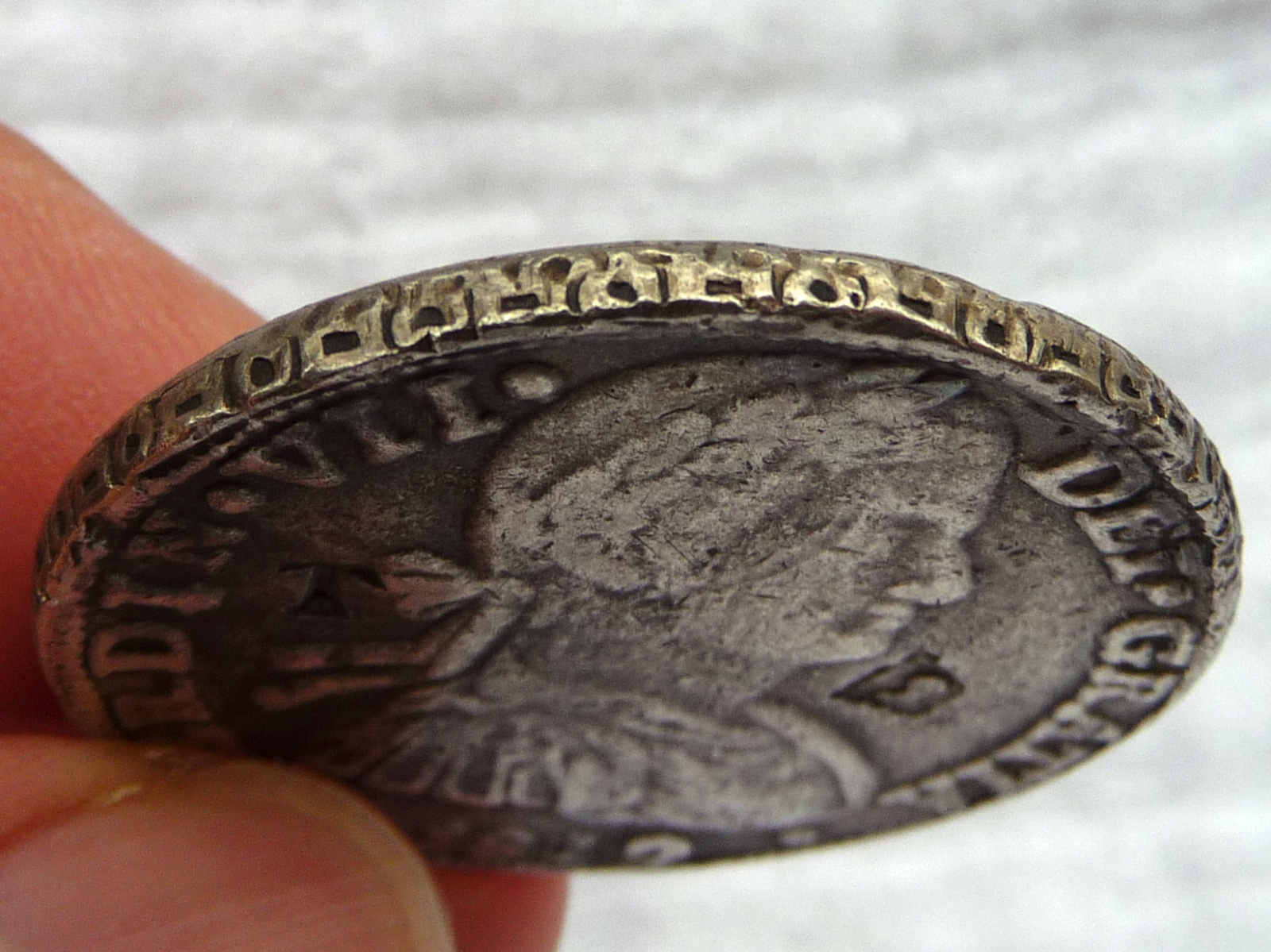
The LVO coin is next on my list. I was unaware of the Eckfeldt's 1842 work on world coins and thanks Bob for sending me that reference which I included the full citation and did make some changes to the article. I speak in terms of probability until a larger data base can be created/studied of XRF data. For now with the Chihuahua casts anything that is debased or Sheffield I am considering it a contemporary counterfeit of the period or a later striking product. The only allowance I am making in the paper is I believe there may have been a LAPSE in time on applying the regal edge to the 1811 pieces (first year issue for the KM#123 cast pieces) as I have a piece which shows perfect silver level and a Pt/Au ratio with the other study pieces. THis may extend to 1812 - not sure? Again - this paper JUST submitted to MNA should bring some new fresh ideas to collectors.
The LVO's as far as my limited time in this Mexican numismatic field is at this point with WOI issues do seem to exhibit plain edges. The previous illustrated Dos Mundos LVO (ex. Stacks) still in my possession will be compared to another piece I have coming in from a noted dealer as genuine to my collection. I will do a paper on these two as the MNA has asked for shorter 1-2 page articles. I think the Stacks piece is REAL - the discoloration is proably improper alloy mixing - we see copper coming to the surface or the piece having brown discolorations - I think a few more LVO's may exhibit this tendency.
In terms of SUD silver pieces and their silver contents ... <VVBG>... who the hells knows! Tomorrow is another day ... <BG>.
John Lorenzo
United States
Edited by colonialjohn
03/18/2013 08:45 am
|
|
Pillar of the Community
France
1591 Posts |
That edge issue is very interesting, but from your sample if I understood everything, one was tooled / filled (so it may have had a proper edge prior to this)
Do you have other "plain edge" samples for this type ?
Tell me if you need mine for your next article colonialjohn :) (as well as anything else actually)
The early design is also interesting (flower / lion - I have the later one except for a 2 reales), if you have that, in order to see if the first coins evolved in composition quality.
|
|
Pillar of the Community
United States
1761 Posts |
Speaking of just the cast Chihuahua the one that was filed and edged in a milling type fashion (ie., staight up and down file markings not equally spaced and all around the edge) - you would think its a contemporary counterfeit - but with the Ag level at dead on ~90% and good Pt/Au ratio. This is why the jury is still out on these PLAIN EDGE issues in my opinion. Anytime - MOVING FORWARD - when you see a 1811-1813 Cast Chihuahua (KM#123) the first question you should ask is the edge regal (circles & squares) or plain edge or something else? As you view the results of the XRF we see EXCELLENT consistency of Ag,Pt & Au from one example to the next ... lets see what other MNA members THINK after the paper is published ... with the 1811 regal edge or no edge requirement leading the way ...
John Lorenzo
United States
|
|
Pillar of the Community
France
1591 Posts |
I hope you did a picture of that edge ;)
Do you have some new informations for this upcoming paper ?
|
|
Pillar of the Community
France
1591 Posts |
|
|
Pillar of the Community
United States
1761 Posts |
I sent the research paper to the Mexican Numismatic Assocation. We shall see ... we should only see plain edge types during 1811 from my research that the circle/square (regal) edge was added as a lapsed anti-counterfeiting measure for this series - possibly? I have confirmed almost exact Ag/Pt/Au % levels between 1811 regal edge and plain edge pieces. Additionally - it may be based on my theory that any 1812 which is plain edge is an immediate PROBLEM - I own (four) 1812's - all are like yours - regal edge - keep me posted on ANY 1811 Plain Edge types - these would be VERY VALUABLE to XRF analyze to support my conclusions - MOVING FORWARD. The larger the data base the more accurate this assumption ... if we do see just ONE 1812 PLAIN EDGE we need to examine the piece to see if it has good Ag/Pt/Au lvels. To see an 1812 PLAIN EDGE Chihuahua cast with good Ag/Pt/Au % levels piece is hopefully an IMPOSSIBILITY ... follow my thinking <BG>.
John Lorenzo
United States
Edited by colonialjohn
05/15/2013 12:57 pm
|
| |
Replies: 100 / Views: 16,796 |








 First Page
 Previous Page


 Posted 03/07/2013 3:43 pm