| Author |
 Replies: 5,134 / Views: 385,439 Replies: 5,134 / Views: 385,439 |
|
|
|
Pillar of the Community
United Kingdom
856 Posts |
Thanks Jack! The Triangle privy mark (only really clear on the reverse at 12 o'clock, but it's on the obverse too) dates this coin to between 4 Jul 1639-26 Jun 1640. We know this because The Royal Mint assayed coins by privy (mint) mark and the last day of issue and first of the next were known. The mark is called 'privy' because in theory only the Master of the Mint and officials knew its significance - a kind of quality control. The legends read CAROLVS.D!G.MAG!BRIT!FRA!ET.HIB!REX - Latin abbreviations for Charles, by Grace of God, of Great Britain, France* and Ireland, King. U was represented by a V here! And the reverse reads CHRISTO AVSPICE REGNO - I Reign Under the Auspices (patronage/protection) of God. Hope that's of interest! * Yes. British Kings and Queen claimed authority over France for many hundreds of years, largely on the basis of their control of Calais, which we held from 1346 until 1558! Here in Britain slabbing has still to catch on. The vast majority of coins are bought and sold "raw". Few people I know slab coins. OK, it's a way of checking authenticity. But I know the ownership history of this coin back to the 1970s which reassures me. One coin I have I know it's ownership back to before 1913. That's a better guarantee to me than a slabber's opinion! . Edited by Tom Goodheart
01/11/2016 07:54 am
|
|
Valued Member
United States
392 Posts |
Tom,
Thank you for the amazing history overview! That you can date AND establish its provenance makes it even more spectacular. By the way, the fact that UK numismatists haven't embraced Third Party Grading is another interesting fact. Other posts on CCF have talked about counterfeit coins being slabbed, and actual counterfeit slabs, so there are still no guarantees, even at tremendous cost.
This appears to be a coin that you were waiting for. Is that correct? Your explanation of the privy mark helps a great deal. Is there any relationship to the use of privy marks on modern coins? Is it still used as a means of quality control? I notice them on Canadian coins among others. I have been suspicious that they are used within small populations of common coins simply to imply rarity.
Thank you so much for taking time to explain some of the mysteries of this remarkable addition to your collection. Very best regards, Jack
|
|
Pillar of the Community
United States
1156 Posts |
1746 Lima crown. This was the other crown that I had certified recently. The TrueView photograph really highlights come of the color on this darkly toned coin. This was an ebay pickup. 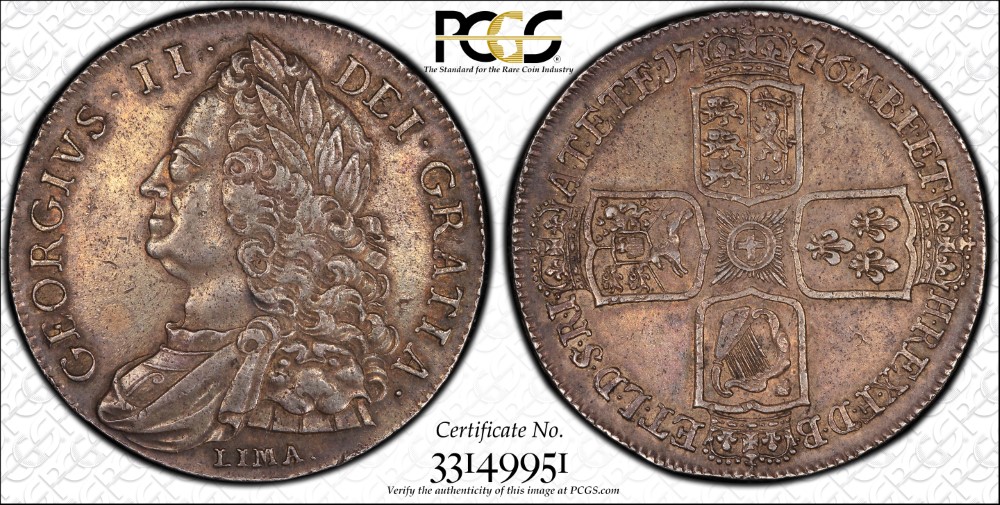 Edited by jgenn
01/11/2016 8:35 pm
|
|
Pillar of the Community
United Kingdom
856 Posts |
Quote:
This appears to be a coin that you were waiting for. Is that correct? Your explanation of the privy mark helps a great deal. Is there any relationship to the use of privy marks on modern coins? Is it still used as a means of quality control? I notice them on Canadian coins among others. I have been suspicious that they are used within small populations of common coins simply to imply rarity. Not a coin I was particularly after, but the opportunity came up and the owner wanted a coin I has so we did a deal.  The original use of privy marks was to identify a particular issue of coins from another so that they could be checked to ensure they met the required standards. The values of coins those days was basically the value of the metal (gold, silver or occasionally copper or brass)they were made from. So diluting the precious metal (such as silver) with another (copper perhaps) meant they cost less to produce but circulated for the same amount as one made to the correct standard. While this could be very tempting, punishment for not making coins to standard had very severe consequences for the moneyer in the early days. Of course if the money was debased with the King's blessing - as happened in the reign of Henry VIII of England - there was not so much the public could do. Though Henry did become known as 'old copper nose' on account of the debased metal showing through on some of his coinage. 'Copper nose' because it was the higher points (such as the King's nose) that showed wear first! However more modern coins (19th century on) the mark tended to primarily identify which mint the coin was struck by and this is the main reason for them now - hence the increasing use of the term 'mint mark'. Some mints, through accident or design, produce fewer coins so I guess it works as marketing in that people still want a P, D or S marked US coin, even though the standards to which they are produced now are so stringent I suspect they are more or less identical. . Edited by Tom Goodheart
01/12/2016 10:47 am
|
|
Valued Member
United States
392 Posts |
Tom - Thanks immensely for the time you've spent with me here. You've most certainly piqued my interest regarding this really amazing period of time (Old Copper Nose - lol). I've really enjoyed the pictures AND the history you've shared. There is so much that I don't know about World Coins. There seems to be mystery around every corner, and thus, so much excitement/interest.
Coins of rarity, and very high value are obviously not my area of collecting. But, studying them is fascinating, especially with someone so knowledgeable. Thanks ever so much. Jack
|
|
Pillar of the Community
United Kingdom
856 Posts |
No problem Jack. Just remember that rarity and very high value don't necessarily go hand in hand!
Specialist coins are a specialist area. So for the sort of thing I collect there may be only a dozen known examples but if only 10 people want one...
Conversely if there are 10 coins but 12 people want one, the demand will be high!
However for most people a, say shilling of Charles I, is just a well, shilling of Charles I. And if they want one they want the best looking that they can afford. Hence common coins in uncommonly good condition will almost always out price (even very) rare coins in poorer state.
The thing is, these coins were made by hand. The planchets (blank flans) were made by hand so are often very far from completely circular. The thickness varies so the design might be strongly imprinted in one area of a coin but weak elsewhere. And the process involved dropping a blank into a cup like die into which another (cone shaped) die was placed. So if the blank isn't exactly central (or is small and thick rather than wide but thin) then parts of the design will go beyond the edge.
Finding a centrally struck, even circular coin can be a real challenge and such examples will command a premium.
The other thing to remember is that rarity is never guaranteed accurate. There may be coins like mine, unrecognised, in collections somewhere around the world (I've bought coins from the Commonwealth, Europe and the US) or even museums. We can only make educated guesses on the number of recognised examples and previous sales records.
All fun stuff!
.
|
|
Valued Member
United States
392 Posts |
Tom, you are a collector's, collector, and a gifted teacher. You are quite right about rarity not necessarily translating to "expensive." I've seen that even among the US and World Crown series' that I collect. Your designation of "Specialist Coins" in Specialist Areas" helps put it into perspective for me. The coining process seems quite like the process used in ancient coins (with varying quality of strike). Or, for that matter, although minted in modern terms, the poor strike issues surrounding the Flying Eagle cent that led to its demise. I've given myself permission to be ignorant in "Specialist Areas", with a note to self to study such areas more. That's all thanks to you and the kindness you've extended to all of us who read your posts. Most sincere thanks, Jack |
|
Pillar of the Community
Australia
7096 Posts |
This is my latest set that I have had graded by PCGS. I have 4 more sets yet to be graded, 1902 Matte Proof, 1903, 1904 and a 1908 set. Here are the "True View" images (Only $5 each) of the 1906 set :yahoo: PL67+ 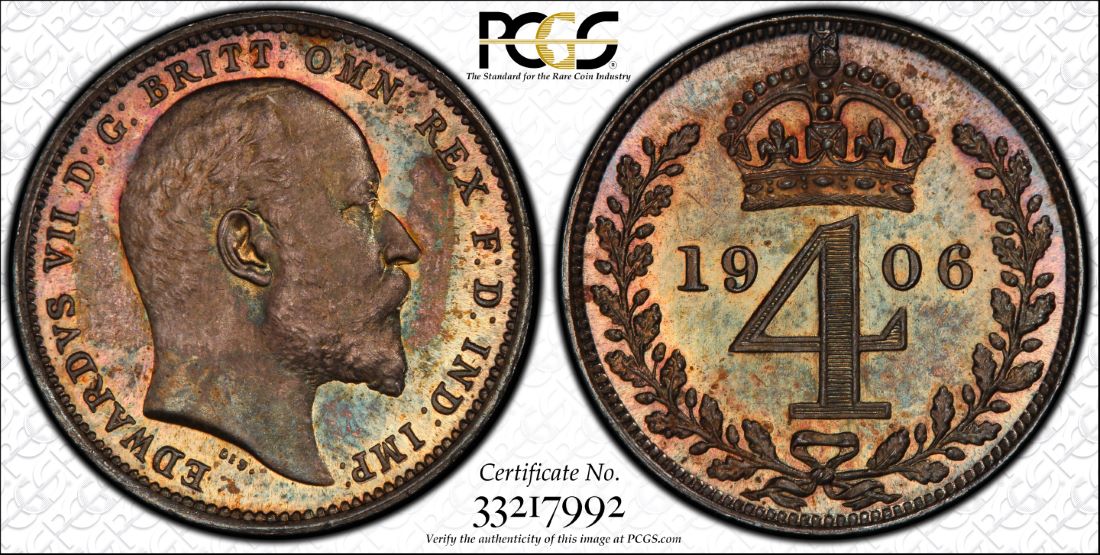 PL66 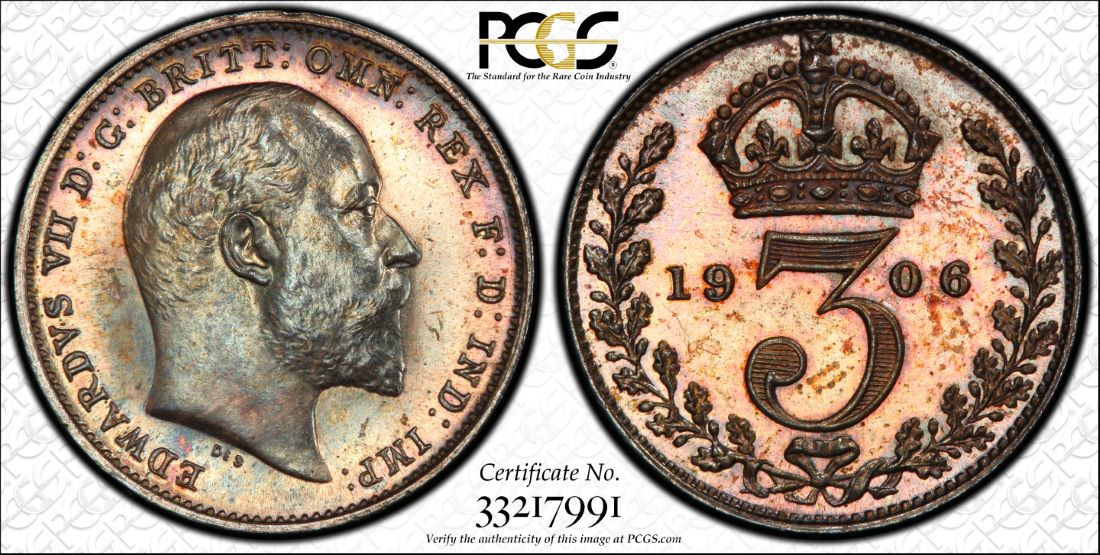 PL66 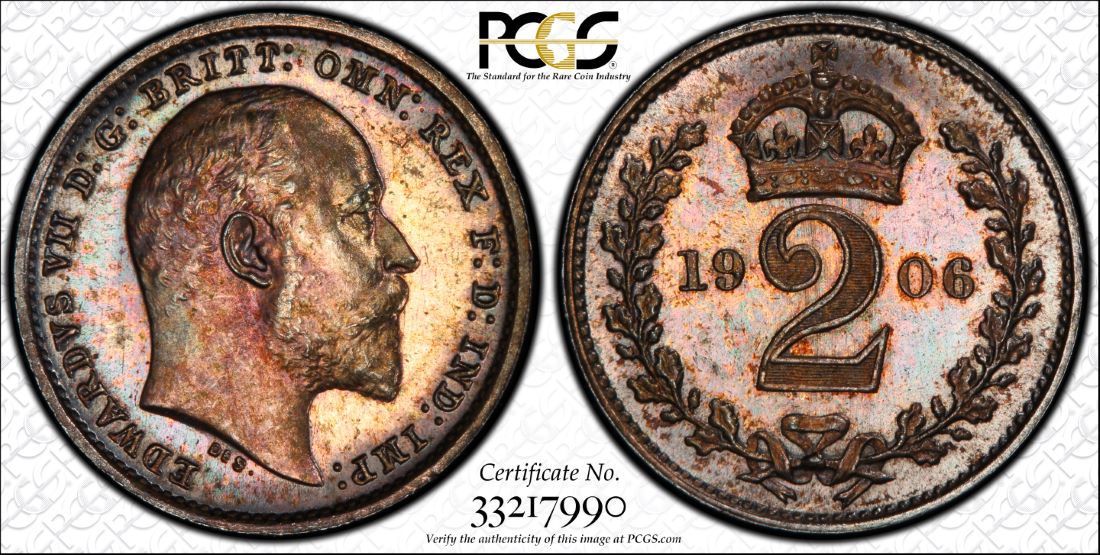 PL65 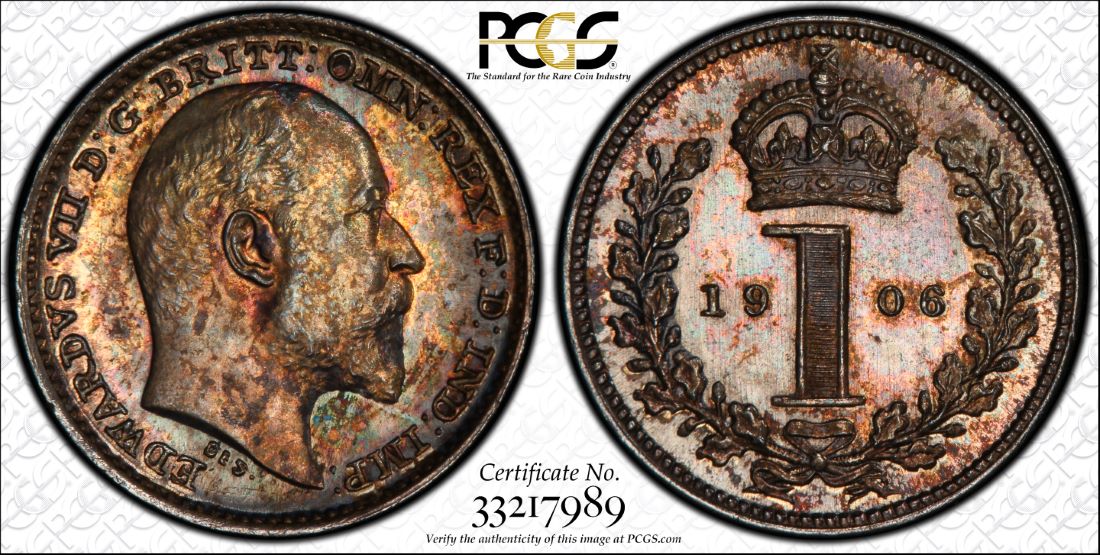 |
|
Valued Member
United Kingdom
190 Posts |
|
|
Pillar of the Community
New Zealand
1679 Posts |
Just purchased 1887 GB half penny which I thought was very nice----your thoughts and grades please 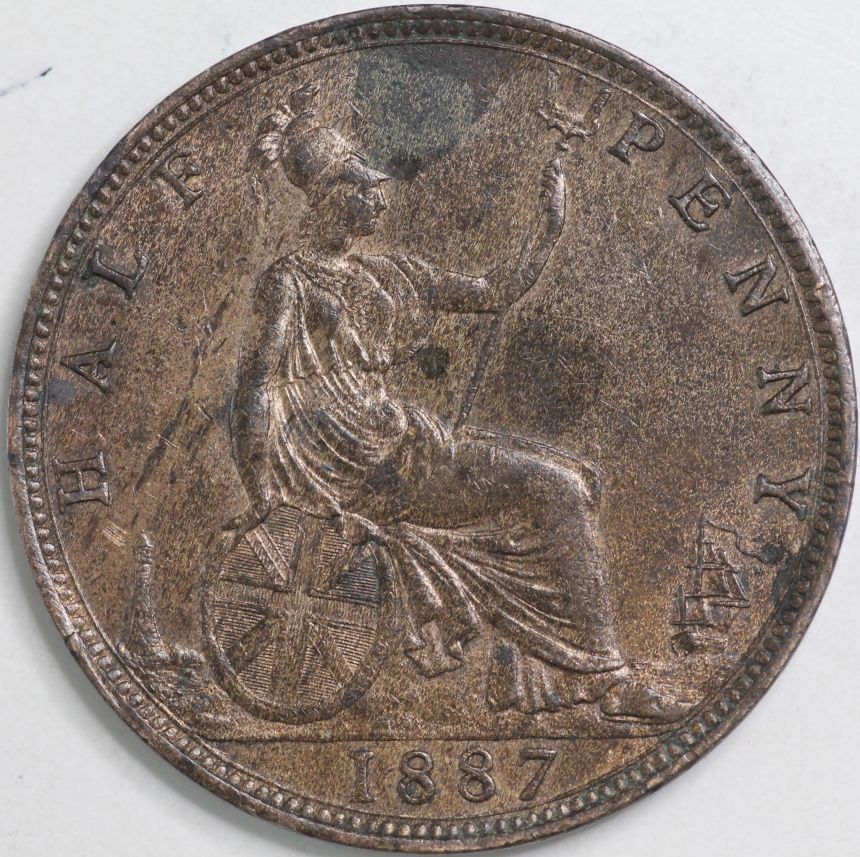 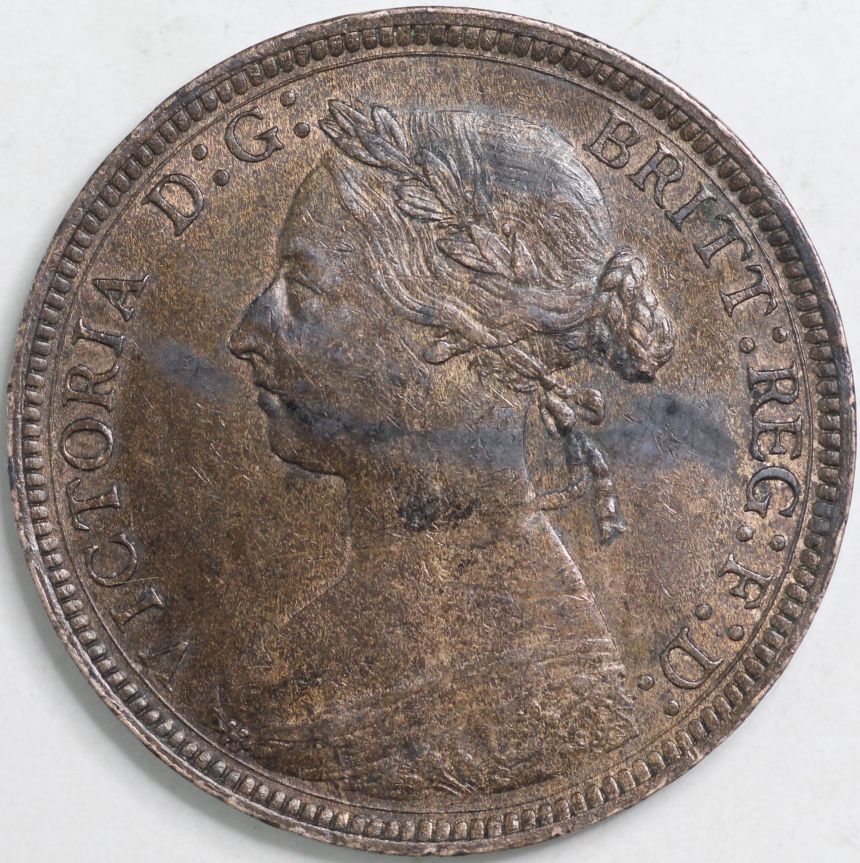 Cheers Don
Vickies cents and GB Farthings nut.
"Old" is a figure of speech and nothing more
|
|
Valued Member
United States
392 Posts |
fourmack - She's a keeper for sure! Even with the staining, she still looks regal. The coin really speaks loudly of its travels, it's a real road warrior. Jack  |
|
Pillar of the Community
United Kingdom
856 Posts |
Arrived yesterday. Difficult to get a representative photograph, but I've done my best. Charles I shilling, S 2800, Sharp G1/2. The (P) mint mark dates it to between 29 May 1643 and 15 Jul 1644, a period when the Tower mint was under the control of Parliament. The King had fled London in 1642 but money still needed to be struck. Illustrates all the joys of hammered coinage(!) Some double striking, weakness due to the flan being thinner and a light strike and off centred. But still a better than average example for the mark, so it will do for now! As for the obverse mark .. I believe it's (P) over Triangle-in-Circle (the immediately previous privy mark) .. at least as far as I can make out! 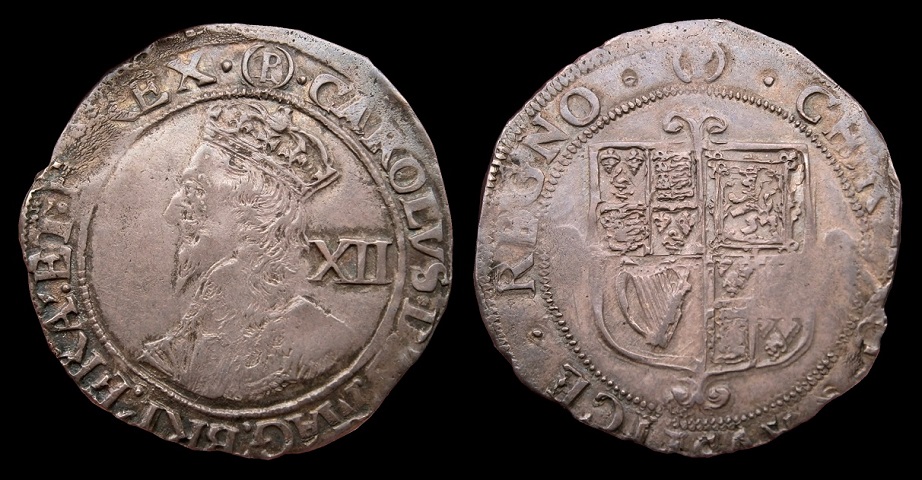 |
|
Valued Member
United States
392 Posts |
WOW, Tom! Another amazing historical landmark for your collection. All aspects of this coin (weakness, multiple strike, etc.) only add to this coins story. Thanks so much for sharing it. It speaks so loudly of its journey and the times it has witnessed. Jack |
|
Pillar of the Community
Australia
7096 Posts |
I picked up this 1937 specimen set yesterday on ebay for 250 quid 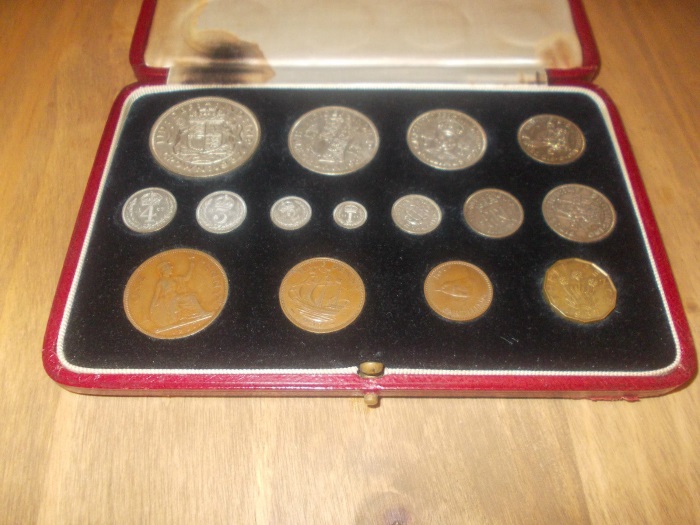 |
|
Pillar of the Community
United States
6326 Posts |
Large One Penny --- 1890, 1911, 1916, 1919, 1921, and 1938. The 1890 Queen Victoria is poor condition, the Georges are better, but the imagined history travels of the coins are captivating for sure. An elderly lady friend of my wife's gave these to me, amongst other coins, they were her husband's who was a ww2 veteran. Both deceased now. She kind of adopted my wife and daughter...happy to give the coins a home.
|
| |
Replies: 5,134 / Views: 385,439 |






 First Page
 Previous Page


 Posted 01/11/2016 1:03 pm


