| Author |
 Replies: 416 / Views: 99,924 Replies: 416 / Views: 99,924 |
|
|
|
Pillar of the Community
Hong Kong
1270 Posts |
Quote:
Is it the case that in fact all produced from 1960-86 do not have these dots? To me, yes. |
|
Pillar of the Community
2087 Posts |
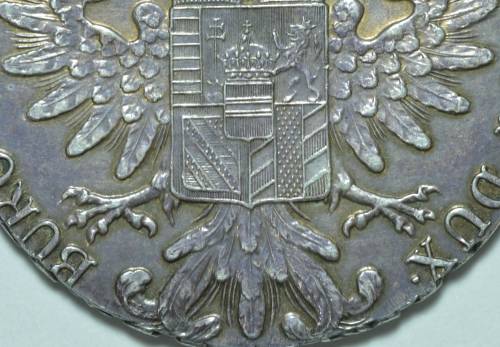
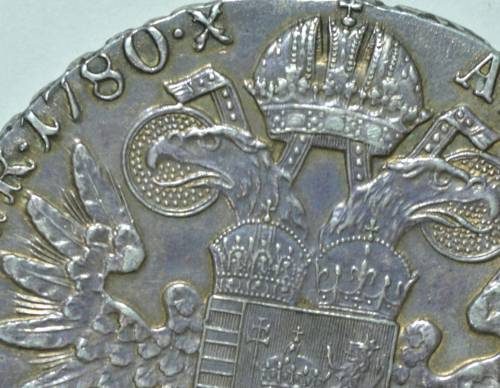
To clarify ( I just went through hafner) the two dots are recorded with H49 (1853-1890/1900) H 54 ( 1890/1900 -1930) H 57 (1930-45/50) No mention of the dots after that..so my counter-marked coins fill in the gaps roughly. Hafner was published in 1984
|
|
Pillar of the Community
 United States
3499 Posts |
wonghinghi & austrokiwi- wow... Well, I suppose that I did not realize that there was such a difference between coins struck 1960-85 and 1986-present, the latter of which have the dots. In fact, I have posted MTTs in this thread that I was sure were from 1960-85. Is it possible that some produced from 1960-85 had the dots while others did not?
I must say that this really is causing me to revise what I thought I knew about MTTs.
|
|
Pillar of the Community
2087 Posts |
Quote:
I must say that this really is causing me to revise what I thought I knew about MTTs. It happens to me often though not as much as when I first started collecting the coins |
|
Pillar of the Community
United States
3499 Posts |
austrokiwi- So all in all your diagnosis is that it is probably a Hafner #61a and that it was probably minted in the early 1960s?
|
|
Pillar of the Community
2087 Posts |
Yep that's the best attribution.
|
|
Pillar of the Community
United States
3499 Posts |
austrokiwi- Very good to know! Thanks!
|
|
Pillar of the Community
Hong Kong
1270 Posts |
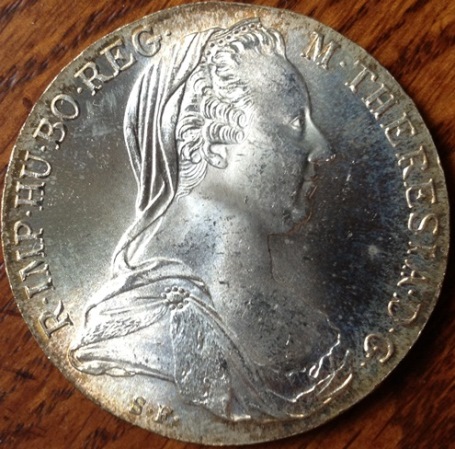
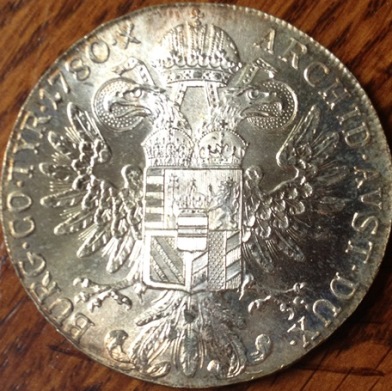
The reasons I believe H60 (Vienna 1945/50-60) has two dots and H61a (Vienna 1960-1986?) don't have : 1)By observing the pictures shown from the Lexicon, I am 100% sure there is no dots on the Austrian Shield of H61a. The degree of certainly to see the two dots on H60 though not as high as above, I really feel there are the dot(s) from the pictures shown. 2)The difference between H57 (Vienna 1930-45/50) and H60 are very small also. Hafner stated there are two dots found on H57 but didn't mention that on H60. Edge inscription of both is similar except that H57 is often under 40 mm while H60 is larger than 40 mm. But, when you see the time interval of the two specimens (H57 & H60), there is a small overlapping (1945-50) between them. Would Hafner miss to tell there is still a possibility to find the two dots on the H60 specimen? According to Hafner's attribution, it should be very uneasy to distinguish H57 from H60 (for the diameter difference within 1 mm between coins probably ), the later is my extra opinion. 3)In fact, the two dots found on the Austrian Shield will give a neutal impression to the end user of the silver coins for buying and trading but must be a negative impression to the coin collectors or commemorative purpose (for the sense of beautifulness). So why do the Mint still put the two dots here? There must be a practical reason. I would suppose this is a privy mark for Austrian Mint. The most probable reason for its presence is to differentiate between the MTTs from different mints/countries. But, after 1960s, Austrian Mint became the only mint for this special thaler, why does it need these two useless dots on the coins then? This explains why H61a (1960-1986?) would have no dots on it. I show a H61a specimen here (I am quite sure) and see whether you agree with. Please tell your idea! 28.05 grams, 40.9-41.5mm 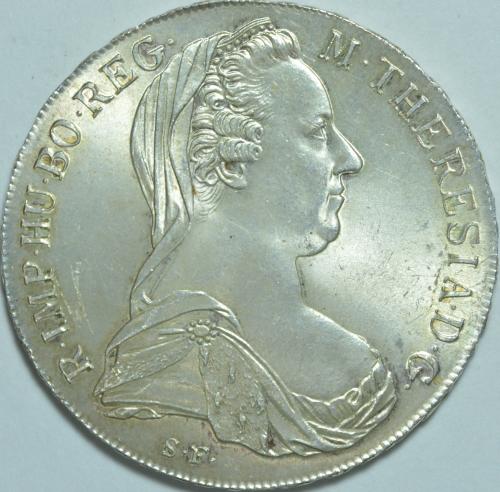 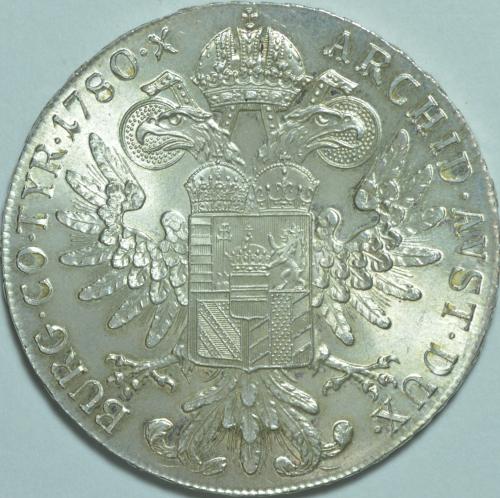      |
|
Pillar of the Community
2087 Posts |
Its really hard to be definite. 1960-1986 is very long time. H 60 covers more than one variety and is a catch all. I suspect H61 is the same. It is probable that the two dots were dropped simple because they were forgotten! They were a 19th century addition and I am sure they were an anti counterfeiting measure. In the late 19th century Italy pushed for the minting rights the UK in preparation for the Ethiopian expedition also considered minting them. I get the impression that after Hafners book was published there was a significant surge of interest in the MTT...I haven't done an in depth analysis but in the late 1980s MTT varieties particularly old restrikes were fetching high prices. Combine that with the fact the vienna mint regards the MTT as their "shop sign" and it is possible the two dots came back for nostalgic reasons. Very few MTTs have been produced as commerative coins... there still are in the main bullion coins. I can think of only one commerative issue a Hall mint struck MTT ( above SF is placed the hall mint mark("F")
|
|
Pillar of the Community
Hong Kong
1270 Posts |
Quote:
Combine that with the fact the vienna mint regards the MTT as their "shop sign" and it is possible the two dots came back for nostalgic reasons. We need more examples to prove above statements or my hypothesis - No more dots after 1960s. |
|
Pillar of the Community
United States
3499 Posts |
wonghinghi- I agree we need some more examples and evidence! However, at this point I still am a bit unsure about the whole matter. I actually have some MTTs that bear the dots, but they just have so many other features of 61a.
|
|
Pillar of the Community
Hong Kong
1270 Posts |
Archraz, first do you agree with my current coin be H61a. Second, can you post your coin that you are sure it is H61a but also with the two dots?
|
|
Pillar of the Community
United States
3499 Posts |
|
|
Pillar of the Community
Hong Kong
1270 Posts |
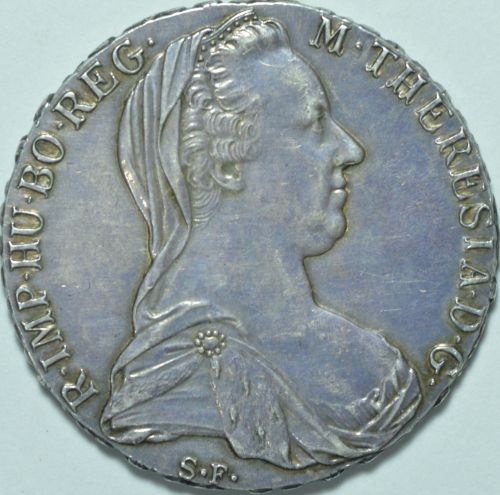
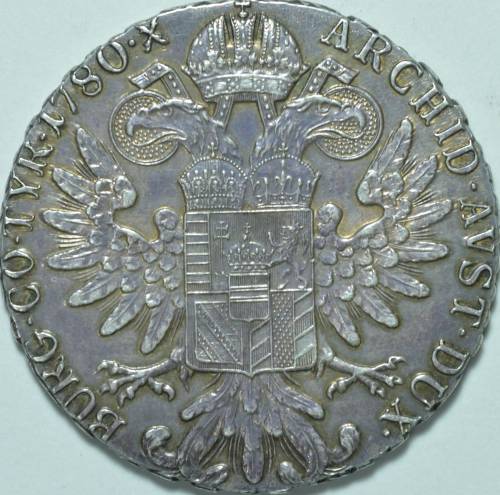
Archraz, your recent coin looks like a H60 to me. Of course, you can also say it is a H61a because the dividing line between H60 and H61a is very small. The time you got this coin might not be the time the coin minted so you can't say it must be a H61a specimen.
|
|
Pillar of the Community
Hong Kong
1270 Posts |
|
| |
Replies: 416 / Views: 99,924 |








 First Page
 Previous Page


 Posted 09/06/2013 11:30 am