| Author |
 Replies: 416 / Views: 99,925 Replies: 416 / Views: 99,925 |
|
|
|
Pillar of the Community
2087 Posts |
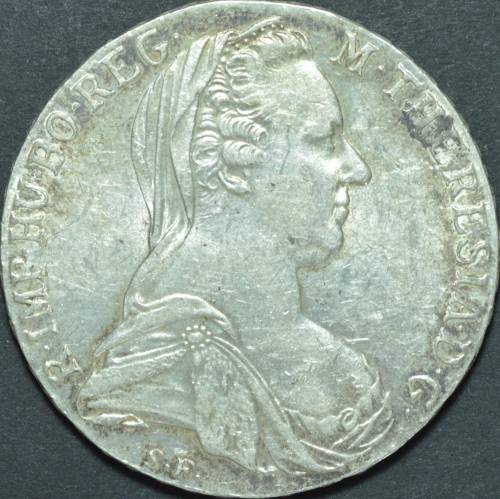
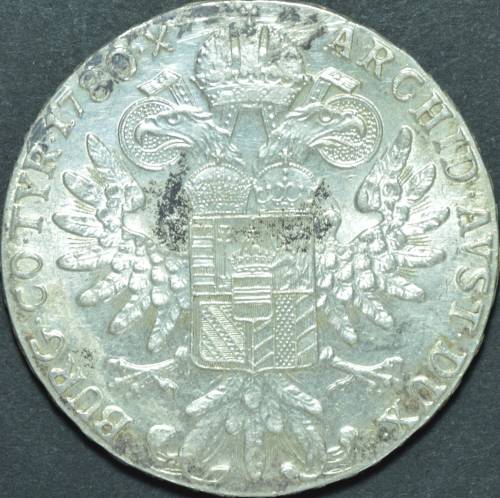
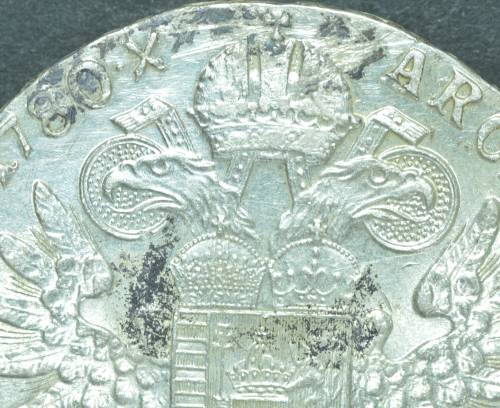
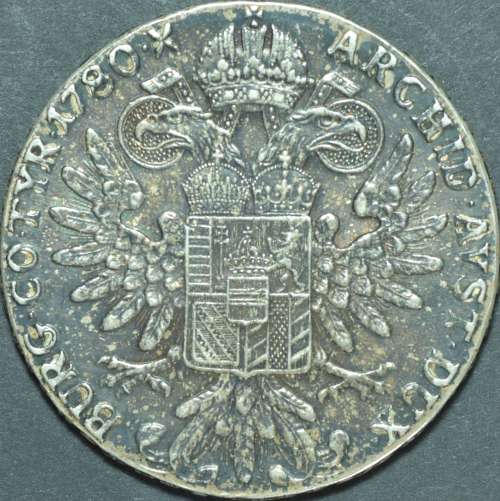
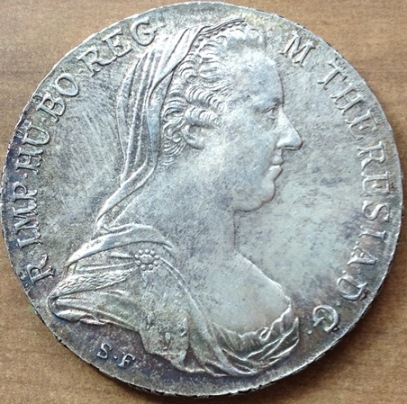
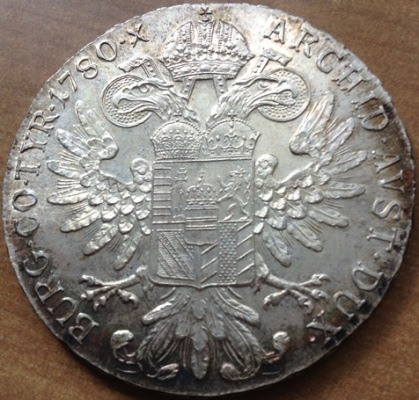
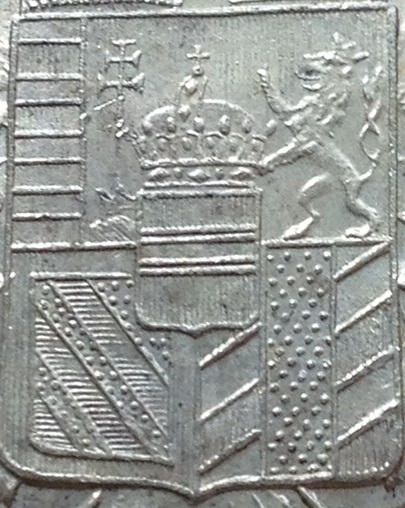
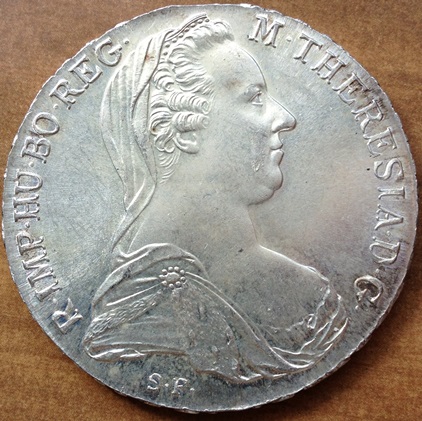
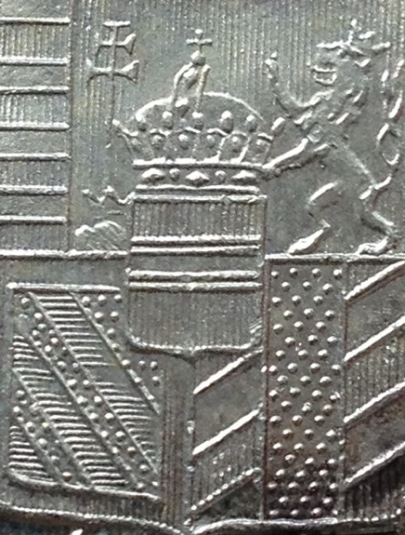
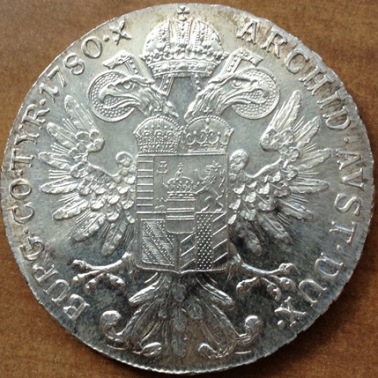
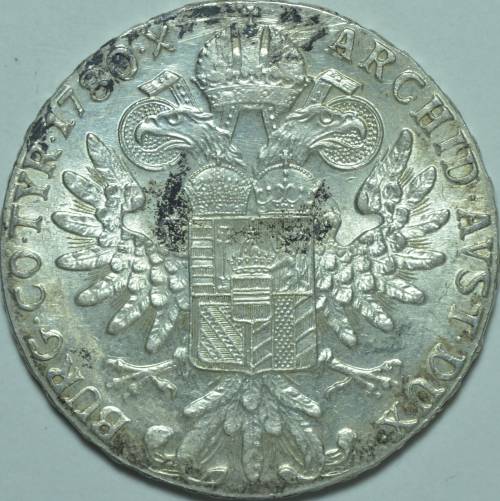
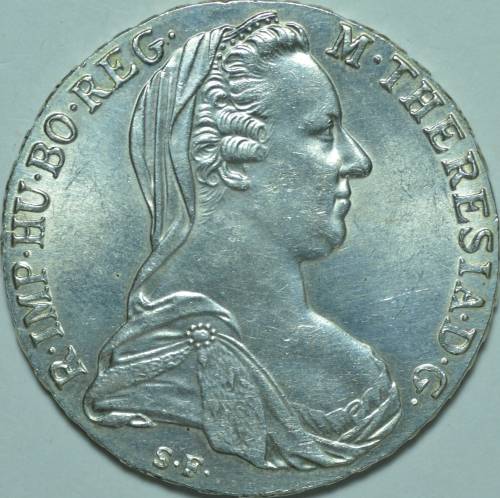
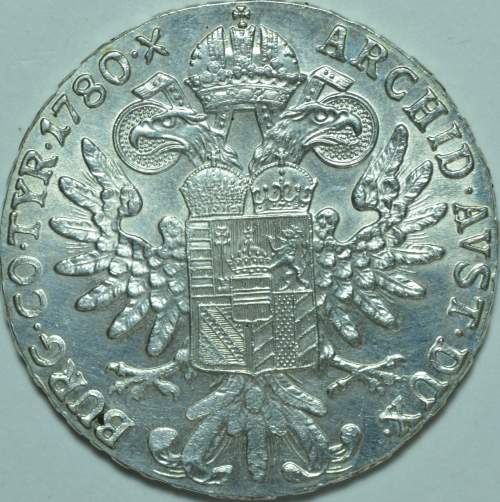
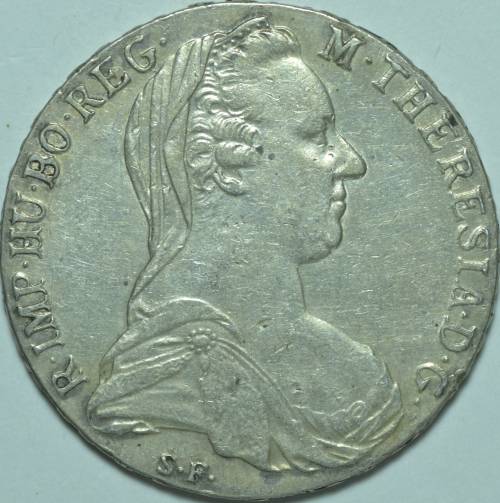
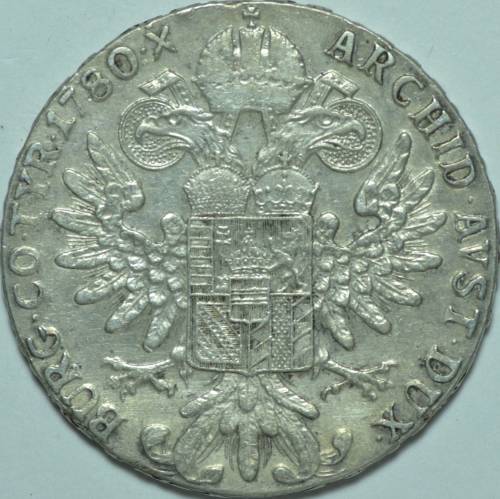
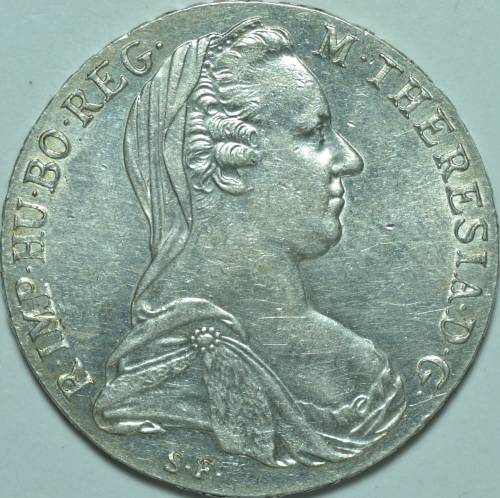
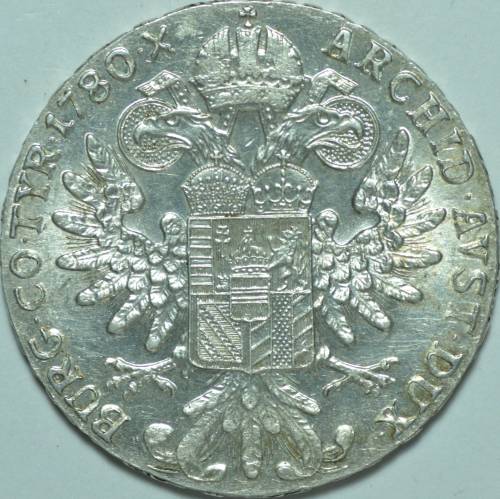
tis a really nice example of H58. The two tail feathers doesn't refer to the 1-2-1 tail feather formation rather it refers to the small double hair feathers( just fine lines) at 5 O'clock and 7.Oclock. I think you have misunderstood Hafner. The coins were produced in Vienna but supplied to Johnson and Matthey a london firm
|
|
Pillar of the Community
Hong Kong
1270 Posts |
You mean the two hairs in the red cirlces. 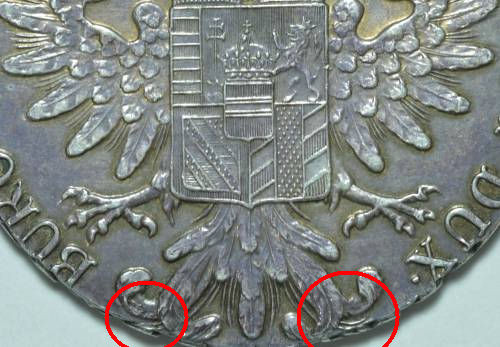 Thank you austrokiwi, you have solved my problem. Then, this is a perfect example of H58. |
|
Pillar of the Community
Hong Kong
1270 Posts |
|
|
Pillar of the Community
2087 Posts |
I refer you to my article "The 20th century minting of the Maria Theresa Thaler". But the first thing you should understand: H66 doesn't exist. The mythogical story about H66 goes back to an article written by Stokes in 1980 published by the Austrian Numismatic society. For some reason Leypold and Hafner thought that Brussels mint( yes Brussels...read on) didn't start producing MTT until after the 2nd world war. However my research( particular London mint and UK foreign office records) and the research of Francois Regourdy ( who reviewed Brussels mint records) clearly shows Brussles started producing the MTT in 1937. What does Brussels have to tell us about Birmingham mint? Brussels mint produced the MTT coin at the request of a London based Banking house Samuel Montagu and co( now swallowed up by HSBC). That banking house was part of the pool that received London mint struck MTT but they like all the other members of the pool were not happy with the limited supply coming from the London mint so to ensure continued stocks that banking house also purchased Brussels mint coins. Two important piece of other info: Around 1937/38(from memory see the article for the specific date) Johnson and Mathey asked the London mint for MTT dies so they could have the MTT struck elsewhere. The reply from the London mint is great reading......they effectively threw their toys out of the cot over the request. The Royal Mint did have production problems with the MTT and prior to WWII they entered into discussions with the Royal Canadian Mint for the Canadian mint to produce MTTs. This included an expectation that royalties would be paid to the London mint. The Canadians decided against the offer. Now before I found what actually happened I was really puzzled on a number of points:
- Prior to the war the London mint refused to hand dies over to Johnson and Matthey so why would they hand them over in 1949
- Samuel montagu were buying coins from the London mint all through the year of 1949 why would birmingham mint get involved The Birmingham mint only ever supplied Samuel Montagu the argument made by leypold and Hafner is the London mint couldn't keep up with demand but London mint records of 1949 make no mention of the same sort of problems that they had before the war
- Why would SM use Brussels mint coins pre war, then start getting Birmingham coins from london mint dies in 1949 and then from 1955 get birmingham struck coins that were produced using brussles mint dies
- Samuel Montagu actual owned the brussels mint dies that were produced before the war
For me something was wrong: now some writers ( Broome, I have a spare copy of his article if any one wants to take it off my hands, and Stokes quote a 1949 London mint report that they believed says that Birmingham used London mint dies. I went to the UK national Archives found that report and all it says about Birmingham is the amount of MTTs produced by birmingham. There is no mention of a transfer of dies from London to Birmingham in any of the London mint archives( held in the national archives ( I know because I spent 3 full days looking for such a reference) What I did find was very different( see my article). Now although I had Regourdys work when I wrote the article I only used it for the Brussels mint info....I didn't look at what Regordy had written about Birmingham( more a little later). What I did find was papers regarding the known transfer of dies from Brussels to Birmingham in 1949. The Birmingham mint had informed the London mint the transfer was occurring. Then the nail in Leypold's, Hafners and Stokes theory....I found set of communications between UK customs and the London mint. A passenger on an aircraft from Brussels was discovered with a set of dies for MTT( including edge dies) the passenger informed customs the dies were for the Birmingham mint they had been produced before the war and had been in priovate hands through the war and weere now beign passed to the birmingham mint for the production of MTTs. Interestingly if I had read Regourdy's comments on Birmingham I would have had a nice piece of supporting evidence. Regourdy discover Brussels mint records that noted that on the 9 may 1949 A set dies was handed over to a representative of Samuel Montagu. Uk customs discovered the passenger with MTT dies on 10 May 1949. Customs were suspicious they impounded the dies and sent them to the London mint, who quickly returned them to customs for release back to the passenger confirming that there was a valid import license for the dies. Some useless detail the passenger was a Mr Vansittart he was ex flight GAJD1 from Brussels to Northholt airport. Nothing more is said in the records. Note Regoudy also thought,based on Stokes, that the 1949 Birmingham strike was conducted using London mint dies! I think a combination of errors occurred to produce this myth, the first too many people read to much in to the 1949 mint report....the London mint was supposed to report on all coins produced in the UK and the mistake was people assumed as the mint mentioned Birmingham that dies had been transferred. Stokes in his research had contacted Samuel montage who sent him a coin they stated was from Birmingham 1949 I suspect that as that banking house was having orders filled by both Birmingham and London that the clerk who sent Stokes the coin just stated it was a 1949 coin and then stokes assumed from all the other assumed to be correct info that it had to be from Birmingham mint. So I repeat H 66 doesn't exist!! There may be another more interesting hybrid out there in the course of this research I was intrigued to find that Birmingham and London shared technology on how to strike the edge of the MTT. Birmingham shiped edge dies and machinery to London for the London mint technicians to examine the equipment was returned Now about 4 years back there was an ebay sale ( that I lost) of a Birmingham mint coin ( Brussels die type) with a London mint edge. I never got to examine that coin...but assuming the seller was right there is an interesting variety to be found. For the Third time H66 does not existAlso note you may want to note in Hafner H 68 should read 1937-1938 and 1952 - 1957. Some more info( that I didn't include in my article. As the UK geared up to liberate Ethiopia from the Italians the ramped up MTT production. However in the early stages before the Indian mints started production they couldn't get enough Coins. The War office managed to make up the shortfall by buying Brussels minted MTT from Samuel Montagu. I suspect there was an Airfoce officer involved in that decision as after the war the air-force continued buying MTT from Samuel Montagu and co and wasn't aware of the London mint production. How I came to this: In the mid 1950s the sultan of Oman visited the UK and toured the London mint he saw MTT being produced. when he got back to Oman he specified that only London MTT MTT were acceptable. The Brit Airforce was in Oman and discovered a huge problem and that the London mint produced MTT. They couldn't use their Samuel Montagu supplied MTT once the airforce switched to London mint dies the Brussels mint stopped making the coin(1957) [/list] |
|
Pillar of the Community
2087 Posts |
Quote:
You mean the two hairs in the red circles. Exactly you also see them on Rome mint coins ( and others) |
|
Pillar of the Community
2087 Posts |
One further comment folowing on from my comments about Birmingham. I have this on going question Durign WWII was there any german sponsored production of the MTT? it seems that as the coin was so important in some of the theaters the Germans were involved in that the MTT may have been a useful tool for Germany. I know of no research in this area and if the germans did produce the coin most likely it would be from Paris. It is also possible the Germans might have relied on Italian production... its an interesting but perhaps un-answerable question.
|
|
Pillar of the Community
Hong Kong
1270 Posts |
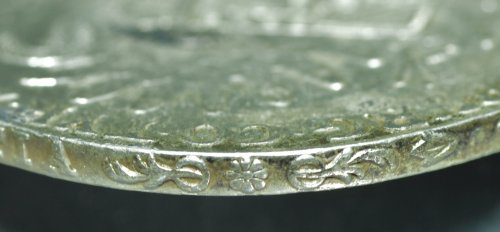
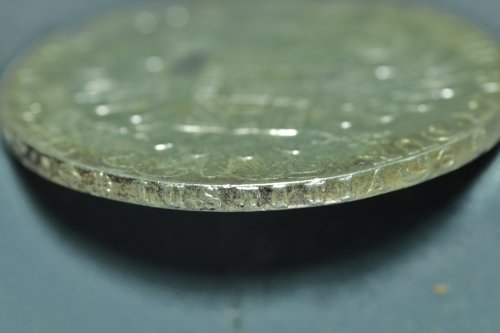
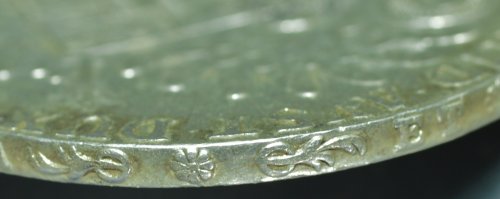
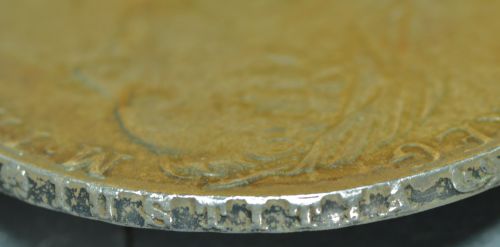
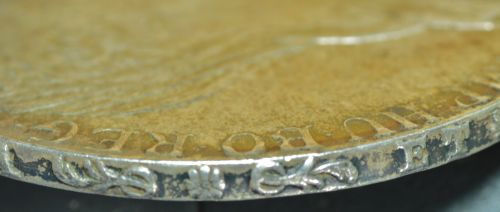
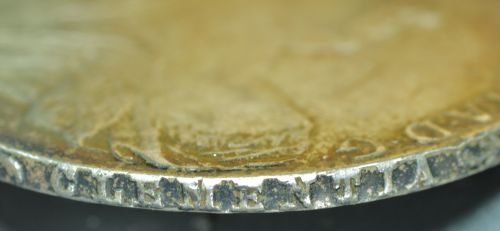
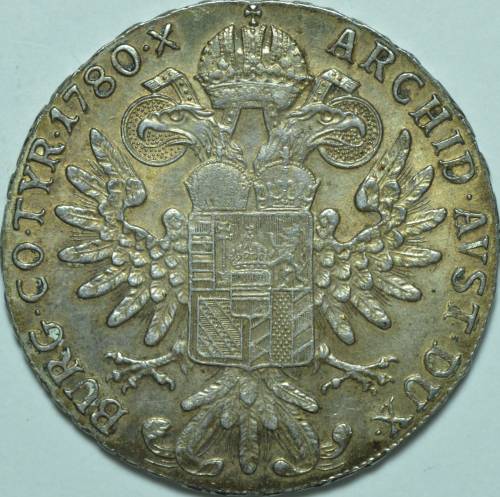
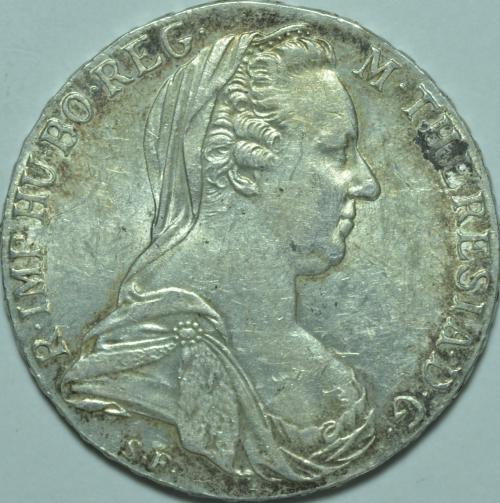
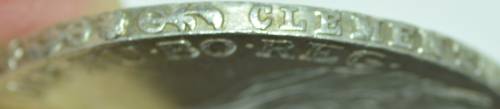
Thank you austrokiwi, you are really an expert in these MTT and most important you share your knowledge with us unselfishly. Let me have some time to digest your current comments and your articles again. By the time, would you like to make a guess the Hafner number of this strange coin. I mean the strange saltire and the opposite orientation of the edge letters.
|
|
Pillar of the Community
 United States
3499 Posts |
Edited by Archraz
09/13/2013 4:30 pm
|
|
Pillar of the Community
Hong Kong
1270 Posts |
Archraz, I can't find any differences between yours two coins with my one posted on 09/08/2013, that I suppose to be a H61a example. As from Hafner's Lexicon, his coin also doesn't show two dots here, this explains why I am confident my coin posted on 09/08/2013 and your two current coins are the same H61a. But nothing is impossible, as austrokiwi said, the two dots would come back for the modern struck specimens due to the reason of "nostalgia".
|
|
Pillar of the Community
United States
3499 Posts |
wonghinghi- Thanks for the help! I do appreciate it. It's good to know that my suspicions were correct.
However, is there any way to determine about when during the 1960-85-ish period that my coin was struck?
|
|
Pillar of the Community
2087 Posts |
Quote:
However, is there any way to determine about when during the 1960-85-ish period that my coin was struck? Archraz:Unfortunately no Quote:
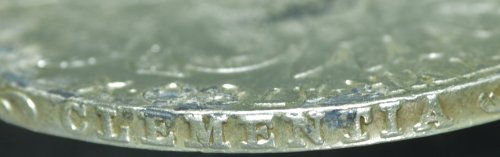
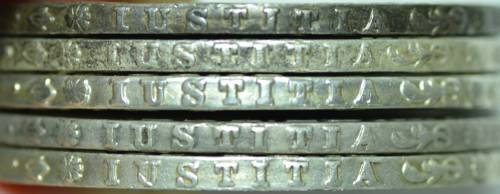
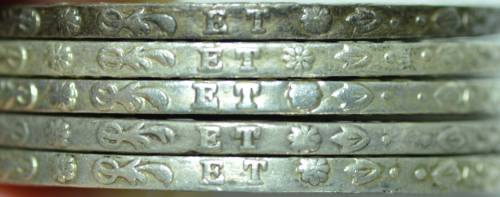
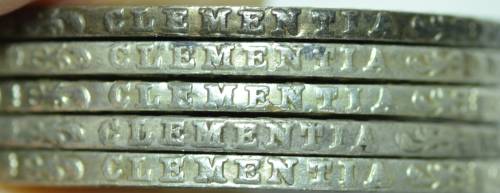
I mean the strange saltire and the opposite orientation of the edge letters. Wonghingi: It is from London mint dies. You need to check the diameter. London had very high production standards their MTT were always 39.5 mm. The indian mint coins are usually 40-41mm. As for edge orientation. for 90-97% of the last 200 + years oof MTT production. The edges have been struck first most often falling directly into a bag before the faces of the coin are struck. accordingly you can find various edge orientations. The only exception to this would be in the early part of the 20th century when the Vienna mint struck the edge and faces concurrently...however no one has identified which variety that coin is |
|
Pillar of the Community
Hong Kong
1270 Posts |
Quote:
As for edge orientation. for 90-97% of the last 200 + years oof MTT production. The edges have been struck first most often falling directly into a bag before the faces of the coin are struck. accordingly you can find various edge orientations. Up to now, I don't agree with you in that point, austrokiwi. I check all my modern categorized MTTs that are in duplicate, triplicate or more and find the edge orientation shows good consistency. If the Mint did what you said "the dges have been struck...", we should easily find two coins from the same time frame, same mint but of different edge orientation easily. This is not found in my collections. I show the data below: H49 x 2 (same edge orientation) H54 x 2 (ditto) H58 x 4 (ditto) H68 x 3 (ditto) London/Indian x 8 (edge orientation differs for the reason the 8 coins actually include London and Bombay or Calcutta specimens, it is believed that the differnt mints had their own edge orientation practice) Who can show two exactly the same MTTs (same mint, same time and of course same Hafner number) but with differnt edge orientations here, my above assumption invalid. On the other hand, I am doing a small research to find a real, unanimous London mint strike (H63) specimen. Characteristics of London strikes: 1) 1-2-1 tail feather formation (unanimously) 2) better edge execution for the letters and arabesques and rosette, it might be accounted by the better minting technique of The Royal Mint3) number of dots within the eagle's (left) beak is 13 for London/Indian strikes, all other mints are from 11-12 dots contemporarily. Pictures are shown below. H49(Vienna) - 12 dots in the eagle's beak 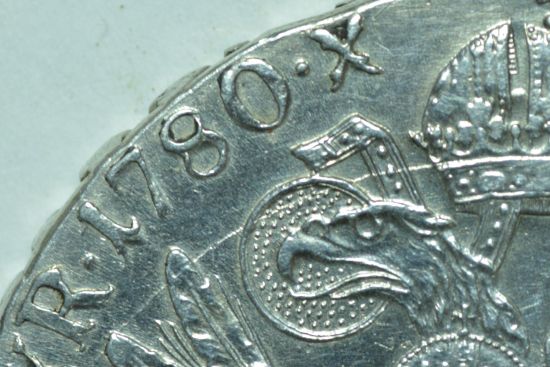  H54(Vienna) - 12 dots 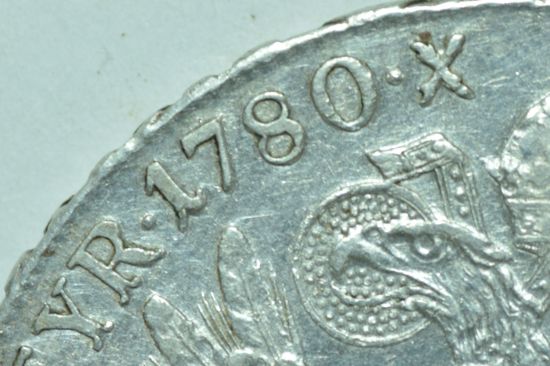  H58(Vienna) - 11 dots 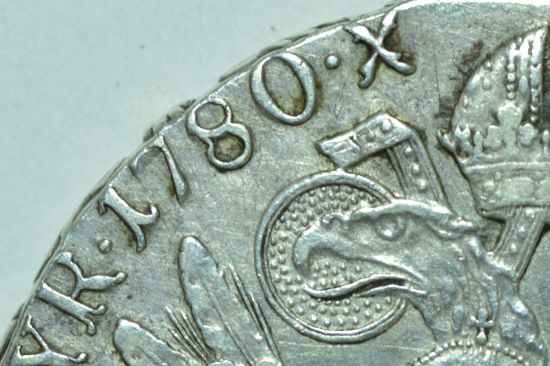  H68(Brussel) - 11 dots 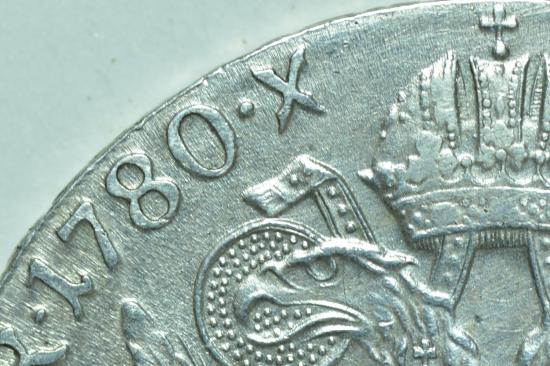  London/Indian strike - 13 dots 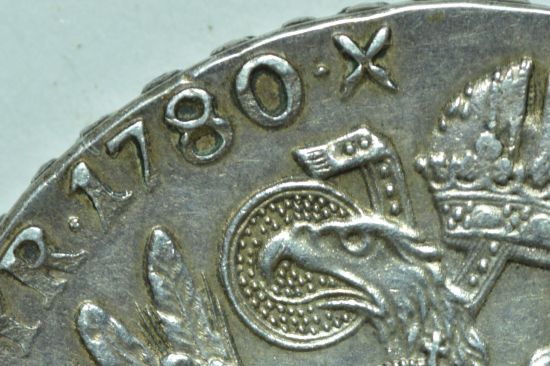 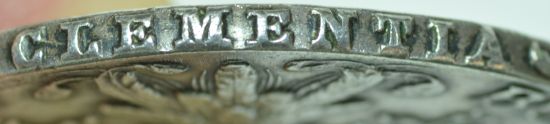 Another London/Indian strike - 13 dots 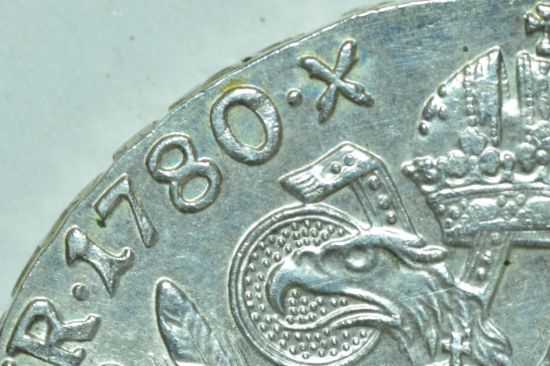 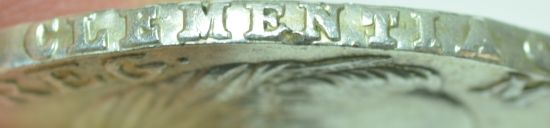 See also the two different type of London/Indian strikes have different edge orientation so they might be from different Mints. In the next post, I would try to identify a real London strike from other Indian strikes. |
|
Pillar of the Community
2087 Posts |
From my collection
Of 8 london-mint-
die struck coins
Likely Indian mint: were 4 of those two edges were oriented to the obverse, the rest to the reverse. Of the likely London strikes 3 were oriented to the reverse and one to the Obverse.
Of 5 Paris mint ( 1st variety) 1 is oriented to the obverse the other four to the reverse.
Of five Brussels mint 1 oriented to the obverse..the remainder to the reverse. I only have one confirmed Birmingham coin it is oriented to the reverse
|
|
Pillar of the Community
Hong Kong
1270 Posts |
|
|
Pillar of the Community
2087 Posts |
I must get a copy of that 61 mint report I guess it covers the agreement not to strike the MTT again. on the edge orientation I had the same discussion a few years ago on another forum.
|
| |
Replies: 416 / Views: 99,925 |







 First Page
 Previous Page


 Posted 09/12/2013 11:51 pm