| Author |
 Replies: 416 / Views: 99,899 Replies: 416 / Views: 99,899 |
|
|
|
Pillar of the Community
2087 Posts |
That is certainly an MTT from Brussels mint dies. Could you kindly add a Photo of the Edge iron meeting point after "Clementia" ( you have the photo of the join point after "ET") Just to see if it was struck in Birmingham
|
|
Pillar of the Community
Hong Kong
1270 Posts |
Austrokiwi, here the additional picture:  Do you mean both Brussel and Birmingham used the same die but the edge meeting point of Birmingham strike has only one point there? There is another question. I find Bombay, Calcutta and Birmingham type of MTT are difficult to find and distinguish. Do you have some hints for these three mints' MTT? |
|
Pillar of the Community
2087 Posts |
Hi Henry. Thats exactly what I mean The photo shows yours to have been struck in Brussels.....for others: London mint MTT pre wwII were sold through a "pool" headed by Johnson and Matthey. The main reason for this was to simplify distribution. The pool was made up of Johnson and Matthey,C.S. Collier & Co ( company of the ex-govenor of the Bank of Ethiopia), Mocatta and Goldsmid, Samuel Montagu and Co, Pixley & Abell, Sharps and Wilkins and N.M Rothschild & sons. The Royal Mint was not geared to supplying a Trade dollar hence the pool... often members of the pool would be frustrated as Imperial coinage would take priority and the members of the pool couldn't get MTT as fast as they wanted. C.S collier actually started negotiations with Birmingham mint in 1935/36 but Johnson and Matthey with some prompting from The Royal Mint talked him out of it. Johnson and Matthey also became disgruntled and later asked if they could purchase MTT dies so they could have the coins struck elsewhere..the Royal Mint refused. Samuel Montagu and Co spoke to the Brussels mint and they agreed to cut the dies and produce the coin. So Pre war Samuel Montagu and co purchased from both the LOndon mint and Brussels. Brussels stopped production once it was "annexed" by Germany. After the war Brussels resumed striking the MTT for Samuel montagu & co ( who still kept on Purchasing from the London mint) The Brussles mint dies were actually owned by Samuel Montagu & co. In 1949 Samuel Montagu & Co trasferred a set of dies and edge irons to Birmingham Birminham mint adapted the edging machine so the only identifiable difference is on the edge of the coins. The picture has two dots at the edge Iron meeting points ( Indicating a Brussels mint strike) A Birmingham mint strike ( very hard to find) has only one dot. Samuel Montagu & Co Continued Obtaining coins from , Brussels, Birmingham and London up until 1957. I think I have covered identifying the Birmingham strike: UNfortunately so far I have discovered no way of identifying Bombay from Calcutta. Hafner is no help as he based his report of the coin on An article by Stokes....who identified the two based on a semi proof Bombay trial strike held at the Royal mints Historical services( which has since gone missing. The trial stike showed many faults and technicians were sent to Bombay to sort the problems out. The final MTT is likely very different to the trial strike. The only known identifiers are those mentioned in my article and those don't include any way of distinguishing between the two Indian Mints. Edited by austrokiwi
04/26/2013 01:25 am
|
|
Pillar of the Community
2087 Posts |
The coin that started my MTT re-strike obsession. I can can attribute my focus on MTTs to my first substantial purchase (€1800 plus tax and BP) I have only seen this variety come up for sale once and I jumped at the coin. Its Hafner 5. Hafners book suggests the coin is a simple error coin ( With Mint signature "F.S." instead of the standard S.F.). However once I had the coin in my hands ( It was sold in a floor auction) I wanted to do some research and starting that research then I realized Hafner's attribution was questionable. Hafner attributed the coin( based on Dr Leypold) to 1815 Venice. the coin looks like a Venice strike and even the edge markings look like a Italian mint strike. However with a bit of reading I realized that Venice 1815 didn't make sense. The first problem is Milan resumed striking MTTs (previously they had produced the Vienna mint type) in 1815 and Venice under the Habsburgs started MTT production in 1817. The second Problem ignoring the actual design the style of the coin is very much 18th century rather than early 19th century. An English expert had identified this coin as being from Guenzburg and reported that it was struck in the third Quarter of 1793. Researching Old Austrian Numismatic texts ( from the 1890s) I found the same report. Without going into all the detail I am now very confident the coin is indeed a 1793 strike... it is not a simple error coin the "F" stands for Faby and the "S" for Stehr. What happened is when Guenzburg cut new dies in 1793 they followed SOPs and changed the mint signature to match the current Mint Master and Mint Warden...Unfortunately this was in breach of the Directives regarding the striking of MTT and Vienna mint ordered the coins and dies destroyed. In 1984 only 7 were known to exist some suggest now that the population now stands at 10. 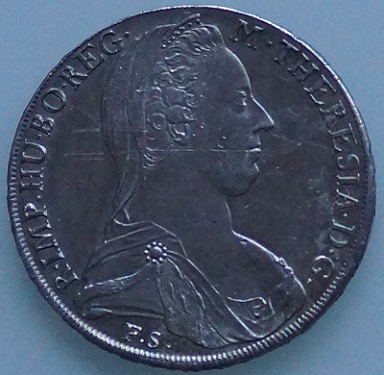 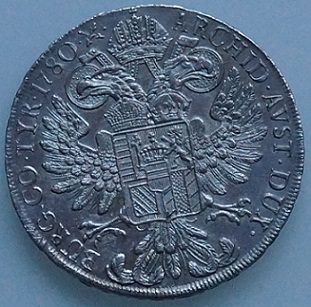 I think the price I paid was a steal... I have never seen another example for sale Edited by austrokiwi
04/26/2013 06:49 am
|
|
Pillar of the Community
Hong Kong
1270 Posts |
Interesting MTT, thank you for sharing.
|
|
Pillar of the Community
Hong Kong
1270 Posts |
Hello members, there are two modern MTTs in my collection that I can't make out they were struck in the same mint as two varieties or they came from different mints. I am sure one of the two must be from London mint, but I can't tell the other one. I am looking for your input to these two coins. Coin A : 40.5-40.6 mm in diameter, length of "CLEMENTIA" IS 21.5 mm, "IUSTITIA" 20mm. Coin B : 40.4 mm in diameter, length of "CLEMENTIA" IS 20 mm, "IUSTITIA" 20mm. Here are their pictures: (the left one is "A") 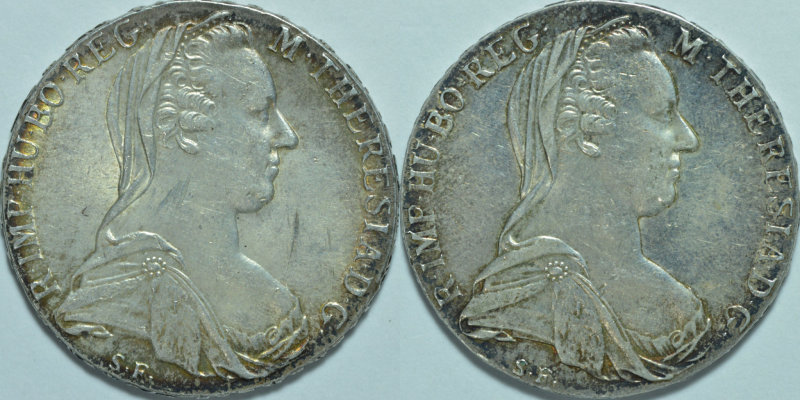 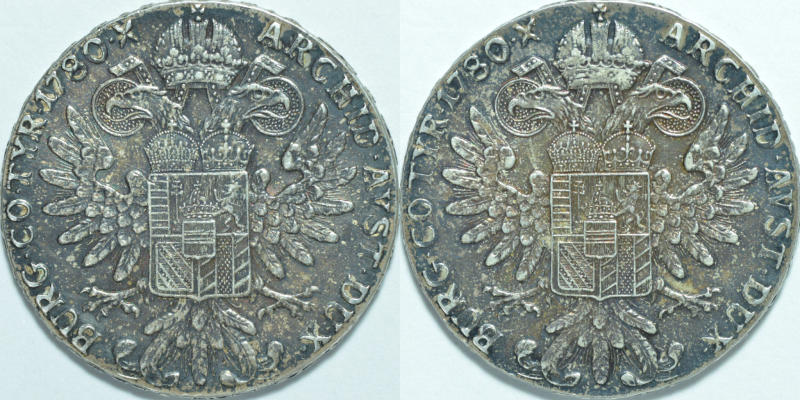 Their edge pictures: (Upper one is "A")       The only difference between the two coins are as follows: ~the appearance of the saltires and the dots around the eagle's head Coin A: 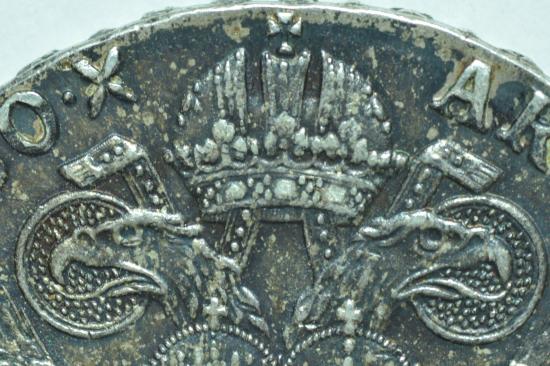 Coin B: 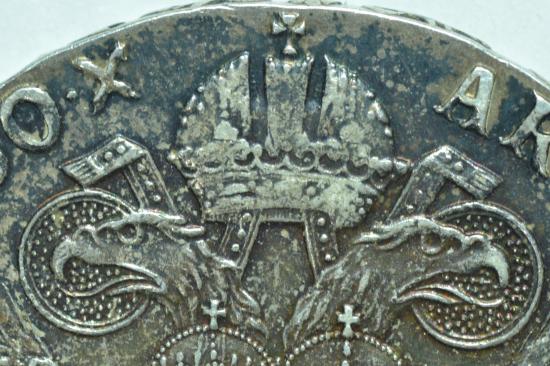 ~the number of spines at the tail region is different (indicated in red circle) Coin A: 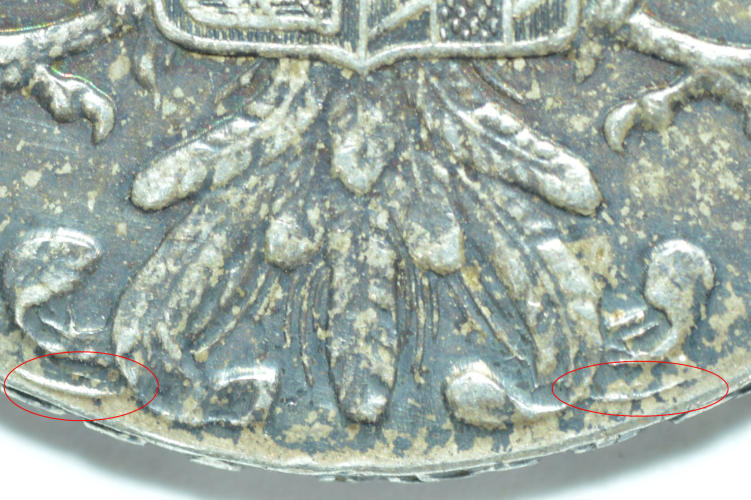 Coin B: 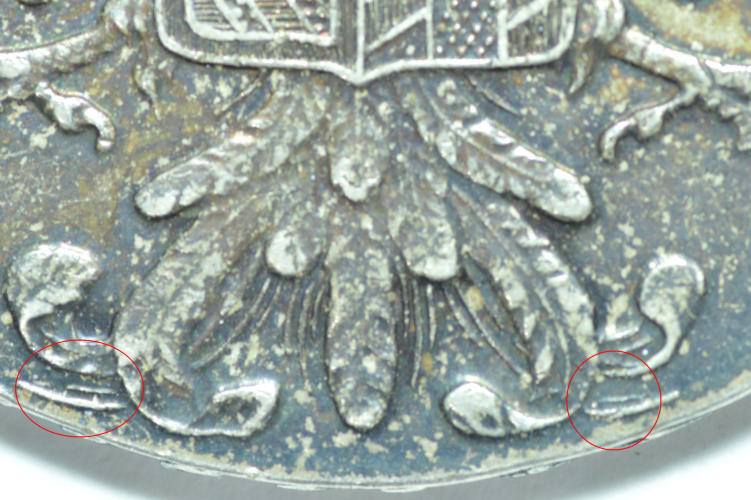 Thank you in advance. P.S. Question to autroskiwi. When do you start to collect MTTS and do you collect over 90% or all of the Hafner's proposed MTTs? Do you know Mr Hafner and is he a German? Thanks, Henry |
|
Pillar of the Community
2087 Posts |
Hi Henry Herr Hafner is Austrian he and I have communicated from time to time by email. His English is not great and my German is worse. The coins you have pictured are from london mint dies. Both show signs of fishing tailing of the letters although B is worse given that both coins are 40mm or larger in diameter then they are most probably minted in India( London mint was always 39.5 mm).....What is interesting is the two coins are different......it is possible one is from Bombay the Calcutta. Unfortunately I have no way of telling which is which.
Edited by austrokiwi
04/27/2013 10:33 am
|
|
Pillar of the Community
Hong Kong
1270 Posts |
Ian, great to here this famous man is your friend. Is he also living in Vienna? I had stayed in Vienna for one day only, it is a very clean, nice and historical place to live. I suppose his work on MTT's research might intrigue you to do a further investigation and have your articles written, don't you? About the coins, do you mean a real London strike would be of the similar appearance of both coins but a smaller diameter? If just so simple, I think it is not difficult to find one in ebay. |
|
Pillar of the Community
2087 Posts |
LOndon mint MTT are very easy to find on ebay. Based on mintage numbers I believe the Indian mint coins( using London dies) may be found more frequently |
|
Pillar of the Community
Hong Kong
1270 Posts |
The following two modern MTTs that I think one of them is H60 (1945/50-60) and the other H61a (196--1986?)but it may also be both of them are H60 or H61a. I feel a bit confused and show here for those interested to make an judgement. Coin A: 40.9-41.2 mm diameter, 28.06 grams Coin B: 40.9-41.5 mm diameter 28.05 grams Coin A at the left-handed side. 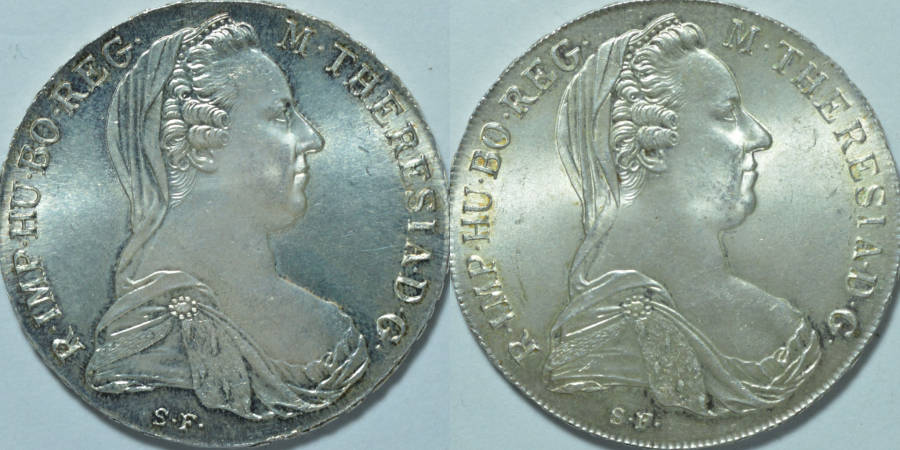 Both coins have long claw, an indication of modern strikes. 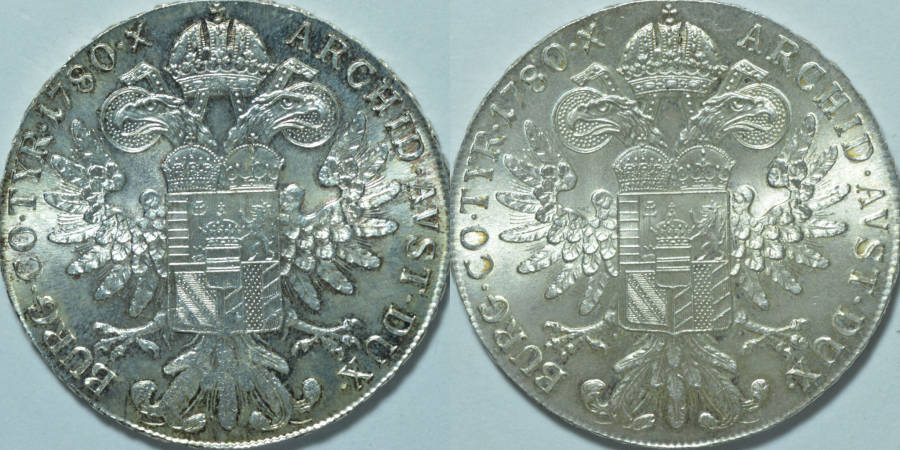 Same saltires: 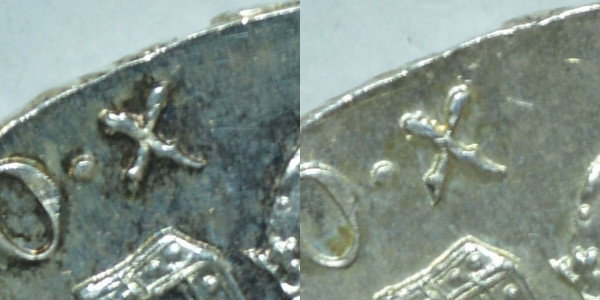 The prominent difference between two coins are the two dots in the centre of the shield, one present, the other absent. 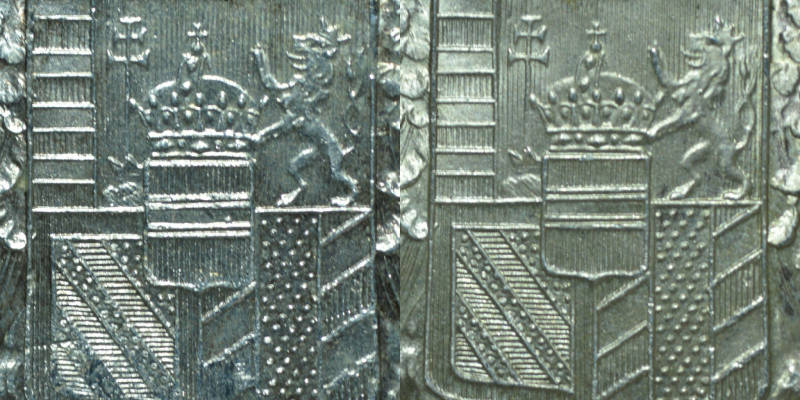 Edges letters and arabesques, one is coarser than the other so this indicates both were struck at different time period? Coin A is the upper one:  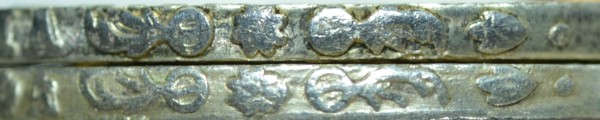 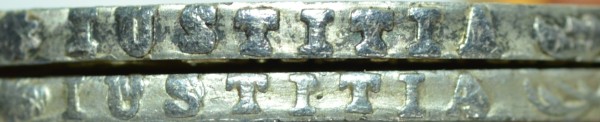 My temporary conclusion: the dots around the eagle head and inside its mouth are finer for coin B (probably due to more advanced minting technique) so I would guess coin B was the latter strike. Coin A is H60 while Bis H61a. Agreed? A question specially to autrokiwi, about the two dots inside the centre shield, should we consider this design as a secret mint mark or it was just the result of a wearing die? |
|
Pillar of the Community
2087 Posts |
On the two coins pictured. the differences might be from die wear or wear on the Plaster/rubber model used to cut the dies. There are so many subtle similarities I would be hard pressed to be able to confidently call them separate varieties. { that said the absence of the two small dots on the second coin does make one think your assessment is correct.}
One of the similarities have a look at your close ups of the satire's specifically the numeral zero that can be seen to me both zeros seem to be very much the same and what differences there are not enough to be confident to say they are different. On the two dots in the center shield. I actually haven't read any documentation that confirms why they are there. I have always assumed they were a means to assist telling genuine Vienna coins from foreign made ( prior to 1935) counterfeits
|
|
Pillar of the Community
Hong Kong
1270 Posts |
Beware to this counterstamp forgery and this seller: http://www.ebay.com/itm/Mozambique-...#ht_25wt_919The host coin is likely to be a modern Vienna strike but the counterstamp is a late 19th Century strike. This morning just 15 minutes before the end of another counterstamp MTT "PM" (Portugal Mozambique), I recognize it is also a wrong host specimen. The counterfeiter is obviously lacking of the knowledge of MTT restrikes history. |
|
Valued Member
United States
329 Posts |
stamped twice and rare as such. Too funny.
|
|
Pillar of the Community
2087 Posts |
Yeah I saw that one too. Many reputable sellers will correctly identify, when selling, that such counter-stamps on MTTs are likely to be spurious, yet that doesn't stop fools from paying, sometimes in excess of €2000.00, large amounts for these travesties. IMHO the people paying for these likely fakes are just collectors as opposed to numismatists. Below is a photograph of the most important "counterstamped" MTT in my collection. I paid a little over US$140.00 for it and some of my fellow MTT collectors thought I was crazy paying so much: 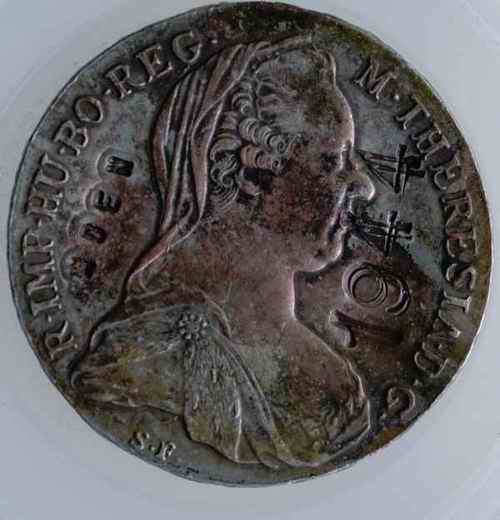 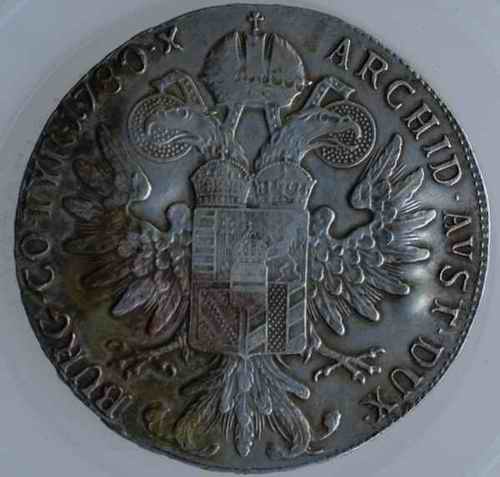 As a small challenge for those interested: Why do I think it is one of the most important in my collection? Note the copper color on the obverse results from heating( most likely with a blowtorch). The coin is genuine. Edited by austrokiwi
05/12/2013 05:49 am
|
|
Valued Member
United States
329 Posts |
Is that h57perhaps marked by an allied soldier during the battle for Italy?
|
| |
Replies: 416 / Views: 99,899 |








 First Page
 Previous Page


 Posted 04/25/2013 10:59 pm


