| Author |
 Replies: 17 / Views: 3,588 Replies: 17 / Views: 3,588 |
|
Valued Member
United Kingdom
287 Posts |
Hi Guys Received a batch of Bronzes today, I was aware 1 looked like it had a serious case of bronze disease. Looking at it closely, I believe it is time to turn off the life support machine, would all agree with this? Also, my main concern is, it looks like it has spread slightly on most of the coins. I cant tell for sure with some if it is a greenish patina or if it is the start of the silent killer? What do you guys think? I am worried about them going in Distilled water together in case it spreads it more? Any advice appreciated Thanks 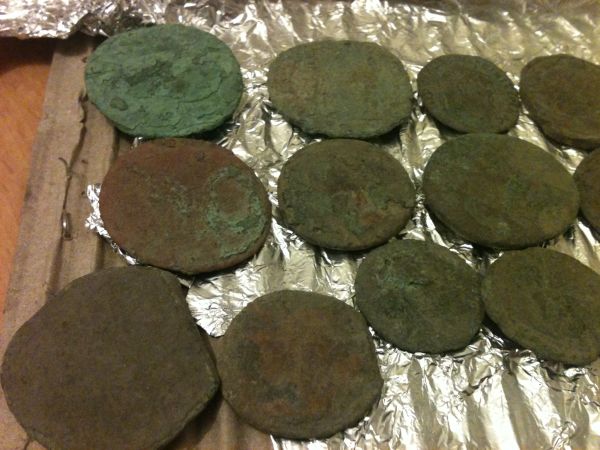 |
|
|
|
Moderator
 United States
23731 Posts |
I wouldn't call it BD, it looks more like corrosion. BD usually leave a Powderly residue when it's active. These coins look like they were buried in damp soil and just corroded away. You might be able to bring out some details if you soak the coins for a time.
|
|
Valued Member
 United Kingdom
287 Posts |
Ah, So I have a chance?
TBH I felt that the top left was too far gone, so I tried experimenting with it a little... or a lot. Acetone and a good scrub, but didn't do nothing positive.
So they are all safe in with each other?
Although you cannot tell by the picture, some have actually got good detail already
So would you recommend business as normal, soak and light brush and see how it goes?
|
|
Valued Member
United Kingdom
287 Posts |
Also, is it dangerous leaving coins in distilled water for too long? what would be the limit, as I am currently trying 'extra patience' with water before moving on to olive oil?
|
|
Moderator
United States
23731 Posts |
I would use one or the other and not both, though it probably wouldn't hurt the coins. I used to clean a lot of coins and I prefer to use olive oil while most here seem to like distilled water.
|
|
Pillar of the Community
United Kingdom
3626 Posts |
Yes, any that you care concerned about keep separate. Once you have got a coin to a standard that you are happy with, consider getting some renaissance wax to preserve them. http://www.ebay.co.uk/itm/RENAISSAN...em1e873ac4e6Make sure they are thoroughly dry first, bake in a hot oven. Once you have used the wax you will be unable to do further cleaning, so do not use it as an interim measure. The British Museum uses it and you can find a lot of information on the internet. It is not as expensive as it looks, a small tub of the stuff will last you for years. |
|
Pillar of the Community
United Kingdom
3626 Posts |
Coins can stay in DW for months, just change it when it gets cloudy. I have never used olive oil, I just think it sounds gunky and it can also change the patina. Oil and water do not mix, use one or the other and if you use oil first, forget DW. Olive oil can have acids in it also. As long as you have somewhere to store your tubs, I would keep several going at the same time. Mine are stacked in the corner of the kitchen. A window sill will do. I spent a lot on DW from ebay as I can't get it locally. Now I use de-ionised water, the sort you can buy from the local garage to top up your car battery. It works fine. |
|
Pillar of the Community
United States
992 Posts |
Quote:
The British Museum uses it Not on coins though. |
|
Pillar of the Community
United Kingdom
3626 Posts |
Quite right Victor. I meant to imply that the British Museum wouldn't use a rubbish product.
|
|
Valued Member
United States
87 Posts |
Hi MIB, From the photo, your bronzes look disease free. I purchased a batch of bronzes a while back, and was disappointed to find that they looked like this- 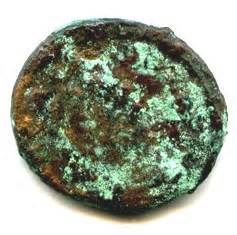 I could tell something had been eating away at the coins from the pitting, and they were covered in a very light green powder. My first experience with bronze disease. They weren't exceptionally valuable coins, so I decided to do some research and see if I could salvage them. I tried soaking the least infected coins in distilled water for months. This eventually got rid of enough cloride ions to halt the sustaining reaction that is bronze disease on most of them. 2 CuCl + H2O = 2 HCl + Cu2O (stage one) 2 HCl + 2 Cu = 2 CuCl + H2 (stage two) The more heavily infected coins I soaked in a solution of sodium sesquicarbonate(soda ash and baking soda)for weeks and then switched them to a distilled water soak. This treatment can be a double edged sword. Using a solution over 5%, I was able to halt the bronze disease on all the heavily infected coins in the lot, but it also stipped the patina off of them. In my case saving the remainder of the coin was worth losing the remaining patina. |
|
Pillar of the Community
United States
992 Posts |
Quote:
I soaked in a solution of sodium sesquicarbonate...but it also stipped the patina off of them Try using sodium bicarbonate (baking soda) in distilled water, it is less harsh on the patina. Edited by Victor
03/04/2014 5:13 pm
|
|
Pillar of the Community
United Kingdom
4208 Posts |
Firstly, doesn't look like BD and should come free in cleaning. Secondly, yes, there can be issues with leaving coins in DW for too long, mainly tranfering BD from one to the other very slowly over time.
I give all my uncleaned coins a couple of weeks in DW, changing regularly, just incase theres even a bit of BD unseen on there. Then, sometimes ill go to olive oil, but I've started staying with DW because its cleaner and easier. I still put tough coins into long term oil baths.
Also - dont go from olive oil to DW, because you'll have oil residue on the coin and the water wont be able to permeate. And it also goes moudly and nasty in the DW.
|
|
Pillar of the Community
United Kingdom
3626 Posts |
Go to Asda or any of the cheap shops, you can buy lots of little plastic tubs for next to nothing. Always keep your suspected BD coins separate from the others. If you are going to soak a few coins together, check them all over from time to time and remove any that seem to be growing green.
Also, I keep a separate set of "tools" for working on BD coins. It all sounds a bit scary, it isn't really, once you know what you are dealing with, it is common sense.
|
|
Valued Member
United States
53 Posts |
I was curious. As a coin collector, are you better off trying to salvage a BD coin even if it means losing the patina? Can metal cleaners like Flitz and Sea Power Metal Polish stop the BD? Or are you better off sticking to the safer methods (distilled water or oil) in hopes you save coin and patina?
|
|
Pillar of the Community
United Kingdom
4208 Posts |
With BD, you must exercise a blitzkrief attack. Remove it all, without mercy, and remove the patina if necessary (a bad BD attack can undermine the patina). You willbe left with pits through it no matter what you do.
Metal cleaners wont stop BD - in fact, they could contribute to it if they contain chloride ions. The DW treatment leeches out the ions from the metal, and removal of the powder also removes these ions. Theres not really any other wayf or the small time collector - but DW does work and it works on very bad BD. The key thing is to cut your losses and accept that if BD is there, there will be bare metal showing post treatment.
|
|
Valued Member
United States
87 Posts |
Thanks Victor. If I decide to treat any badly diseased coins again I'll experiment with a baking soda solution.
|
| |
Replies: 17 / Views: 3,588 |









 Posted 03/04/2014 2:57 pm


