| Author |
 Replies: 6 / Views: 1,201 Replies: 6 / Views: 1,201 |
|
|
Valued Member
United Kingdom
287 Posts |
Just spent a little bit more than I should have done on these greek uncleaned. Have I got a chance of getting my moneys worth? just spent £2 a piece, got a little carried away :S Assuming this is a lot to pay considering I normally get Romans for 50p! Does anyone recognise the few that have detail showing? Thanks 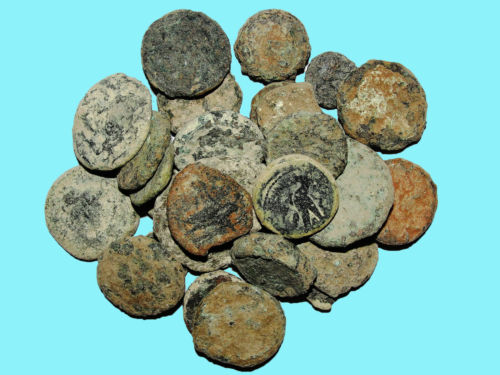 |
|
|
|
Pillar of the Community
United Kingdom
4208 Posts |
I see a ptolemaic Eagle. Greeks do cost £2 each - I've only ever had 10 uncleaned and thats how much they costed me. Mine actually cleaned up surprisingly well - you might have some good stuff under that.
|
|
Valued Member
 United Kingdom
287 Posts |
Thanks Ben, I will let you know how they turn out.
I have 4 coins with BD at the moment, which I have tried experimenting to get rid of it, tried mainly lemon juice and Olive oil. Couple of these are greek, nice horse sticking out, but I cant seem to rescue them, the amount of green goo that comes out of these coins whilst soaking is substancial, but I think its staining them more, unsure if it is actually 'reacting' and causing the green goo rather than fixing it.
Any Ideas whats best to do?
Thanks
|
|
Pillar of the Community
United Kingdom
4208 Posts |
Yep, I most certainly do. First off, quarantine and clean out the vessels they were in or get new ones.
Second, put away the lemon juice, that will only speed it up - bronze disease is, at its heart, an acidic process, caused by Hydrochloric acid formed by Chloride ions on the coin's surface reacting with water (its a bit more complex than that, but this explanation is sufficient to undertsnad whats happening).
Third, remove all the green. Dont hesitate to remove patina, just go at it. Dig down to bare metal. There can be no hint of it left. and make sure the patina isn't undermined - if it is, just keep going until theres no green left.
Fourth, begin distilled water treatments. This ebbs out the chloride ions which propagate and cause BD. Its slow and more green will develop even during treatment - remove it all. I soak the coins for a few days, then remove green, replace the water, rinse everything and repeat. It can take a long time to fix the problem.
Once theres no sign of anything green for a couple of weeks, move the coin to its own distilled water bath and continue the treatment for 2 more weeks, just to be thorough. After that, bake it in the oven to remove moisture and seal in wax - if moisture cant reach the coin, then the few remainig chloride ions wont be able to continue.
It will take patience to fix it, but these things have weathered 2000 years already and theres no reason they cant survive the next 2000.
|
|
Moderator
 United States
23731 Posts |
It's hard to say right now if you overpaid. We are going to have to wait and see once the coins are cleaned.
|
|
Valued Member
United Kingdom
287 Posts |
Thanks VM, I will get to work on them, I should have asked first as I think I have made the problem quite a bit worse.
fingers crossed.
One thing I find amazing, Is how many roman coins survived 2000 years, yet, I see a lot of Victorian dug coins that look nothing but a flat piece of metal.
|
|
Pillar of the Community
United States
5010 Posts |
cleaned coins are always a gamble, it's hard to tell how much of that stuff will come off. I would guess no much, it looks pretty solid. if thins are improving with regular cleaning, that may be a good lot for long term olive oil treatment
|
| |
Replies: 6 / Views: 1,201 |
|










 Posted 03/28/2014 5:13 pm


