| Author |
 Replies: 7 / Views: 15,308 Replies: 7 / Views: 15,308 |
|
|
Valued Member
United Kingdom
183 Posts |
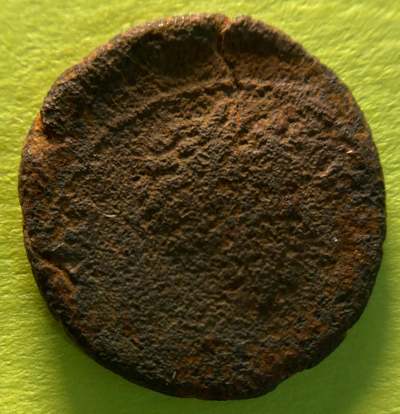
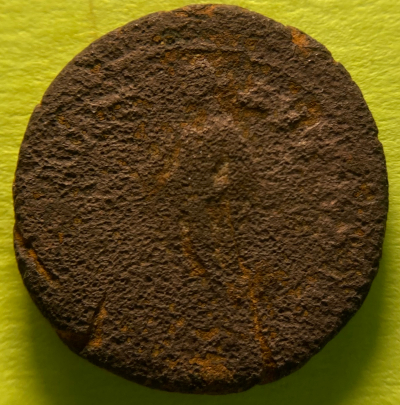
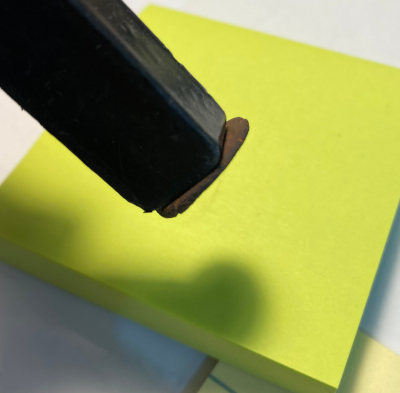
can ancient coins be slightly magnetic? or are magnetic
ones defo fakes?
I thought cheaper ancient coins were either mostly copper or silver?
HH
|
|
|
|
Moderator
 United States
23731 Posts |
Other than some medieval Chinese coins that where made from iron I don't know of any other ancients that could be magnetic.
|
|
Pillar of the Community
United States
993 Posts |
traces of iron are frequently found in Late Roman bronzes, though usually no more than half a percent.
|
|
Moderator
Australia
17012 Posts |
None of them should be sufficiently magnetic that they stick to a common cheap refrigerator magnet.
However, some might stick weakly to one of those super-powerful rare earth magnets. Bronze, brass and debased silver coins could be debased with anything metallic that happened to be lying around, not just copper and tin, and some of those alloys could turn out to be magnetic. Late Romano-Egyptian tetradrachms, in particular, would not surprise me if they stuck to a magnet.
Just for fun, I just now took a rare earth magnet and ran it over my ancients album. Some of the coins that noticeably stuck were:
- Askalon, small bronze of the time of Domitian
- Numidia, large bronze of Juba II (stuck very strongly)
- Indo-Greek, silver drachm of Strato II (I own two of these; one was quite strongly attracted, the other only very, very weakly attracted)
- Roman, sestertius of Commodus
- Roman, follis of Constantine I, Treveri mint
- Roman, half-follis of Constantine I, Alexandria mint
- Roman, follis of Licinius I, Siscia mint (this one in near-Unc with silvering intact)
- Roman, AE3 of Jovian - two of these, from Heraclea and Antioch mints
- Roman, AE2 of Magnus Maximus
- Roman Provincial, AE22 from Viminacium, Gordian III
- Indo-Scythian, large bronze of Azes II (stuck very strongly)
- Sunga Empire, square copper half-karshapana
- China, "wu shu" cash of the period post-AD-186.
I am as confident as I can be that these coins are genuine; none of them have increased their level of dubiousness because of this test.
Note that the only "silver" coins that stuck were Indo-Greeks. This does not surprise me, as it is well documented that copper ores naturally high in nickel were used in ancient Bactria to make debased and base-metal coins look more silvery; a "natural" form of cupronickel, used over a thousand years before nickel was formally discovered.
When testing silver coins, make sure that any "weak magnetism" you might be observing is not simply a side-effect of eddy current braking. A rare earth magnet will not stick to pure silver but will push it around, under some circumstances giving the appearance of "sticking" to a moving magnet. To count, the coin has to actually stick to a stationary magnet.
Don't say "infinitely" when you mean "very"; otherwise, you'll have no word left when you want to talk about something really infinite. - C. S. Lewis
|
|
Bedrock of the Community
Australia
21794 Posts |
The ancient Kingdom of Baktria had some rare issues of copper nickel coins C/- 200BC-150BC.
Copper nickel alloy is not magnetic, but pure nickel IS.
|
|
Pillar of the Community
United Kingdom
4208 Posts |
A lot of late roman coins have sufficient iron content to stick to a powerful magnet. This topic came up before, so I checked all mine, and a surprising number of them were affected.
|
|
Pillar of the Community
United States
993 Posts |
Quote:
and a surprising number of them were affected. It shouldn't be a surprise, as numismatists have known for many years iron could be found in the alloys. Cope started publishing his research on metallurgy over forty years ago. |
|
Valued Member
United States
92 Posts |
|
| |
Replies: 7 / Views: 15,308 |
|




 Posted 08/20/2014 08:31 am