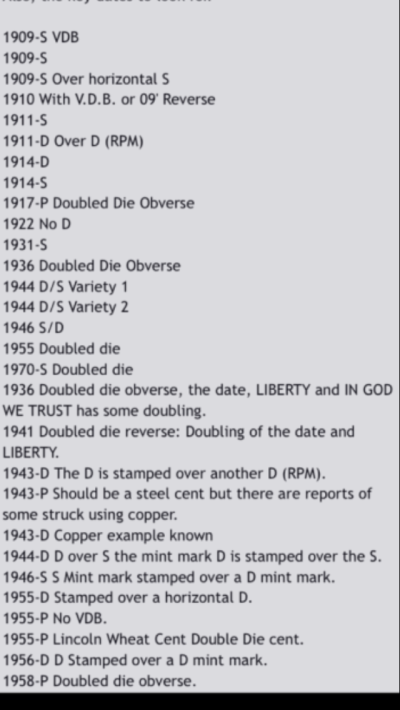
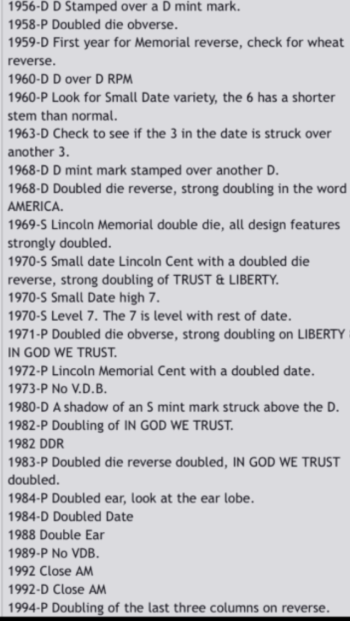
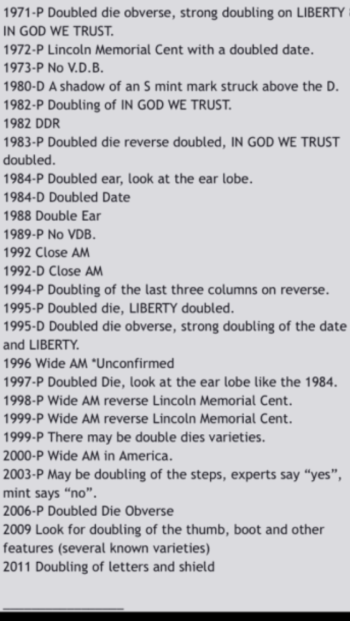
I'm well-educated and a numismatist, but not a well educated numismatist. :)
Anyway, to hopefully answer your question... This is a very broad question with lots of possible answers. I think most of us could write a book about it and honestly, I would if I had time to do it (and publish it and ask 1
Morgan dollar for a copy...) Yes, error coins might be rare and might increase value, but it's not always certain. It depends on how many error coins there are, what kind of error, etc. Some of the things you mention as error, like
Wide AM, aren't actually an error but more of a variety by die design and might be rare because of low mintage with that specific set. Same for VDB cents. Double eared Lincoln cents I would certainly label erroneous, though, just like plate end coins. :)
There is actually a huge glossary over here where you can learn a lot about error minting.
http://www.coincommunity.com/dictionary/ To help you get started with some: a lot of error minting is because of something with the die. Here's a list of numismatic terms
http://www.coincommunity.com/dictio.../coins_d.asp Just look up all the die stuff and think of all that can (and thus will) go wrong. There might be books out there on error coins, but no exhaustive encyclopedia comes to mind.
I think it would be great if you could narrow down your question a bit to maybe some specific currency (and also coin value, era, that kind of thing). As you are American, I'm going to assume that you are most interested in American dollars and cents (would be great if you were totally into, say, Finnish Markka or so, though ;) ). In that case, there are lots of experts out here who can tell you of most of this. One of the things I learned here is that CCF has lots of specialists on specific coins, especially American coins. :)







 Posted 06/08/2016 10:48 pm