| Author |
 Replies: 139 / Views: 52,976 Replies: 139 / Views: 52,976 |
|
|
|
Pillar of the Community
 India
1996 Posts |
Taj ud din Yildiz-1212-14Taj ud din Yildiz became the ruler of Ghazna following the death of Muhammad bin Sam in 1206. When he lost his Kingdom he captured Lahore from Nasir ud din Qubacha. He claimed Delhi also when Iltutmash was ruling Delhi. He issued coins from Lahore between 1212 and 1214. He was defeated by Iltutmash and executed around 1216. 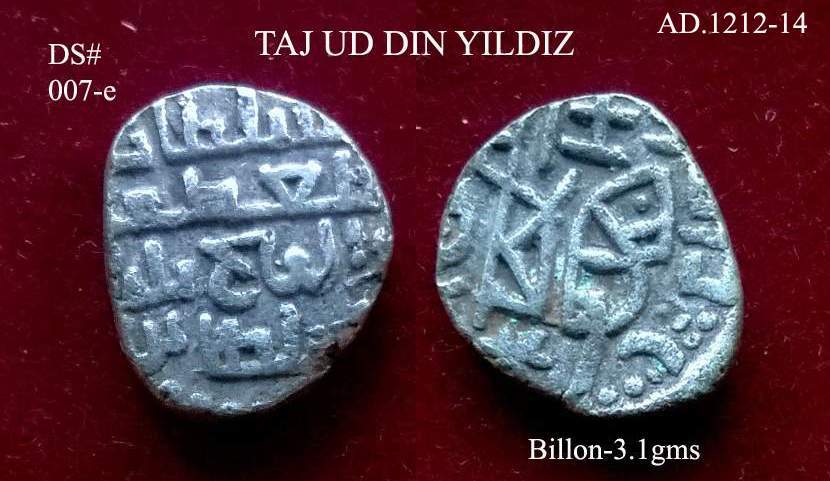 Name of ruler-"Yildiz" on the third line of the legend side. Name of ruler-"Yildiz" on the third line of the legend side.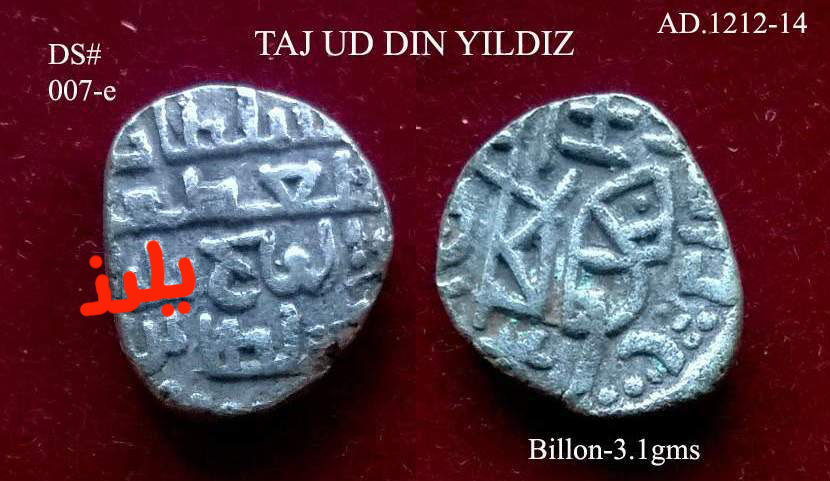
|
|
Pillar of the Community
India
1996 Posts |
Sultana Razia--1236-40 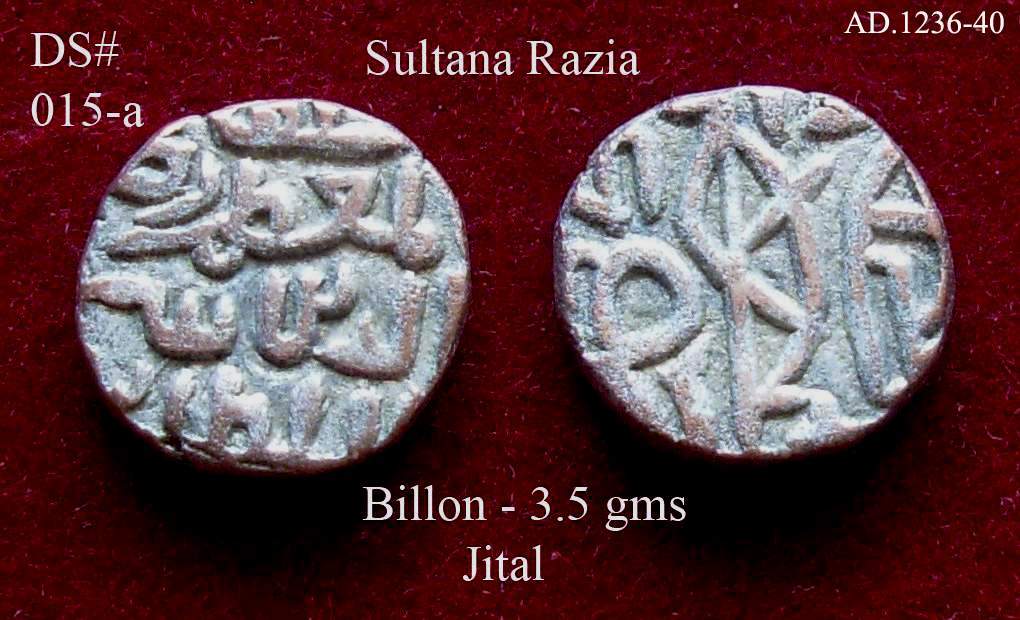 Ruler's name (with title)-"Al mu azam Razia" on the second line of the legend side. Ruler's name (with title)-"Al mu azam Razia" on the second line of the legend side.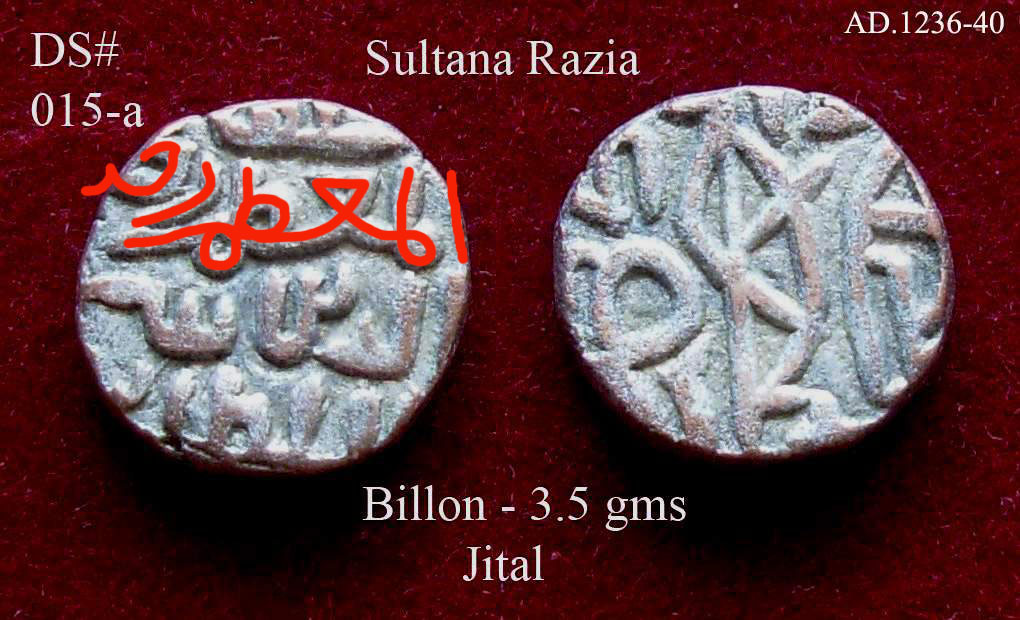 Her issue that was previously posted here retains the bull side and legend replaces horseman. ( http://www.coincommunity.com/forum/...-1236-40.jpg )
|
|
Pillar of the Community
India
1996 Posts |
|
|
Pillar of the Community
India
1996 Posts |
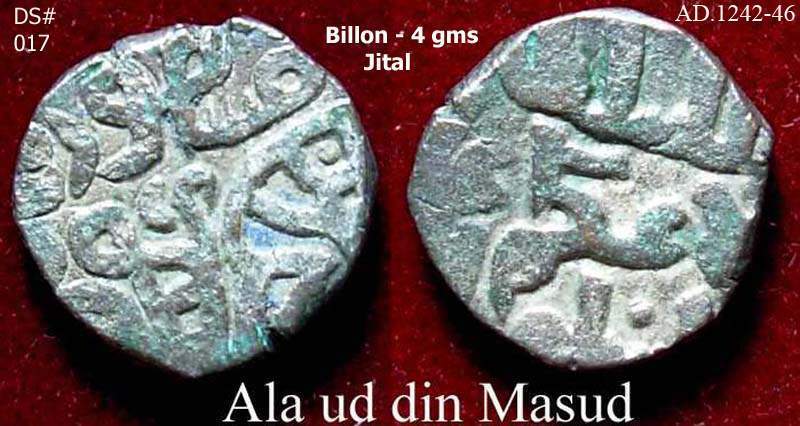
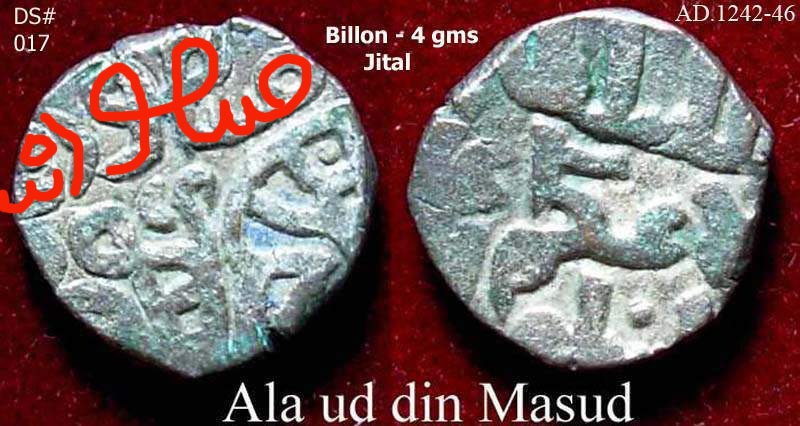
Nasir ud din Mahmud1246-66After Sultana Razia was executed, Delhi became land of political turmoil. Muiz ud din Bahram was followed soon by Ala ud din Masud. He too proved incompetent. That resulted in inviting Nasir ud din Mahmud to rule Delhi. 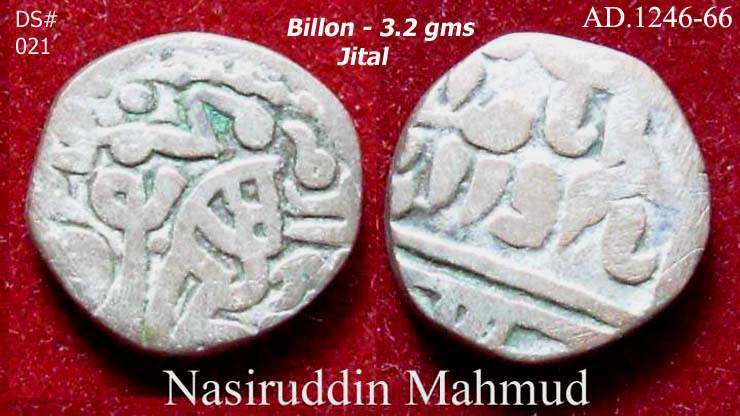 Name of ruler - "Mahmu(d)" above horseman in Persian. Name of ruler - "Mahmu(d)" above horseman in Persian. Nazir ud dunya wa al din is struck on the other side. 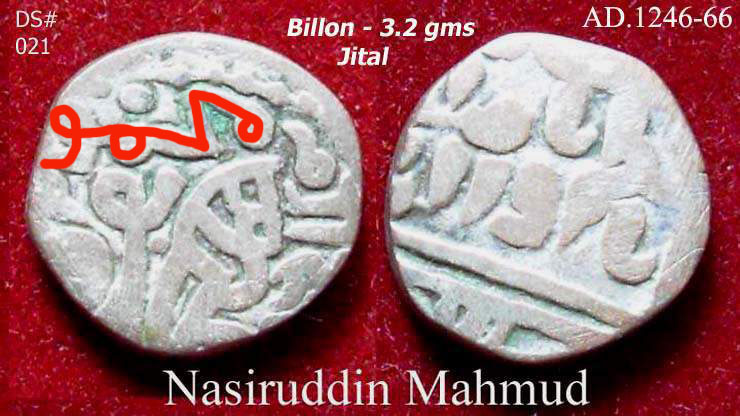
|
|
Pillar of the Community
India
1996 Posts |
Purab Chandra (Purva/Poorvachandra) (~1341-1360) Ruler of Kangra, the land also known as Trigarta, Katoch and Jalandhar. The dynasty or Katoch is said to be the oldest, tracing its roots to BC.4300. But little detail is known about them. Their coins have same monotonous horseman pattern on the reverse. Obverse shows the ruler's name. 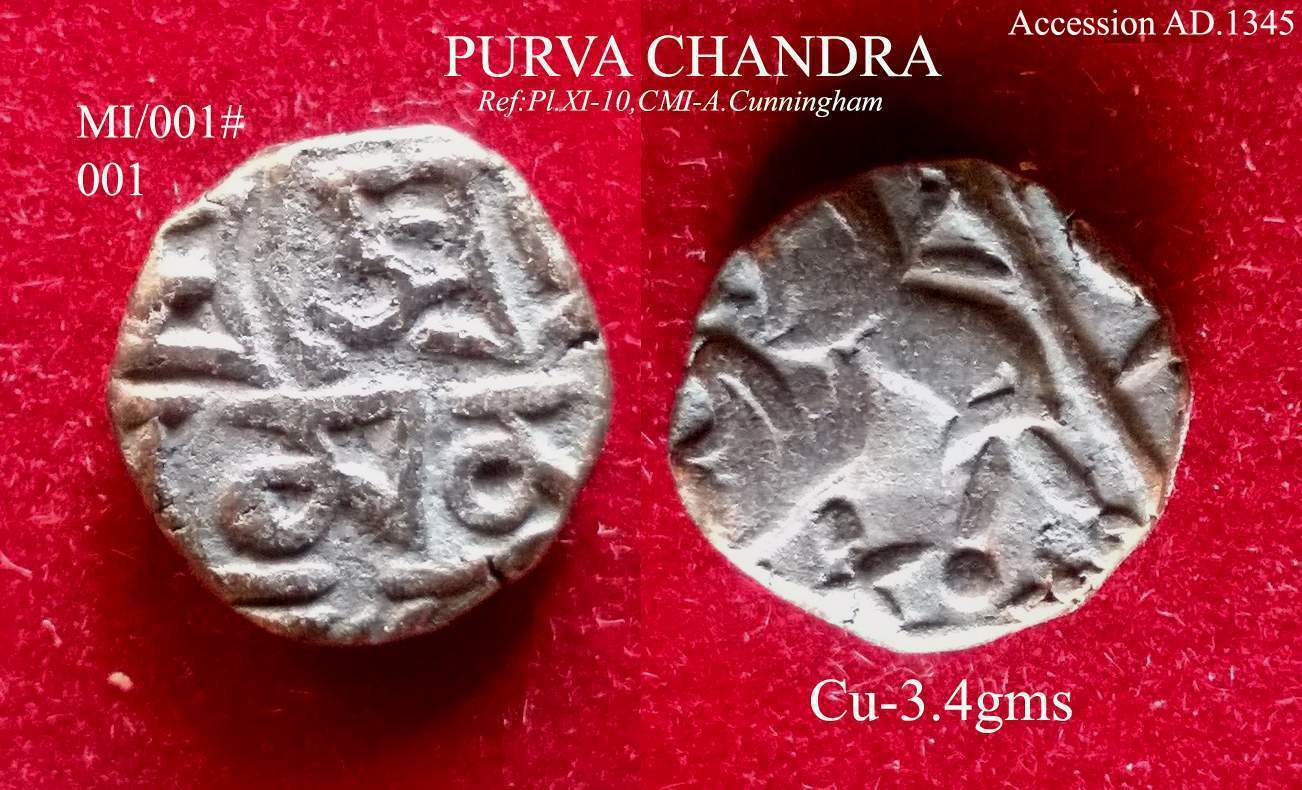 Name of ruler - "A(purvachandra)" Name of ruler - "A(purvachandra)" Purbachandra (Poorvachandra) struck his name on coins as "Apurvachandra" deva. 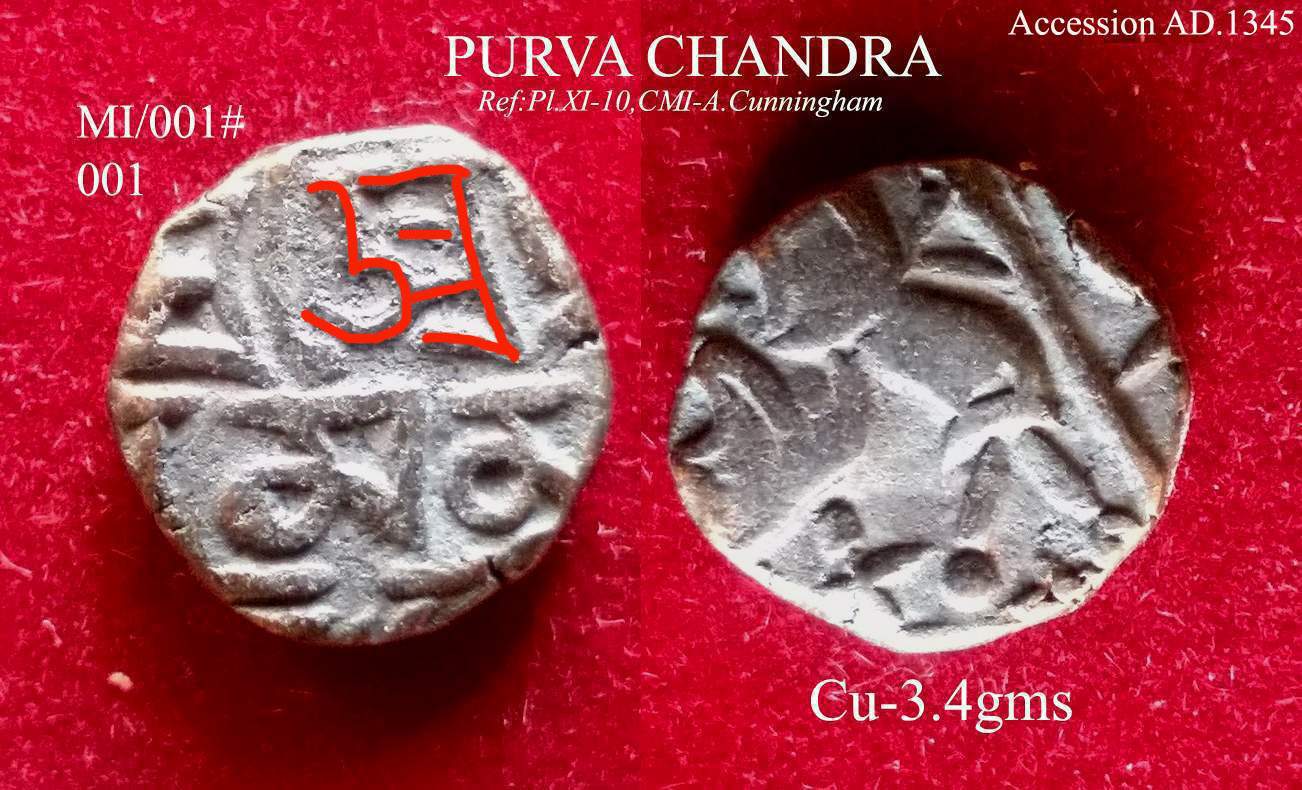
|
|
Pillar of the Community
India
1996 Posts |
Shringar Chandra- ~1375-90454th in the lineage of Katoch rulers of Kangra.He received the title "Miyan"(equal in status to the sultan) from the Delhi ruler Firoz shah. 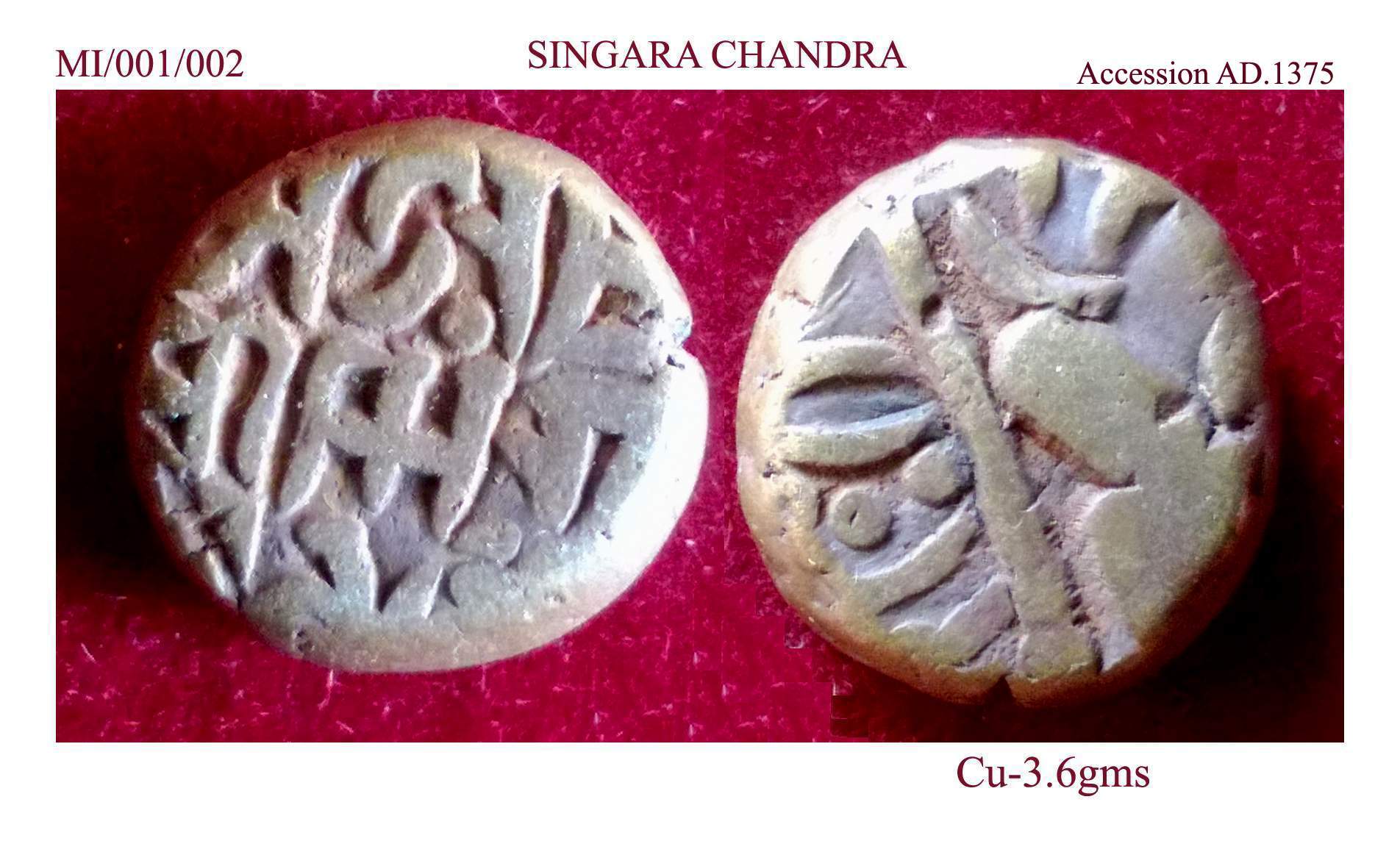 Name of ruler - "Sing(ara)" on the second line of legend side. Name of ruler - "Sing(ara)" on the second line of legend side. (First line is "Maharaja" ruler's name is preceded with "Sri" on the second line). 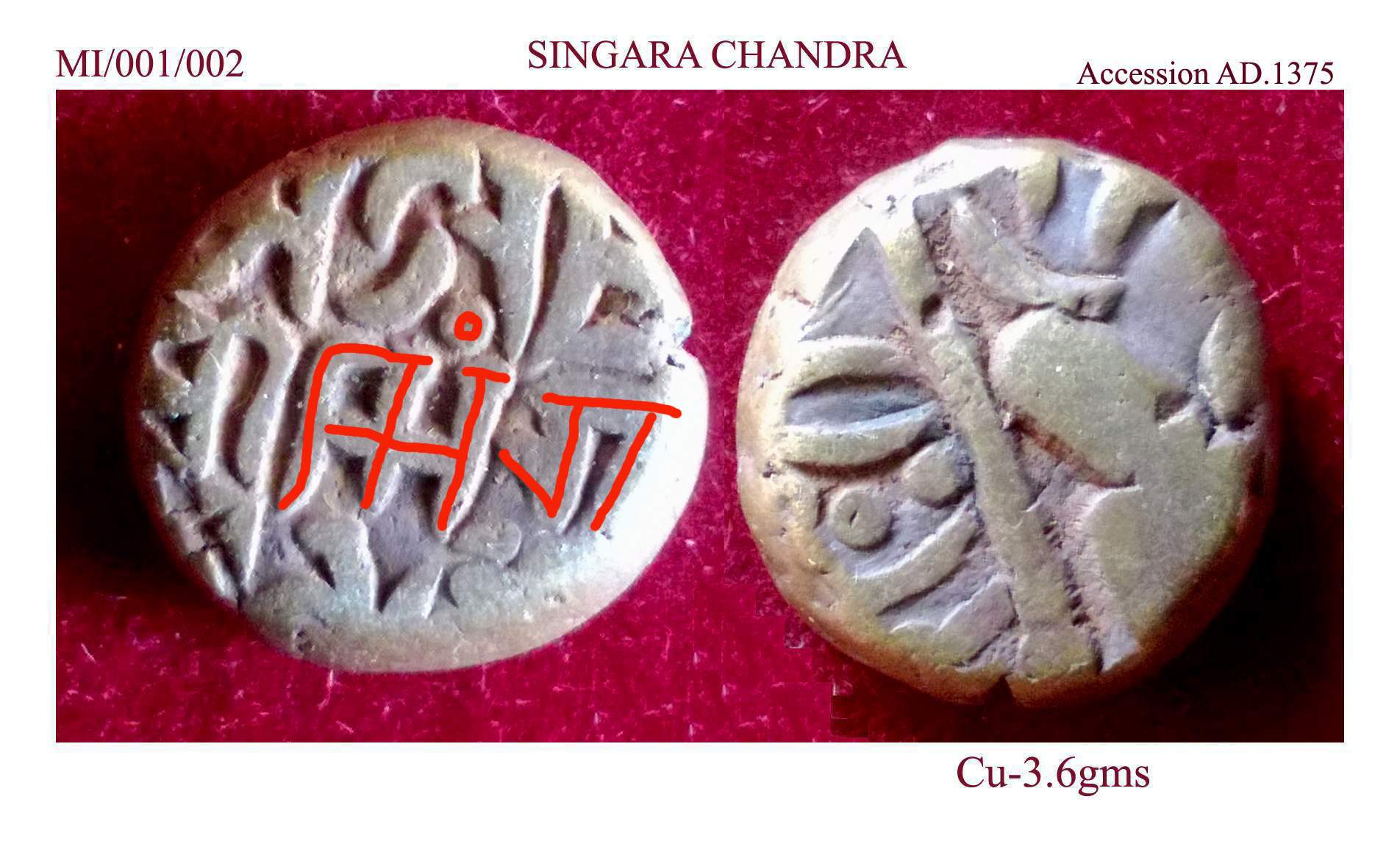
|
|
Pillar of the Community
India
1996 Posts |
Megh Chandra ~1390-1405Son of Singara Chandra and followed him as Kangra ruler. During his reign, he fought with Timur. 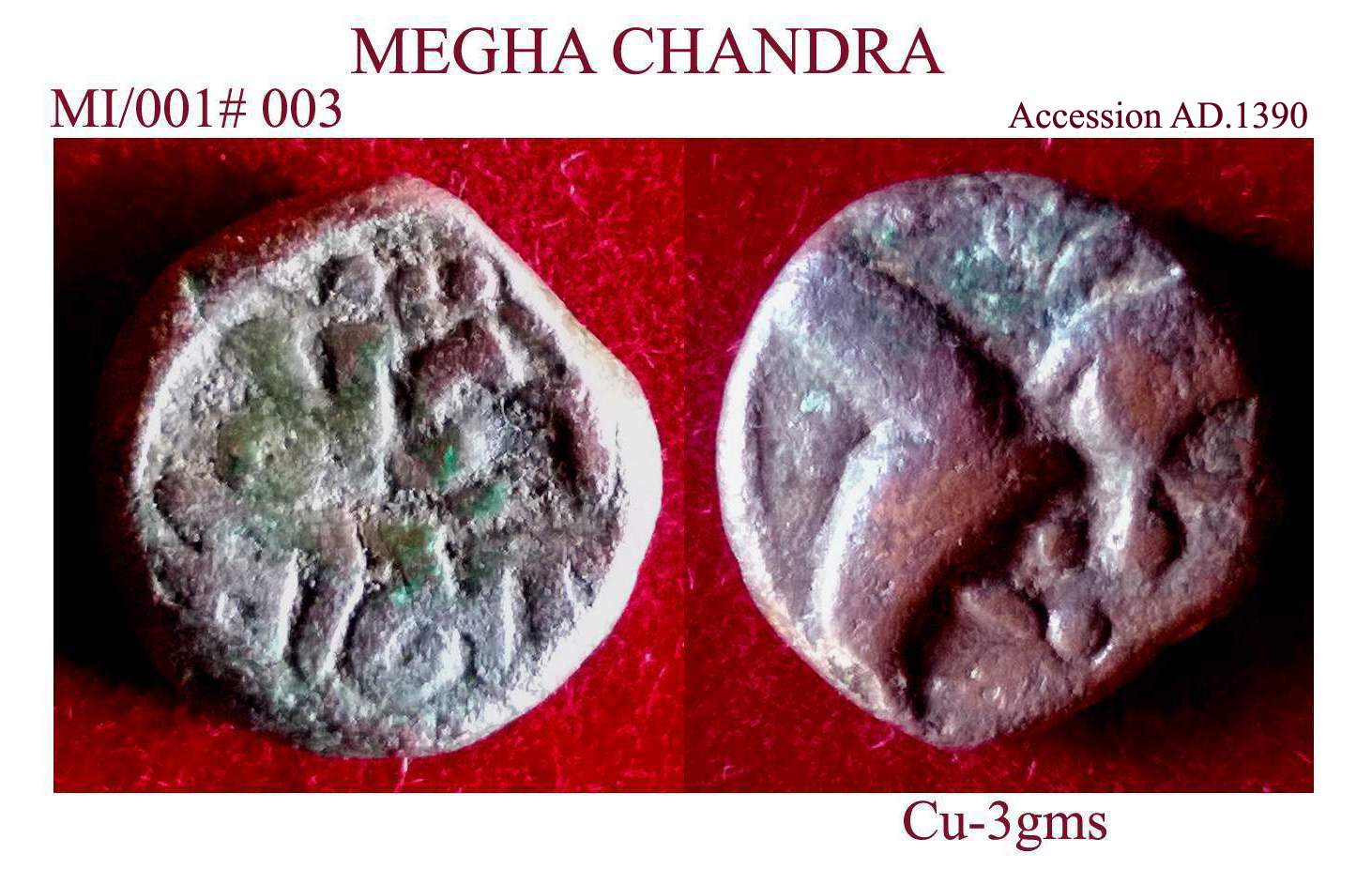 Name of ruler - "Megha" on the middle line on legend side. Name of ruler - "Megha" on the middle line on legend side.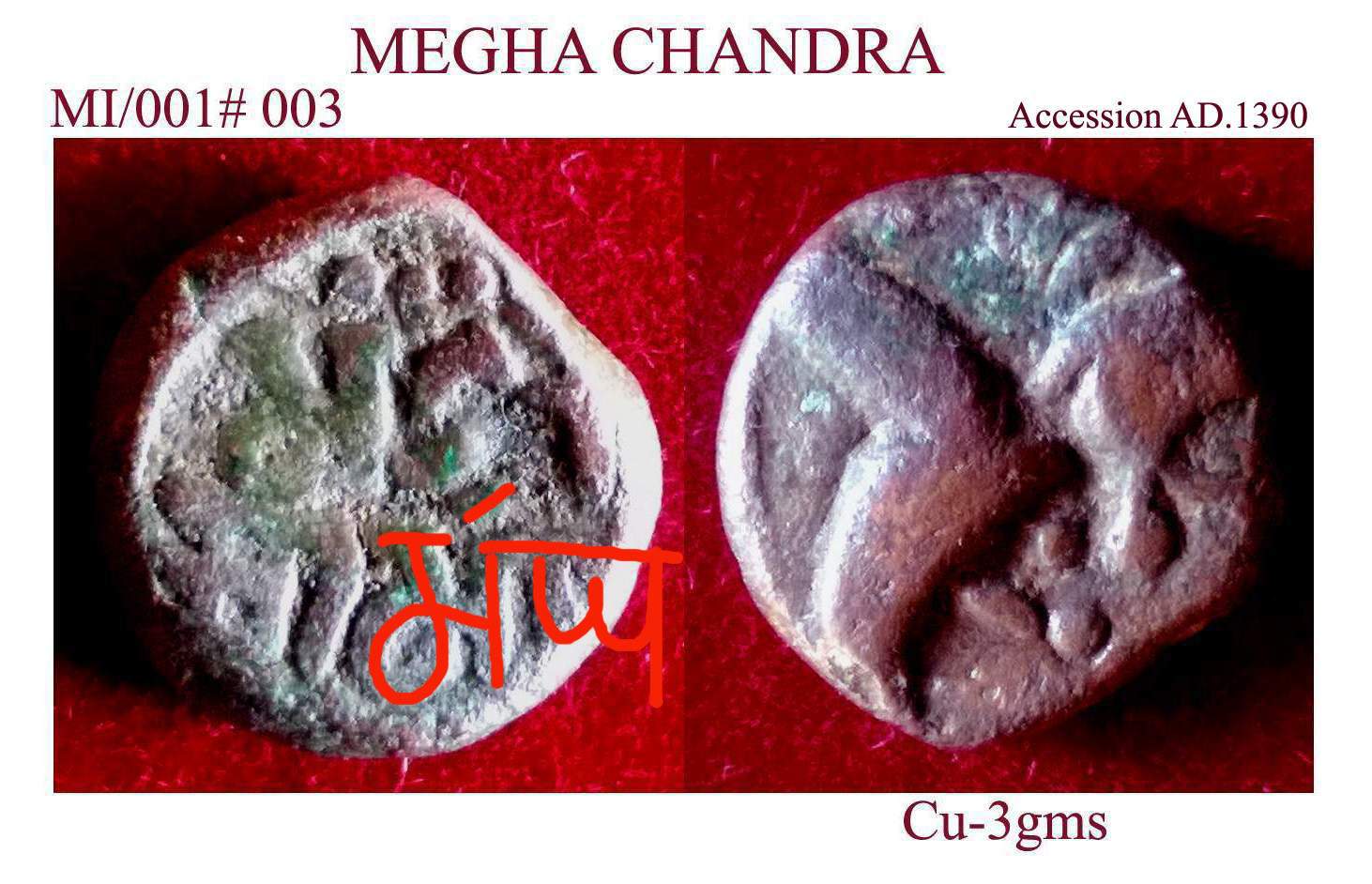
|
|
Pillar of the Community
India
1996 Posts |
Hari Chandra - ~1405-20Son of Megh Chandra. He is said to have established a new principality. There is an interesting story said about this. Once when Harichanra went out on a hunting expedition into the forests, he got separated from his contingent and could not found in spite of earnest efforts. He was considered dead and his younger brother KarmChandra was placed on the throne. But Harichandra was rescued and he got well. But when he got to know what happened in Kangra, he decided not to return to the capital and founded another city Haripur and started ruling the adjacent areas of Guler. This was with consent of his brother. This could be a story, but Guler is given precedence in ceremonial functions of the state.Strangely it is seen that the rulers of Kangra have mostly ruled for a span of fifteen years consistently one after another. It is possible that this could have been due to some Royal familial custom. 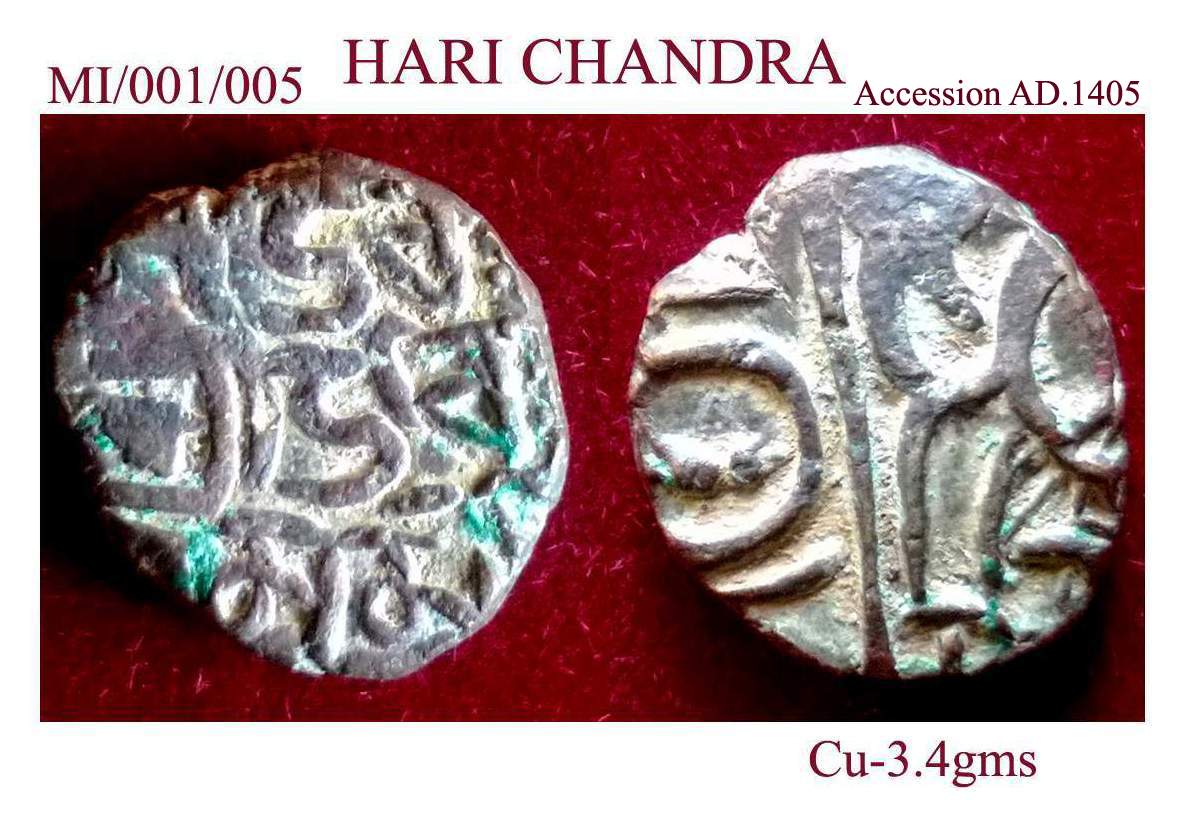 Name of ruler - "Hari" on the second line of the legend side. Name of ruler - "Hari" on the second line of the legend side.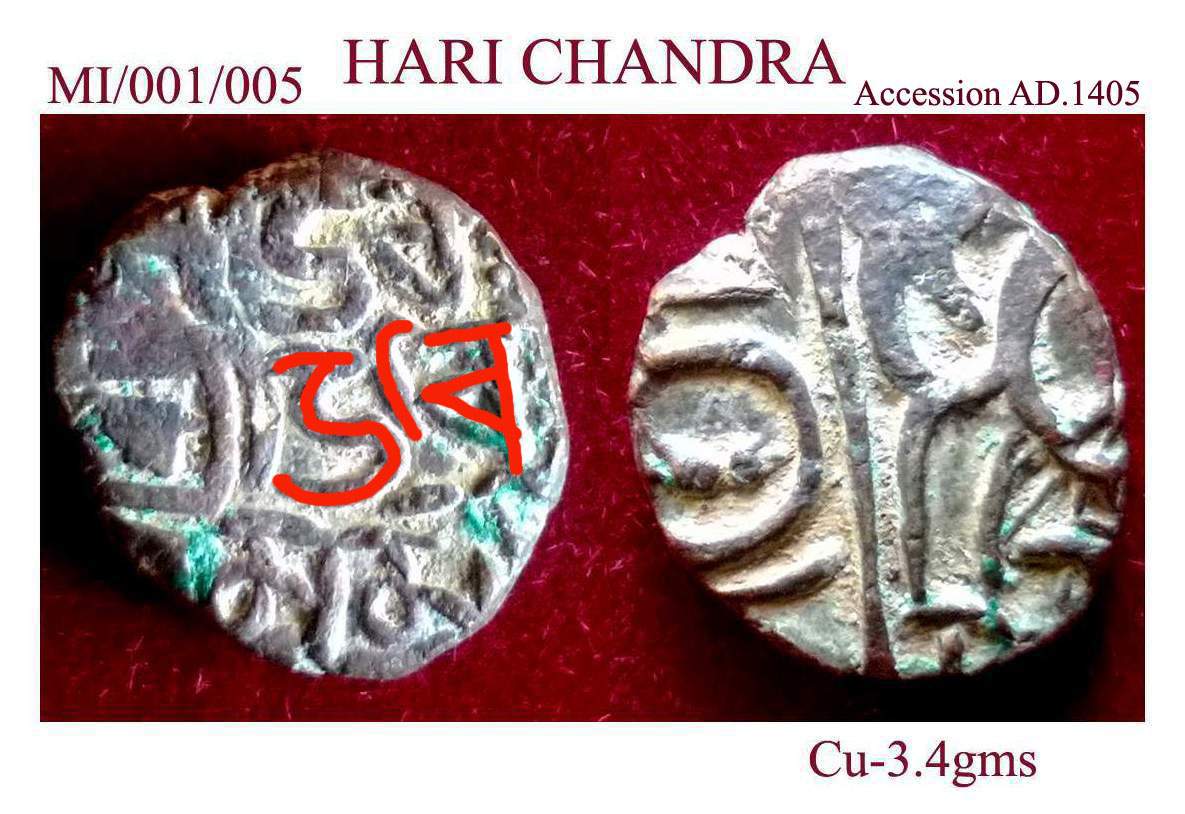
|
|
Pillar of the Community
India
1996 Posts |
Devangga Chandra - ~1450-65Kangra ruler and son of Sansar Chandra. His period is considered a peaceful one. His issues bear his name as "avatar chandra". 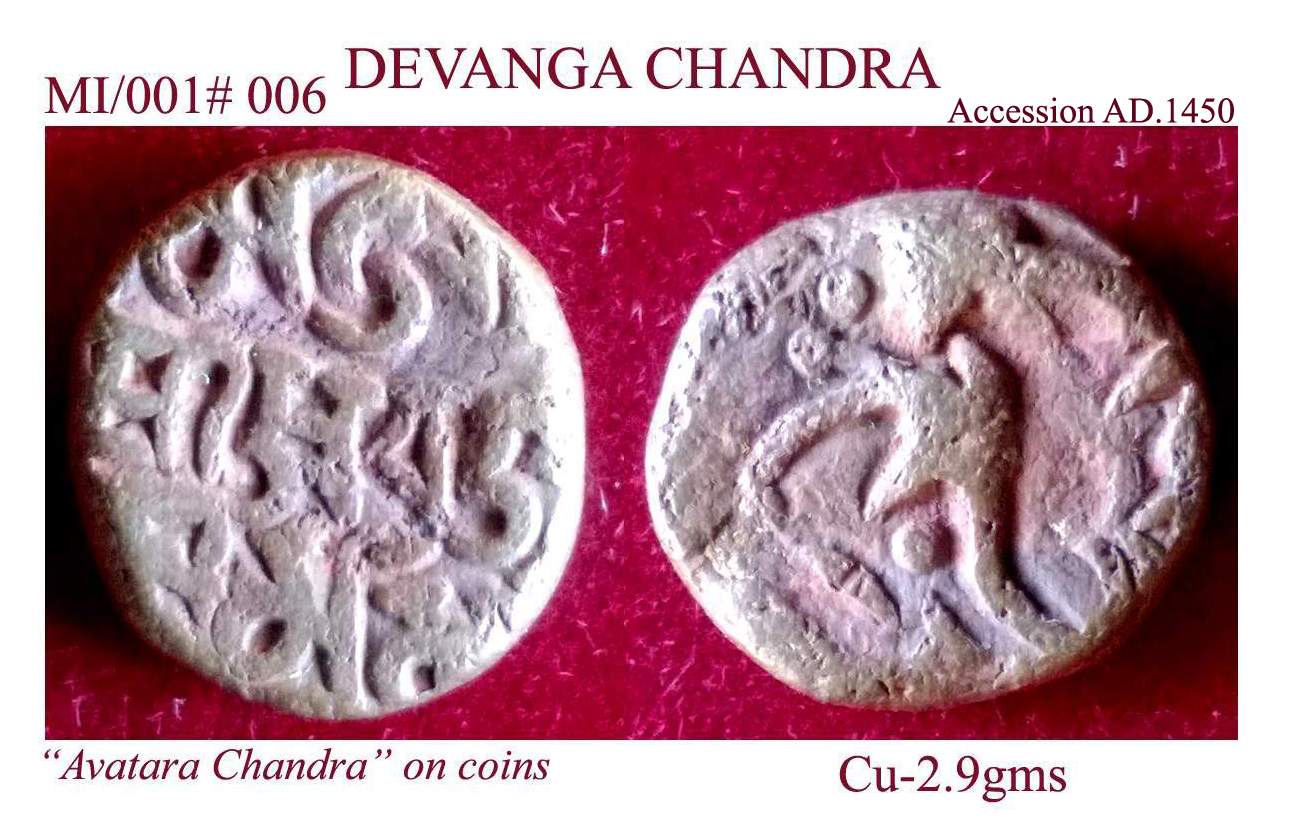 Name of ruler - "Avat(ara chandra)" on the second line of legend side. Name of ruler - "Avat(ara chandra)" on the second line of legend side.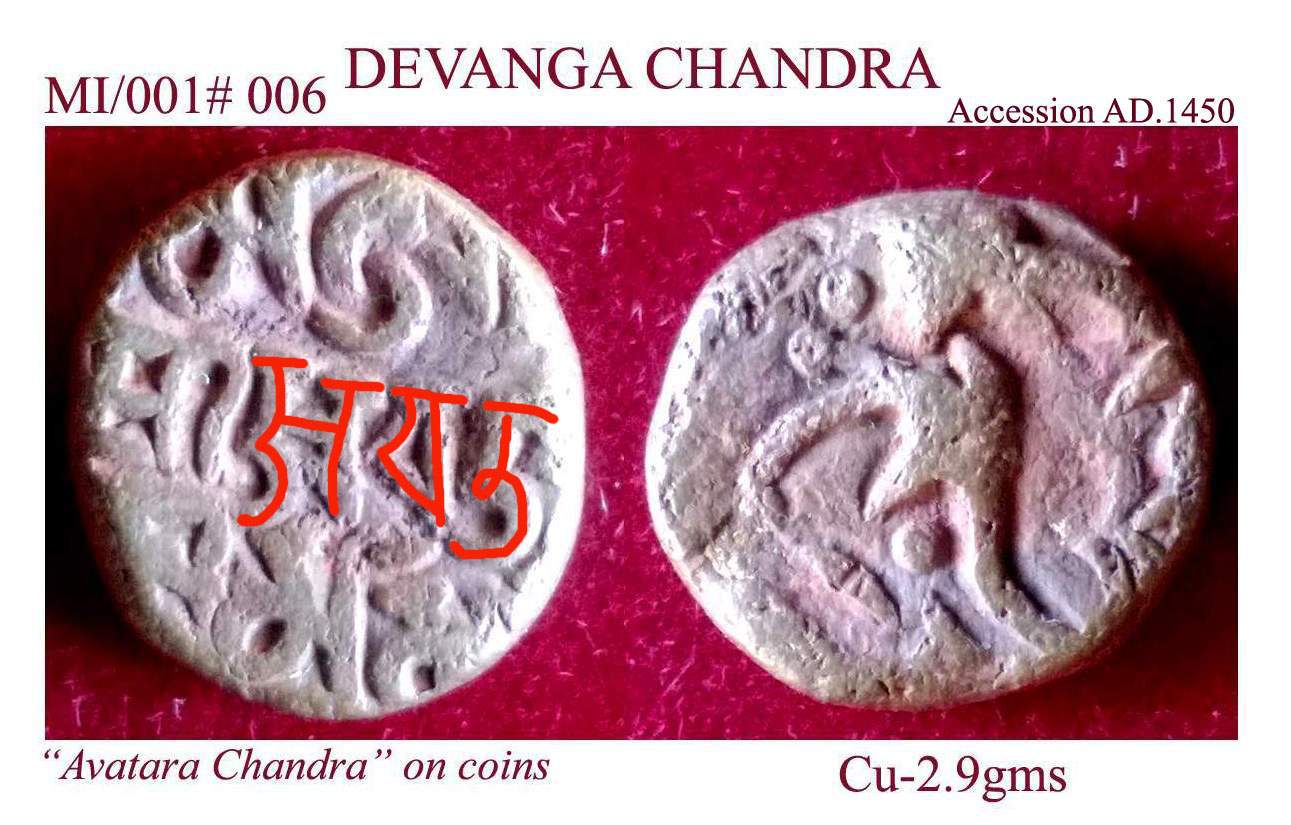
|
|
Pillar of the Community
India
1996 Posts |
Trilok Chandra - ~1610-15Before Trilok Chandra became Maharaja, local coinage of Kangra had been replaced by the Mughal issues of Akbar. In just a few years he revived the use of local coinage under his own name. This infuriated Jahangir who decided to invade Kangra. He summoned all the hill rajas to Delhi where he planned to arrest Trilok Chandra, but Trilok fled. He was chased and in the attempt to defend, he was killed in A.D. 1615. 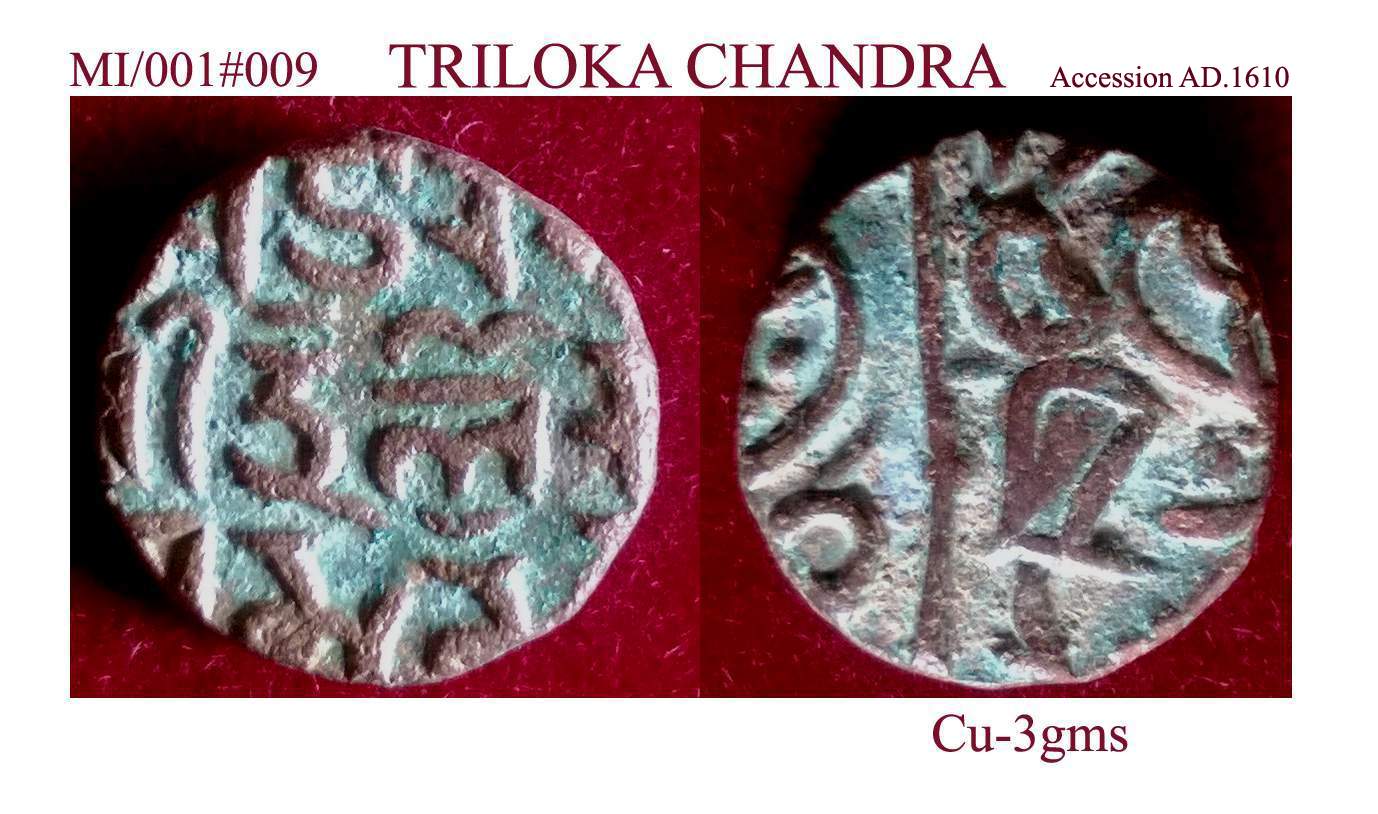 Name of ruler - "Trilok" on the second line of legend side. Name of ruler - "Trilok" on the second line of legend side.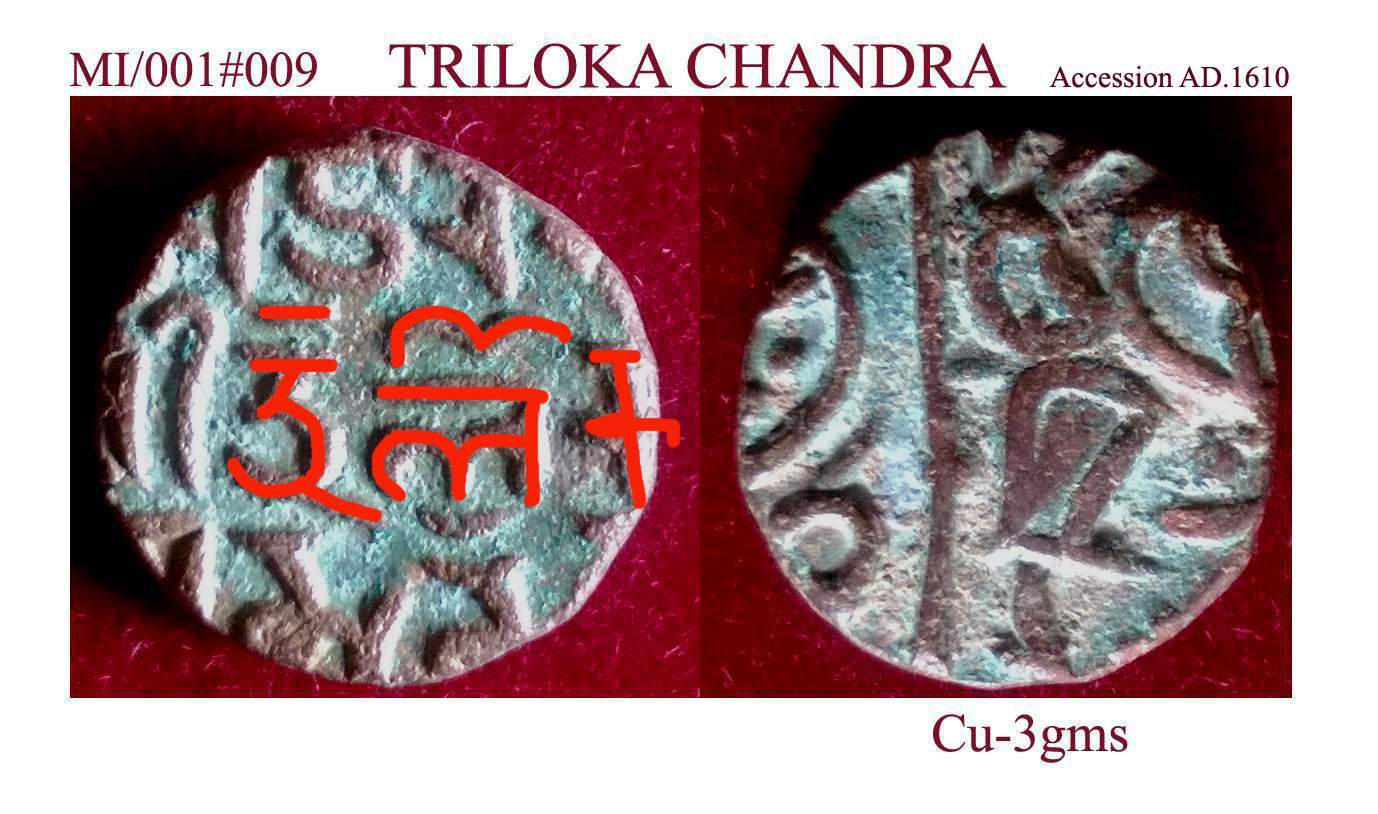 Hope you enjoyed this thread. There are comparable coins issued in the Khwarazmian Empire. Some are with Horseman to the left. If somebody is in possession of such coins, please share. Hope you enjoyed this thread. There are comparable coins issued in the Khwarazmian Empire. Some are with Horseman to the left. If somebody is in possession of such coins, please share.
|
|
Pillar of the Community
United States
6130 Posts |
Giving this thread a little bump. I have been looking into these coins, and I am honestly a little surprised that nobody has ever offered up a explanation of the symbolism of these coins. Since you know these coins perhaps better than anyone, maybe you can shed some light? I do feel confident that the bull is the Nandi bull, the mount of the Lord Shiva: https://en.m.wikipedia.org/wiki/Nandi_(bull)Further attested by the presence of Shiva's Trident, symbolising the creation, maintenance, and destruction of the world, the three tasks of the gods: https://en.m.wikipedia.org/wiki/TrishulaHaven't been able to figure out the horseman; his very unusual helmet/mask makes me think that he is more than just a calvalry soldier, however. Drnsreedhar or others: care to weigh in? |
|
Pillar of the Community
India
1996 Posts |
@Finn235:)
Thanks for the post. Frankly speaking, I do not have any convincing reply to your question. It is likely that the bull is "Nandi", but I have not so far come across any literature that supports this view. The oldest coins of the "bull and horseman" variety have legend on the bull side reading "spalapati deva" and "samanta deva". Among them, Spalapati coins precede Samanta. Spalapati means " chief of army" and Samanta means " vassal". So it is a wild thought that one who was once the chief of army of a prominent ruler later became semi-independent Samanta. He might have put horseman to symbolise that he is a warrior and use of those symbols could have continued into succeeding centuries spreading over vast area and with many dynasties including rulers of Khawarezm. There is something similar in history where one who was working under the King of Kanauj (after Harshavardhana) later came to rule Delhi on his own. Still this theory is only an inference and does not quite fit with the Ohind theory of its origin. I am still hunting for convincing literature. If I succeed, shall share information. Thanks.
Edited by drnsreedhar
11/12/2016 2:22 pm
|
|
New Member
United States
22 Posts |
@drnsreedhar
Thanks for posting this thread on Bull and Horseman coins, this is a very interesting series! drnsreedhar, your posts on Indian coinage are so informative and encouraging (because you help make collecting Indian material less intimidating!).
Much appreciated,
Blake
|
|
Pillar of the Community
India
1996 Posts |
Thank you wertsdbHere is an addition to Type-2 (horseman replaced with legend and bull retained)
This is an issue of the Ghazni Sultan "Jamal ud daula Farukhzad"(AD.1053-1059)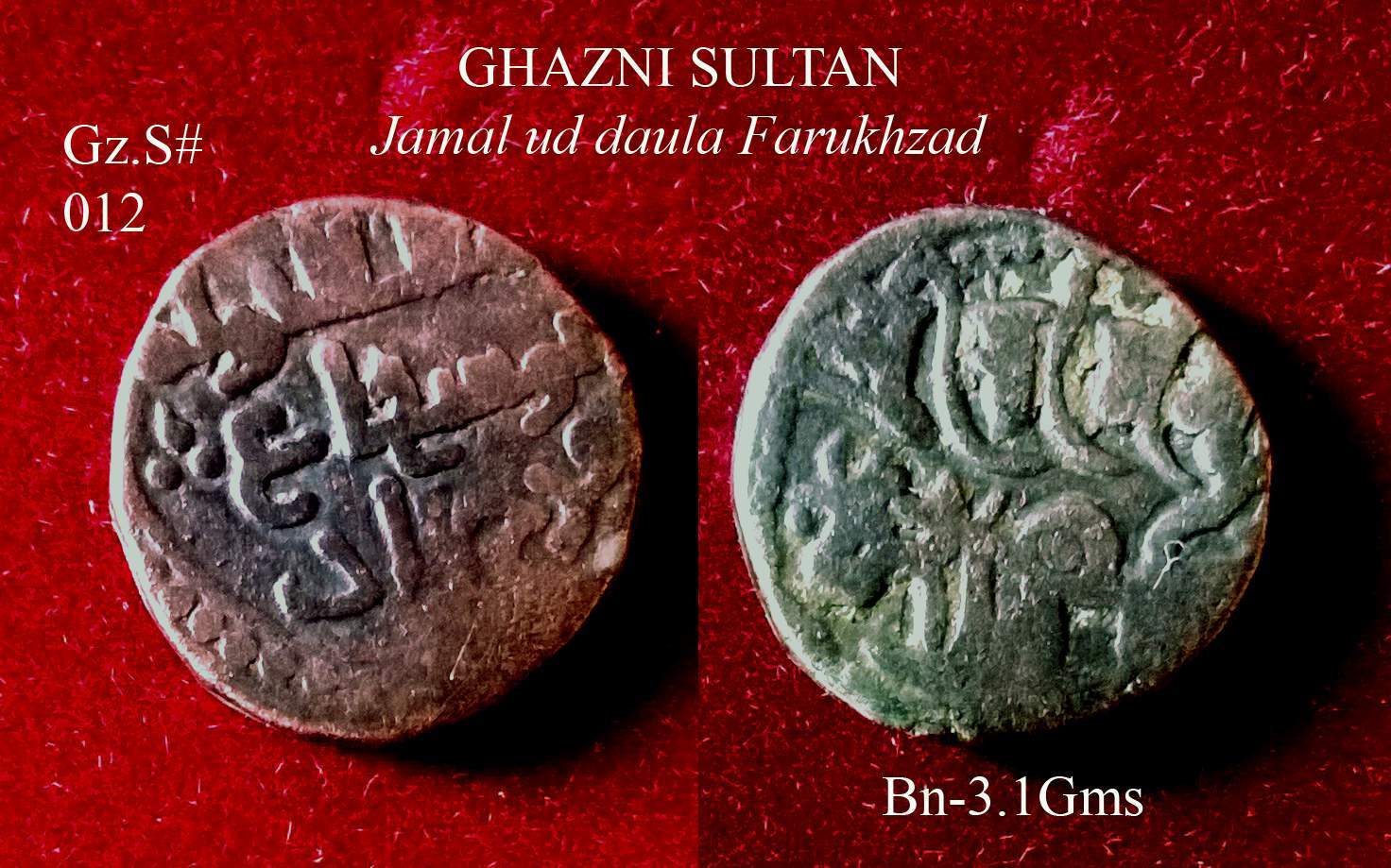 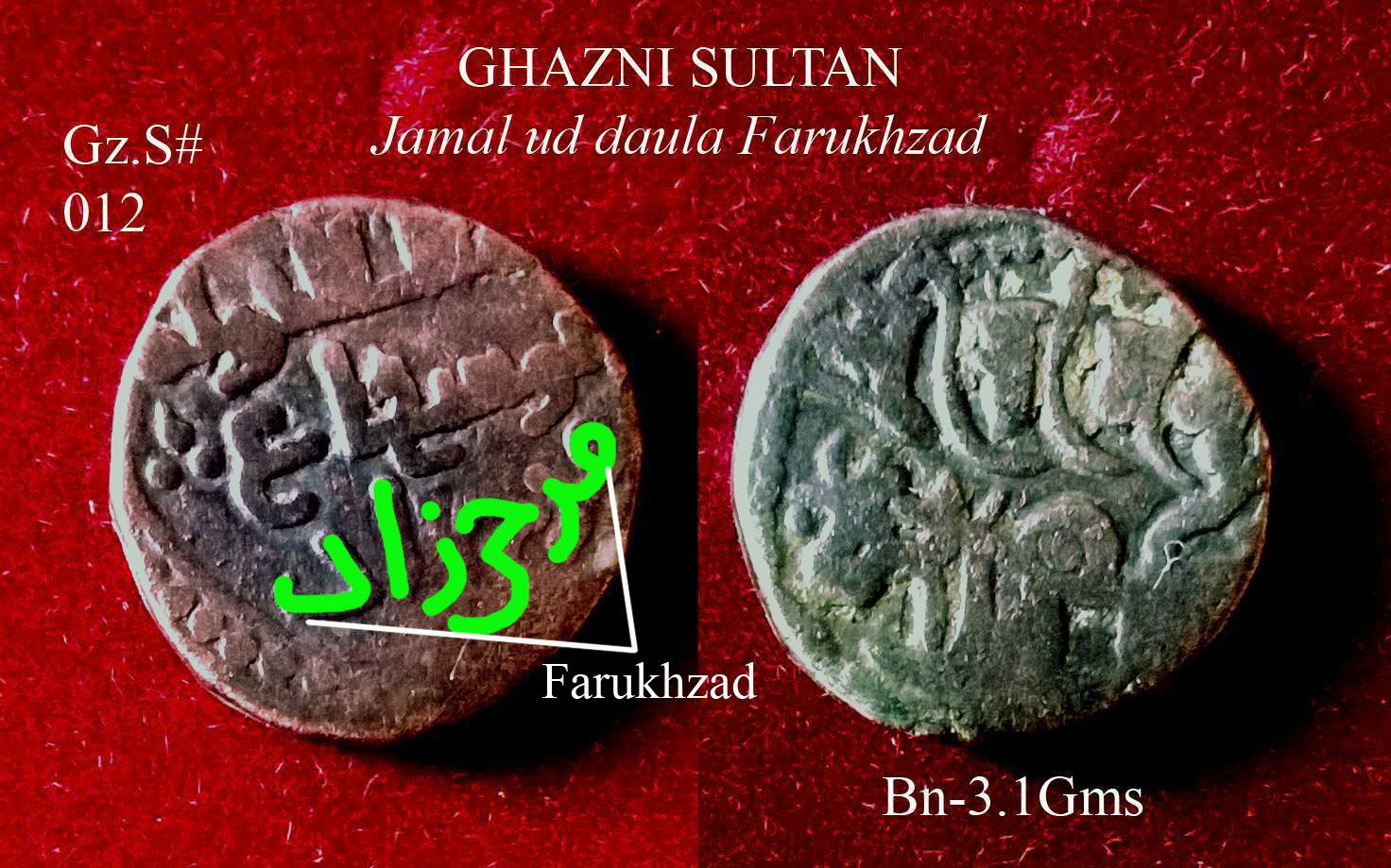
|
|
Pillar of the Community
India
1996 Posts |
One more addition to Type-2.Izz ud daula Abd ul Rasheed of Ghazni(1050-1053.AD) 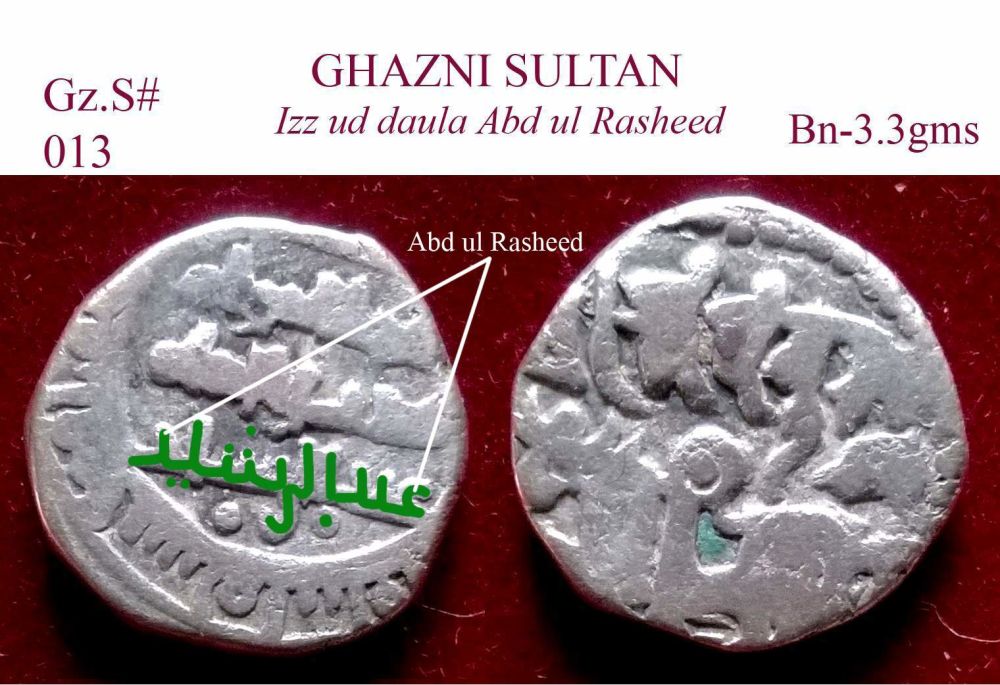
|
| |
Replies: 139 / Views: 52,976 |








 First Page
 Previous Page


 Posted 09/02/2016 11:25 am